

How Long Do Drill Bits Usually Last?
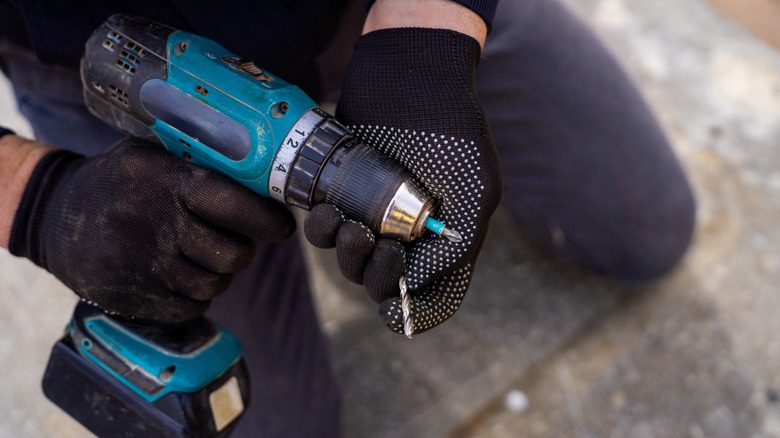
When drilling, the drill bit itself takes a lot of punishment. A tool set will often contain a number of replacement bits of different sizes, because, as Your New House's Sonya McKinney puts it, "the bits are pretty small, and they're attacking some pretty tough materials, so they are going to break sooner or later." If you've just bought a new model, then you surely want to know how long your bits are likely to last. Essential factors to consider, as with most tools, include the frequency of use, your usage habits, the type of bits you're using, and the substance you're drilling into.
QLT Supplies estimates, for instance, that a single drill bit may only be able to drill around 150 to 250 holes into concrete, while a drill of tungsten carbide may be able to drill up to approximately 1,500 to 10,000 holes in a substance like aluminum alloy.
Let's take a look at what happens when a drill bit wears down, some signs that you should replace them, and some important tips that will help you extend their lives. After all, while there are some handy uses for old drill bits you might not have considered, you want to get the most from them first.
How usage habits can affect the lifespan of a drill bit
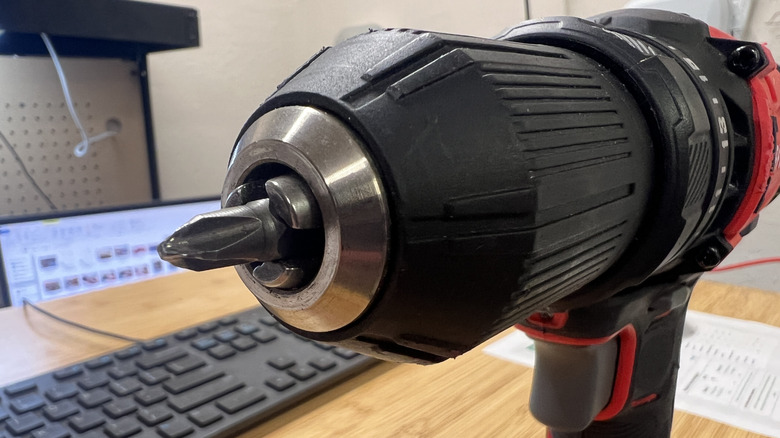
Technique can have a huge impact, because either drilling too quickly or too slowly can have a negative impact on a bit's lifespan. If you're using a bit of high-speed steel (HSS), for instance, friction and the heat generated by too-high RPMs or a feed pressure that's too low can damage the bit. In the latter case, the bit will merely rub against the material to be drilled rather than boring through it, increasing the heat generated. Temperatures of around 600 degrees Fahrenheit and above can impact the tempering, and so the strength, of an HSS drill bit. This is why resources such as recommended charts of speeds for different bit sizes and drilling materials should be consulted.
As with other tools, like knives, a sharp drill bit is essential for efficient performance. It can wear too quickly and lose its sharpness if you allow it to overheat or if you apply too much pressure. Technique is important when drilling, and using too much force can potentially snap the bit entirely. They're more susceptible to this if they're already worn or damaged, so be sure to always use the appropriate drill bit and technique for the surface into which you're drilling.
Tool manufacturer Ruko notes that longer drills and bits are more likely to snap, and so users should only work with the right length for the job. The company also underscores the importance of using the likes of a tungsten carbide drill on tougher surfaces like stronger steels. Some drill bits are far better suited for drilling through stainless steel than others.
How to make your drill bits last longer
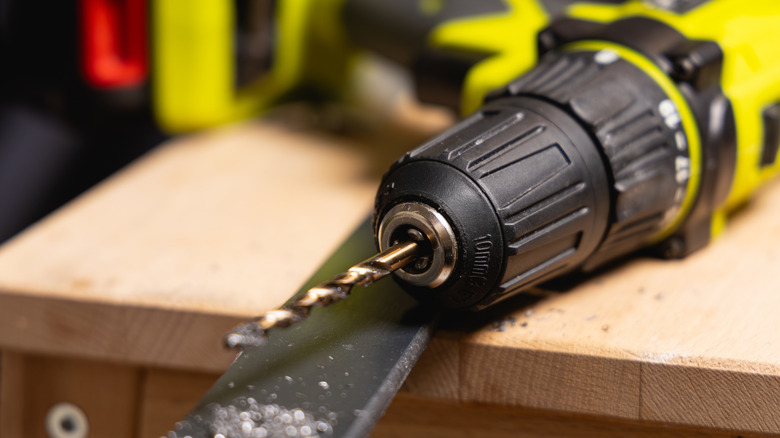
The more frequently you use your drill and its bits, the faster they will wear. You always want your tools to perform at their best, and this requires frequent care. For one thing, remember that there are some easy ways to sharpen dulled drill bits instead of throwing them away. During and in between uses, though, there are some more important measures to take.
Lubrication is typically very important when working with metals, so if you're working with harder metal surfaces, you can reduce the risk of excess friction, overheating, and potential damage by applying some cutting oil to the surface to be drilled. A simple pilot hole will also reduce the strain on your drill and its bit by cutting running time and guiding you to the optimal spot.
A drill bit can collect a lot of debris as it's used, so you should clean that away when you've finished using it. You may then be tempted to leave a drill bit loose on a work surface until it's needed again, but proper storage can dramatically improve its longevity, too. Appropriate cases not only help you organize your drill bits, but also ward off the moisture and other potential damage that could occur to loose ones.