

5 Common Problems With LG Refrigerators
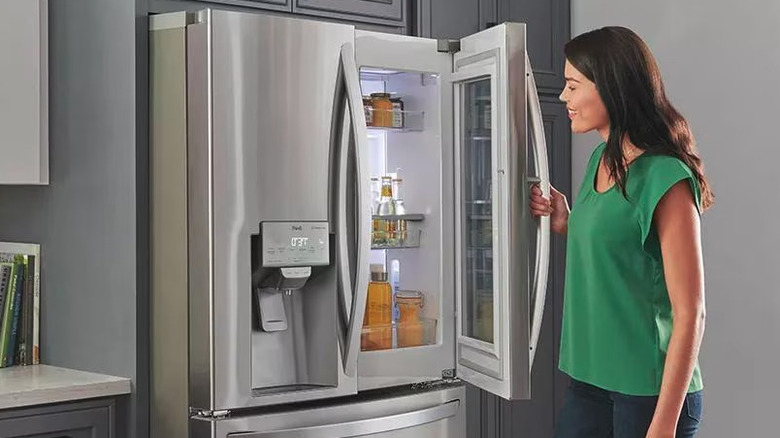
Given the sheer breadth of options available to consumers, buying a new refrigerator can be a dizzying task. It can also be a fun one, however, because who doesn't enjoy bringing a shiny new appliance into their home, right? That's particularly true as modern refrigerators can be equipped with high-tech features that can make them more than just a convenient place to keep your perishables cool and fresh.
LG is, of course, one of several major refrigerator manufacturers that offer some of those high-tech upgrades on many of its new models, including the Door-In-Door InstaView that allows you to look inside without even opening the door. As cool as some of LG's new refrigerator tech can be, there are some things to consider before you purchase one of the appliances for your own home.
After all, even as some LG models have earned raves from the likes of Consumer Reports, the brand is just like many others on the market in that there are a few common issues you might encounter during the lifetime of your fridge. On top of that, many of them are only backed by a limited warranty. While many common issues may be manageable enough without the need to call a repair service, others could mean a heavy repair bill or even the need to purchase a new fridge. Here's a look at a few of the more common problems owners of LG refrigerators may encounter after the point of purchase.
Freezer issues are common
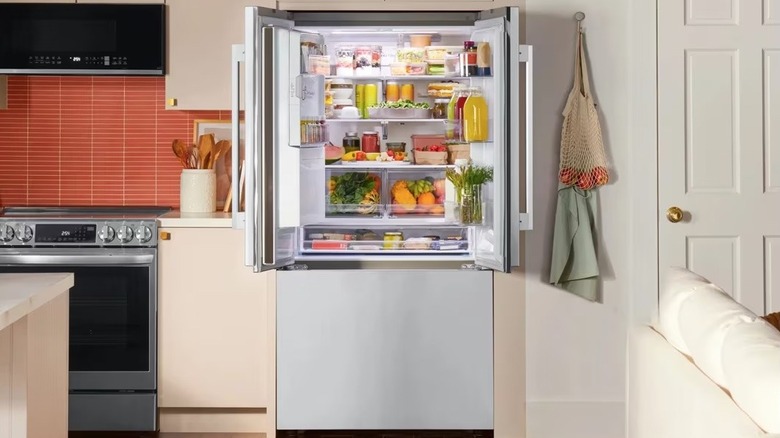
The refrigerator is not the only part of the device designed to keep food cool, as most are also fitted with either a side-by-side or bottom-freezer compartment to keep frozen foods fresh for extended periods of time. As with the main cooling compartment, the freezer itself can cause no end of headaches for owners, with some LG refrigerators known to have issues with their freezer not actually freezing.
LG devices are not alone in issues like a lack of cooling and freezing, of course, which ranks among the biggest tells that your refrigerator may be in trouble. Though some customers have reported the issue in their LG device, it is not always a mechanical one. In fact, an overloaded freezer may prove the cause, as packing too much food or ice cream inside may lead to blocked vents and fans. In this case, you may be able to fix the problem by moving items around to clear the vents and fans.
You may also be able to diagnose or fix the problem by checking and adjusting the freezer's thermostat to the recommended settings, which you can find in the owner's manual. It's also possible that your fridge's demo mode is still engaged, preventing the freezer from properly cooling. Bigger issues may be behind the failing freezer, though, including damaged door seals, a dirty or failing condenser, a faulty thermistor, capacitor, or compressor, and any number of mechanical issues. If you think such issues are behind your freezer troubles, you'll likely need professional help.
Compressors are one of the biggest issues with LG refrigerators
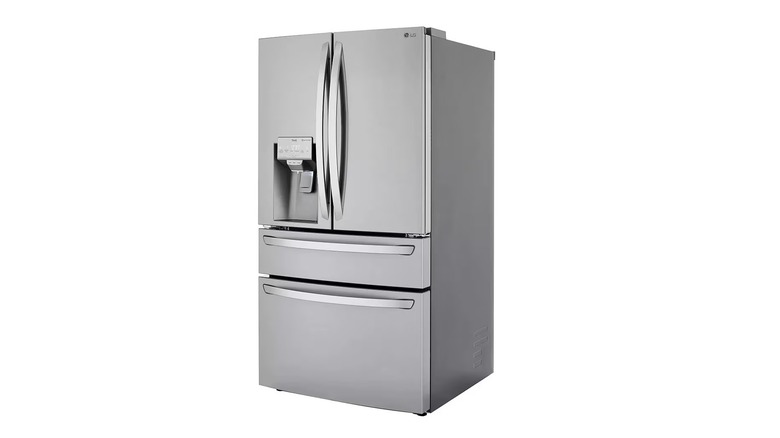
A bad compressor may also be behind the freezer's failure to cool down. And just for the record, if you were to poll LG refrigerator owners out there about issues they've experienced, odds are a faulty compressor would be one of the more frequently noted. Like some fridges from Samsung, compressors have been an ongoing issue with LG devices.
This is problematic, as compressors are essentially seen as the beating heart of the refrigerator. If you're unfamiliar with what they do, a refrigerator's compressor pressurizes refrigerant and moves it through the appliance's cooling system, helping pull heat out of the fridge and freezer compartments.
Yes, that's a lot of work for one component, and the linear compressors utilized in several of LG's more popular models have often not been up to the task. So much so that the brand has faced class action lawsuits over alleged compressor-related cooling problems and premature failures. The brand has reportedly sought to change course slightly by introducing new "smart inverter" compressors to some of its models, and a few users are reporting they are indeed outperforming their predecessors. However, many LG fridges still have the brand's efficiency-minded linear compressors. So, you might be wise to do your research and avoid any LG fridge running on those problematic devices, as they will generally require professional help to fix when they fail.
Water and ice dispensers can also be a problem
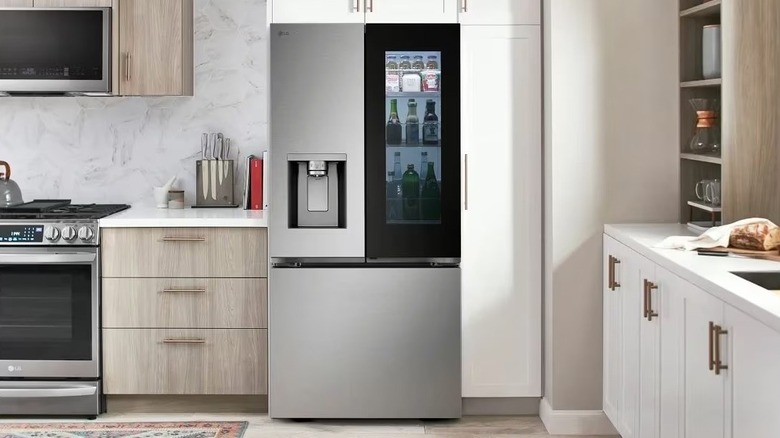
Water dispensers have become a pretty game-changing advancement in refrigerators in the years since they were first developed, offering users cool, filtered water with a convenience previously unseen. But if you own a refrigerator with an in-door or interior water dispenser, or even an ice dispenser for that matter, you likely already know that they are prone to malfunction. According to some refrigerator repair professionals, such issues are indeed common with LG fridges.
For proof of that fact, we'd point out that LG has essentially acknowledged the problem by adding a troubleshooting page for water and ice dispensers on its own website. Per the company, if those features aren't working on your LG fridge, the issues may not be mechanical failure. Rather, the company encourages owners to first check for an error code and follow certain steps to try and correct the problem themselves. It also recommends double-checking the appliance's water filter, its connection to the water source, as well as any locking features those dispensers may have.
Door switches and magnetic sensors may also be the problem, as well as loose connections in the hinges of the refrigerator door. If it's none of those issues, electrical problems may be the cause of the malfunction, and a professional may be needed to repair it. However, at least one fridge pro also suggests you double-check that the fridge is actually plugged in and functional before calling in help, because people are gonna people, right?
French door seals can be a problem too
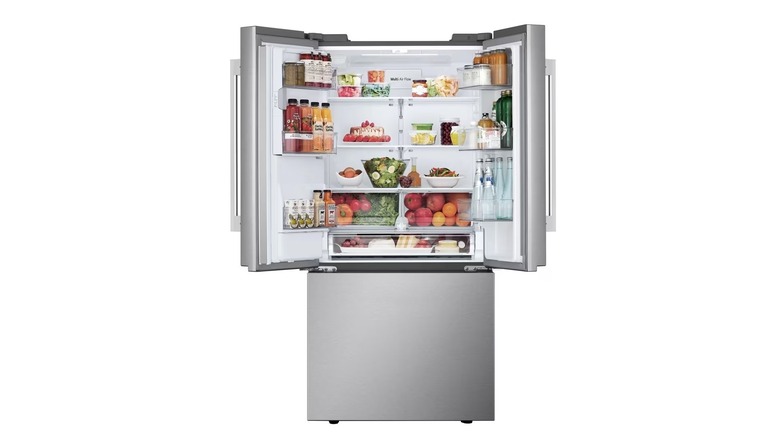
Refrigerators with French door designs have become increasingly popular among consumers in recent years, with many appreciating their wide-open design and unified interior shelving layout. Yes, they are also pretty sleek-looking appliances that some feel add a decidedly modern polish to any kitchen. As sleek as French door refrigerators can look, the doors themselves can be problematic if they don't close and seal properly.
The lack of sealing is one problem refrigerator pros report with LG's French door lineup, and that seemingly minor issue could lead to any number of other major ones. That's because the lack of a seal means cool air is constantly escaping the refrigerator, and that will invariably lead to the refrigerator and its cooling elements working overtime to cool things down, likely to the point of malfunction.
According to LG, the common culprit in the sealing issue is the mullion, which is the fancy name for that little flap that fills the gap between the doors. The flap should lie flat against one door when open, and automatically open to fill the gap when closed. If it isn't sealing, you may need to clean the fasteners that attach the mullion to the door, as buildup of dirt could prevent it from properly opening and closing. The fasteners themselves may also be the problem, and if they're faulty, they should be replaced ASAP. Until that mullion is fixed, you may need to close it manually when you open and shut the doors.
Strange sounds should not be ignored with LG refrigerators
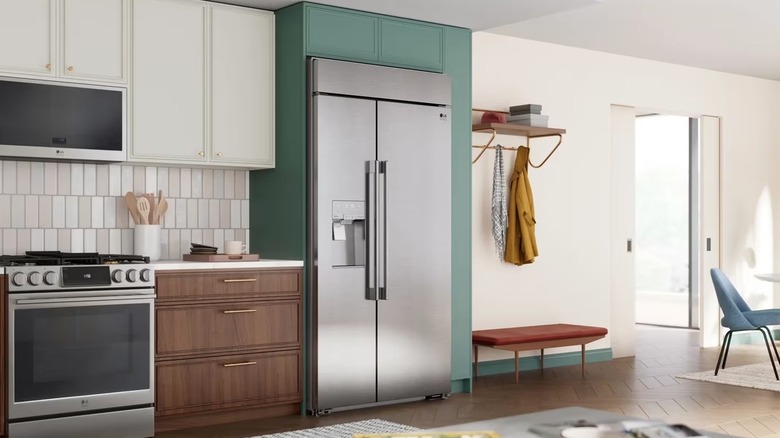
Modern refrigerators are designed to run quieter than models of yesteryear. They are not, however, designed to be completely silent during operation. Refrigerators do, after all, have mechanical parts like motors, fans, and vents working hard to keep their contents cool and fresh. To that end, even LG is quick to point out that certain noises are to be expected from their fridges.
There are, obviously, a few sounds that you do not want to hear from those appliances, with users and refrigerator professionals alike noting that LGs are prone to making them. And yes, even LG notes that some noises you hear from its refrigerators are harbingers of bad things to come, and should be addressed with due speed.
Knocking sounds are among those that may mean trouble, even as some components in the fridge can make such a sound when they kick on or off. If, however, you hear knocking from lower parts of the fridge, it could mean issues with the condenser fan or compressor, and professional help may be required. Likewise, knocking from the ice maker could mean a faulty evaporator or a jammed ice dispenser. Per LG, rattling is also a sound you don't want to hear, as it may mean an internal fan is brushing up against an obstruction. If that rattling is combined with a whirring sound, it means the fan may be frozen in place and unable to move. In either circumstance, repair help should be sought.