

4 Car Parts That Can Affect Your Vehicle's Fuel Economy
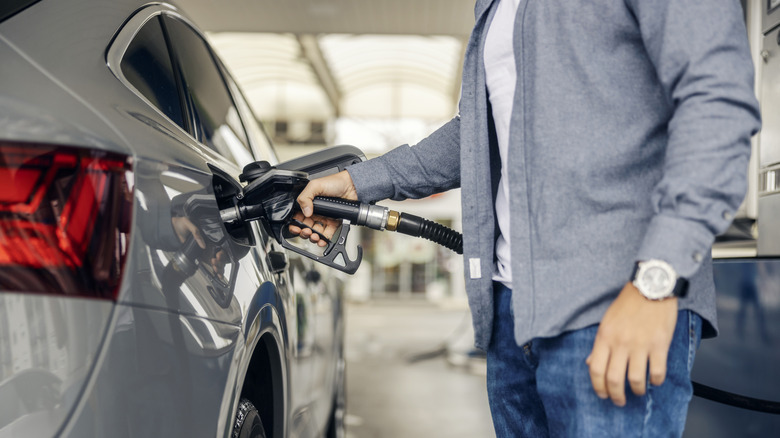
If your daily commute to work is starting to feel like it just might not be worth it, you're probably not alone. Miles equal dollar signs, and every moment spent idling at a red light is painful when gas is averaging $4.45 per gallon. While as of this writing most areas haven't hit record-breaking prices — yet — it's the most expensive gas has been in years, and it's a hard hit to the wallet for many.
According to Consumer Reports in a survey taken before gas prices shot up, a whopping 96 percent of Americans cited fuel economy as a factor to consider when purchasing or leasing a new vehicle. Two-thirds of those surveyed said it's a "very important" or "extremely important" consideration. Many of us are seeking out vehicles that will take us further on a gallon. Beyond purchasing a fuel-efficient car, however, what else can we do to save a few dollars at the pump?
Various factors affect fuel economy, including the weather, vehicle maintenance, and even our driving styles. But vehicle components also play a part. Here are four car parts that drivers have some control over that can make a big difference when it comes to fuel economy.
Tires
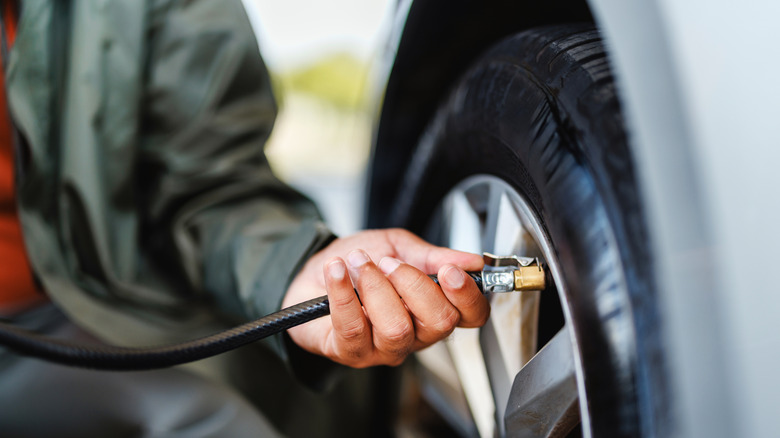
Let's begin with the most obvious, and one of the more expensive parts on our list: tires. They have the capacity to greatly affect fuel efficiency, and it all comes down to resistance. If your tires are generating greater resistance against the road, your engine labors harder and uses more fuel. Called rolling resistance, this simple matter of physics can result in more pain at the pump.
Replacing worn, older tires with fuel-efficient new ones is simply the first step. Look for lightweight options, since heavy tires can diminish fuel efficiency. There are several things you can do to maintain those tires that will help keep that resistance at a minimum. First, be sure they are inflated to the proper pressure, which is typically found printed on the inside of the driver's door. It will also be in your car's manual. Underinflated tires result in more of the tire making contact with the road, creating friction. Don't overinflate them thinking that will improve your fuel efficiency — it won't. Instead it will increase the wear and tire on your tires and could even cause a blowout.
Misaligned wheels can also drag your car down, so be sure to get your alignment checked every year or so. Also rotate your tires regularly to make sure they are wearing evenly, and don't use tires larger or smaller than the size recommended by the automaker.
Air filters
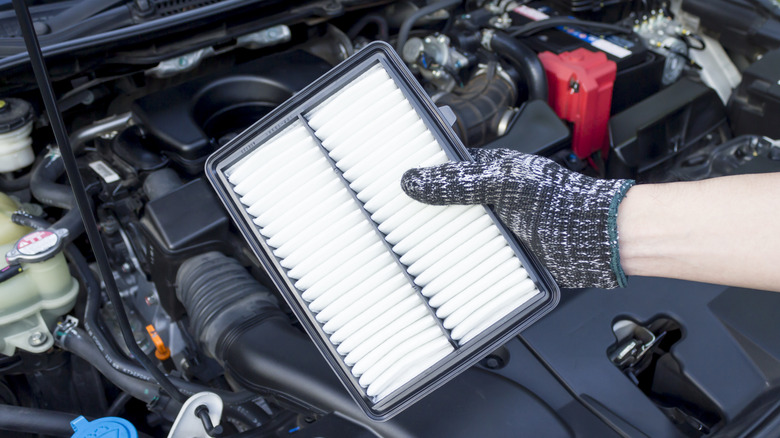
Your car probably has several air filters in it, but the important one in this discussion is the engine air filter. Car engines need a few things to function: fuel, of course, is one of them, but internal combustion engines also need air. The engine air filter makes sure that the air entering your car's combustion chamber is as clean as possible, trapping dirt and other contaminants that could potentially negatively affect your engine's performance. Don't confuse the engine air filter with the cabin air filter, though; the latter works with your vehicle's HVAC system and has nothing to do with your engine or fuel efficiency.
In modern vehicles, a dirty engine air filter can reduce fuel economy by up to 6 percent. In older, carbureted engines, this number increases to 11 percent. This can potentially cost you hundreds of dollars in fuel over the course of a year, as a dirty air filter causes your engine to work harder, increasing fuel consumption.
Today, most manufacturers suggest that you replace the engine air filter every 15,000 miles or so, but check your owner's manual for specifics on your car. You can have it replaced by a mechanic or when you get your oil changed, and you may also be able to easily take care of this simple maintenance on your own. The cost is typically minimal.
Spark plugs
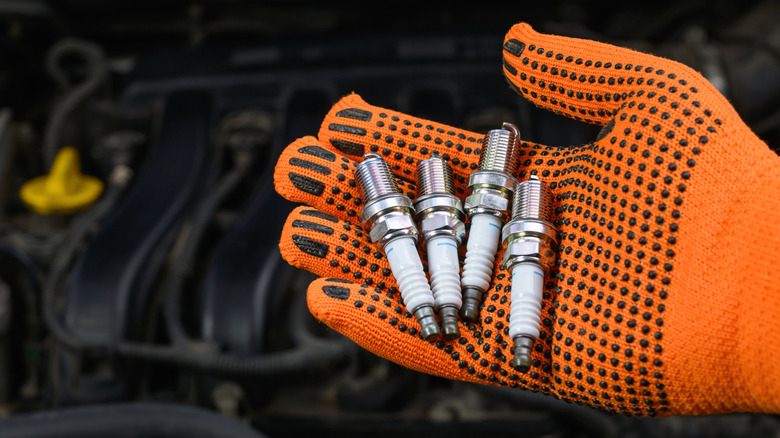
Cars have advanced in many ways over the last 20 years, but gasoline-powered vehicles still require one thing that old-school mechanics are familiar with: spark plugs. These simple parts trigger ignition of the air-fuel mixture in the engine and help sustain optimal efficiency. If your car is newer, the spark plugs may last up to 100,000 miles. But if your vehicle dates back to the 1990s or is even older, your spark plugs are likely made of a different material and won't last as long. Old spark plugs can affect your fuel efficiency, especially on higher mileage vehicles. Between 60,000 to 100,000 miles, you may lose one to two miles per gallon. The decline is gradual, so many drivers never notice.
Along with increased fuel consumption, there may be a few other hints that your spark plugs need to be replaced. Your vehicle may sputter when you start it, or you may even have difficulty getting the engine to turn over. You may also notice a decrease in your acceleration rate. If you think your vehicle may need new spark plugs, schedule a maintenance visit with your mechanic. While the impact to your annual fuel cost may be minimal, every little bit helps, and spark plugs are a relatively inexpensive fix, typically costing around $8 to $30 each.
Oxygen sensor
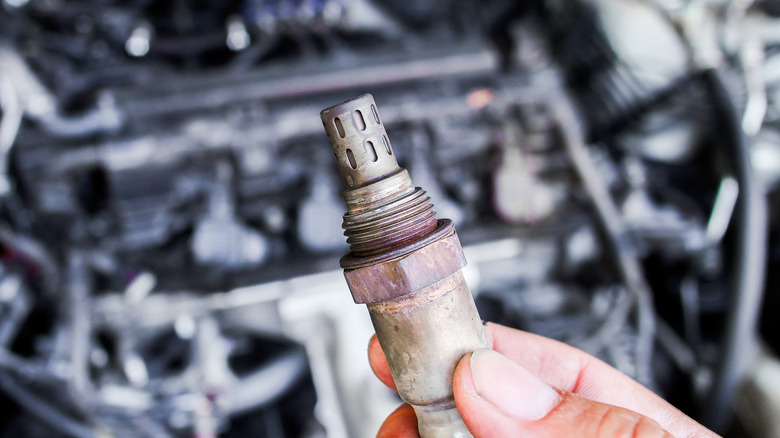
Oxygen sensors in your car measure what the air composition is of the exhaust gases that your vehicle is putting out to help maintain the correct fuel-to-oxygen ratio. The number of sensors your vehicle has depends on a variety of factors, including the engine type and size and the configuration of the exhaust system, but federal emission laws mandate that every car and truck sold in the U.S. has at least two of these sensors.
If one of your O2 sensors fails, the fuel-to-air ratio may be off, leading to a decrease in engine performance. Drivers may notice a rough idle or misfiring engine, but it can also lead to a decrease in fuel efficiency. The miscalculation in that vital ratio can cause you to burn more fuel than necessary. Not only are you wasting gas, but extra fuel in the combustion chamber can actually cause a loss of power during acceleration.
You may see a warning light on your dashboard if you have a bad oxygen sensor, but if you experience other warning signs and don't have a check engine light, you should still have a mechanic inspect your vehicle. While the sensors can be replaced individually, your mechanic may recommend replacing all of them at once if one goes bad. The repair is not usually too costly but may be several hundred dollars in some cases. Driving with a bad sensor is not a good idea, as you risk damaging your catalytic converter, resulting in an even pricier repair.