

5 Milwaukee Tools Beginners Should Steer Clear Of
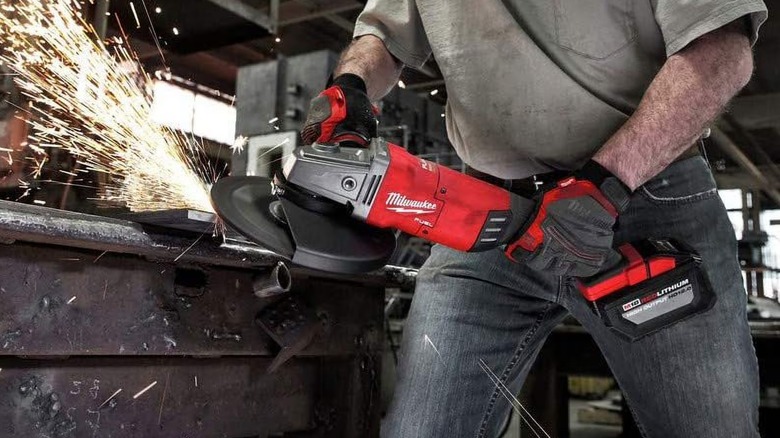
If you have the money to spend and want to build out a strong, capable tool collection, shopping with Milwaukee isn't likely to disappoint. It's one of the biggest names in tools, with a reputation for providing home DIYers and professionals alike with everything they need to get their work done. That's to say the Milwaukee catalogue is more than just a few basics drills, drivers, and sanders. In addition to some rather niche Milwaukee tools with unusual uses, the brand has tools not everyone will need or have the experience and skill level to handle effectively.
When buying tools, it's key to know both what you need and what you can handle. For a beginner, you want to start small and easy before advancing, especially if you're Milwaukee only. Within the brand's range, there are tools that take skill and technique to master, some intended for specific jobs, and others that, if not used or set up correctly, could be prone to breakage or damage in some other way. On paper, these are perfectly serviceable tools, but in the hands of someone without the know-how to use them, mere tool breakage can be a best-case scenario.
As great as Milwaukee tools are, some are best left to those with the experience to use them. Here are a few examples that beginners should stay away from, at least until they get more supervised or aided labor hours under their belts.
Milwaukee M18 Fuel rear handle circular saw
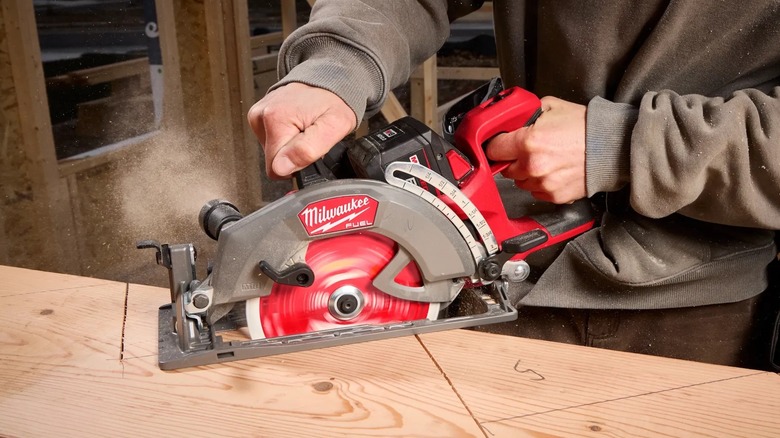
A circular saw is a great piece to have around a woodworking shop. These tools are powerful and make cutting through thinner, flatter pieces of wood a breeze. For those in need, there are options for sale all over, too. Milwaukee is one of the several major circular saw brands out there and the M18 Fuel rear handle circular saw is among its standout choices. With that said, for those new to woodworking and circular saws of any kind, this specific unit might be a bit much to wrangle based on a few notable attributes.
The obvious point of hesitation is the speed this saw offers. The blade moves at 6,000 RPM, requiring the user to have a tight grip and complete control at all times. Otherwise, a runaway saw is an entirely possible danger. The back handle can be daunting as well, since the weight is based exclusively in front instead of underneath like with a traditional top-handled circular saw. Combine the awkward weight distribution with the blade speed, and you have a recipe for disaster. Experience, confidence, and focus are essential when handling this tool, along with the physical strength and stability to hold on tight and guide it to your wanted cut.
Milwaukee M18 Fuel large angle grinder
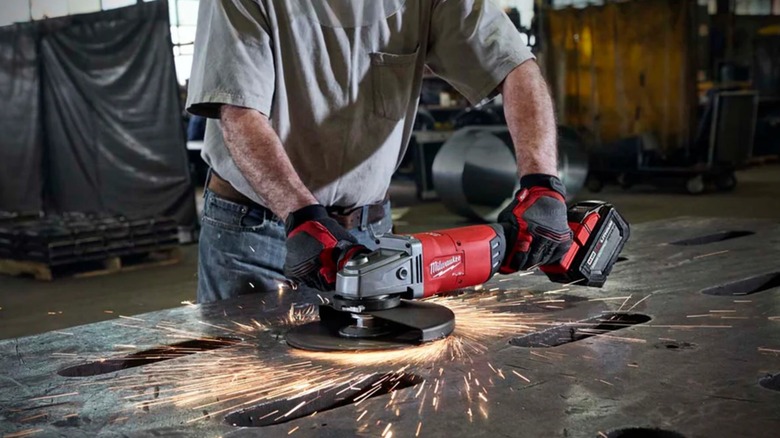
Angle grinders are incredibly versatile tools that can aid in woodworking, metalworking, and more. They feature a spinning disc on the head, which can be swapped out to best suit the material used or the user's intentions for it, doing everything from cutting to sanding to polishing. Milwaukee has numerous angle grinder models to offer, the biggest of the bunch being the M18 Fuel 7-inch to 9-inch large angle grinder. Not only does it being the biggest option make it a risky buy for beginners, but the angle grinder in general takes some getting used to. It requires ample hand and eye protection due to the flying debris it creates, and it's a nuanced tool that requires experience to use at its best.
First and foremost, you need to know exactly how to hold it and at which angle to keep it to achieve your desired cut and shape. Of course, this is much easier said than done given the 11.95-pound weight of the Milwaukee large grinder with its connected battery, and the tremendous speed of the disc. While it's not the fastest Milwaukee model at 6,000 RPM –the 4 1/2-inch to 5-inch grinder hits 8,500 RPM — the combination of speed, size, and weight is enough to throw the first-time user off. Also, it can be easy for newcomers to overcompensate for the tool and push it more than needed, rather than allowing the disc to do the work. This is likely to wear the disc and tool down while potentially not offering the desired effect on the material.
Milwaukee M18 telescoping pole saw

Trees can get big, which makes seasonal branch pruning quite a hassle. Fortunately, this is where a pole saw can come to the rescue, as it's intended for reaching high branches and chopping them out of the sky. Milwaukee has delved into this tool type before, as evidenced by the M18 Fuel telescoping pole saw, for example. This tool is relatively easy to use, but if you're new to it, it will require some practice to utilize correctly and safely. There are a lot of variables to account for when using pole saws this large that beginners need to be aware of before giving it a first try.
First, there's the awkwardness of this tool. It involves reaching up or out, and with a weight of 16 pounds and maximum length of 156 inches, or 13 feet, it can be exhausting to hold up. This is true for jobs in need of multiple thicker branch trimmings, which mean standing it up and balancing its weight for extended periods. Should you lose control and drop it, there's also the miniature chainsaw on the cutting end to worry about. On top of that, you need to be mindful of where you're standing and how you're cutting, since falling branches could be a hazard to you, those nearby, or even property. Observance of those more experienced and practice with a lighter model or on lower branches are good choices before buying your own.
Milwaukee MX Fuel sewer drum machine
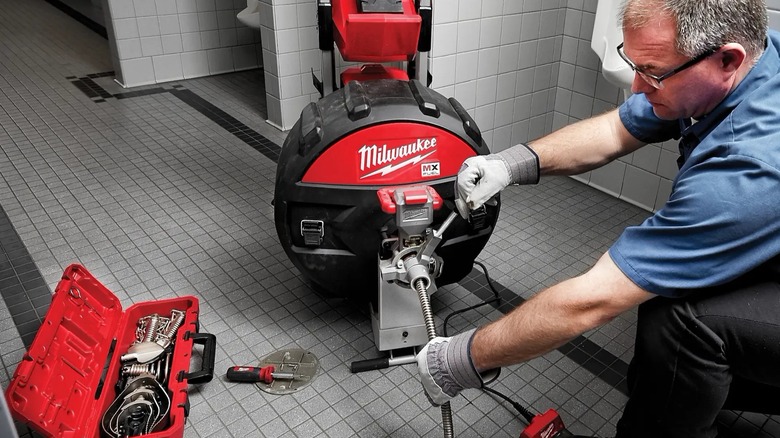
With modern plumbing, blockages in kitchen sinks, shower drains, and more are an inevitability. Given that plumbing isn't so easy to monitor based on sight alone, it can be hard to tell where exactly pipes are clogged and by what. In many cases, a simple drain snake is enough, but some problems call for more heavy-duty solutions. The 5/8-inch to 3/4-inch cable sewer drum machine, which is part of the expansive Milwaukee MX Fuel equipment line, is intended to plow through and remove deeper, more stubborn blockages, but given its size and power, it's for the best that those with plumbing experience are behind its use.
The biggest concern is using it on old, fragile, or already damaged pipes. The cable spins at 200 RPM, intended to clear out pipes from even the most stuck-on debris. Unfortunately, if you don't have the plumbing knowledge to recognize that this machine is more than your pipes can handle, further damage to your already clogged system could occur. On top of this, there's the concern of cable breakage with these machines if the cables aren't wrapped in a way that prevents kinks and bends. Additionally, even though it's on wheels, this tool weighs 125 pounds, so it can be a lot to handle for those not accustomed to such large appliances.
Milwaukee M18 Fuel 20-inch chainsaw
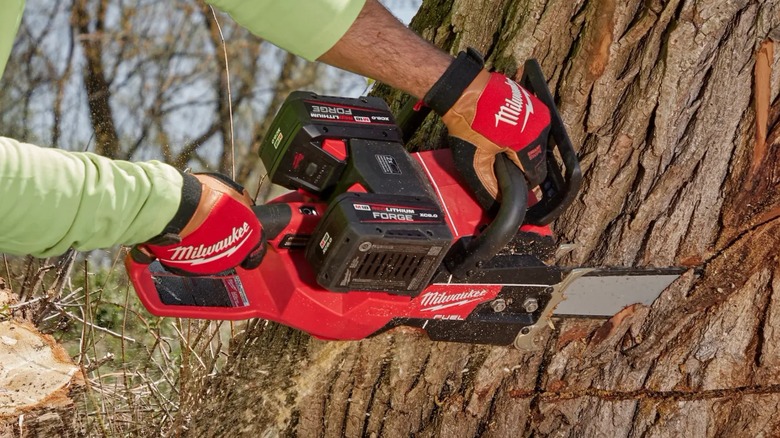
In making a list of the most well-known power tools out there, the chainsaw undoubtedly deserves a spot. It's a game-changer in the landscaping tool world, making quick work of thick branches and logs. As for Milwaukee, the company ranks well among the other major chainsaw brands out there, but its chainsaws aren't for everyone. The M18 Fuel dual battery 20-inch chainsaw is a particularly risky version of the tool to put in a beginner's hands. Its physical attributes could make this already dangerous tool even scarier to use.
At this point, this is Milwaukee's largest chainsaw with a 20-inch bar protruding from the front. Couple this with the fact that it's the heaviest Milwaukee chainsaw at 19.9 pounds, and it becomes clear how awkward and potentially unwieldy this tool could be for the inexperienced. It's cordless, which is a plus, but two 2.38-pound M18 RedLithium Forge XC8.0 battery packs run it, meaning even more weight to manage while it's running. It generates 5.8 horsepower, so being able to handle both the weight and power is paramount to the user's safety. Even with built-in kickback protection, a hesitant, inexperienced chainsaw user could unintentionally put themselves in danger in short order.
How these tools were chosen
Multiple steps were taken to select these specific Milwaukee tools as non-beginner-friendly. The first task was to dig through the entire Milwaukee catalogue and determine which tools were fine for newcomers and which weren't. This meant passing by simple general-use tools like power drills, palm sanders, and basic hand tools, to name a few, and taking inventory of more specialized, powerful, and complicated items. With that distinction made, we looked deeper into those in the latter camp, better defining why they may not do a beginner much good on the job at best, or create a dangerous situation for them and those in their vicinity at worst.
These tools were defined as less than ideal for beginners by multiple criteria. Some are genuinely difficult to set up and use without proper experience. There are also those that are aimed more so at professional tradespeople, meaning a beginner might be able to use them, but the cost and limited use cases make them passes. There's also the danger factor, or a combination of these elements that make it abundantly clear these Milwaukee tools should be left to experienced users.