

This Is Tim Cook's Biggest Regret From His Time At Apple
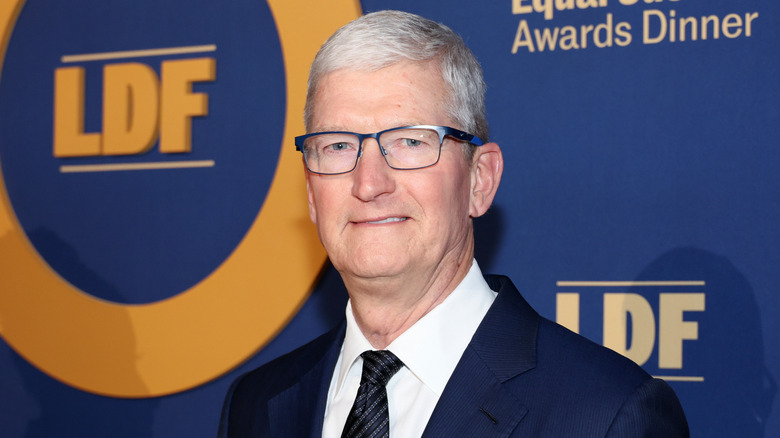
The announcement that Tim Cook would step down from his longtime role as Apple CEO in September 2026 felt, in some ways, less like an organizational change and more like a royal succession. Cook stepped into the shoes of a giant in 2011, replacing the late Steve Jobs following the founder's untimely passing. By all market metrics, his reign was a phenomenal success, catapulting Apple to become the first trillion-dollar company by 2018 and the first to reach three trillion in 2024.
But Cook's legacy is not pure marble. His talents are firmly rooted in services and supply chains, and many of Apple's financial gains were made through a ruthless streamlining of the company's logistics, the construction of a walled garden around its products that made switching costs too high for customers to bear, and hefty stock buybacks. In other words, Cook was good to investors, even at the cost of customer experience. Though Cook is staying on as chairman of the board, he will be succeeded by John Ternus, an Apple veteran who currently serves as the company's senior vice president of hardware engineering, and tech analysts have taken his selection as a promising sign for what has been perceived in some corners as a baffling decline in Apple's historically famous focus on product perfectionism.
Cook's farewell tour has seen him reminisce about the regrets accumulated during his tenure as CEO of Apple. In an all-staff town hall, he admitted to slipping up during the infamously sloppy Apple Maps rollout, but touted the success of other products launched under his auspices. What he left out, however, is even more revealing. Here's how Cook's calculated confessions conveniently cover up more glaring issues.
Tim Cook regrets the Apple Maps rollout
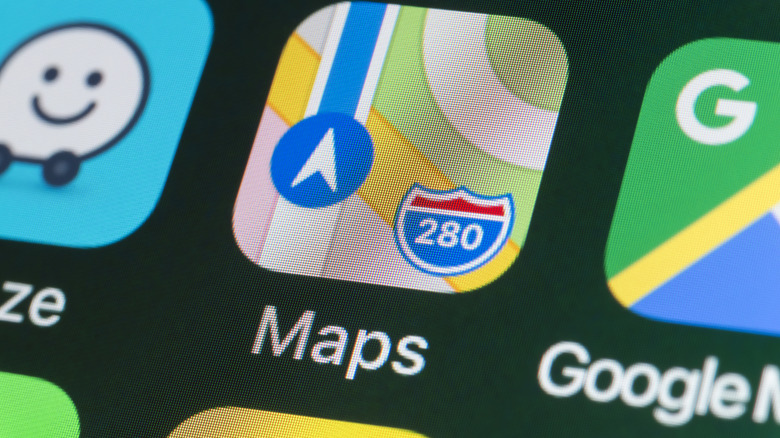
As reported by Bloomberg, Tim Cook held a town hall for Apple employees on April 21, shortly after the announcement of his succession as CEO. During the event, Cook circumspectly claimed that the largest regret he has from his time at the helm is the notoriously sloppy rollout of Apple Maps. The app launched in 2012 to great fanfare, giving Apple users a way to break free of Google's stranglehold on the GPS navigation market. But it quickly became clear that the app was flawed in multiple ways. "The product wasn't ready," Cook said during the recent meeting. That's quite the understatement.
On the humorous side, Apple Maps' 3D features were broken out of the gate, with landmarks such as the Brooklyn Bridge appearing to melt into the pavement beneath it. On the more serious side, navigation was riddled with errors that put users in danger. In one instance, several tourists in Australia were stranded for over 24 hours in the Murray-Sunset National Park, without food or water, after Apple Maps mistakenly told them they were headed to the city of Mildura, which was actually 40 miles away (via The Guardian).
The situation was so disastrous that Cook was forced to make a public apology — something that was, and is, quite uncharacteristic for the company. Consider, for example, that its response to the iPhone 4's so-called antennagate was to tell customers to hold the phone differently if it stopped working. Perhaps to balance things out, Cook also lauded the Apple Watch as one of his proudest moments, notably touting the device's life-saving capabilities.
Tim Cook is skimming over more recent failures
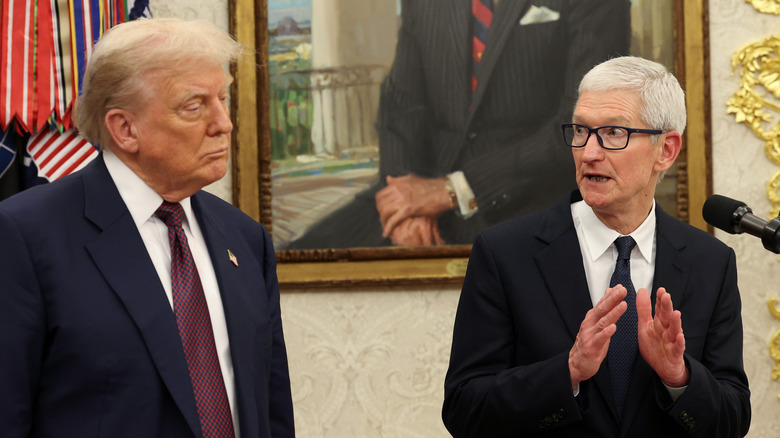
There's no denying that the botched Maps rollout is among Apple's most memorable and public failures. It may truly be Tim Cook's greatest regret, but it's also the savviest one to discuss. It's been a long time, for one, and bringing it up 14 years later is unlikely to harm either Apple or Cook's reputations. Second, it's a mistake Cook is already on record apologizing for, which means he can talk about it without eating any fresh crow. That's not the case for more recent missteps in the 2020s.
Apple has struggled to jump on the AI bandwagon, ultimately opting to buy its AI smarts from Google rather than go it alone. That led to the revelation that there had been open internal warfare between redundant AI teams, with entire celebrity ad campaigns promising features that never materialized. The scandal led to a class-action lawsuit for false advertising and ultimately to the departure of several high-ranking officers. In 2024, the company launched the Vision Pro mixed reality headset to much fanfare, only for the $3,500 gadget to become a niche curio rather than the next evolution of computing its marketing materials promised.
And then there's the massive antitrust lawsuit filed by the U.S. Department of Justice, which alleges that Apple has deliberately built an ecosystem that illegally traps users within its walled garden. Apple has spent the better part of two decades under Cook's tenure making sure that life is as painful as possible for anyone who tries to use an iPhone or Mac alongside competing devices like an Android phone or Windows PC. That contempt for Apple's users may overshadow Cook's many victories and stand as his ultimate legacy.