

Are Red Light Cameras The Same As Speed Cameras?
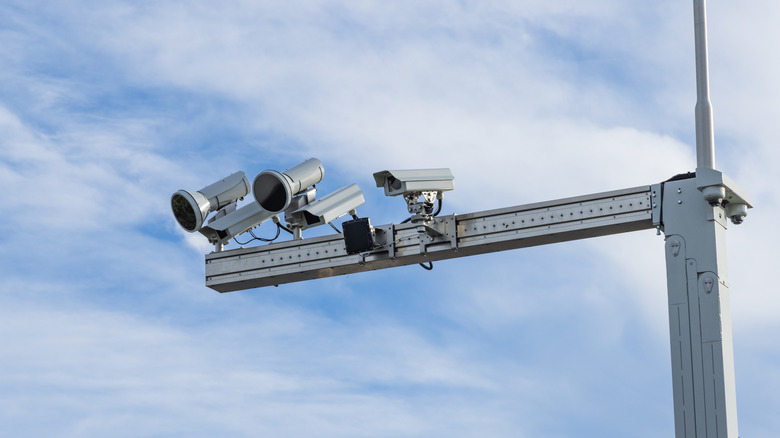
We see them every day with alarmingly increasing frequency — cameras that pop up on the side of the road or at intersections. Whether they're used to issue tickets in speed and construction zones or relay license plate information, let's face it: These aren't going anywhere. It's best to keep informed as to what they do, what they look like, and where to find them so you can avoid a potentially hefty fine.
You'll find no fewer than four types of traffic camera in the United States: Traffic-monitoring cameras, automated number-plate recognition (ANPR) cameras, speed cameras, and red light cameras. The first two cannot issue tickets, so we'll be brief about them. A traffic-monitoring camera's job is to detect where cars are to precisely time traffic lights and govern automated signage according to conditions. The ANPR camera identifies a car by its license plate, acting as a monitor to track movements.
Speed cameras and red light cameras, on the other hand, both function in similar ways in that they're designed to prosecute drivers for disobeying traffic laws. The main difference between the two is simply where they're placed and what laws they uphold. A red light camera, as the name suggests, sits at an intersection and monitors red light offenses. Speed cameras are typically situated at the sides of roads prone to speeding, like back roads and highways. These cameras issue automated tickets, which the registered vehicle owner receives in the mail. It's a system not without its faults; for instance, a woman's license plate matched a common novelty plate, and she was issued 15 traffic tickets. Let's dive deeper and explore more about how these systems differ and what they can and can't do.
How red light cameras work
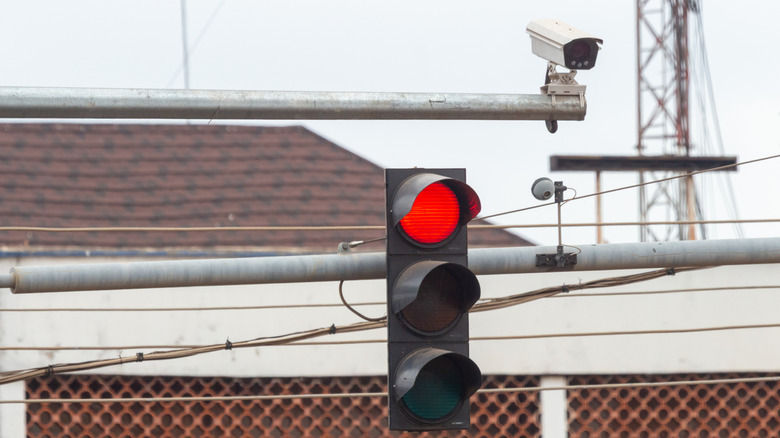
Traffic-issuing red light cameras operate through a hard link to the traffic signal itself. When you pull up to the red light, the camera takes a picture of your car as it moves into position, then detects if the vehicle moves past the point where it's then in the intersection. If the light is red in both phases, i.e. the car blew the red light, then the camera photographs the car a second time as it goes through the light. It then issues a citation to the registered owner of the vehicle.
This system was first implemented in New York City in 1994, a metropolitan area we all know for its infamous gridlock. The New York Department of Transportation took a hard look at statistics, recording fatalities occurring at intersections and asking the question, "Would an automated red light camera help stop speeders?" New York champions the system today with plans to expand it to 600 intersections. If you blow a light in the City and your car is captured by this camera, expect a $50 ticket in the mail.
Typically you'll find red light cameras situated at busy intersections, near school or work zones, or in major cities. They're identified by the secondary camera unit that captures a picture of the car as it goes through the light, typically mounted on its own pole overlooking the intersection. The legality of red light cameras is often called into question, with specific rules varying on a per-state basis. Some states exclude them outside of metropolitan areas, and others don't allow them at all.
How speed cameras are different
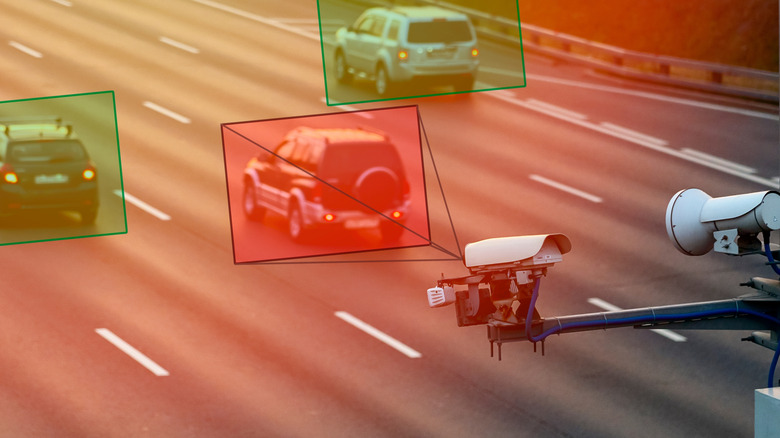
Speed cameras function the same in principle — if you're speeding, it'll take a picture of your car and mail you a ticket. But there are actually several types of speed cameras, each one operating using different methods. Most modern systems use a form of LIDAR and infrared photography to track and capture a car's image, either by measuring its speed between two fixed points or by measuring its speed at a specific point — much like the ones used in Colorado. These are your fixed units, designed to run autonomously, as opposed to mobile units, which are set up by officials and, as the name suggests, are not static.
These types of cameras are generally what you'll see in places like construction areas or school zones — any place with a consistent, reduced speed in comparison to the usual flow of traffic. Other areas include high-speed expressways and suburban areas with excessive rates of speeding violations. According to the U.S. Department of Transportation, their presence has reduced crash frequency by 54%, and accidents involving injuries and fatalities by 47% and 20%, respectively.
Different cameras operate using different methods, making detection an exceedingly difficult proposition. For instance, some speed cameras use lasers, whereas others use different bands of radar. Apps like Waze and Google Maps typically state fixed speed trap locations as a heads-up, but you'll often find surprise mobile units in front of construction zones and the like. Just like red light cameras, the person who receives the ticket will be the one to which the vehicle is registered.