

The New Speed Cameras In This State Make It Much More Difficult To Dodge A Ticket
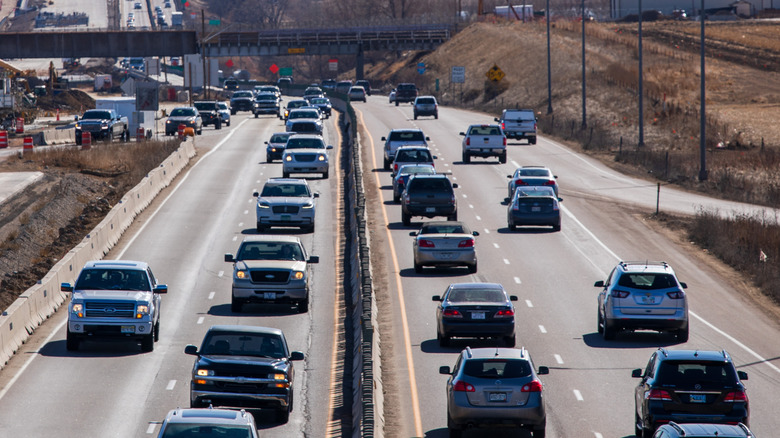
For law enforcement, the effort to keep drivers within the speed limit is a job that never ends. Everyone's in a hurry to get somewhere, and sometimes people go too fast. Not only do would-be race car drivers have to watch for any police who might be around the corner, they also have to contend with speed cameras. And if you're looking to smash the speed limit in Colorado, things just got a bit tougher.
Colorado has a traffic system in place that uses two cameras for vehicle identification instead of a single speed reading. Those cameras are set at different points along the way and record each vehicle's license plate, as well as the travel time in between. That information is then used to measure an average speed, which is what ultimately determines if a driver is speeding. This means that even if you slow down after going too fast at one point, you could still end up with a ticket if the overall average is too high.
The state's system officially went live on April 2, 2026, following a 30-day warning period during which drivers were not issued citations. During that window, speeding in the area dropped by 90%. Drivers who insist on breaking the speed limit now face a $75 fee. However, no points can be added to a driver's license, since the cameras aren't designed to identify who's in the driver's seat.
Colorado is making an effort to slow down drivers
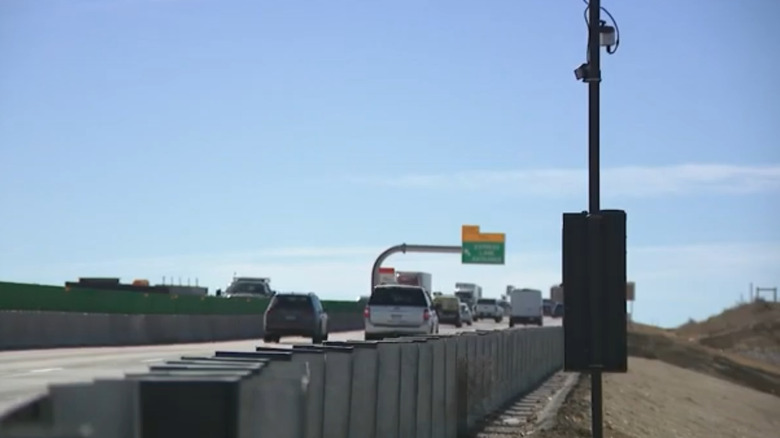
Colorado's speed camera system is set up at an area where construction is underway on I-25. This means that when drivers slow down, they're doing much more than just avoiding a ticket. They're also making it safer for workers to do their jobs, while accounting for construction vehicles on the roadside as well. But this system isn't the only one the state has in place to deter speedsters on the road.
Colorado, one of the worst states to drive in the U.S., has also rolled out a broader effort under its Speed Enforcement Program. This initiative includes both fixed and mobile camera units, which began operating in 2025. They were first tested along Highway 119 between Boulder and Longmont, and were specifically targeted at construction zones. Similar to the I-25 system, the mobile unit tracks drivers between two points to measure the average speed. Colorado is even using driverless "speed jeeps" to dish out tickets.
The Colorado Department of Transportation (CDOT) has disclosed data to back up its Speed Enforcement Program. According to CDOT, speeding has been tied to more than a third of all roadway deaths in the state over the past five years. Nearly 70% of drivers speed on Colorado highways, and that's only the drivers who admit to doing it. State officials note that automated enforcement can significantly reduce injuries and fatalities, with research indicating reductions of between 20% and 37%.