

5 1950s Motorcycles That Are Worth A Fortune Today
Right after the Second World War, the world of motorcycling really began to take off. Many veterans, in fact, formed motorcycle clubs (not to be confused with motorcycle gangs) for the love of riding. As such, many of the motorbikes released during the early postwar period in the middle of the 20th century represent the start of a movement. That's why bikes of that generation are worth an astounding amount if they are in running order. Though the motorbike had existed long before, it is only around this time that it really began to catch on and become a mainstream means of transport that was accessible to everyone.
And that last bit is real important. When these units rolled off the factory lines in the 1950s, they were cutting-edge, sure, but not something reserved for lordly-sorts with large disposable incomes. Your average blue-collar worker could easily get their hands on one of these machines with just a few months of savings, which could explain their popularity. Coming to today, many of these examples sell for respectable five-figure sums — which can buy you a really good car in most places of the world — while others shatter the six-figure mark at auctions. Many factors contribute to the value of these bikes, with scarcity being topmost; decades of crashes and neglect have erased the vast majority of examples. Also contributing to the value is historical significance, racing pedigree, and performance, which all five of the following bikes from the 1950s have in droves.
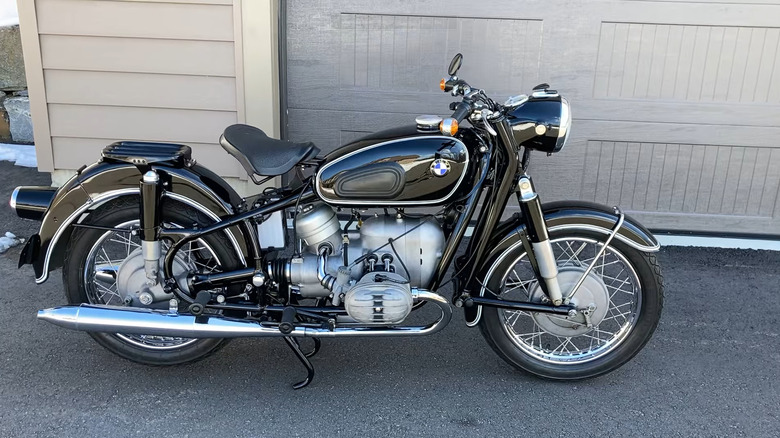
BMW R69S and R50
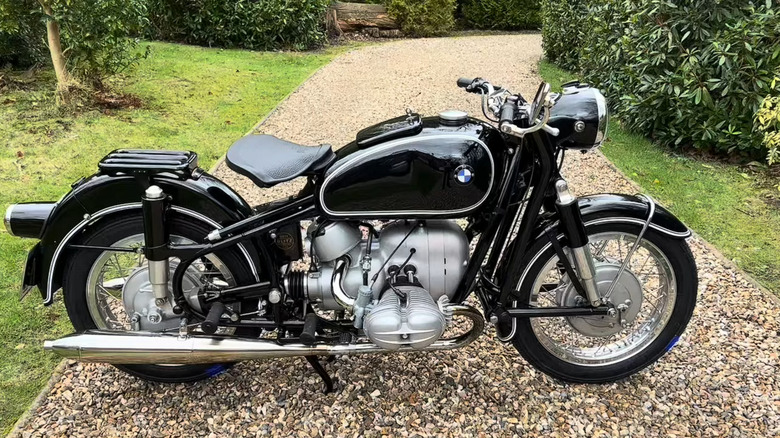
Both the R69S and the R50 are undoubtedly among the coolest BMW motorcycles ever built, and not least because they have their origins in the German military complex. To begin with, the R50 came out in 1955, featured a 494 cc, twin-cylinder engine, and clocked in at a total weight of 429 pounds. It had a top speed of around 87 mph (140 kph) and there was also a version of it that came equipped with a sidecar. Total power output for the bike stood at 26 hp coming in at an okay 5,800 rpm, and units sell for around $20,000 today if and when they become available.
Somewhat rarer is the BMR R69S, which could reportedly reach speeds of more than 100 mph. It debuted at the very end of the 1950s and remained in production until 1969, which is kind of poetic when you consider the name. For its part, the R69S came with a 594-cc, two-cylinder engine that made a whopping 42 hp and featured a rough-and-tumble shaft final drive. For the uninitiated, some of the benefits that shaft final drive transmissions (versus chain units) have are that they are durable and low-maintenance but also harder to replace. Given that the R69S was built to be rugged, the choice of shaft transmission — which might have seemed odd, given that it was a light, long-distance utility bike — actually makes a lot more sense. Today, R69S units can easily cross the $30,000 mark when going to auction.
Moto Guzzi 500 cc
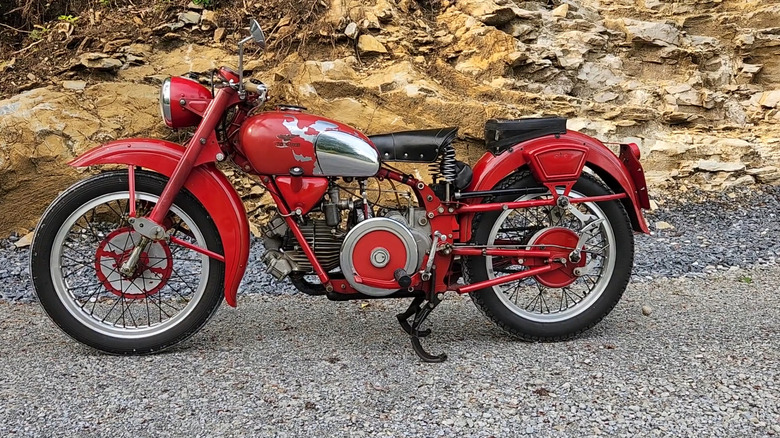
Another bike that comes to us from across the pond in post-war Europe is the 500 cc from the Italian heritage brand, Moto Guzzi. There will be no prizes for guessing the engine size correctly, because the clue is in the name: It shipped with a half-liter engine that spread its displacement across four cylinders. The power unit in the lineup was mated to a four-speed transmission and featured shaft final drive. Also, the name "500 cc" implies the base model of the lineup, though there were a number of different body-types available at the time, such as a sidecar-optioned version.
It's unclear whether these upgraded body types were manufacturer or dealer options, but there does seem to be a decent number of them floating around. Pricing data for this bike when new is not reliably available; many asking prices touch the $35,000 mark when sold on the aftermarket in late 2025 and early 2026.
Standout features of the Moto Guzzi 500 cc include the fact that the suspension was a Guzzi in-house product, being a linked fork unit at the front. Also, the engine had dual overhead cams, which was not typical for the era. As with most bikes of this time, it was considered a "works" machine, meaning it was intended for racing and was developed in part by the company's motorsports division.
Vincent Black Shadow
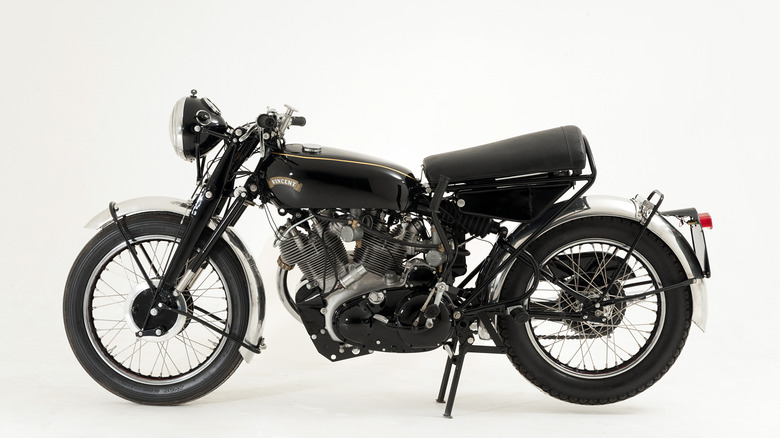
Made by a company from the UK called Vincent, the Black Shadow routinely sells in the high-five-figure range at auction, and it's easy to see why it's so desirable. First and foremost, it came with a displacement figure of one liter (998 cc) at a time when other makers' mainstays (like the BMW R50 and R69 from above) were shipping with half-liter displacements, or at least somewhere in that range. Couple that with the fact that that liter of displacement came about via a V-twin engine, which is a layout known for its distinct burbly rumble that can be heard half a mile away, and the Vincent Black Shadow already had the makings of one of the most desirable bikes of the era.
Additionally, the engine was actually a part of the frame, which reduced the amount of frame tubing, ending up in reduced weight. Heck, if a brand released a cruiser with those specs, and the all-black, no chrome, no shiny bits aesthetics of the Black Shadow today, it'd probably be a success even now. However, the real talking point for this bike was its top speed, which hovered north of the 125 mph mark. Now, the top speed of a motorbike naturally depends on several factors, but none of that stopped the Black Shadow from becoming the world's fastest production motorbike when it was launched. All that is why units for sale can easily touch the $60,000 mark today.
MV Agusta 500 GP
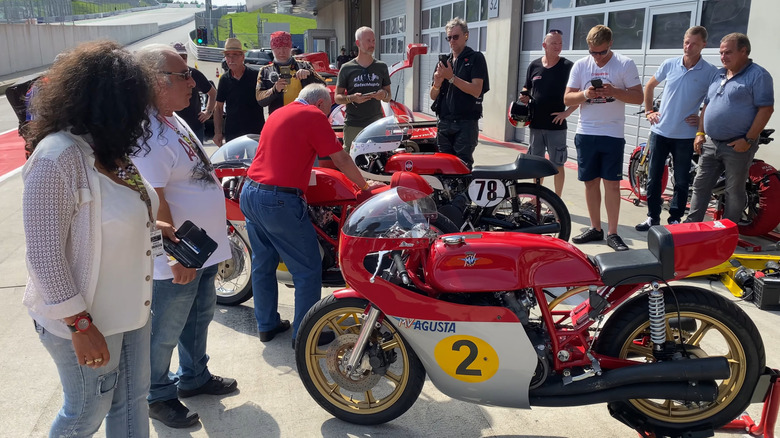
Up until now, all the motorbikes that we have listed have been so-called mass-market consumer models. In other words, if you had the money, you walked into a dealership, put down a deposit, and ordered one to your specs. However, the 500 GP was not such a bike, being primarily developed for racing in the Moto Gran Prix — often abbreviated to Moto GP — by the incredibly expensive motorbike brand MV Agusta.
For those wondering, the MV in the name of the brand is an abbreviation of "Meccanica Verghera" – with the first word meaning "Mechanics" and the second being the name of the place where it was founded. Coming back to the 500 GP superbike, it shipped with a massive six-cylinder engine that displaced 500 cc and made about 75 horsepower. It was clearly an iteration of the MV Agusta four-cylinder bike from earlier in the 1950s, and had the same displacement too.
The motorcycle manufacturer found extreme success in motorsport, mainly through its 500 cc variants of bikes (four and six-cylinder both). In 2009, a bike from this series (a four-cylinder older version) came up for auction, and ended up getting a valuation of around $150,000 at the time, putting it firmly amongst the most expensive ever sold by any metric. In fact, the legacy of MV Agusta racing runs so deep that the company re-released one of their most iconic engines (the 500 cc tri-cylinder) as a modern variant about a decade ago.
Moto Guzzi Otto Cilindri
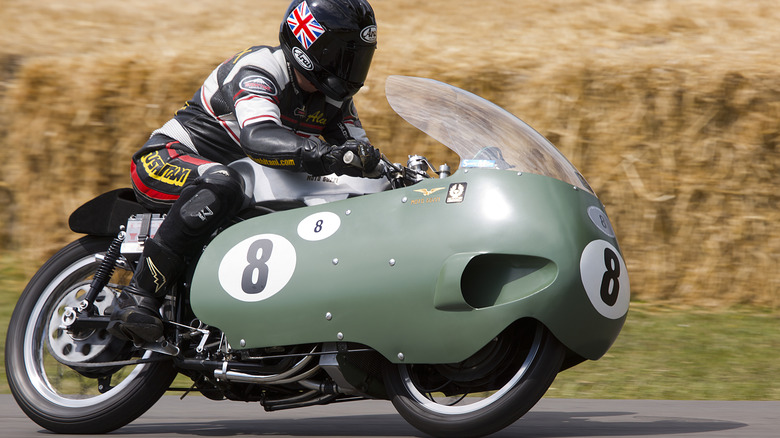
If you thought having a high-cylinder motorbike was limited to the Honda Gold Wing of modernity and the MV Agusta 500 GP that we just covered above, then think again. Around the same time that MV made a six-cylinder, Moto Guzzi decided to distinctly Americanize their offerings too.
By that, we mean that the company really subscribed to the trope of bigger is better, no replacement for displacement, and all similar lines pointing to more cylinders and larger engines. The name is taken from the engine; Otto Cilindri means "eight cylinders" in Italian, and that's exactly what the bike had, getting a net displacement figure of 499 cc with a top speed of 171 mph. If you're wondering what kind of witchcraft the company did to have eight cylinders displacing under half a liter, we did the research.
That displacement was achieved in large part thanks to the bore and stroke dimensions of 44 mm and 41 mm, respectively. While we couldn't find reliable sources for the piston sizes, they must have been tiny to stay under the class limit. While original models of the Otto Cilindri would be moonshots to find today, even replicas shatter expectations. So you'll never ever see one for sale; even replicas command extremely high prices. One tribute model sold in 2016 for the eye-watering sum of 240,000 Euro (more than $280,000 USD), and, considering the heritage, it's a fair price to pay.