

Why Your Car's Speakers Might Sound Better Than Your Home Audio Setup

For some, a joyride is only as good as its soundtrack. Naturally, that's improved when your car's sound system sounds fantastic — which a lot of car stereos certainly do. So much so that depending on your home audio setup (and car), you just might prefer using it to listening from the comfort of your own home.
But why is it so often the case? Well, the sound quality found inside your car is really the result of a cocktail of different things — and it's not just about the prowess of your speakers themselves, although that helps. Unlike your living room, office, or wherever you keep your home audio setup, your car probably has the benefit of being designed with the best audio experience in mind. That means that everything from the placement of your speakers to the materials used to build your car's interior is selected and designed carefully to create the optimal listening environment, especially on higher-end models.
That's a stark difference from what the average home audio setup is like. Even a household room with the best surround sound system and plenty of acoustic padding probably wasn't originally designed to be the ideal audio haven. There are good odds that there'll still be a reflective surface somewhere that messes with your room acoustics, even if it's just a coffee table, sideboard, or shelves. Admittedly, it won't always be a better experience to listen in the car. If you can hear a lot of road noise from outside or have a particularly swanky home set-up, then you might feel the opposite. But, the way that cars and vehicle audio systems are designed means that they can produce some surprisingly impressive effects.
Your car's internal acoustics and layout will shape its stereo's sound

Sound travels differently depending on a lot of factors. For example, how close you are to a speaker impacts how quickly — and how much — sound you'll hear at a time. As a result, speaker placement and position are an important part of any audio set-up. In a regular, brick-and-mortar room, you can really only work with what you've got, even if a room's layout isn't ideal. Removing a pesky wall isn't exactly a renter-friendly home renovation, and for many, it could be overkill to do all of that just to improve your audio. Meanwhile, when it comes to cars, engineers can fine-tune exactly where your speakers should go for optimal listening, with speakers placed in almost any direction or location required.
The materials used to craft your car also play a fundamental role in deciding exactly how good (or bad) your speakers sound in there. Generally speaking, for the best sound possible, you want it to be as well isolated as possible. That means that you're getting the most of your music without it leaking out too much, and without anything other outside sounds seeping in to muddy things. Cars are already typically designed to block out noise and or other vibrations, as road surfaces, engines, and even spoilers can produce a fair amount of sound themselves. In turn, this gives your car speakers a chance to shine in a better acoustic environment than you might be able to capture in your own home.
Software and immersive audio technology can also improve your car's sound quality
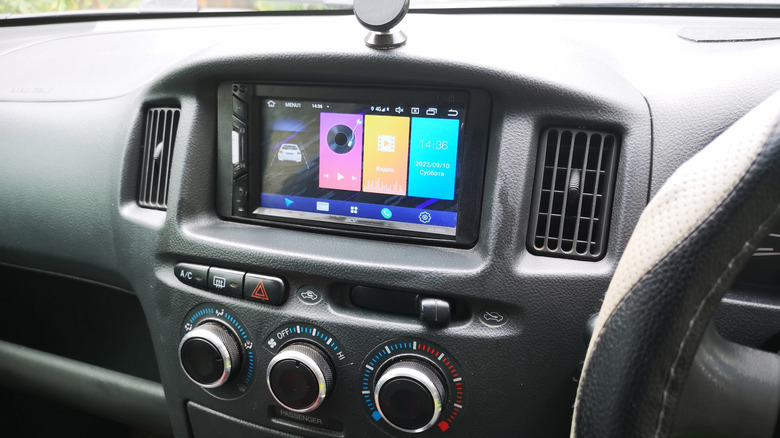
Of course, finding a great sound isn't all about hardware. It's about software, too. Much like the speaker hardware and any acoustic treatment that's built into your car, your car's software is also likely to be tweaked to fit your vehicle's exact needs to create a pleasant listening experience. Meanwhile, your home audio setup's software can only be designed based on an average room or ideal conditions.
One way that software could make your car speakers sound better is through equalization. Equalization can go a long way in deciding how your stereo is going to sound, as it allows you to tweak, boost, or reduce frequencies to make sections of audio sound louder or quieter, depending on your taste. Equalizers aren't specific to car stereos — whatever audio setup you use at home probably has one built in — but they will be tuned for your car's layout and design, meaning they can play a large part in making your car's speakers sound so good. Plus, it leaves a lot of room for customization if you so wish.
Besides equalization, some cars use other types of technology that could make your car speakers sound nicer. Surround sound audio technologies like Dolby Atmos are an example of this, with a long list of automakers like Bentley, Hyundai, and Audi integrating it into their vehicles' audio systems. Dolby Atmos spatializes audio by making it move around a set number of speakers, with the intention of making audio feel more immersive and sound clearer. As a result, your car speakers just might be getting an extra lift that your home speakers aren't. Unless you have a suitable surround sound setup at home, that is.