

3 Time-Honored Car Practices That Don't Make Sense Anymore

Owning your own car is a point of pride for many Americans. Most of us proudly remember our very first car, whether it was a budget-friendly clunker you affectionately named Dopey (we may be speaking from experience here) or a dependable, safe (i.e. slow!) and fuel-efficient parental pick. As we get older, cars can be a status symbol or simply a safe way to get to work or to tote our kids around to games and school. Regardless of how we view them, however, proper interior, exterior, and mechanical maintenance is undeniably essential.
In the early days of the horseless carriage, owners not only needed to know how to drive their car, but how to maintain it as well, since repair shops could be few and far between. In time, gas stations became more than just a hub for fuel. Drivers would bring their cars in to fill the tank but also to get a new tire or the oil changed, or to have the engine checked out. By the 1950s, cars were more complicated and required more care than the typical gas station attendant could provide. Car owners began taking their prized automobiles to mechanics that were specially trained and educated in maintenance and repair.
Today, the landscape has changed again. Vehicles are not only safer, they're more like computers on wheels. It makes sense that the way that we care for and maintain our vehicles has also changed. Here are three traditional practices that have become relics of a bygone era.
Warming up the engine
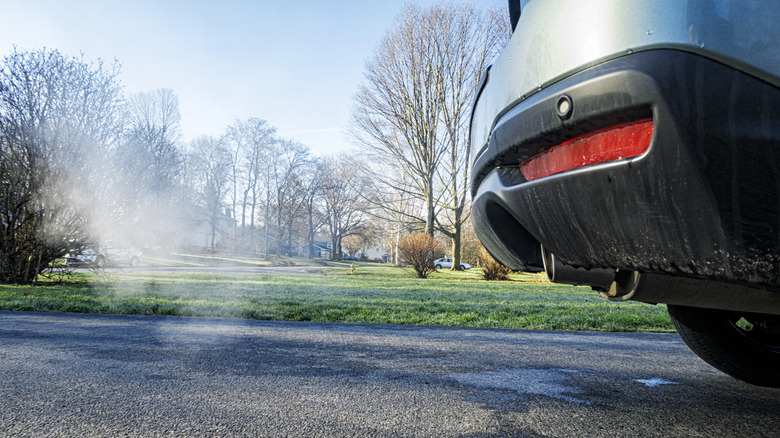
Many of us still warm up our vehicles on a cold winter's day, of course, but that is typically meant to help heat up the cabin interior for comfort or to defrost the windshield, it's not a necessary step for the engine. It was a different story when cars had carburetors, though. You've probably heard the term associated with cars but unless you're a gearhead, you may not know what it means.
Cars used to have carburetors to blend air and fuel to hit the right ratio. Drivers would warm up the engine to get that right mix of air and fuel before they began their drive, otherwise the car could stall. This all changed in the mid-1990s, however, with the rise of fuel-injected engines. Modern cars don't have carburetors, eliminating the need to warm up the engine.
Today, allowing your car to sit with the engine idling mostly just burns fuel unnecessarily, though it may be a good idea if your vehicle has sat for a long time without being used. Modern cars have oil pumps that quickly deliver oil to moving parts, but this process is typically completed in seconds, not minutes. If you start your engine to warm up the cabin, be aware that idling quickly consumes fuel and can also cause additional wear on your engine.
Oil changes every 3,000 miles
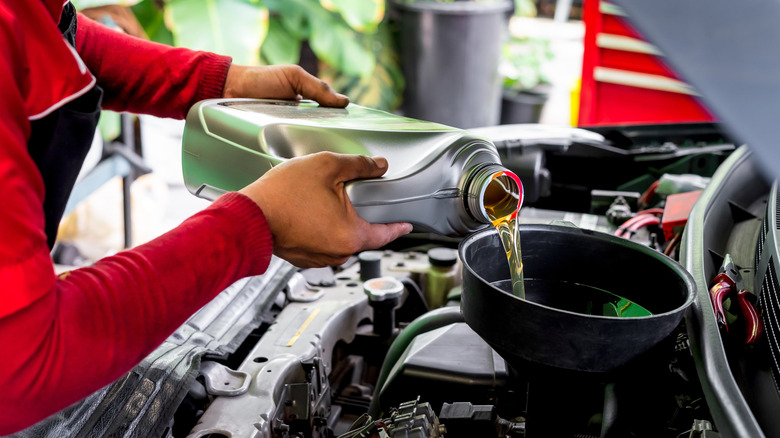
If you're of a certain age and your dad or another trusted adult taught you everything you know about cars, you probably learned to change the oil in your vehicle every 3,000 to 5,000 miles. This used to be true — oil changes were necessary more often due to the type of oil we used in cars, how engines were made, and how the oil was delivered. Modern cars now use synthetic oils, which are more refined to resist the build-up of sludge and deposits. This type of oil is more heat-resistant and less volatile, meaning you're losing less oil over time than conventional oil. Modern engines also have fewer gaps between moving parts, and most vehicles have monitoring systems that let a driver know when they need an oil change. This eliminates the need for drivers to stick to a strict schedule, and we typically change our oil every 7,500 to 10,000 miles.
Not only are fewer oil changes a relief to drivers, it's also better for the environment, reducing waste and saving resources. Your owner's manual includes information about the manufacturer's suggested interval between oil changes. You can also easily check your car's oil level yourself using the dipstick. Wait until the engine is off and cool, then open the hood and pull out the dipstick. Wipe it clean, insert it back into the tube, then pull it back out and check the oil level on the stick, which should have an indicator showing the minimum. If the oil is below that minimum mark, your vehicle needs more oil.
Pumping the brakes

Few things are more terrifying than when your car starts sliding on ice or hydroplaning on a wet road. You've lost traction and control of your vehicle, and you could easily end up in a ditch, or worse. If you're an older driver, or a young driver that learned how to drive from an older person, your response in these scary situations may be to pump the brakes.
Pumping your brakes is when you repeatedly step on and off the brake pedal. You may have been taught to do this to keep your wheels from locking up, or it may just feel unnatural to new drivers to keep steady pressure on the brake pedal even when you're sliding. Some drivers might also employ this technique because they're not experienced at gauging the stopping distance, and they're nervous.
The anti-lock braking system (ABS) eliminated the need for this practice, but not everyone has gotten the memo. It became a standard feature on vehicles in the 1990s, and the National Highway Traffic Safety Administration mandated it on all new cars starting in 2013. The ABS system requires steady pressure on the brake, but then it does the pumping for you when it detects that a wheel is going to lock up. So if you're sliding, hit the brake and maintain that pressure. You may feel the brake shudder and jolt under your foot, but that means the system is doing its job to help you maintain control. You can check your manual if you're not sure if your car has an anti-lock braking system.