

The Reason Why Some Gas Station Pumps Are So Much Slower Than Others
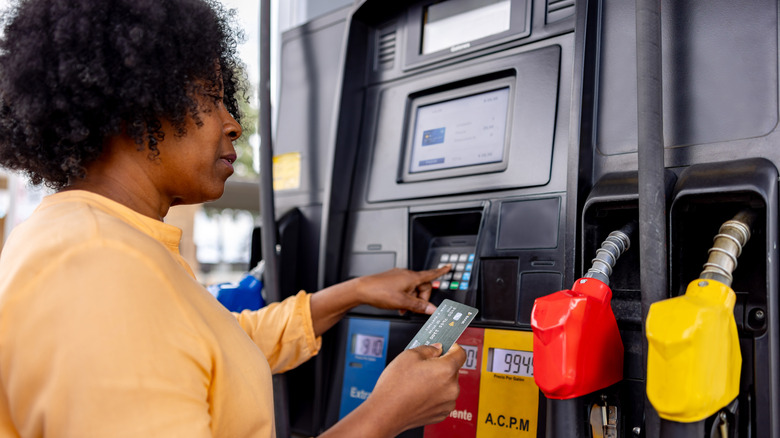
The gas marketplace is filled with lore, and at times, frustration. Pull into a gas station to fill up, and you'll be in and out as the fuel quickly rushes in, without even a moment to doomscroll. Pull into another station, and it seems like you're filling the tank with an eyedropper. It can be a headache. If you've ever noticed this inconsistency — and have been annoyed by it — we understand, and feel like an explanation is needed. While the gas quality itself can vary from place to place, pump pressure can also differ between stations. A painfully slow flow rate is often caused by a clog in the pump's filter. This could be due to negligence on the part of the station owner. The filter change is ideally done every six months or after pumping 100,000 gallons per month.
Another reason why the pump's digital readout climbs at a snail's pace is that the gas itself is compromised. Dirty gas can happen, which clogs the filters faster than regular clean gas might, further exacerbating this issue. A worn-out nozzle is another culprit. Pumps can also just die, like any machine, after a certain period. When a gas pump is near the end of its life, it may show signs of slow flow, along with stalling, a whining noise, flickering power, or difficulty starting. Obviously, you'll want to steer clear of any service station with sketchy pumps exhibiting these issues.
Good pump practice
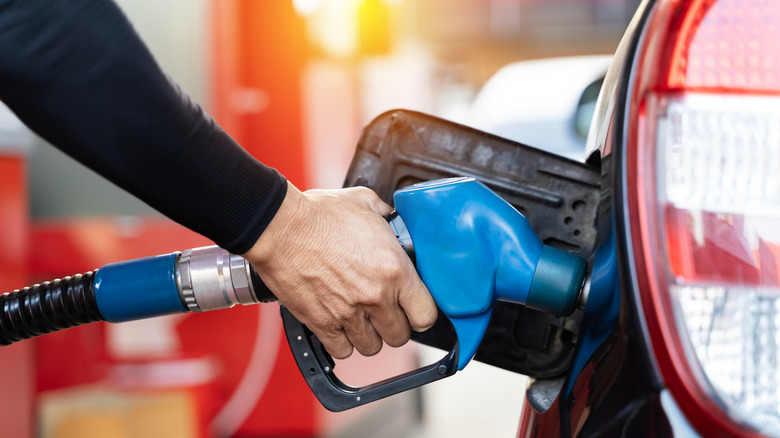
Whether you're pumping cheaper diesel or gasoline, we all know that it's costly to fill up these days. The ongoing conflict in the Middle East certainly isn't helping things. But what we do know is that the process should be fast and efficient, the fuel quality should meet all government standards, and it should be safe. Dealing with a slow pump is part of the joy of owning a combustion-engine-powered car, something Tesla drivers have long forgotten. Of course, powering up electric vehicles has its own set of concerns, too. But a slow pump isn't always a cause for concern; it's just wise to be cautious. To prevent poor-quality gas from reaching your tank via a slow-flow pump, you'll want to be vigilant. Start with a visual inspection of the pump — if the nozzle is severely rusted, the pump has cracked lines, or just looks like it's been through a tornado, maybe avoid it altogether.
If you encounter engine-related trouble and you think it's due to compromised gas, return to the station in question and speak to the manager or owner. If no action is offered, a small claims threat could be the answer. Lastly, check your insurance plan to see if it covers damage caused by dirty gas from faulty pumps. The bottom line: keep your guard up. Fuel Logic noted last year that 1 in 5 pumps in Houston were faulty. Fast or slow pumps, it's a concerning stat, to say the least.