

The iPhone Air Is Thin – But These 5 Android Phones Are Even Thinner
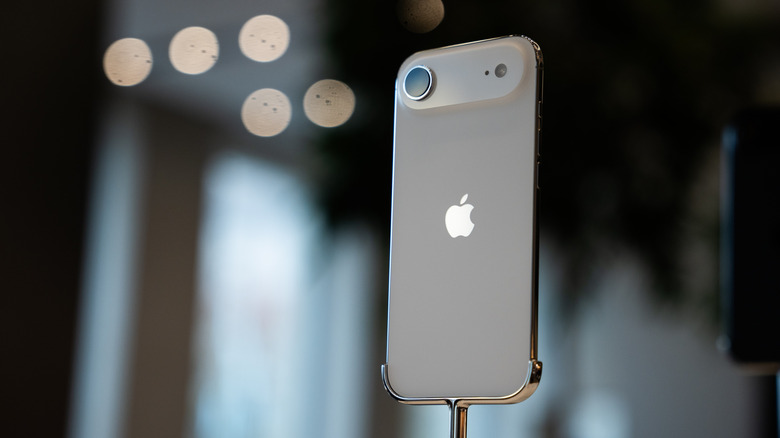
For the most part, Apple has figured out its smartphone lineup. You get a base variant with all the essentials plus two Pro models each year, usually alongside a budget-oriented offering. However, Apple does like to throw in a wildcard now and then. The crowd-favorite iPhone 13 mini is a good example, though it didn't sell well enough to hold a permanent position in the lineup. With the iPhone 17 series, Apple also launched the iPhone Air — a device with a heavy emphasis on sleek design.
At just 5.6 mm thin, not only does it happen to be the thinnest iPhone Apple has ever made, but it is also one of the slimmest phones in general. Despite that, the iPhone Air is surprisingly tough, and did shockingly well in a durability test conducted by YouTuber JerryRigEverything. That said, the iPhone Air does make some notable trade-offs to achieve its sleek looks and 165-gram weight, including a single 48-megapixel camera and a battery that will only last you a full day at best.
While the Galaxy S25 Edge is a direct competitor that comes with modern internals, the iPhone Air has it beat by 0.2 mm. But there are Android phones, both modern and historical, that are actually thinner than Apple's device — although some only get there on technicalities. Here are a notable handful.
Motorola Moto Z
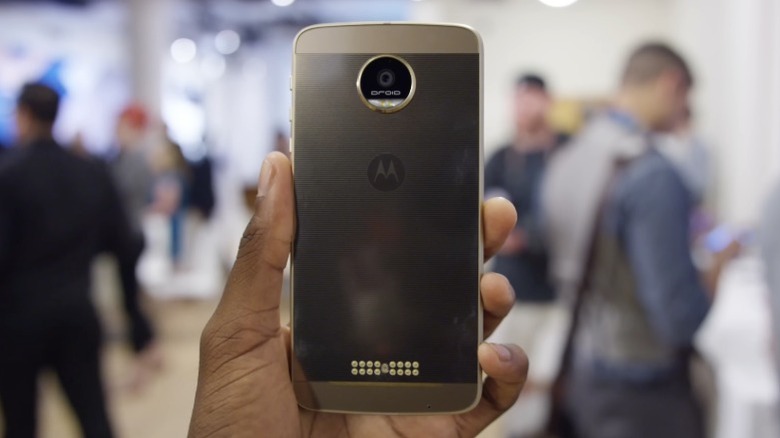
A decade ago, phones didn't all look the same, and manufacturers didn't shy away from throwing wild ideas at the board to see what stuck. The Motorola Moto Z, released in 2016, was a great example of that ethos. Not only was it incredibly thin at 5.2 mm, but it also weighed only 136 grams. The phone was a premium offering, powered by the Snapdragon 820 chip and 4GB of RAM — basically as beefy as smartphones got in 2016.
Unlike the iPhone Air, whose thinness is primarily an aesthetic choice, the Moto Z had a bigger vision behind its thinness — modularity. Though this approach didn't last, the Moto Mods we went hands-on with back then were a breath of fresh air. Moto Mods snapped onto the back of the Moto Z via magnets and expanded the phone's functionality. A few of these mods were simply back shells that added grip or style, but others introduced useful features like an additional battery, bigger speakers, and a projector.
Priced at $499, the Moto Z received generally positive reviews. Its thinness also meant that it was one of the first smartphones to ditch the 3.5mm headphone jack — a few months before Apple did the same on its iPhones. That said, the Moto Z did have an awkwardly large camera bump and a comparatively small 2,600 mAh battery.
Samsung Galaxy Z Fold 7
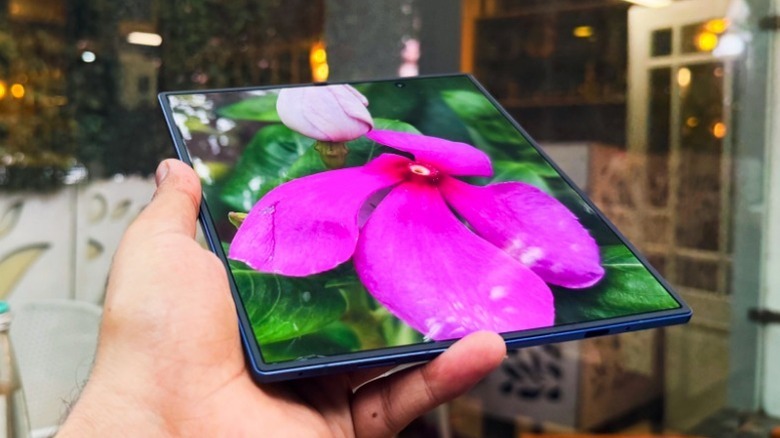
Samsung beat Apple to the punch and released its ultra-thin Galaxy S25 Edge a few months before the iPhone Air. The device has a very similar set of pros and cons, but it is a touch thicker than Apple's offering. If we were to stick with what's technically true, then we'd have to turn to the Samsung Galaxy Z Fold 7 to find an offering that's thinner than the iPhone Air — but that comparison comes with an asterisk.
Since it's a foldable, the Galaxy Z Fold 7 has two different thicknesses. When folded, it measures 8.9 mm thick — impressively, about the same as an iPhone 17 Pro Max. The cover display also features a very usable aspect ratio, which is something the first few generations of foldables struggled with, making it usable even when folded.
The Galaxy Z Fold 7's thickness drops to 4.2 mm when unfolded. This makes it noticeably thinner than the iPhone Air, although it being basically a tablet at this point doesn't make for a one-to-one comparison. In our review of the Galaxy Z Fold 7, we appreciated the Fold 7's design and build quality, calling it "sharp and suave." Moreover, at 215 grams, it actually weighs less than many regular slab phones. Both the 6.5-inch outer and 8-inch inner displays are Dynamic LTPO AMOLED 2X panels that refresh at 120Hz. Powering the foldable is the Snapdragon 8 Elite SoC, with 12GB of RAM and 256GB of storage on the $2,000 base variant.
Samsung Galaxy Z TriFold
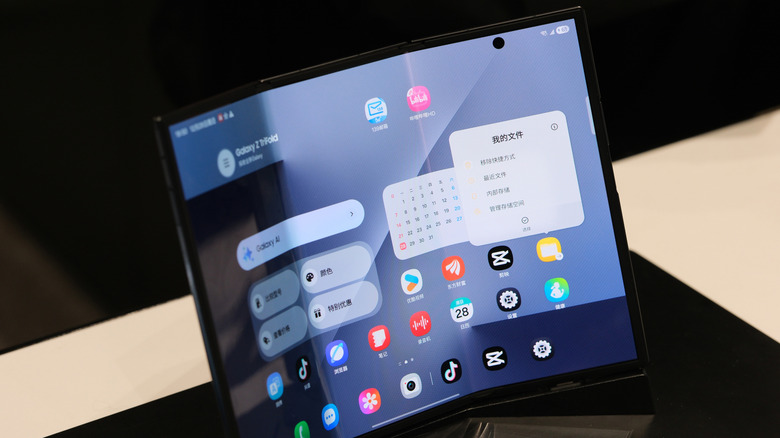
The first-generation Galaxy Z Fold was released in 2019. Since then, Samsung has been refining the design with each generation, unveiling a new model each year. If that weren't enough, Samsung launched the Galaxy Z TriFold in late 2025 — a foldable that, once again, pushes the boundaries of smartphone design even further. The device features a multi-hinge system that allows the 10-inch inner display to be folded in multiple sections. The Galaxy Z TriFold measures at a stunning 3.9 mm when unfolded.
The three sections vary ever so slightly in thickness, but even the thickest section beats the iPhone Air at 4.2mm. Design-wise, the camera module's layout makes the device resemble the Galaxy S26 Ultra when folded up. Like the Z Fold 7, the Galaxy Z TriFold is powered by the Snapdragon 8 Elite chip and 16GB of RAM. Since it supports Samsung DeX without requiring an external display, you can also connect a Bluetooth keyboard and a mouse and use it as a laptop replacement.
Despite being so thin, the Galaxy Z TriFold packs a decently sized 5,600 mAh battery, which should last around a day and a half, according to CNET's review. That said, at 12.9mm when folded completely, the device is definitely thicker than most slab-style smartphones. It launched at $2,900, but Samsung has discontinued production of the device, despite high demand in Korea and the U.S.
Gionee Elife S7
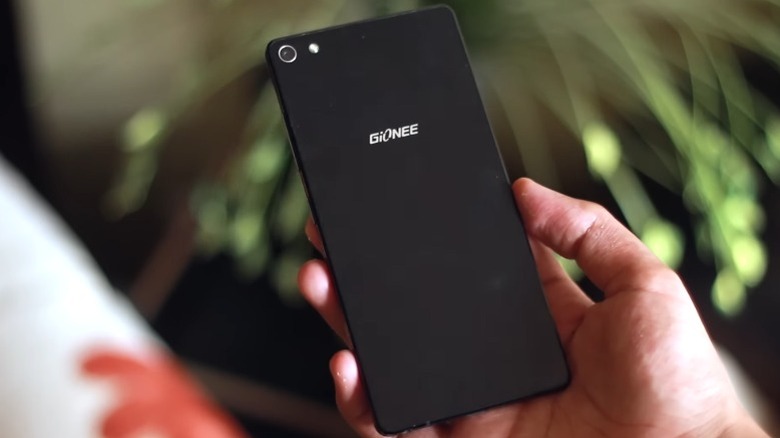
Gionee isn't widely known globally, but it had a good run in its home market in China. Its Elife series of smartphones largely featured sharp aesthetics, with clean designs and slim form factors. However, the Gionee Elife S7, unveiled in 2015, boasted a notably thin chassis even by Gionee's standards. At 5.5 mm, it was one of the thinnest smartphones you could buy at the time. Gionee launched the Elife S7 as a flagship offering in the Indian market, competing against phones such as the OnePlus One and Xiaomi Mi 4.
The phone featured a sleek metal frame and weighed just 125 grams. It also boasted a 5.2-inch Super AMOLED display, 2GB of RAM, and 16GB of storage. Despite how thin it was, the Gionee Elife S7 managed to pack in a 13-megapixel camera without a camera bulge. It was backed by a 2,700 mAh battery and supported dual SIM. Sadly, Gionee filed for bankruptcy in 2018 and was later acquired by Indian manufacturer Karbonn Mobiles.
Honor Magic V6
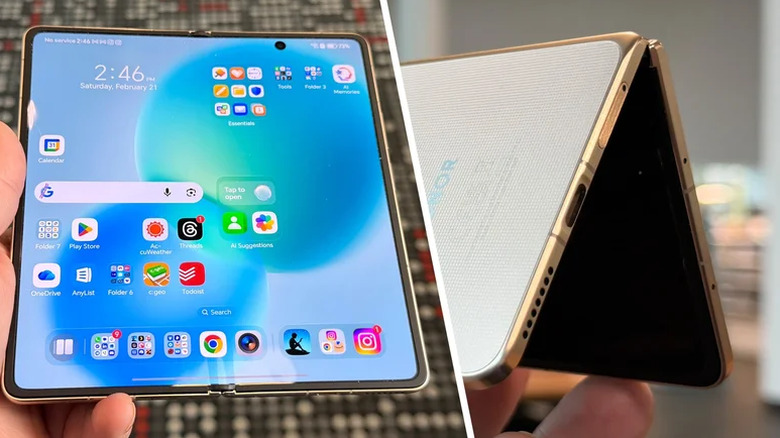
As much as we'd love to see more modern slab-style iPhone Air alternatives, it doesn't seem like other manufacturers are in a rush to release the thinnest phone in the market. Thus, we have to turn to another foldable to find an iPhone Air-rivaling Android phone. This time, it's the turn of the Honor Magic V6, which, when unfolded, is just 4.1 mm.
The Honor Magic V6 is the first foldable that's powered by the Snapdragon 8 Elite Gen 5 SoC. This puts its performance and efficiency scores a touch higher than Samsung's foldables as of early 2026. You get 12GB of RAM and 256GB of storage with the base variant, which is priced at 8,999 yuan in China. That converts to around $1,310, although it will likely cost a bit more when it's released globally.
We went hands-on with the Honor Magic V6 and were impressed by both the 7.9-inch inner and 6.5-inch outer displays. It uses silicon-carbon battery technology, allowing it to pack an impressive 6,850 mAh battery with 80W wired and 66W wireless charging. Unfortunately, at the time of writing, Honor hasn't announced a definitive timeline for a global release; the company has only stated that the foldable will debut in certain as-yet-unspecified markets in the second half of 2026.