

Dodge's Charger Daytona EV Kept Sabotaging My Attempt To Keep An Open Mind
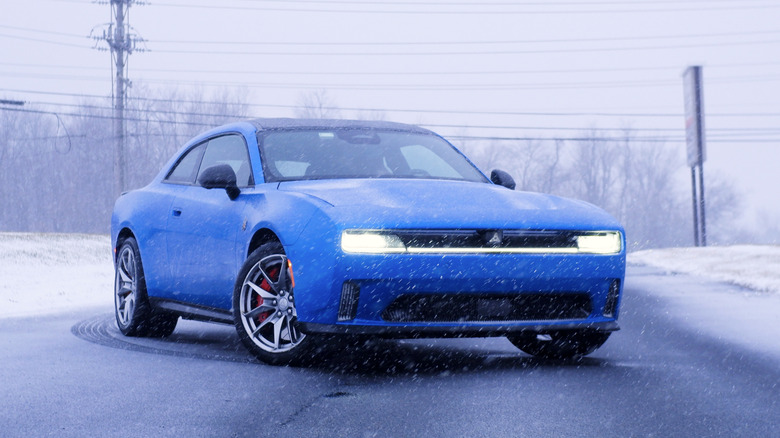
After almost two decades of being the face of Dodge, the Charger and the Challenger as we knew them departed this mortal coil, leaving the Durango (and now also discontinued Hornet) as the only gas-powered cars in the Dodge lineup for a little while. Deep in the halls of Stellantis, an idea emerged to electrify a new Dodge Charger for a new way forward.
The Dodge Charger Daytona was born, and to say it's a controversial vehicle is an understatement. For the stuck-in-the-past crowd, an electric Charger is downright heresy, defaming the great HEMI engine and all she represents. For another crowd–the more optimistic bunch–the Charger EV was a step forward from a brand that might not be known for taking all that many steps forward. That optimism was slowly eroded by reports that the latest muscle EV wasn't all it was electrified up to be, with technical issues rearing their ugly, collective head.
Big, blue, and fast
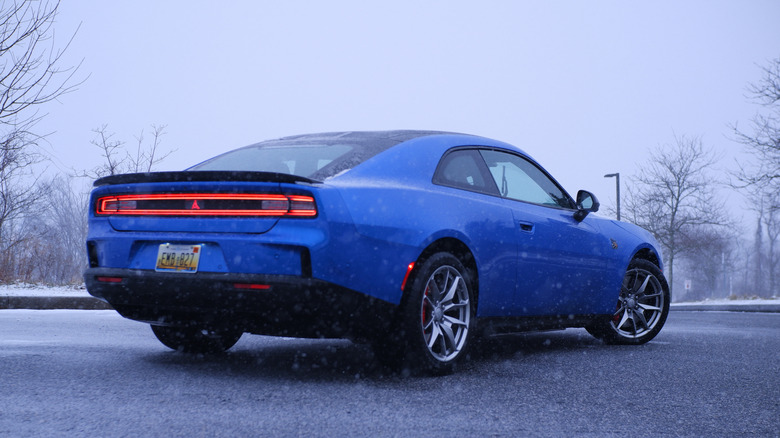
I was in the latter crowd. I was excited about getting my hands on a 2026 Dodge Charger Daytona, so I was fairly impressed when one silently arrived in my driveway. As you will learn, that excitement may have been misplaced.
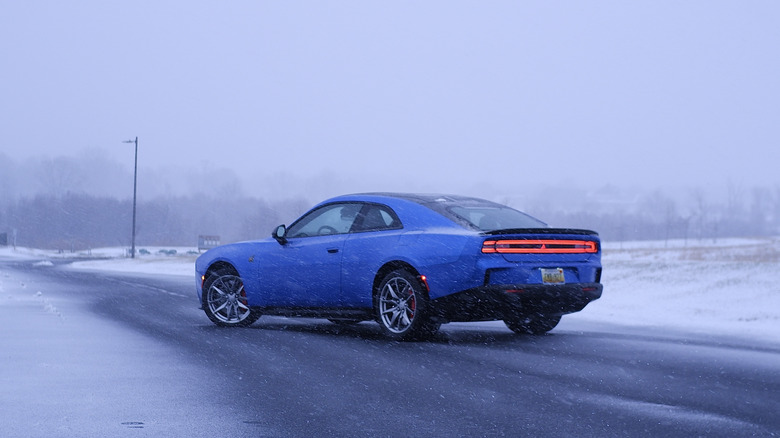
But before I explain my experience with the Charger, let's explain what it is. The new Daytona that I drove is a massive, blue-tinted coupe powered by two electric motors and a 100.5 kilowatt-hour battery that altogether put out a fairly stout 670 horsepower. Dodge says it will do the 0-60 sprint in 3.3 seconds. Range is an estimated 241 miles (which I found to be pretty accurate, unless it was very cold outside). But being big and fast isn't unique to the Dodge Charger: there are electric commuter sedans, trucks, and hatchbacks that can perform identically.
 Alex Hevesy/SlashGear
How is the Dodge Charger Daytona to drive? Well, it's a riot if you can keep the battery charged. 241 miles of range isn't all that much compared to a lot of other EVs, and if it's cold out (like it was when I had the car), you'll be sitting and charging more often than ripping around parking lots and melting tires. The muscle car-ness is complemented by the electric drivetrain and blasting off from a stop light in almost total silence is hilarious. A huge blue missile of a car will always be funny to me.
Demons and electronic gremlins
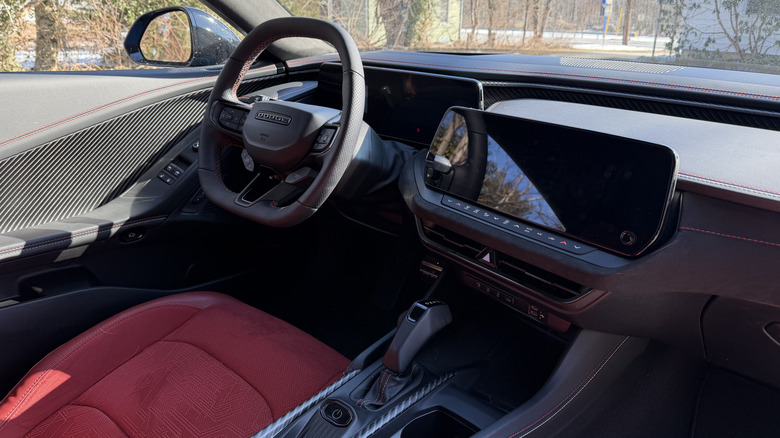
The inside is punctuated by red leather seats in a color that Dodge appropriately calls "Demonic Red." Hellacious imagery aside, the two seats are aggressively bolstered and thoroughly racecar-like. It's quite roomy inside, I suspect because the car itself is really wide. You feel like you're sitting several yards away from whatever passengers you may have in the car.
Beyond the flashiness, the interior is functional (sometimes). The UConnect-powered infotainment screen would occasionally try to fight me and at one point it stopped producing sound of any kind, prompting several factory resets and turning off the car for several minutes until the sound from the radio came back. Not to worry, the simulated exhaust from the "Fratzonic" system never died down, so at least that took priority.
On the fake exhaust sounds, I understand the purpose. It's a funny gimmick to show off, but it got annoying relatively quickly so I just turned it off for the majority of my time behind the wheel.
Dodging reliability
Those problems, unfortunately for me, slowly extended to the rest of the car. Upon pulling into my driveway on the fifth day of my normally seven day test, a large red wrench appeared on the instrument cluster, ominously stating "SERVICE ELECTRICAL SYSTEM" and prompted me to pull over and stop driving. I'm no mechanic, but that doesn't seem good. Fortunately, I was already stationary, so the car did not put me in any real danger.
I also had the same issue with the Dodge's corporate cousin, the Chrysler Pacifica plug-in hybrid. After learning from that debacle, I decided that that 2026 Dodge Charger Daytona was not all that trustworthy. As for the cause of the issue, I can only hypothesize. Maybe it was the cold weather, low battery, or any number of outside factors. But after perusing forums and other reviews, the problem seems to point fingers at Dodge itself. It's a common issue according to what I've been able to research, and a fix requires a trip to the dealership.
Deciding that the Charger probably wasn't going to comply and function as a vehicle, it was picked up early and shipped back to the local Dodge dealership, cutting my test period short.
Hard to recommend
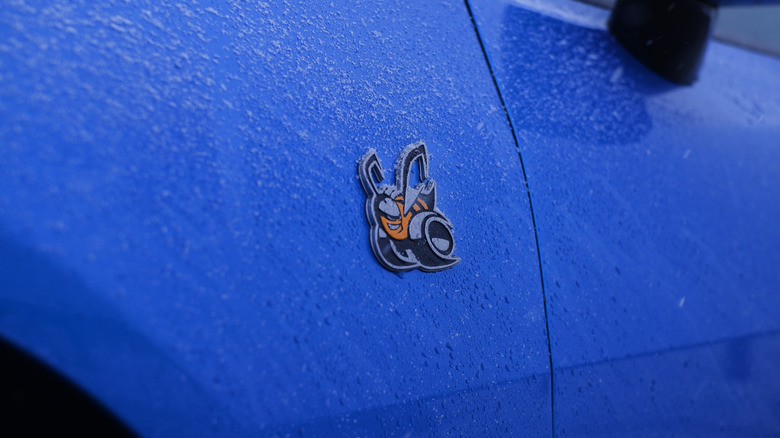
With that, I wholeheartedly can't recommend this car until Dodge either recalls and fixes the issue, or otherwise makes some sort of wide announcement and tweaks the software. (I suspect the gas-powered Dodge Charger is the fix, but that might be my cynicism talking). But, for completion's sake, let's run down what a 2026 Dodge Charger Daytona Scat Pack Track Package will cost you.
The base price is $59,995. The "Bludicrous" paint is an additional $695. The "Customer Preferred Package 25F" that adds more luxury features like ventilated seats, 12-way power adjustments, a power rear-hatch, and rain-sensitive wipers is $4,995; the $1,995 "Carbon and Suede" package gives you carbon fiber and suede accents. The "Track Package" consists of Brembo brakes, suspension tweaks, 20-inch wheels, a drive-recorder, and red brake calipers, for $4,495. The aforementioned Demonic Red seats are $495. Lastly, the sometimes-functional 18-speaker Alpine sound system is $1,495. Add in a destination charge of $1,995 and you get to a final cost of $76,160.
$76,160 in the world of six-figure Rivians, Lucids, and big GM EVs, is pretty average. But, for the sake of your own sanity, buy one of those cars instead. Having driven a large portion of performance-oriented American EVs on the market today, the Dodge Charger is more trouble than it's worth, even if it scores well in the ridiculous looks and hilarity department.