

5 Of The Coolest Discontinued Engines Found In Old American Cars
For decades, American automakers produced some of the best, most legendary car engines ever made by man. Then, those brands proceeded to systemically murder every single one of them in favor of soulless efficiency. After all, there was a glorious (and extended) period in U.S. history where engineers were allowed to build engines on a very simple philosophy: More displacement, more cylinders, more power, and never mind the consequences.
Fuel economy was irrelevant, insurance was nobody's concern except the buyer's, and emissions regulations were not as strict either. All the engines of this time were meant to move absurdly heavy bodies at completely irresponsible speeds, all while making sounds that would eventually be legislated out of existence. Make no mistake, this was needed — stricter emissions controls and better gas mileage benefit the general public — but it's hard not to wax nostalgic about some of these powerplants.
Then, towards the peak of the muscle car era came the OPEC regulations, newer CARB emission standards, and, of course, the two gas crises. As a result, power figures and cylinder counts were slashed across the industry, and we wouldn't see a resurgence till the early 2000s when forced induction tech caught up with the market. By then, all the legendary engines on this list had been well and truly relegated to the history books, becoming remnants of an era when "too much" was never enough and "practicality" was something that happened to other people.
Ford & Shelby's 428 Cobra Jet
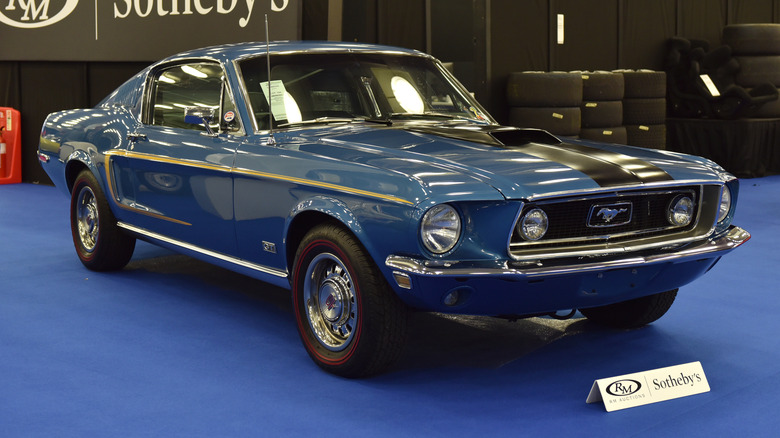
Towards the end of the 1960s, the Ford Mustang was being severely walloped by the likes of the Chevrolet Camaro and Pontiac GTO in a straight line. These, along with various other youth-targeted muscle cars, were out-muscling the Mustang; sales were stagnating. Shortly thereafter, local Rhode Island dealership Tasca Ford specced a special version of the Mustang by mixing and matching some parts from the automaker's performance division to the engine. Pleased with the results of his engine swapping efforts, the dealer showed Caroll Shelby the creation, who then proceeded to use a similar build in various motorsport races over the next two years.
Tasca's car, known as the Mustang KR-8, ended up being so supremely overpowered that the Ford higher-ups decided to offer the specification/tune as a standalone version. Suddenly, the blue oval's pony car was competitive versus GM's best; the rest was pretty much history. Widely considered to be among the best Ford V8 engines made, the 428 Cobra Jet, as came to be known, displaced 428 cubic inches (seven liters). It had an insane-for-the-time compression ratio of 10.6:1, and guzzled copious amounts of fuel through a quad-barrel Holley carb. The power output in the 1968 Mustang with this engine stood at 335 hp, along with 445 lb-ft of torque — we say "in the Mustang" because the 428 CJ would be fitted to a couple other Ford models as well.
Chrysler 440
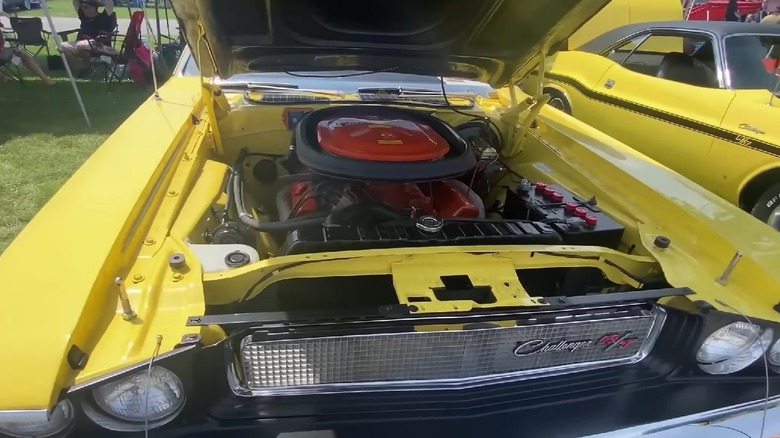
Over the decades, the Chrysler Group certainly came out with some legendary engines — the 426 HEMI and Pentastar V6 spring to mind. However, it was the 440 that made a mark on history like no other, powering cars such as the Dodge Super Bee and Plymouth Road Runner. It's saddening to see what the now Stellantis-owned Chrysler Group has become today, after having seen a heyday that produced the legendary 440. At about the same time as Ford was having its eureka moment with the 428 Cobra Jet that we just looked at above, Dodge decided that it needed an engine to sit below the 426 Hemi.
There was already a 440 engine with quad-barrel carbs in Dodge and Plymouth vehicles, but this one received a number of updates. Foreshadowing-ly named the "440 Six Pack," the updated 440 came with a hexa-barrel carburetor. During regular use, the engine fed all of its air through a 350 cubic feet-per-minute carburetor mounted squarely in the center of the engine bay, but two other supplementary carbs would also kick in for added performance at times.
The intake manifold on the engine was also completely redesigned, as were several internal components like the tappets and camshaft. All the changes resulted in the eye-watering new power output of 390 hp and 490 lb-ft of torque. Originally offered on the Plymouth Road Runner, this redesigned 440 engine would eventually become an option on the Plymouth GTX too, along with a couple Dodge models as well.
Pontiac 400 Firebird
As we've already established, the muscle car rivalry was heating up to an unfathomable degree towards the end of the 1960s. Today, we really only have the choice of the Camaro and the Mustang, as the Challenger as we know it is no longer an option. However, back in the 1960s, the catalog was so vast that every car had to have something unique about it if it wanted to sell, especially to the younger crowd. Pontiac, for their part, thought that the best selling point was to give the Firebird a massive, supremely powerful engine.
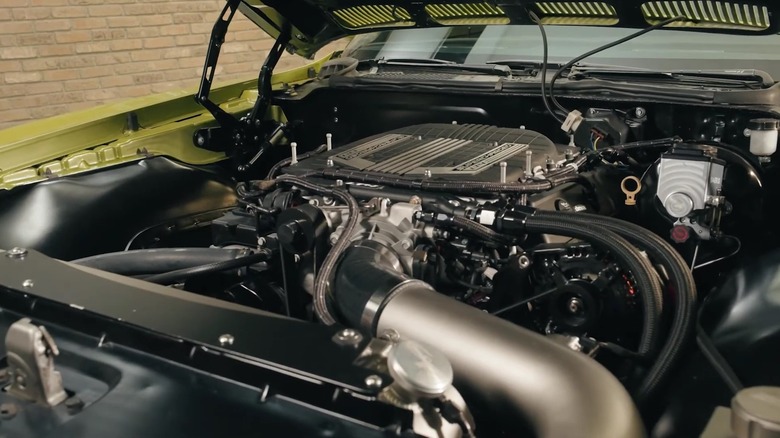
This would come to be known as the Firebird 400, so named for its gargantuan displacement of 400 cubic inches, or 6.6 liters, across eight cylinders. Final power output for the engine from GM's Pontiac stood at 330 hp and 400 lb-ft of torque, though some custom builds have been able to extract about 540 hp along with torque that goes well into the mid 600 lb-ft range.
An interesting story about the 400 that was used in the Pontiac Firebird was that the development timeline was a bit rushed, so engineers just took the Pontiac GTO 400 engine and modified it to reach the power output we stated earlier. However, the Firebird 400 models also came with higher-rated transmissions and some non-engine upgrades, and the large engine actually out-sold the V6 versions that were also offered on Pontiac's screaming chicken. It's also worth mentioning that there were certain versions of the Firebird 400 that came with the legendary Ram Air upgrades installed, which GM fans will no doubt appreciate.
Chevy 454 LS6
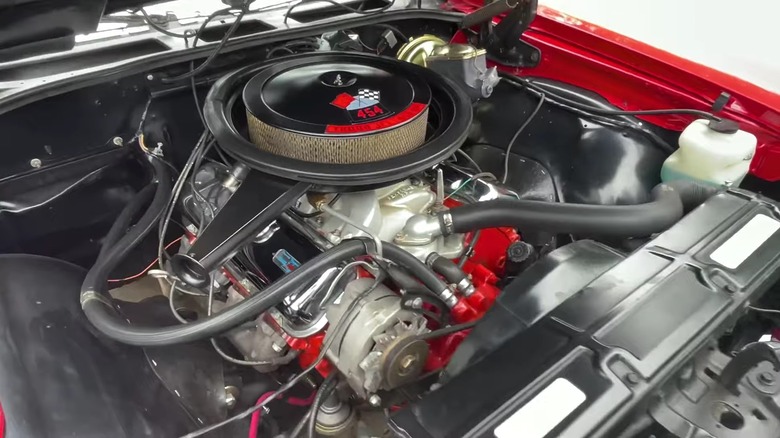
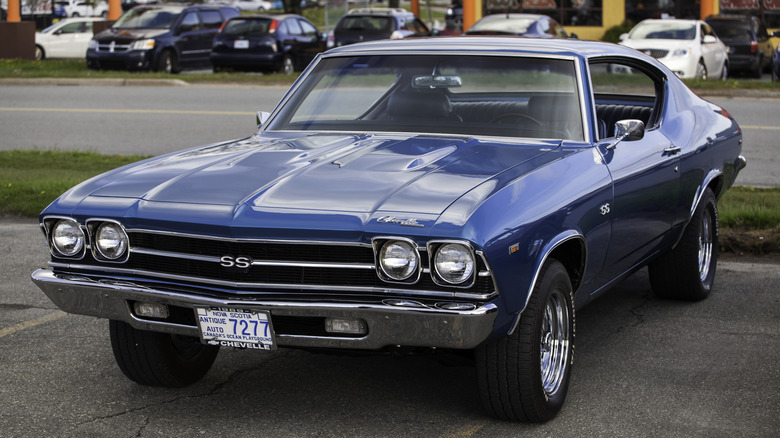
Here, we'd like to mention that we're talking specifically about LS6 versions of the Chevrolet 454 engine, though each of the variations (LS4, LS5, etc.) was legendary in its own right. The LS6 454 rose to fame after being used in the Chevelle SS muscle car range in the early 1970s, where it made a lot of horsepower and decent low-down torque. Later that decade, the back-to-back gas crises and stricter environmental laws would result in the entire auto industry dialing back on power in favor of efficiency, but not before Chevy made the masterpiece that was the LS6.
Engineers didn't make the engine from scratch, instead opting to heavily modify and tune the proven eight-cylinder 396 platform. The bore and the stroke were increased, its compression ratio was tweaked, and several components were upgraded, the most notable of which was the carburetor. Final power figures for the higher-output LS6 variant (the LS5 made less oomph) stood at 450 hp along with 500 lb-ft of torque, which made the Chevelle SS in 1970 the most powerful muscle car on the market based on horses alone.
Other than in the Chevelle SS, the LS6 engine was also offered (as an optional upgrade) in the convertible version of the Chevelle, and a couple other models from Chevy too. It's also worth mentioning that the 454 big block engines from the Old Bowtie are probably among the longest-running engines ever made, having been in production for well over five decades before being discontinued — a remarkable feat.
Chevy 396 L78
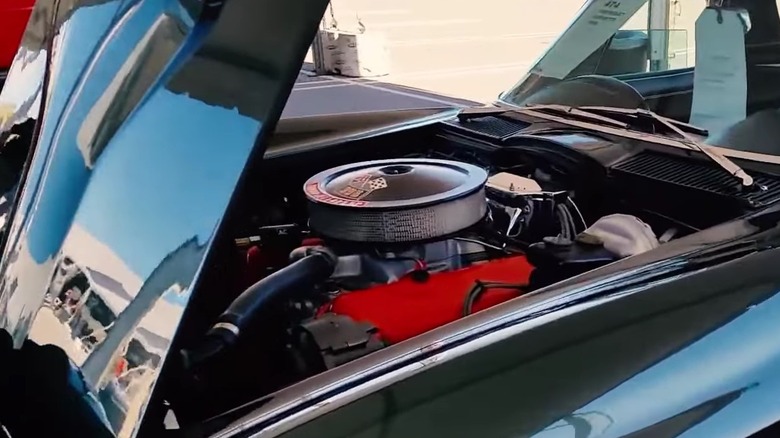
The Chevrolet 396 family of engines is also legendary in its own right, and not least because it is this engine that would eventually turn into the 454 LS6 that we just looked at above. With roots in the Chevrolet Nascar program (technology was trickled down into the road going engines), the 396 first made its debut in the middle of the 1960s, though various different versions would be released down the line.
The one we specifically want to talk about is the L78, which was the version of the 396 that was used in the Corvette of the times. It was one of those classic muscle car engines that made lots and lots of torque — 415 lb-ft to be specific, along with an equally impressive 375 hp. However, that horsepower figure is disputed in a good way; many independent tests confirm that the L78 consistently made more hp than the stock rating claimed by Chevy.
We'll remind readers that 396 cubic inches was 6.4 liters. This wasn't exactly small, but it was pretty standard for the time; that makes these power figures quite astounding. An interesting tidbit about the L78 upgrade package on the Chevelle SS specifically is that it wasn't mentioned anywhere in brochures or pamphlets. Back in the day, if you wanted one of these, you had to know to fill out Chevrolet's secret form, mail it to your dealer, and mention the specific product code to get this trim.