

BMW's New i3 Is More Than Just An Electric 3 Series
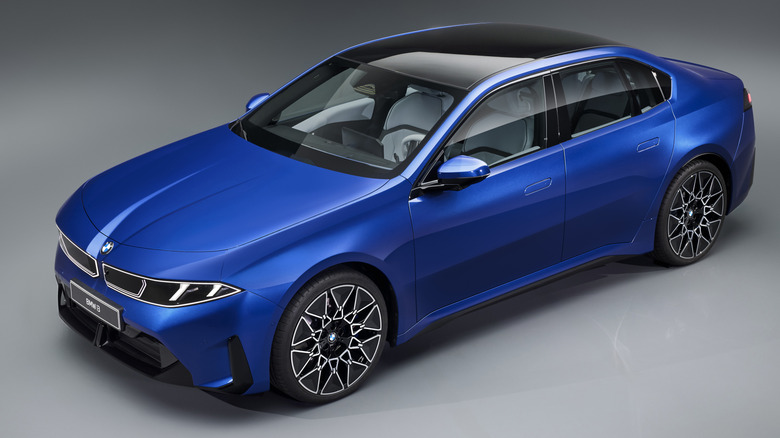
It may be part of the luxury car establishment today, but BMW is well acquainted with what the kids call disruption. In the 1960s, on the brink of bankruptcy, it came up with the Neue Klasse, German for "new class," a family of cars that redefined the concept of high-end automobility by leaving excess behind. And just over a decade ago, it became one of the first established automakers to launch an electric car with the i3, a radical rethink of not just the powertrain, but the entire vehicle.
That emphasis on efficiency and precision comes to the fore again with the new i3, part of the new Neue Klasse (call it Neue Klasse inception) kicked off by the iX3 crossover. It's not another crossover, or an oddly shaped hatchback like the original i3, but a sedan that serves as an all-electric counterpart to BMW's bread-and-butter 3 Series. Arguably the core of BMW's identity, the 3 Series is also a direct descendant of the original Neue Klasse. So the new i3 marries new with newer.
A new era of design
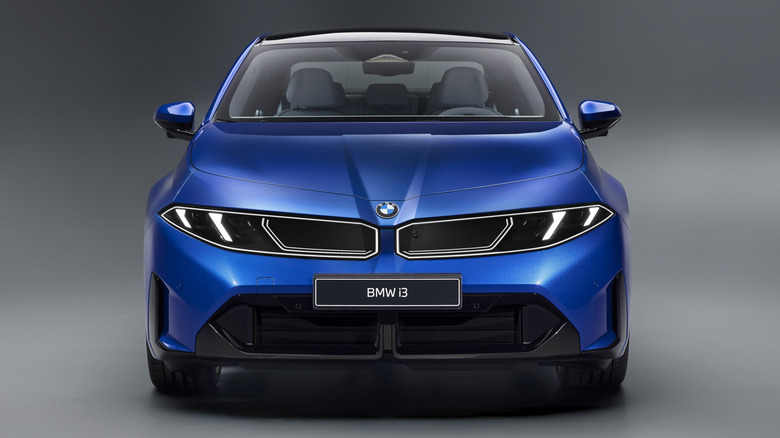
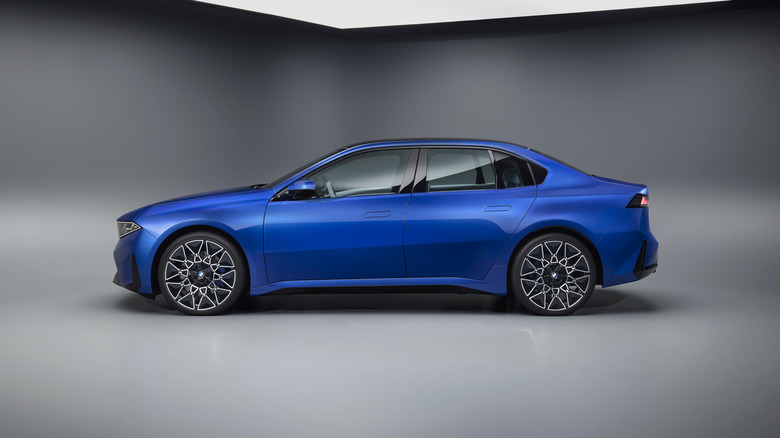
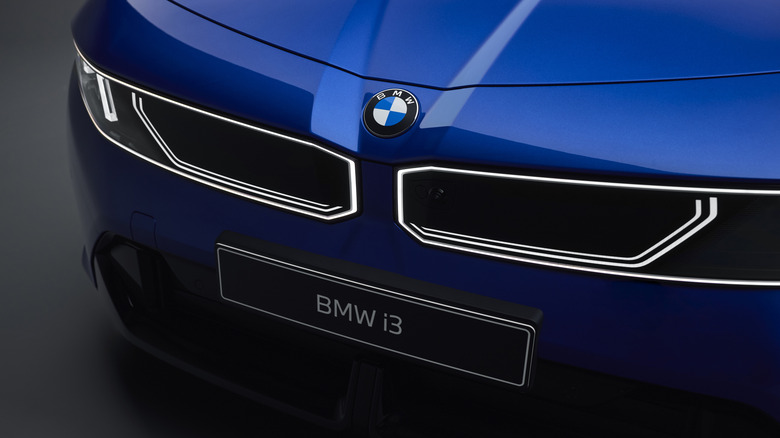
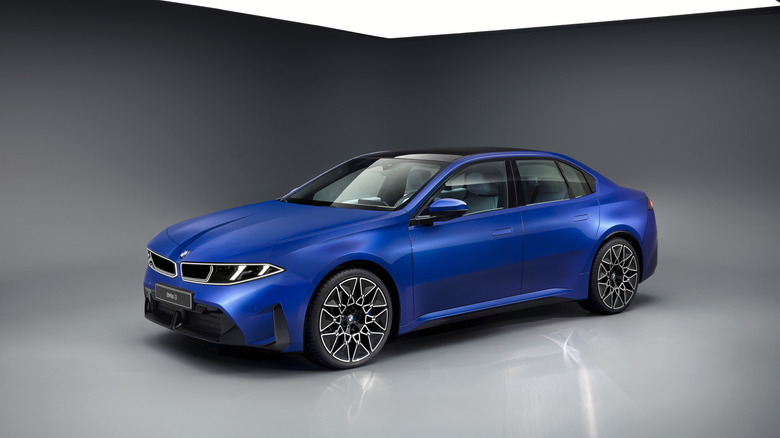
Seeing the i3 roll into the spotlight for the first time last week, after BMW invited me to witness its big unveil, I was glad to see that it wasn't just a sedan version of the iX3. Its front end is lower, the traditional BMW twin-kidney grille evolving into twin illuminated halos. The iX3's boxy fenders are smoothed out, and the windshield is more laid back. Because while BMW was once known for designing cars to the maxim of "same sausage, different lengths," it's now trying to make each model more individual.
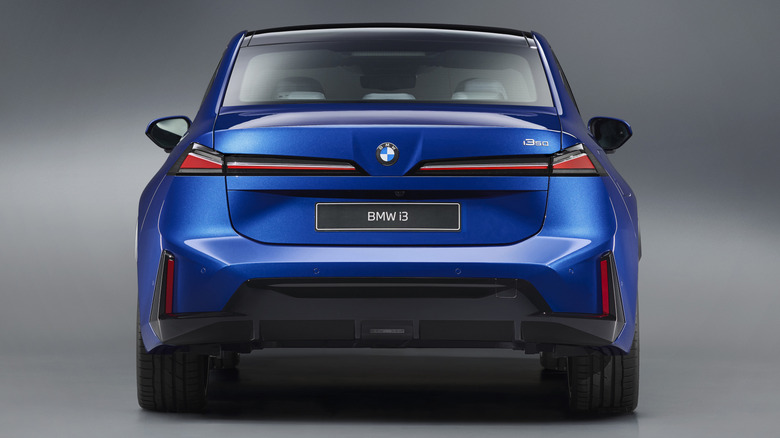
"Each one of our cars will have its own distinctive character," BMW design boss Adrian van Hooydonk told SlashGear and other assembled media at the i3 premiere. He said the iX3's small vertical kidneys were tried on the i3, but the look was "too retro" and insufficiently sporty. Designers also moved the taillights from their original position on the Vision Neue Klasse that first teased the i3 in 2023. Otherwise, the finished product is remarkably close to that concept.
The original i3 was distinctive, but it clearly wasn't the future of BMW. This time around, the EV will define the look of the future 3 Series, just as today's 4 Series, 5 Series, and 7 Series pair gasoline and electric powertrains with the same styling.
"We want to change the look and feel of the entire brand and leave the choice of powertrain to the customer," van Hooydonk said. But don't expect the next gasoline 3 Series to share a platform with the i3.
Engineered to be electric
That's because the i3 truly is built around its battery pack. Automakers love to talk about dedicated EV platforms, but BMW is putting its money where its mouth is here.
Like the iX3, the i3 dispenses with battery modules with a lighter, efficiency-boosting cell-to-pack design. And instead of just using the pack to reinforce the body shell, it's an irreplaceable part of that shell. In the i3, the pack is the floor. Take it away, and you'll be driving Fred Flintstone style. This saves weight, allows for a flatter underbody that improves aerodynamics, and maximizes torsional rigidity, according to BMW. And the cells contained within are cylindrical, with 20% greater energy density than the previous-generation prismatic cells, BMW claims.
Engineering like this helps the i3 live up to its Neue Klasse billing. BMW already has a full lineup of EVs based on combustion-car architectures, so it's impressive to see this venerable automaker start over in the name of building better cars. It's channeling the spirit of the original Neue Klasse, while proving that it's not above learning lessons from the likes of Tesla, Rivian, and Lucid: all cylindrical-cell proponents.
A balance of tech and ergonomics
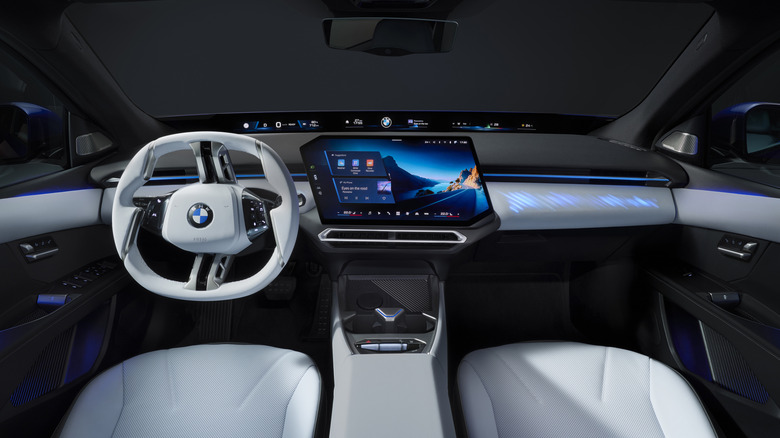
As another member of the Neue Klasse, the i3 has a door-to-door panoramic screen at the base of the windshield and a 17.9-inch freestanding touchscreen. The former is purely a display, smearing information that normally go in the instrument cluster in a thin band like matter circling a black hole, while the touchscreen and steering-wheel touchpoints are where the controls live.
The steering wheel itself has two vertical spokes, with touchpads sticking out of the hub on its horizontal axis. The unusual design allows the wheel to be small enough to avoid blocking the panoramic display, and means drivers don't have to bend their thumbs to use the controls, van Hooydonk said, adding that he's personally confirmed that it works fine while drifting.
I didn't get to put van Hooydonk's claim to the test, but riding in an iX3 to the reveal, the logic of the panoramic display was apparent. It's much thinner than the similar displays used in Lincoln SUVs, so it's easier to keep the road ahead and the screen in your line of sight at once. It does require a deep dashboard though, so you don't get that cockpit-like feeling of traditional driver's cars.
Transplanted iX3 powertrain sets the stage for something more
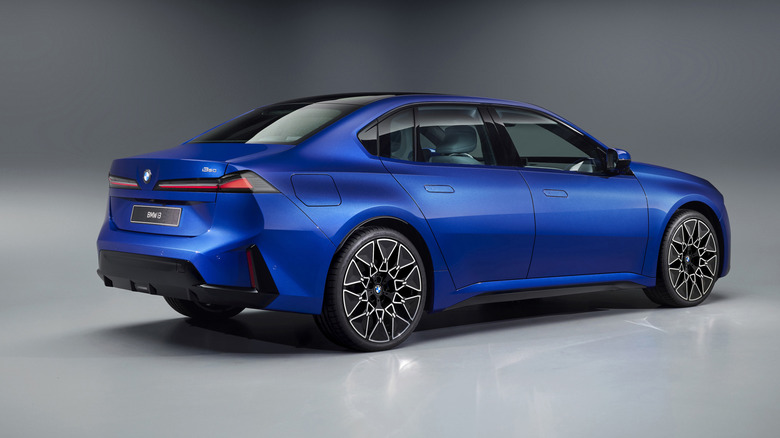
The i3 launches in the United States in dual-motor all-wheel drive 50 xDrive form, with the same 463 horsepower and 476 pound-feet of torque as the iX3, produced by a front synchronous motor and rear induction motor. BMW says that combination reduces energy losses by 40%, and weight by 10%, compared to its previous-generation electric powertrains. A lower-power 40 xDrive model will arrive later.
With less weight to haul and less air resistance to deal with, the i3 will likely beat the iX3's manufacturer-estimated zero to 60 mph time of 4.7 seconds, perhaps getting closer to the 4.2 seconds of a non-Performance all-wheel drive Tesla Model 3, and beating BMW's own i4 xDrive40. That's a hint that the i3 will eventually replace the i4.
Expect the i3 to also serve as the basis for the first true all-electric M performance model, with a unique quad-motor powertrain, Hyundai Ioniq 5 N-style artificial sounds, and other upgrades that take things a step further from M-lite models like the iX M70, which have more power but little else.
Clever and joyful tech
Automakers have been piling on digital features for decades, leading to a tangled mess of wires and computers that rivals the rat's nest of utility cables beneath any city street. So while the i3's four-zone electrical architecture is the same as that of the iX3, it's still a cool piece of engineering that's worth appreciating here.
Dividing the car up into four zones, rather than dedicating wires and controllers to each system or function individually, helps cut weight while setting the stage for BMW's "Heart of Joy" computer. It works with the powertrain, brakes (including regenerative braking), steering, and suspension, ensuring all systems are on the same page. This, in theory, provides a more consistent driving experience without the random interventions that can come when various driver aids are left to their own devices.
This level of integration also allows for what BMW calls "Symbiotic Drive." When driver-assistance features like adaptive cruise control and lane departure warning are active, the car takes the driver's inputs into account to cut down on extraneous warnings and make the tech into more than an on/off affair. Mercedes took a similar approach with the DrivePilot system in its electric CLA-Class, one of the i3's potential rivals.
A test drive will provide the final verdict, but being able to use these features without feeling like you're fighting the car, or fumbling to reactivate adaptive cruise after tugging the steering wheel too hard, sounds pretty good.
Over 400 miles of range
Well-integrated driver aids are nice, but the selling point for most customers will likely be the i3's estimated 440 miles of EPA range. That should be more range than the iX3 using the same 112.1-kilowatt-hour battery pack, thanks to the sedan's lower weight and better aerodynamics. EV fans are used to hearing numbers like this from Lucid, not BMW, showing that the Neue Klasse package delivers a serious boost in efficiency.
The i3 and other Neue Klasse models also finally adopt an 800-volt electrical architecture, allowing for DC fast charging at up to 400 kilowatts via a standard NACS port. That should allow for a 10%-80% charge in the same 21-minute window as the iX3, with a Level 2 AC charge taking 7.5 hours. The i3 can also share its power with vehicle-to-load (V2L) capability, power your house during blackouts (assuming a compatible hardware set is made available) in vehicle-to-home (V2H) mode, and help power the grid in coordination with other EVs with vehicle-to-grid (V2G) mode.
A big promise
The only predictable thing about the i3 is its pricing. A BMW North America representative said it will start "a little south of iX3," which the automaker previously said will have a base price of around $60,000. That will make it more expensive than a gasoline 3 Series, but still well within reasonable range for a luxury EV.
With so many automakers reticent to wholeheartedly embrace EVs, a merely adequate entry often feels like a win. BMW is promising a lot more here. With vastly improved range and efficiency, new styling and technology, all in a form that closely resembles the automaker's signature model, the i3 could redefine BMW or follow its namesake into the dustbin of history. Just seeing how this plays out will be exciting.
And, unlike certain other automaker's EV projects, we will likely get that chance. Production of the i3 starts in August at BMW's hometown plant in Munich, Germany, which is being converted to all-EV production. BMW confirmed that U.S. sales are still scheduled to start in 2027.
"We keep our promises," CEO Oliver Zipse declared in front of 4,000 BMW employees at the i3's unveiling. Refusing to walk away from a big investment is a good start, but that won't be wholly true unless the i3 drives like a true BMW.