

5 Tire & Wheel Maintenance Checks You're Probably Forgetting About
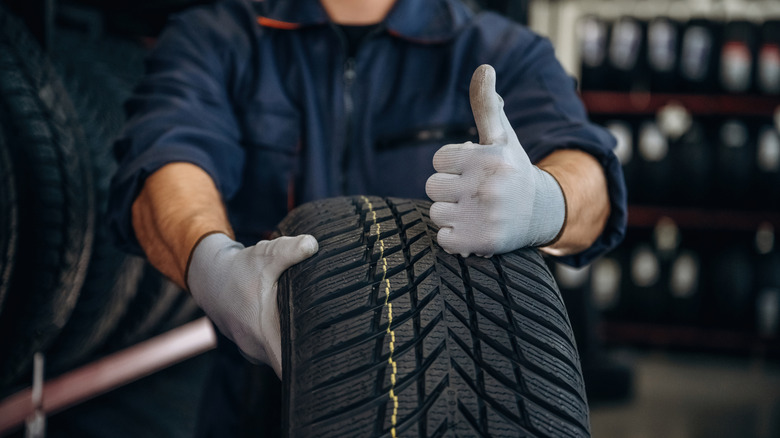
There are few areas more critical to a smooth run on the road than the tires and wheels of your car, and they're areas that you surely check on a regular basis. A quick inspection for flats or any detritus that may have accumulated in the treads, checking air pressure using a gauge, and more are all things that help to keep our cars in top running shape. Yet even with the best of intentions, there are some jobs that you can easily forget when it comes to maintaining this crucial part of your car.
Unfortunately, if you don't address these things regularly, they're ones that will often tend to come back and bite you, landing you with quite the hefty bill and/or putting you in danger on the roads. The good news is that a quick check between rides is often enough to give you all the early warning you need — if you know where to look. If it's been some time since you've checked the tightness of your lug nuts and that your spare tire are in good working order, here's an advanced warning to do just that, along with three other quick checks that some drivers completely neglect over the course of their super busy lives.
Stay on top of the condition of your tires
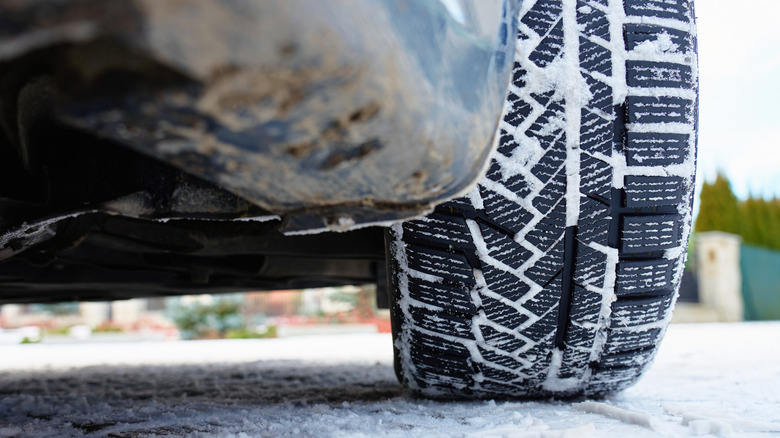
As noted, most drivers make a point of checking the treads of their tires for anything that could have pierced them, and of clearing away the muck and detritus that can quickly accumulate if you drive along poorly maintained roads or go off-roading frequently. The trouble there is, a quick wash will often leave your tires looking bright and (somewhat) new again, which can lull you into a false sense of security. If you take a look beyond the surface level, those squeaky-clean tires of yours may not be in nearly as good condition as you thought.
It's not just about determining whether they're clear of obstructions and that you haven't got a puncture anywhere. These things are critical too, of course, but while you're looking, think about it: When did you last replace your tires? However sensible your everyday driving habits may be, tires take the full force of the road by design. As a result, those elaborate tread patterns they used to have can disappear faster than you think, and a tire doesn't have to be completely bald to be dangerous.
There are some crucial warning signs that your car tires need to be replaced, such as uneven wearing or if there's telltale bulging, and these are definitely things to act on with urgency if spotted. Ideally, you'll have keep a vigilant eye on your the condition of your tires and step in before they get to these more extreme points. Keep an eye on your tire treads (take a look at the wear indicators) and replace them sooner rather than later if you notice a major difference. As expensive as a new set of tires can be, there's absolutely no putting a price on safety.
Take care of your spare tire
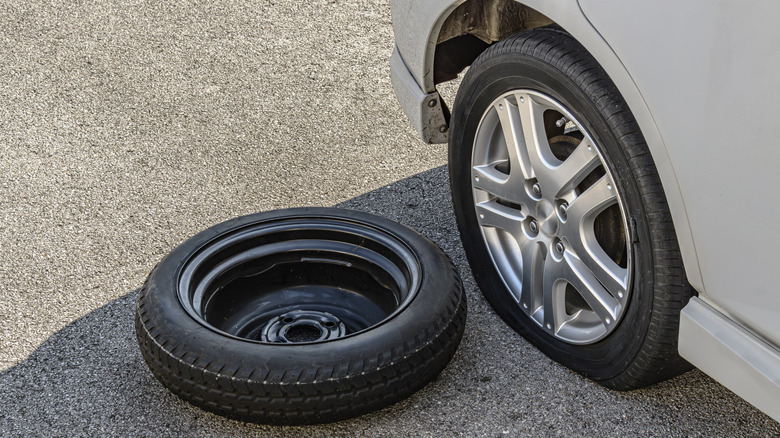
It's incredibly easy to neglect a car's spare tire. New cars typically don't even come with a spare tire any more, instead opting for a temporary "emergency donut", and many of us don't really think we'll ever need to use it. We'll often make sure we have it, granted, but that might be as far as it goes — a steadfast, reassuring presence stowed away safely somewhere in your vehicle.
It's out of sight and out of mind a lot of the time, and because it isn't on the road, it will typically miss out on the usual maintenance that we might lavish on the other four wheels on our vehicles. Unfortunately, that's the very crux of the problem: This tire is strictly for emergencies, and such situations never really come up when we're expecting or prepared for them. We improvise on the fly, and that's a terrible time to discover that our one and only spare tire is actually in woeful condition. It may have even been for some weeks or months, but, as ever, we didn't really "spare" it a thought — pun intended.
Nonetheless, our trusty spare tire is there to bail us out when the worst happens and could very well save our lives. As such, it deserves much better than a lot of drivers give it. The next time you or your mechanic is fixing up your tires, don't forget to give this one the same treatment. It's got to be not only functional but in a safe condition to drive. Remember, if its condition is very different to that of your other three tires, it can create a potentially dangerous imbalance, or at the very least an uncomfortable journey ahead.
Tighten your lug nuts
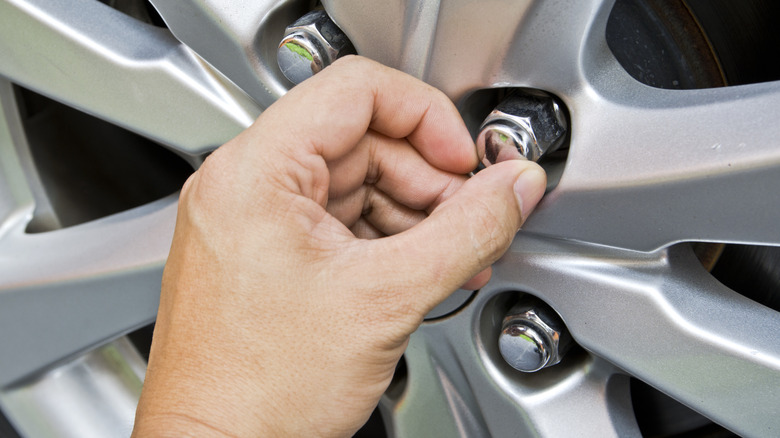
There's another complication with tires, and it's that their connection to the vehicle itself. The rigors of the road mean that a vehicle is subjected to a lot of pressure over time. This is sufficient to gradually loosen the grip the tire's lug nuts have, which could potentially be very dangerous.
This is why it's critical that, after you've replaced and refitted one of your tires, all of its lug nuts should be retorqued after approximately 30 miles of driving on them. This should be performed to an extent appropriate for the vehicle in question, as per the manufacturer's directions in the manual, and it's an important balance to get right because tightening too far for a specific vehicle's requirements can increase pressure and potentially damage surrounding components. Meanwhile, failing to tighten the lug nuts enough can cause a dangerous, uncomfortable ride.
If you notice that your lug nuts aren't as tight to their hub as they should be (telltale signs like vibrations or steering difficulties can be urgent), consulting a trusted mechanic is an excellent route forward. It's also possible, however, to remedy the situation at home using a torque wrench. This invaluable tool is the primary means of tightening lug nuts; while it's a job for a practiced hand, it's certainly also one that drivers can tackle themselves with the requisite experience. The great thing is that the wrench allows the user to set the desired torque prior to use (hence the tool's name), thereby ensuring that the level will be correct when applied.
Get your wheels balanced
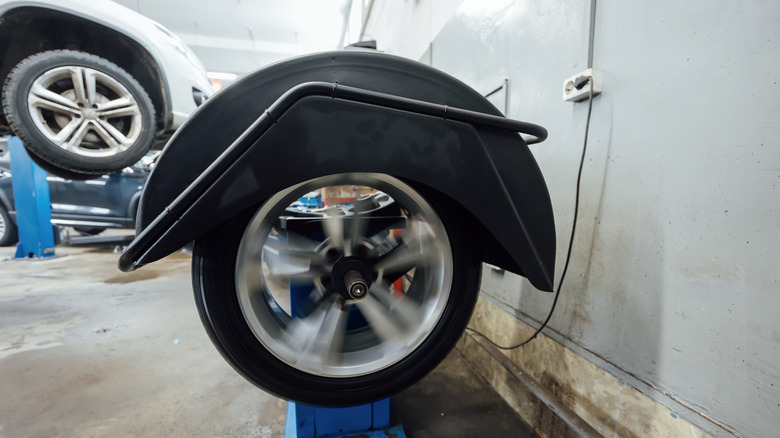
A rogue pothole can catch even the most conscientious of drivers unawares. These are frequent occurrences that we often brush off, without realizing that such a minor collision still might have compromised the balance of your wheels. Wheel weights are stuck or clipped to a wheel with the optimum placement for balancing, but if knocked loose or otherwise impacted, the symptoms of wheel imbalance can be immediately obvious to the driver. Off-balanced wheels can negatively impact your control on the road and cause a noticeable vibration in the short term. Imbalanced wheels can even cause wear and damage to systems like the suspension and worsen your vehicle's fuel economy through increased pressure on components.
After an encounter with a pothole or similar smaller impact, we may not think to check our wheel weights or broader balancing, especially if it looks like there was no immediate structural damage. Unfortunately, this is one of those situations that can worsen the longer we continue to drive with an imbalance. If you find yourself having a noticeably rougher ride in any way, it's important to consider the possibility. If you have any concerns, a professional checkup and rebalancing where necessary can resolve the issue. This is performed through the use of a specialized weighing machine, which will pinpoint spots on the wheels that aren't balanced correctly so that a mechanic can apply the appropriate weights in the right spots.
Maintain your valve stems
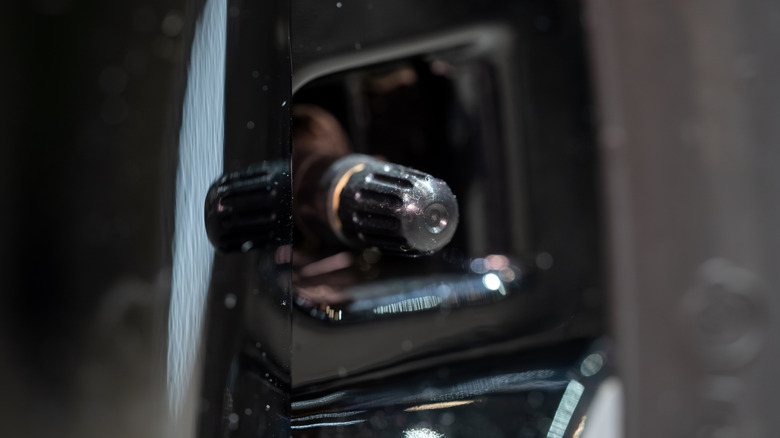
You might have put a lot of thought into the bigger picture regarding tire care, such as avoiding the major pitfalls while storing them long-term. Don't forget, though, that proper maintenance includes everything down to the smallest valve stem. These oft-forgotten wheel components are the tiny champions that allow air pressure to be balanced where necessary within your tire, as well as enable them to be reinflated and act as a convenient closing point for the valve afterwards to help combat leakage. They're a crucial though rather insignificant-looking component, and one that also requires maintenance.
Often, a valve stem will be made of rubber, by virtue of its affordability and the ease with which it can be installed through the rim by means of a valve-puller. These are snap-in stems, and they differ from their metal (often aluminum) counterparts in that the latter type is secured by means of a retaining nut, hence the name clamp-in valve. Each type of valve stem and its associated components will steadily degrade over time with use, though, so it's vital that you inspect your valve stems and replace them as soon as possible if you notice any signs of damage. After all, a compromised valve stem could leak and lead to a flat tire with no warning if you aren't monitoring the condition of each one on your wheels.