

You Don't Need Fire Or An Expensive Machine To Mount A Tire On A Wheel
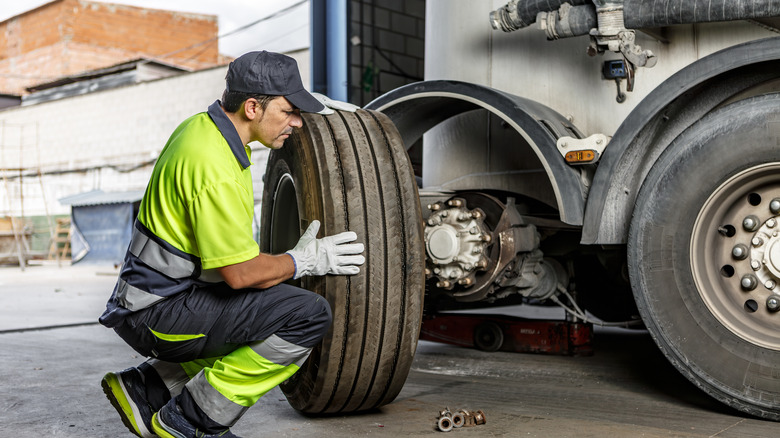
Before expensive tire machines became the norm, people did the job of removing and mounting new rubber car tires onto their rims. Today, it's still possible to mount new car tires at home without fire or a big pile of money, or the required floor space in your garage, although the practice is better suited to when you need to replace the tires on your riding lawn mower.
The process isn't easy, it'll take some muscle, finesse, and time. I've done it several times over the years, most often mounting new tires for motorcycles, riding mowers, ATVs, and trailers. I've also mounted a few car tires back in the day.
I'll outline the process of mounting a tire by hand in the next sections. First, I should warn you that I don't recommend doing this on a vehicle with low profile tires. The short sidewalls of those types of tires are stiffer than the sidewalls of taller tires. Second, the likelihood of scratching the wheel is almost guaranteed. If you have nice wheels and going to a professional is an option, I'd highly recommend having them professionally mounted and balanced.
I'm all about saving money where I can, I've been known to buy used tires in singles and two at a time. You can also save money by buying new tires online and having them delivered to your door. However, as far as mounting an automotive tire, I'll always opt for the professional route if at all possible. The good news is this process works well for other types of tires, and they're much easier to manage.
Mounting a new tire requires breaking the bead seal
The first step to mounting a tire with hand tools, unless you already have an empty wheel and unmounted tire, is removing the old tire from the wheel. If we're going to remount the same tire and wheel combination, we'll want to mark the tire at the valve stem location and any attached weights to ensure we don't put the tire on the wrong way.
Getting the tire off the wheel is the first difficult task that requires some ingenuity. First, unless the tire has a big hole in it, we'll need to remove the valve core to let the air out. When a tire is fully seated on the wheel, the bead, a structural part of the tire surrounding the opening, seals tightly against the wheel. In most cases, this seal is the only force holding the tire to the wheel, preventing slipping during acceleration and braking and rolling off the wheel when cornering. To remove the tire we must break that seal.
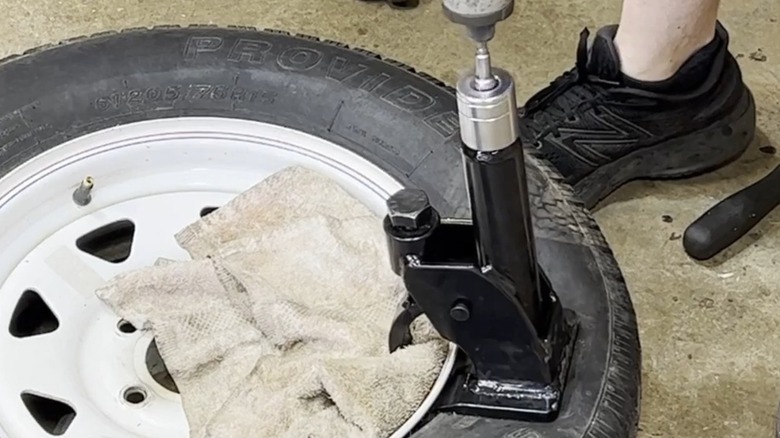
Methods of breaking the bead seal from a wheel include the labor-intensive method of hitting the tire with a sledge hammer and driving a car or a tractor over the tire laying flat on the ground. However, a tool like the Maddox manual bead breaker could make it easier. I've never used one, but YouTuber Bad Hombre Garage finds it helpful.
If you don't want to spend $90 on a tool you may never use again, you can accomplish the task with a small bottle jack or a scissor jack. Place the jack on the tire and wedge it beneath the underside of a lifted vehicle. For safety, ensure the vehicle is supported by jack stands.
Remove and replace the tire
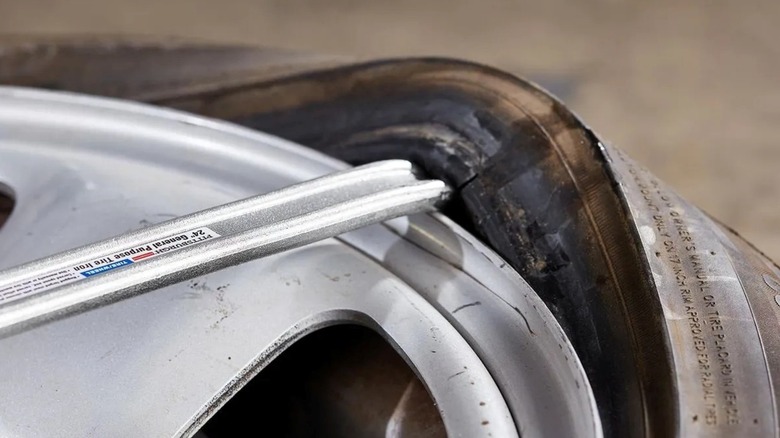
Once the bead is loose, press one side of the bead down towards the wheel's smallest diameter, then use tire spoons to lift the opposite side over the wheel's edge. Progressively work your way around the wheel, lifting small sections each time.
Once the front of the tire is free of the wheel, pull the tire up on one side, again ensuring the lower bead edge positions against the wheel's smallest diameter. Then use the tire spoons to pry the tire completely from the wheel.
When mounting the new tire, pay attention to any markings on the tire or included instructions regarding which sidewall faces out or orientation to the wheel's valve stem hole. Apply a lube to the tire bead, there are specialized lubes but some recommend hand-soap too.
With the wheel face down, push the tire onto it, remembering to use the smallest diameter of the wheel to your advantage. If you're lucky it'll go on with some force, if not, use the spoons to coerce it into position. While most car tires are tubeless, if this tire uses a tube, put it in place now. The backside of the tire will likely require more spoonage than the front. This is the last opportunity to install a new valve stem if desired.
You'll most likely need an air compressor with a tank that holds more air than the tire to reseat the bead. You can stack the odds in your favor by pushing the beads as close as possible to their seats. Placing the front sidewall on blocks and standing on the backside of the wheel before flipping it over and gently pulling up on the tire while applying air is a good approach. I've also had luck with tightening a ratchet strap around the tire's circumference.