

Has The 2026 Toyota Highlander Outstayed Its Welcome?
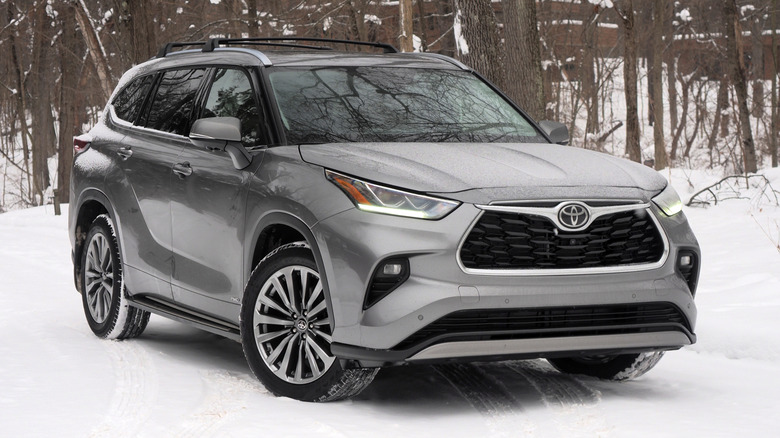
The writing has been on the wall for the Toyota Highlander for a while now. Though it's only recently that the Japanese automaker has confirmed the 2027 Highlander will adopt an all-new design — and an all-electric drivetrain — the three-row SUV was already feeling the pressure, and it was coming from inside Toyota's own dealerships.
The culprit was the Grand Highlander, a longer three-row SUV that had the regular Highlander in its sights from day one. When it debuted in early 2023, Toyota all but conceded that it was intended to address less-than-capacious third-row seating in the non-Grand model. Since then, buyers in the U.S. have voted with their wallets, and sales of the Grand Highlander were more than double that of the regular Highlander in 2025.
 Chris Davies/SlashGear
With demand for the regular Highlander down more than 37% year-on-year in 2025, Toyota's willingness to take a risk with the nameplate is understandable. All the same, I couldn't help but be curious as to whether we're losing a family SUV we'll regret saying farewell to.
Three rows, yes, but not three spacious rows
If you're not a fan of the sharp angles and crisp edges progressively dominating SUV design language right now, you may be disappointed by the blunt bodywork of the 2027 Highlander. Against its slab sides the 2026 SUV looks positively curvaceous, with the Grand Highlander slotting somewhere in-between.
 Chris Davies/SlashGear
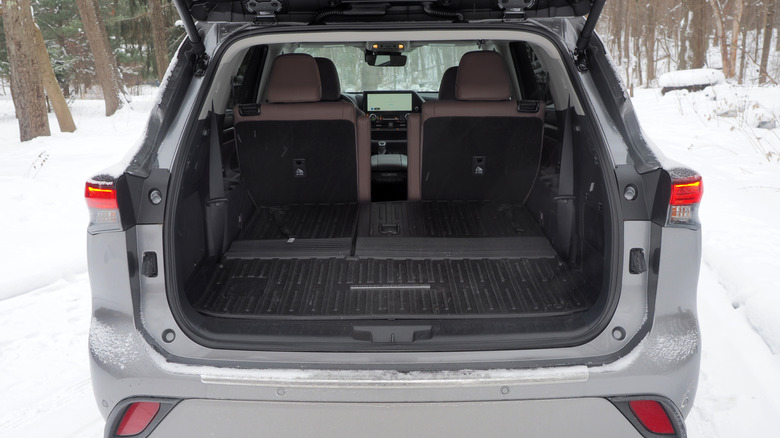
From its "angry catfish" fascia to the power tailgate, the existing Highlander is about four inches shorter than the 2027 version will be. Toyota hasn't confirmed specific interior dimensions for the new model yet, but given the Grand Highlander writing on the wall, it's likely that the Highlander EV will splash most of its extra length on those in the third row. Cargo space of the 2026 and 2027 Highlanders is about the same: this outgoing SUV has 16 cu-ft with all three rows up and 48.4 cu-ft with the third row flattened.
 Chris Davies/SlashGear
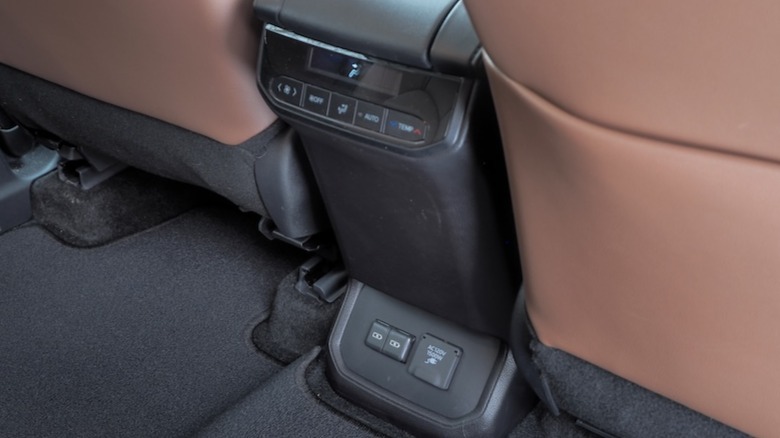
You can't deny that things get snug by the time you make it to those rearmost seats. Legroom is definitely a pinch for adult-scale passengers; the fact that three of the Highlander's seats are back there — out of a total of eight on the entry XLE trim or seven on all other trims — make tight shoulder room another pressing issue.
The hybrid is perky around town
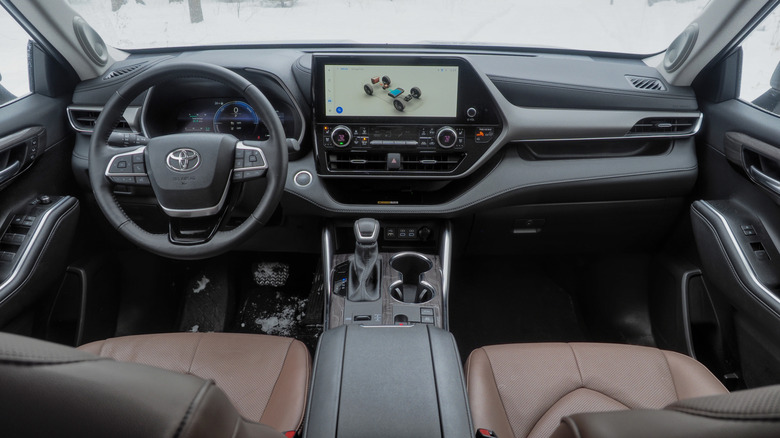
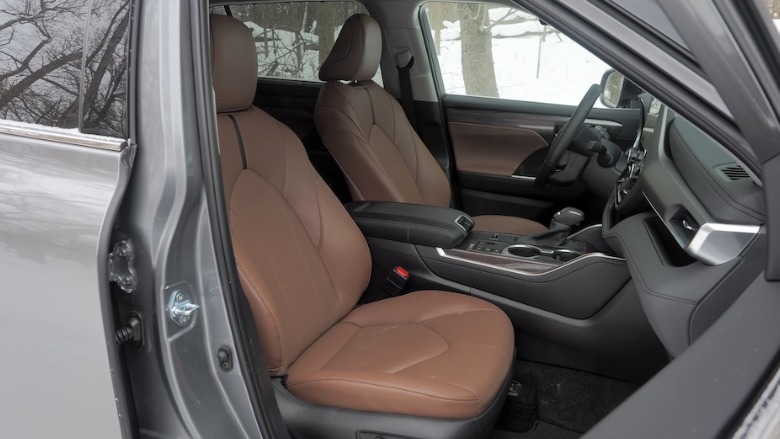
I'm not saying you should ignore the family's complaints, but things up front are certainly most plush. There's leather, heating, and ventilation for the first row from the Limited trim up; the second row gets leather too, but doesn't enjoy heating until the top-spec Platinum trim, which seems miserly.
 Chris Davies/SlashGear
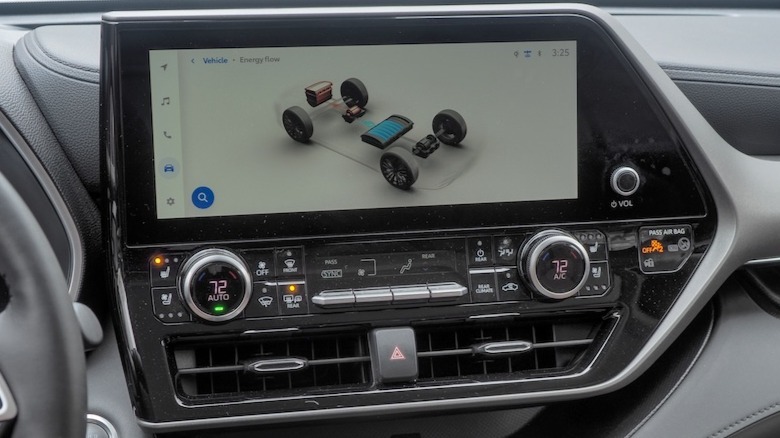
The splash of electrification in this Highlander Hybrid is welcome, though not for reasons of extra power. Non-hybrid versions of the SUV get a 2.4-liter turbocharged four-cylinder gas engine with 265 horsepower, whereas the 2.5-liter gas engine paired with three electric motors of the hybrid musters 243 hp in total. All-wheel drive is standard regardless, either a mechanical system in the non-hybrid or a dedicated electric motor for the rear wheels in the hybrid.
 Chris Davies/SlashGear
It's not a fast SUV — Sport mode gives a slight bump in sensitivity to the gas pedal, but it's minor — but the electric motors add a stab of urgency at urban speeds. You notice it pulling away from lights and stop signs, even if the Highlander starts to run out of grunt as the speedo climbs. Nobody will call this an exciting car to drive, but it's an easy one, with highly-assisted steering and big mirrors for great visibility.
It's high time for a change
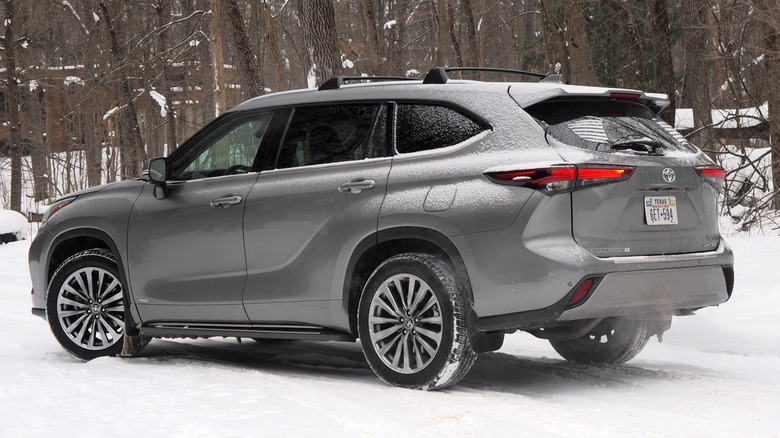
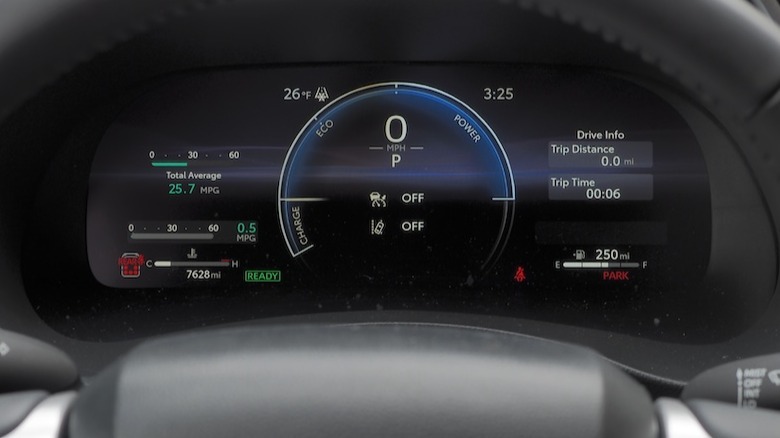
In theory, the main advantage to electrification is a bump in economy, with the hybrid EPA-rated at 35 mpg across the board for city, highway, and combined (versus the 21, 28, and 24 mpg, respectively, for the non-hybrid). Maybe it was the ice and snow during my testing period, forcing the Highlander Hybrid to make more use of its rear electric motor, but my own mixed use landed just shy of 26 mpg.
 Chris Davies/SlashGear
Since this isn't a plug-in hybrid, battery power is reclaimed from things like deceleration. That makes things simple, given you just fill up at a gas station like with any ICE car, but it also means that while the Highlander Hybrid has an EV Mode button, its electric-only usefulness is seriously curtailed. Toyota doesn't actually disclose how far it'll go, but I struggled to drive more than a mile at under 25 mph with a light foot on the accelerator. Anything more aggressive and the gas engine roused itself.
 Chris Davies/SlashGear
It's hard to argue with Toyota's decision to put this current Highlander out to pasture. While you can question America's tastes for larger and larger SUVs, the reality is that those who truly need a three-row model are getting more space in the Grand Highlander, and at a lower starting price. The hybrid AWD version of the Grand model almost matches this smaller Highlander for fuel economy too, on paper anyway, at up to 34 mpg combined. Sounds like perfect timing to pass on the nameplate to something more ambitious.