

This May Be The Worst Way To Break In A New Engine
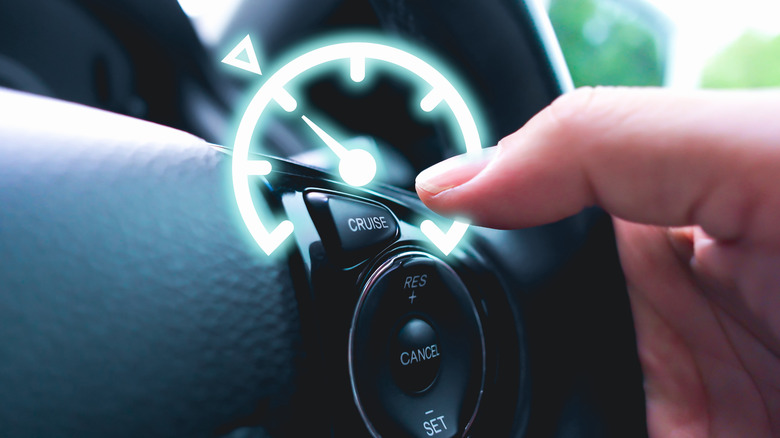
There's a certain kind of anxiety that comes with driving a brand-new ICE car. Thanks to the break-in period, people tend to drive with more restraint than they normally would. That's fair enough, but some folks try to take shortcuts. Like, why not just get it over with as fast as possible? It's tempting to take the car out on the highway, set the cruise control at 65 mph, and knock out a few hundred miles in one sitting. Sounds clever, but that's actually probably the worst thing you can do to a fresh engine.
You see, variation is key during the first 500 to 1,000 miles – and the best way to do so is by having the engine speed move up and down consistently. This helps the piston rings inside your engine seat themselves gradually against the cylinder walls. On the other hand, using cruise control during that period does the exact opposite. It holds RPM at a fixed point, forcing the pistons to move at the same rate the entire time. Consequently, the rings never get the variation they need to settle in evenly. The result is uneven wear on the cylinder walls. Cylinder wall scoring can lead to oil creeping higher into the cylinder than it should, which leads to the engine burning through more oil than normal.
Now, while modern mass-produced engines tend to have protections in place specifically to make this worst-case scenario less likely, automakers still warn against using the highway hack. For instance, the manual for the Kia Carens, a compact minivan sold in several global markets, advises against maintaining a single speed for too long early on. Mazda's guidelines for the MX-5 say the same thing.
Other stuff to keep in mind
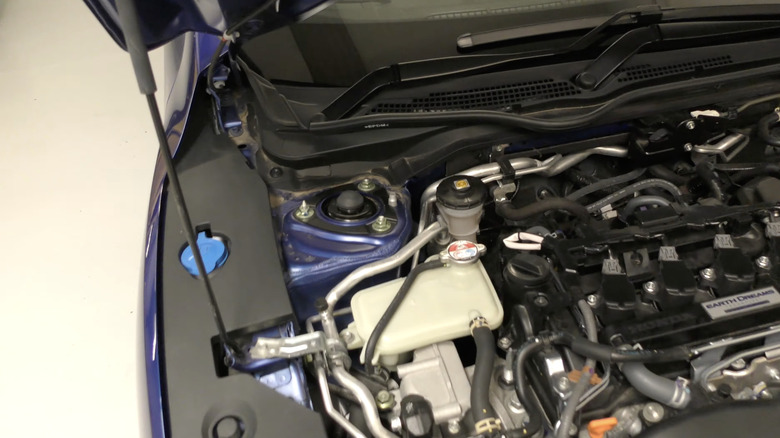
Highway cruising at a fixed speed isn't the only activity you need to avoid, though. Most manufacturers also recommend keeping revs below 3,000 to 4,000 during break-in, depending on the model. Revving too hard on a fresh engine can create hot spots on cylinders. You'll also want to avoid overloading your car with cargo and passengers to prevent overburdening your engine. All of this may sound like a lot, but the good news is that getting it right isn't difficult at all. Ultimately, you're just driving with slightly more restraint than usual.
Moreover, a lot of modern mass-produced engines don't necessarily need a proper, full-on break-in. But following a few basic precautions probably can't hurt. After all, the goal is to keep your car and its engine kicking for as long as possible. That said, hand-built engines in high-performance cars do require being gentle at first, and a more deliberate approach will squeeze more life out.
For any other car, however, varying the rpm happens pretty much automatically when you're driving around town. If it's a manual transmission you're dealing with, try short-shifting – changing gears at lower revs than you normally would. There may be variations in recommendations depending on the manufacturer or car model, though, so checking the manual can be helpful. Beyond break-in, there are quite a few other long-term engine care habits worth picking up if you want to get the most out of your car.