

Why Samsung Removed The IR Blaster From Its Phones
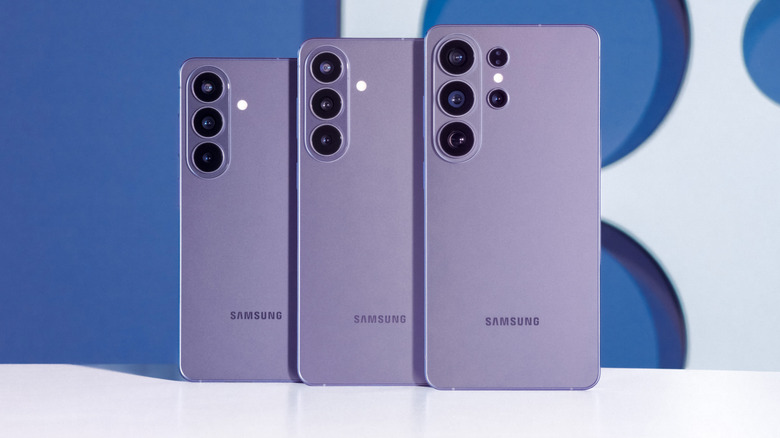
Samsung has removed many features from its popular Android smartphones over the years. Long gone are the headphone jack, SD card slot, and removable batteries, all of which made Galaxy phones more versatile. But for some users, the biggest sting came when the Korean tech giant ditched the infrared remote, also known as an IR blaster. It allowed users to control their TV and other devices right from the phone.
The IR blaster remains a useful feature for some users, and though it was more common on Android phones at the time, it's still available on many smartphones today. Anything with an IR remote can be controlled right from the phone, meaning that the many different remotes for a complicated TV setup can be merged into a single device already in a user's pocket. If a hotel room is missing a remote, users can use their phone instead. Other appliances, from portable heaters to LED light strips, often include IR remotes, and they can be controlled from a phone with an IR blaster, too. There are also less scrupulous applications. Don't like what's playing on the TV at a gym or restaurant? You get the idea.
Why would Samsung choose to remove such a useful feature? According to the company, the IR blaster was an old feature that was replaced by newer improvements. That's an explanation the company has rolled out for other features it cuts, and while it might be true, it doesn't take the sting out of the removal if you happen to be one of the users who relied on the Samsung IR blaster day-to-day. So, here's what led Samsung to remove the feature, and why it probably won't come back again.
Samsung cited low use in its decision to remove the IR blaster
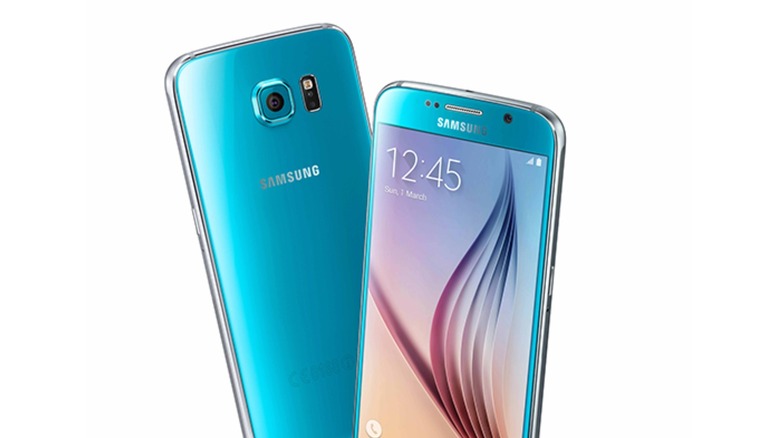
Samsung unceremoniously did away with the IR blaster in 2015 with the release of the Galaxy Note 5, a device that was notable for its lack of an infrared emitter. No statement was publicly forthcoming from the company, leaving users to contend with the loss on their own. The closest thing to an official explanation came secondhand. In 2016, a user on the Android Central forums claimed to have reached out to Samsung's technical support department to request that the IR blaster be added back to future devices. The response the user allegedly received was quite lengthy, but read in part, "IR blaster has been removed from the Note5 phone as of now. We are constantly improving and updating our operating systems, and with every improvement, there is always a chance that an older feature may be changed or removed. We value your input about your favorite features on our devices, we will pass along your suggestion for future updates."
As other users in the forum grumbled, that's a whole lot of language to say very little. Squinting at the statement, you could read it to mean that Samsung saw the IR blaster as outdated. Lending some credence to that interpretation is the fact that the removal of the IR blaster coincided with a total redesign of Samsung Galaxy smartphones. The Note 5 was the first device in its series to ditch the plastic chassis found on older Samsung phones, opting for a more premium-feeling glass-and-metal build. However, the Samsung Galaxy S6 made the same leap in build quality without sacrificing its IR blaster. Only with the S7 did Samsung remove it from mainstream flagships.
The IR blaster was the start of a long-running trend for Samsung
For quite some time, Samsung was widely known among smartphone enthusiasts for its maximalism. The company had an "everything but the kitchen sink" approach that polarized users, with some of the opinion that more features are always a good thing, while others felt that the ever-expanding feature creep made Galaxy devices feel bloated. Ultimately, Samsung appeared to side with the former group, and the removal of the IR blaster heralded the beginning of a killing spree for underutilized features.
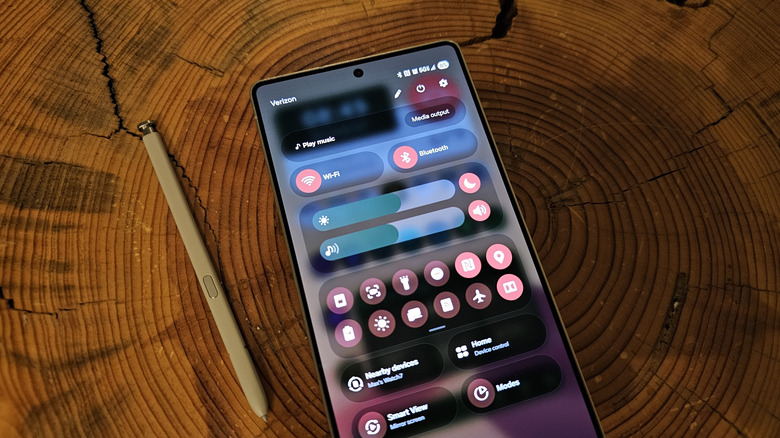
Since removing the IR blaster, Samsung has not been shy about culling features in the name of streamlining and cost-cutting. With the notable exception of the headphone jack, it's hard to know whether any of them were widely used, but power users may still miss many of them. Among the features absent from new Galaxy phones are removable batteries, SD card slots for storage expansion, an iris scanner for security, a mechanical camera aperture, a pressure-sensitive display, heart rate and SpO2 readers, MST technology in Samsung Pay for older payment terminals, and LED notification indicators. The company even moved on from its signature curved displays and stopped including a charging brick in the box with most new devices. Most recently, Samsung dropped Bluetooth support for the S Pen, leading to another outage cycle. Samsung might argue that some of those features were outdated, while the functionality of others can be replicated through alternative means, but a loss is a loss.
One thing Samsung certainly hasn't dropped is the price tag. The company charges $1,300 for the Galaxy S25 Ultra, while the brand-new Galaxy Z TriFold costs an eye-watering $2,900. It's understandable that users balk at paying more when their favorite features aren't carried forward.