

3 Things Your Ryobi Vacuum Can Do (Besides Cleaning)
We may receive a commission on purchases made from links.
Whether you own your space or shell out to a landlord every month, it's safe to assume that you take a certain amount of pride in keeping it tidy, even if doing so is often a bit of a hassle. It doesn't matter if you love or loathe cleaning your space; it's likely that a good vacuum cleaner is the primary tool with which the seemingly endless battle against the dust and dirt is waged on the home front.
It helps, of course, that vacuums are arguably more powerful and versatile than they have been at any point in time since their invention. They continue to evolve in ways that are sure to help make keeping your sacred space clean easier than ever, too, with some of the major vacuum manufacturers even offering robotic cleaners to those who just don't want to do the work on their own.
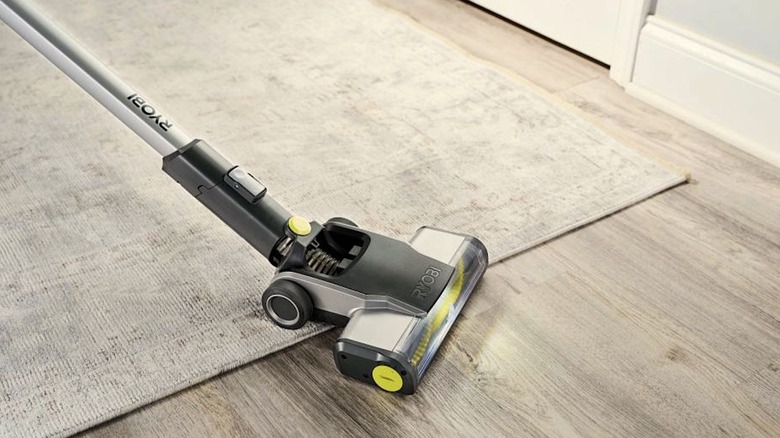
Among those major brands, power tool manufacturer Ryobi has become a regular fixture in the vacuum cleaner conversation, and currently offers an entire line of cordless devices in its distinctive green livery. Just FYI — those vacs are also powered by the Techtronic Industries-owned brand's One+ 18V lineup, meaning you can share their batteries with any other One+ tools you might already own. And yes, as with vacuums from many of the other majors, Ryobi's 18V cleaners can indeed be utilized for functions other than cleaning. Here are a few ways you may be able to use your Ryobi vacuum once you've finished cleaning house.
Vacuum sealing clothes for the season
While the removal of dust and debris is, perhaps, the biggest part of anyone's home cleaning regimen, those duties no doubt stretch well beyond that basic task. Thankfully, there are a few handy smart gadgets around these days that may be able to aid you in many of those endeavors. But apart from basic cleaning, there are a few seasonal tasks that most smart gadgets just can't handle. And it's safe to say that storing seasonal clothes away until they are needed again is one of them.
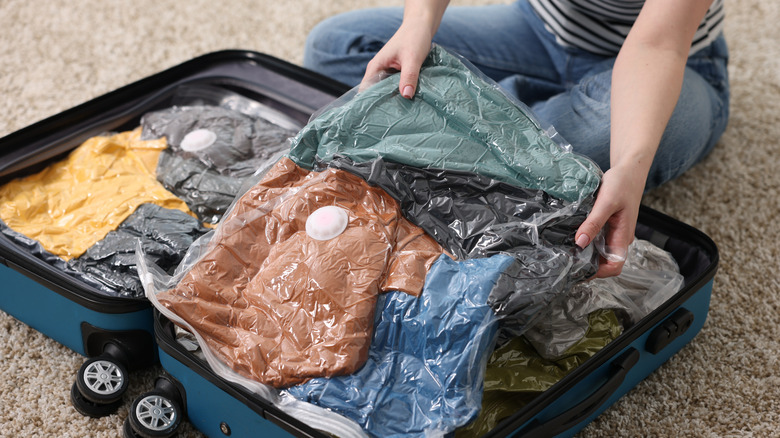
There are, of course, several ways to go about packing clothes away for the season, with some folks just chucking them up on closet shelves or packing them away in an unused suitcase. But people who don't have room to spare in their closet might instead turn to shrink-wrapping as a way to not only maximize their space, but keep their seasonal gear dust-free for the duration.
If you're not familiar with vacuum-sealing, it involves placing clothes and other items inside of a plastic bag for storage. Once the bag is sealed tight, you remove any remaining air inside via some sort of suction device. While some vacuum sealing kits include a special device for that purpose, for most people, it is done instead via an actual vacuum cleaner. And yes, if you've got a Ryobi vacuum, its hose or one of its included attachments will almost certainly be able to perform the requisite suctioning.
Picking up small items in hard to reach places
Speaking of hoses and attachments, Ryobi tends to offer kits that include multiple heads for its various One+ 18V Stick Vacuums. Those attachments will come in handy when you're cleaning between couch cushions and behind heavy furniture, as well as other high or hard-to-reach places. On the off chance that you've misplaced a precious object such as an earring, a small toy, or even a lost sewing needle, those attachments can cause havoc, suctioning the items up through the tube and into a collection chamber where damage may occur. In a worst-case scenario, you might not realize they're there and discard them when you empty that chamber into the garbage can.
Of course, the hose and attachments with your Ryobi vacuum could also be particularly beneficial in helping you retrieve those items, assuming you're aware that they are back there or under there, or wherever it is that they may have fallen. But before you jam that hose into those dark places to vacuum up the misplaced item, there is one simple hack you should use, lest they end up in the collection chamber as previously noted.
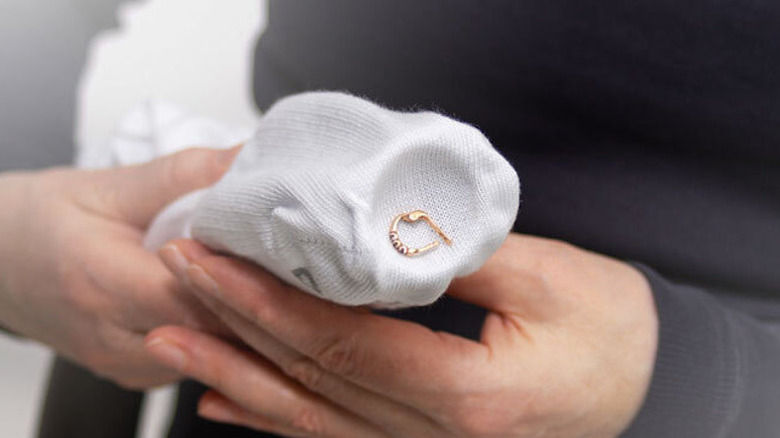
That hack is to slip either a thin sock or a stocking over the opening of the hose or attachment. Doing so should allow the proper amount of suction to secure the item in question while also preventing it from entering the vacuum itself.
Touching up furniture divots on rugs and carpeting
For a certain population of home dwellers, furniture is seen not just as a direct reflection of their aesthetic persona, but also their awareness of general interior design trends. But the furniture pieces you bring into your home are often bulky and heavy, meaning they can potentially be damaging to any flooring you set them down on.
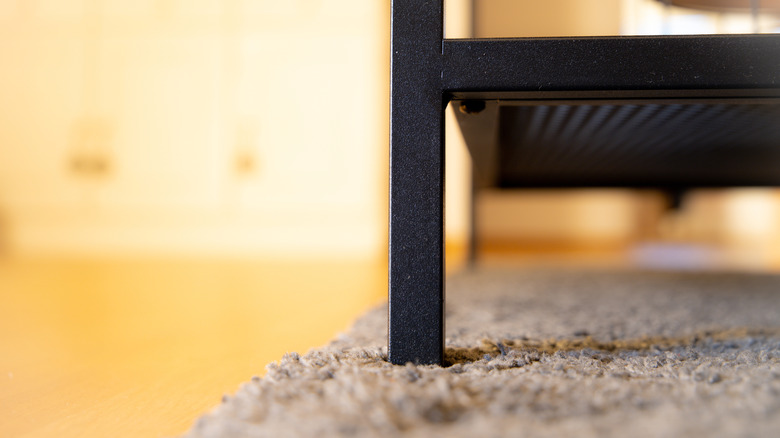
While wood floors are easier to protect when proper measures are taken, heavy furniture can still put a noticeable hurting on any rugs and carpeting where they rest. If you're hyper-diligent in your cleaning regimen, it's likely that you move certain pieces of furniture with some regularity when you set about vacuuming. And if that's the case, you've no doubt lamented the dents and divots left in rugs and carpeting by the legs of even lightweight furniture.
While a top-rated Ryobi vacuum may not be able to completely rid your rugs or carpeting of those unsightly furniture spots, it should aid in helping them rebound from the pressure-caused divots with virtually no extra effort from the person doing the cleaning. In fact, you can take action on those spots while you're vacuuming, as all you really need to do is hover over those furniture dents a little longer than the rest of the rug or carpeted area, adding a little extra downward pressure in the process. Doing so should allow the vacuum to suction up the matted-down fibers to their original standing, or at least close to it. This process may also be aided by steaming the affected rug or carpet areas prior to vacuuming.