

12 Discontinued Motorcycles That Deserved One More Model Year
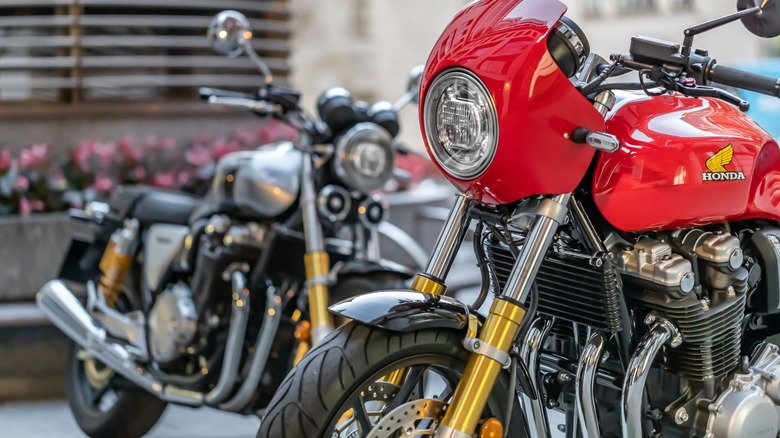
The bond between rider and machine is often an emotional one that may remind you of a horse and a cowboy. As time goes on, many motorcycle models fade away, but some were cut a bit too soon. The iconic, the eccentric, and the underrated weren't just old models; they were casualties of rapidly changing market trends, tightening global emissions regulations like Euro 5, or corporate shifts in focus.
The real tragedy is that, in many cases, a single extra year of production could have allowed the manufacturer to offer a proper, celebratory final edition. That could at least give a respectful swan song for a beloved bike and create a highly collectible artifact in the process. It's understandable to see a bike get taken down because of product planning missteps, costly regulatory compliance, or modern necessity, but it's not always easy to watch.
Each bike in this collection, from monstrous power-cruisers to technologically advanced sport-tourers and niche track machines, should have had another year to gain more sales and push their legacies. Unfortunately, it doesn't seem like any will get another chance anytime soon.
Yamaha VMAX
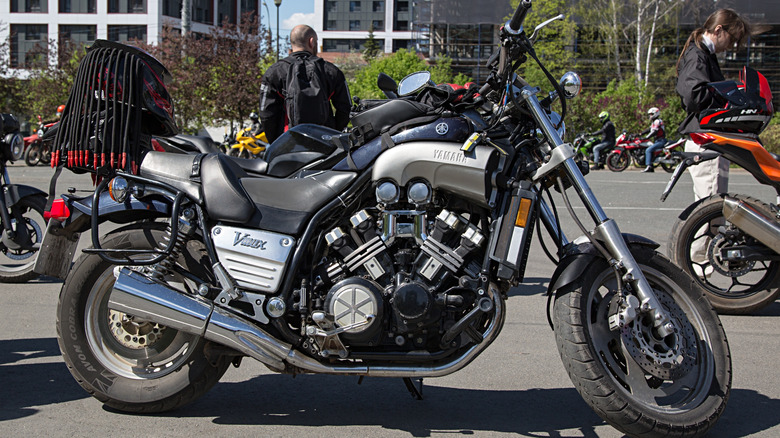
The Yamaha VMAX was a legend in the power cruiser world. It packed a massive V4 engine, which could give you a lot of power. When it first hit the motorcycle scene in 1985, it basically ignored sensible handling and good fuel economy. Some would call it one of Yamaha's ugliest motorcycles, but it may just be an acquired taste.
When Yamaha finally gave the bike a comprehensive redesign in 2009, it stuffed a colossal 1,679cc liquid-cooled V4 into an aluminum chassis. This brought the claimed output to an astonishing 200 horsepower. On the dyno, these modern beasts easily put down over 170 horsepower to the rear wheel and up to 123 pound-feet of torque. This let the heavy rocket sled dominate the quarter-mile in about 10.2 seconds and reach speeds up to 170 mph when it wasn't restricted.
Even with that cool muscle bike look, Yamaha decided to retire it after the 2020 model year. This happened because of shifting global market trends and those strict Euro 5 emissions regulations, which just made that massive V4 too expensive to update. It really deserved one more year, though. Its departure was pretty quiet for such an iconic machine, and a proper final edition would have let fans celebrate its 35-year legacy the way it deserved.
Harley-Davidson Iron 883
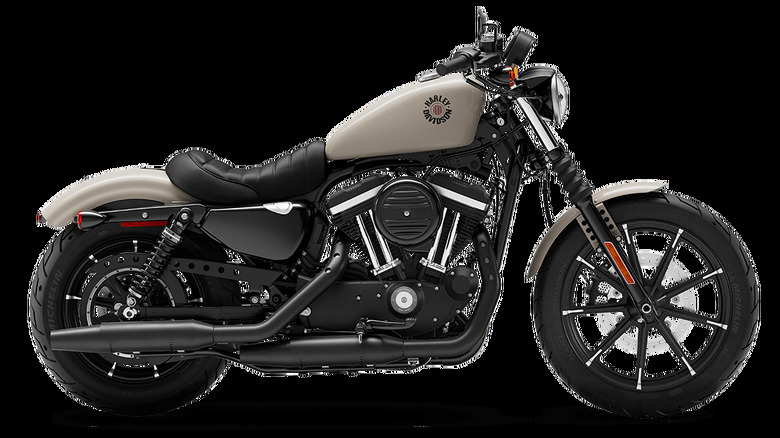
The Sportster family embodied a raw, pure approach to motorcycling, and the stripped-down, blacked-out Iron 883 was basically its perfect modern symbol. Underneath all that was the legendary 883cc Evolution V-twin engine, a remarkably durable powerplant that gave you that deep, soul-satisfying idle rumble and a mechanical character that was easy to love.
Since it didn't have complex electronics, advanced ride modes, or liquid-cooling radiators, you felt a direct connection with the machine. Plus, its huge aftermarket support lets owners customize their bikes endlessly, making them totally personalized expressions of freedom on two wheels. Giving the Iron 883 a final, celebratory 2023 model year would have been the ultimate victory lap for a legendary machine that got thousands of riders into the Harley-Davidson lifestyle.
Sadly, tighter emissions standards were a big reason it got the axe in 2022, which ended its long run as a Sportster favorite. While its retirement was probably unavoidable because of strict Euro 5 environmental rules, it really deserved one more year to connect the old-school Evolution engine with the new Revolution Max platform. Keeping it for 2023 would have let Harley offer a mechanical option while the liquid-cooled Nightster got settled.
Harley-Davidson XR1200X
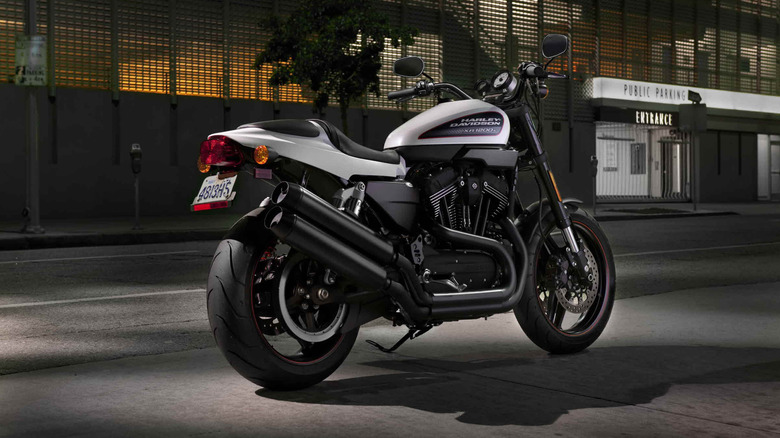
The Harley-Davidson XR1200X is an example of a machine being the right bike at the wrong time. It showed up as a sport-focused outlier in a lineup full of traditional cruisers. The XR1200X was heavily inspired by Harley's XR750, a legendary, purpose-built flat-track dominator, and we think the XR1200X was one of the most underrated Harleys ever made.
Harley-Davidson gave the XR1200X some serious performance bits, so buyers got a fully adjustable Showa Big Piston Fork, nitrogen-charged piggyback rear shocks, and powerful Nissin four-piston brakes that worked with dual floating rotors. Its 1200cc Evolution V-twin engine was blacked out, which looked cool, and delivered a torque-rich rumble. Despite these impressive upgrades and a chassis capable of pretty great handling, the motorcycle just couldn't find its crowd during its production run.
It had a taller seat height, rear-set footpegs, and ergonomics that diverged from traditional Harley positioning. Also, the fairly heavy 573-pound wet weight and its okay 81 horsepower wouldn't be enough for sportsbike lovers. So, the XR1200X didn't really have a chance to build a big following before Harley-Davidson stopped production after 2012. I think that if it were released today, there's enough variety in the customer base to get a following this time around.
Yamaha WR250R
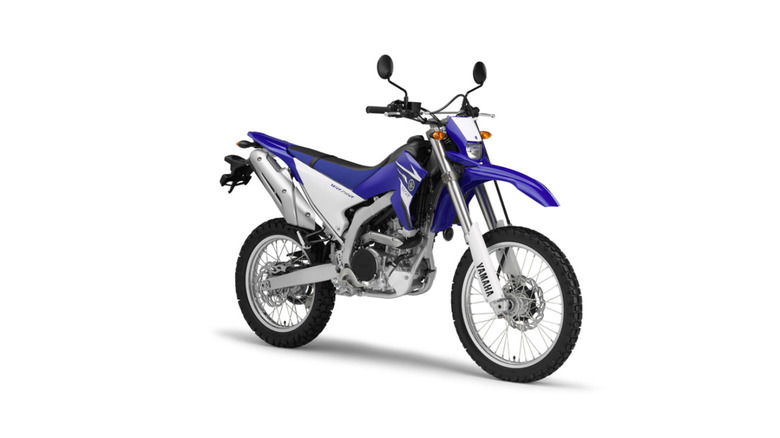
First introduced in 2008, the Yamaha WR250R brought a serious, sporty edge to the 250cc class, which had been mostly full of heavier, budget-focused machines. Yamaha engineered the WR250R as a premium bike, packing in a fuel-injected, liquid-cooled DOHC four-stroke engine that even featured a downdraft straight intake, titanium intake valves, and a forged piston for a serious 11.8:1 compression ratio.
All this was encased in an advanced semi-double-cradle aluminum frame and supported by a fully adjustable suspension that gave you a massive 10.6 inches of travel at both ends. This meant the WR250R rode much closer to pure dirt bike territory than its competitors. That high-performance DNA, combined with a tough engine, really made it seem like a go-anywhere, do-anything machine.
According to Dirt Rider, Yamaha cited "global production efficiency" as the main reason for pulling the plug in 2020. It deserved another year because it left Yamaha without a premium small-displacement dual-sport. If Yamaha had just kept it around through 2021, it could have capitalized on people looking for socially distanced, off-grid exploration.
Honda CB1100RS
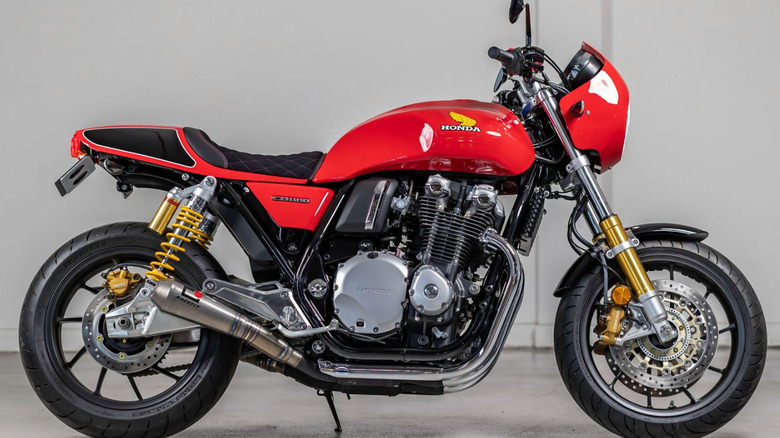
The Honda CB1100RS is a modern classic, but Honda had to discontinue it after the 2021 Final Edition because of tougher emission regulations. It really deserved one more year, especially since it was the peak of the air-cooled inline-four heritage that put Honda on the map. With the whole industry shifting mostly to liquid-cooling and parallel twins, a 2022 model would've been a rare, authentic masterpiece for collectors.
When it first showed up in 2017 to make the CB1100 lineup even more appealing, the RS variant was designed specifically to mix that classic Universal Japanese Motorcycle vibe with a sportier, café-racer-inspired look. Honda kept that massive 1140cc, DOHC, air- and oil-cooled inline-four engine going strong through the Euro 3 and Euro 4 eras. It even used alternate cam timing across the cylinders, creating an off-beat, soulful exhaust rumble while maintaining Honda's signature smooth and predictable power delivery.
The CB1100RS really stood out from its EX sibling, upgrading the suspension and adding a fat aluminum swingarm, a shorter wheelbase, and sharper steering geometry. This seriously capable chassis upgrade, which included 43mm Showa Dual Bending Valve front forks, twin remote-reservoir rear shocks, and radial-mounted Tokico four-piston brake calipers, gave riders a surprisingly engaged and connected feel on winding roads.
KTM RC8 R
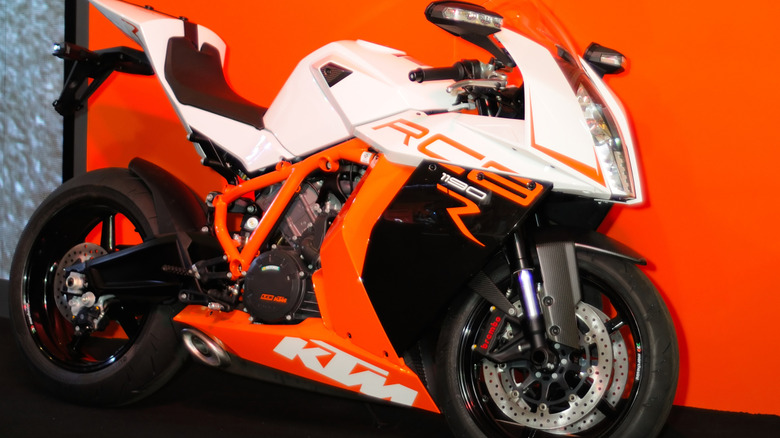
KTM pulled its last full-faired superbike, the awesome RC8 R, from its street-legal lineup in 2015. KTM's CEO at the time said that high-performance street bikes hitting 200 horsepower were just getting too dangerous for public roads and belonged only on racetracks. That explanation sparked a lot of debate, especially since the brand was still making and developing the super-powerful 1290 Super Duke R naked bike, which put out around 180 horsepower.
The RC8 R came with a super adjustable chassis, and you could tweak the subframe, seat height, footpeg positions, shift linkages, the clip-on handlebar rise, and more. Its removal was likely a mix of many reasons, but the RC8 R was too unique to let die that way.
If the Austrian manufacturer had just given the RC8 R a 2016 model year, it would've been the perfect chance to tackle that perceived danger issue directly by adding the advanced electronic rider aids the bike was missing. The RC8 R didn't have traction control, anti-lock brakes, or power modes, which were fast becoming industry standards. A 2016 update could've let KTM put the sophisticated electronics package from the 1290 Super Duke R right into the RC8 R's architecture.
Harley-Davidson V-Rod
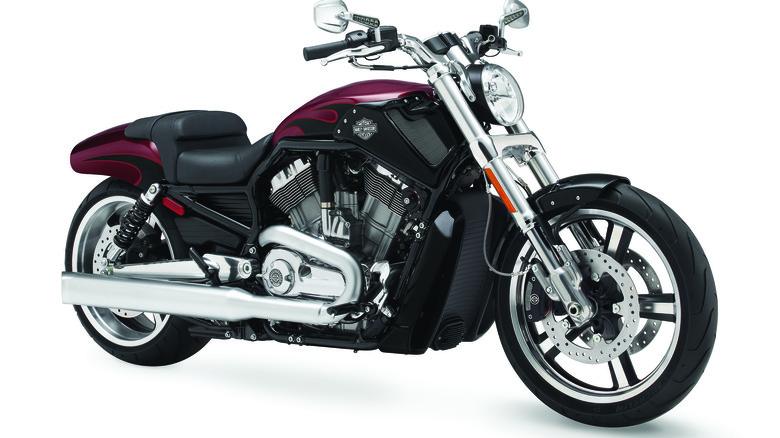
The Harley-Davidson V-Rod was a huge change for the company, moving away from its old-school, air-cooled roots when it first came out. Porsche Engineering even helped develop it, and the V-Rod packed a super cool 60-degree, liquid-cooled V-twin Revolution engine with double overhead camshafts, meaning it could scream up to 9,000 rpm and kick out some serious horsepower.
It was a futuristic, low-slung muscle bike that was all about straight-line speed, not so much the classic cruiser look. It seemed like it was for a unique kind of rider, someone who probably wouldn't have even looked twice at a Harley otherwise. It had a pretty good 16-year run, but the V-Rod was quietly dropped after the 2017 model year. The Harley-Davidson V-Rod may have been discontinued because it would've cost a lot to update the engine to meet Euro 4 emissions standards, or simply due to dwindling sales.
Cutting it early left a big gap in Harley-Davidson's lineup, especially since the global power cruiser segment was changing so fast. Harley didn't have a direct competitor for something like the Ducati XDiavel. Making a final edition could have maintained competitiveness while a replacement was developed.
Aprilia Dorsoduro 900
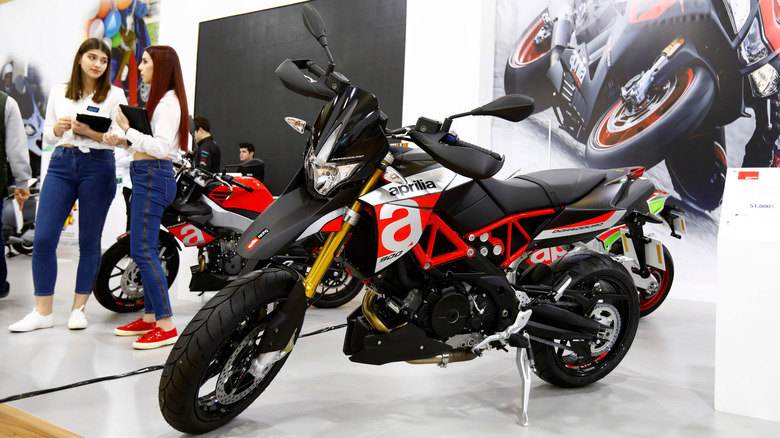
The Aprilia Dorsoduro 900 was a rowdy, big supermoto that was just cut in 2020. Powered by an 896cc, 90-degree V-twin engine kicking out almost 95 horsepower and a solid 66 lb-ft of torque, the Dorsoduro 900 was a machine built purely for getting you hyped and providing agile street fun. With its pretty tall 34.2-inch seat, upright, wide dirt bike-style handlebars, and iconic under-seat dual exhausts, it offered riders a great view of the road.
Even though it had modern electronic rider aids, including a full-color TFT display, three ride modes, and multi-level traction control, the machine still kept that raw, aggressive vibe. Aprilia, however, decided to ditch the 900cc V-twin platform in 2020 because of new Euro 5 emissions rules and focused all its energy on its brand-new 660 platform instead.
Keeping the Dorsoduro 900 in the lineup for 2021 would have let Aprilia market this punchy V-twin directly alongside the RS 660. The Dorsoduro 900 would have grabbed the attention of anyone who found the polished 660cc parallel-twin too mellow for their adrenaline fix.
Triumph Thruxton RS
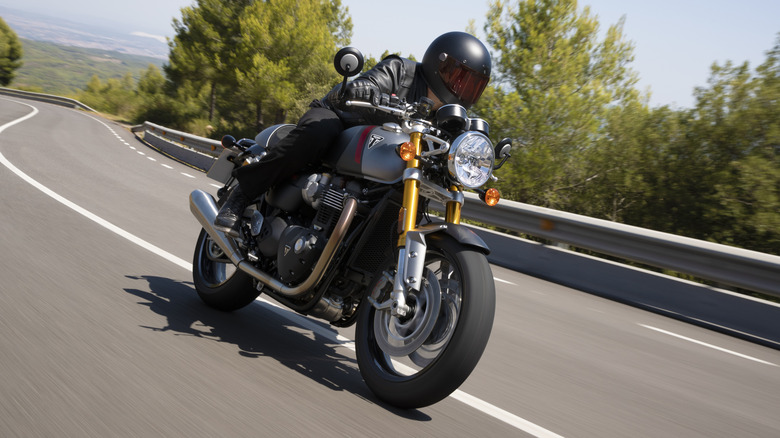
The Triumph Thruxton RS wrapped up with the 2024 Final Edition, leaving the lineup without this aggressive retro sportbike. This was a machine that blended timeless 1960s British looks with modern performance. It absolutely deserved one more year because the Thruxton RS was easily the most refined version of the modern classic ever made, packing high-end Öhlins and Brembo components. It's also a great motorcycle for beginners.
At the heart of this ultimate cafe racer sat a magnificent High Power 1200cc parallel-twin engine with a 270-degree crank, carefully tuned to give you over 103 horsepower and 83 pound-feet of torque. Triumph's engineers had done a fantastic job, cutting internal engine inertia by 20% by using lightweight parts, a lighter clutch, and magnesium covers. This lets the motor spool up freely, delivering a mid-range punch alongside a truly heavenly exhaust note.
The Thruxton featured fully adjustable suspension at both ends, consisting of a 43mm Showa fork and twin Öhlins piggyback shocks, which kept the bike planted through sweeping corners. Braking duties were handled by Brembo M50 four-piston radial monobloc calipers clamping down on twin 310mm floating rotors, delivering sportbike-level stopping power.
Harley-Davidson Fat Bob 114
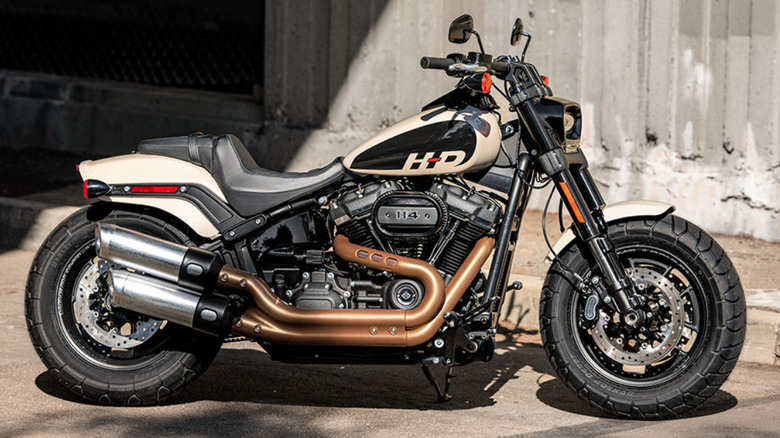
The Harley-Davidson Fat Bob 114 looks really cool with its post-apocalyptic style and great handling. So, it's a real shame it got dropped from North America for 2025. This motorcycle was a massive shift from those traditional, chrome-heavy Harley-Davidsons. It went for a tight, lean, and super sporty vibe instead. It had hardly any chrome, striking bronze exhaust headers, twin stacked mufflers, and a distinctive horizontal LED headlight.
It was powered by the Milwaukee-Eight 114 engine, which pumped out a ton of torque: 114 pound-feet at 3,500 rpm. That meant thrilling acceleration and instant passing power right off the line. Plus, it handled surprisingly well for a 675-pound machine. It used a stiffened Softail chassis, a Showa inverted fork, and a rear monoshock to offer precise, confidence-inspiring cornering.
With dual front disc brakes squeezed by four-piston calipers, its stopping power was equally impressive, and its 31- and 32-degree lean angles let riders really hustle through twisty backroads in a way few traditional cruisers ever could. Removing this absolute gem from the lineup seems counterintuitive. Competitors like Indian Motorcycle are perfectly positioned to grab this audience with bikes like the liquid-cooled, 105-horsepower Scout Bobber.
Honda VFR800F
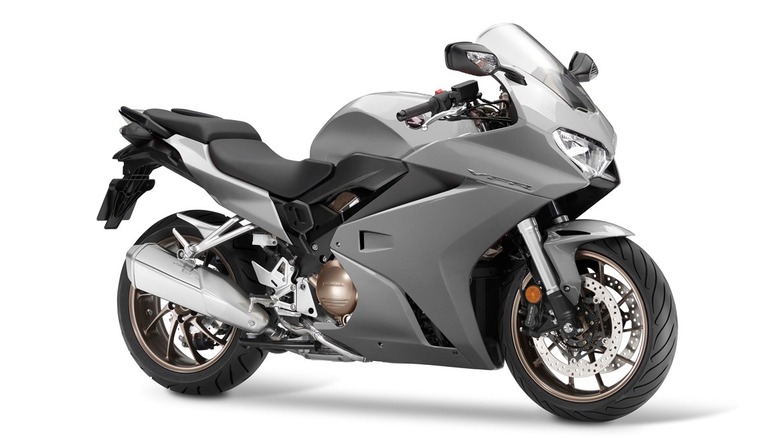
The Honda VFR800F has great balance, giving you the nimble handling and lean angles of a sportbike with the comfort, wind protection, and stability you need for those long tours. What truly made it even better was Honda's incredible 782cc liquid-cooled, 90-degree V4 engine, which delivered a unique, raspy exhaust sound and super-smooth mid-range torque. This is also one of the few Hondas offering a dual-clutch transmission.
Even with all that amazing heritage, Honda actually stopped making the VFR800F after the 2022 model year. That complex V4 engine architecture just made it super tough and expensive for them to update it for the strict new Euro 5 emissions rules. However, a motorcycle icon this huge really deserved one more production year as a special edition, rather than quietly disappearing into motorcycle history books.
This special, final model could have highlighted all those characteristics that fans loved, from that unmistakable V4 rumble to the bike's gorgeous single-sided Pro-Arm swingarm and its premium paint finishes. By putting out this swan song, Honda would have given the community a commemorative, highly collectible version of a bike that did a great job in the modern sport-touring category.
Ducati Monster 1200
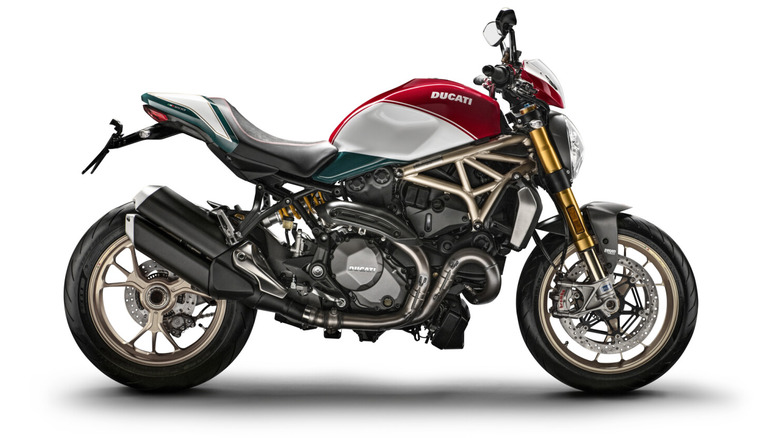
Ducati phased out the powerful, large-capacity Monster in 2021 when it introduced the smaller, new model. The 1200 was a big motorcycle, rocking a liquid-cooled 1,198cc Testastretta V-twin engine that pushed out 147 horsepower and over 90 pound-feet of torque. It absolutely deserved one more year to show off and get the last of the profit it could get.
The Monster 1200 had a steel trellis frame that used the beefy engine as a stressed member. Unfortunately, Ducati launched the completely redesigned middleweight variant and dropped that classic trellis structure. Instead, it went for a modern, superbike-derived alloy front frame to save as much weight as possible.
Keeping the 1200 around for 2022 would've given customers a high-end, trellis-frame option if they weren't totally sold on the new Monster's lighter frame. This would have eased the transition for Ducati's most famous nameplate. A final celebratory model year would've let riders pick those premium components that made the 1200 special, like the fully adjustable Öhlins suspension and those ferocious Brembo M50 brakes found on the S models.