

Kia's 2026 Sportage PHEV Isn't The Cheapest, But It's The Best Buy For A Lot Of Drivers
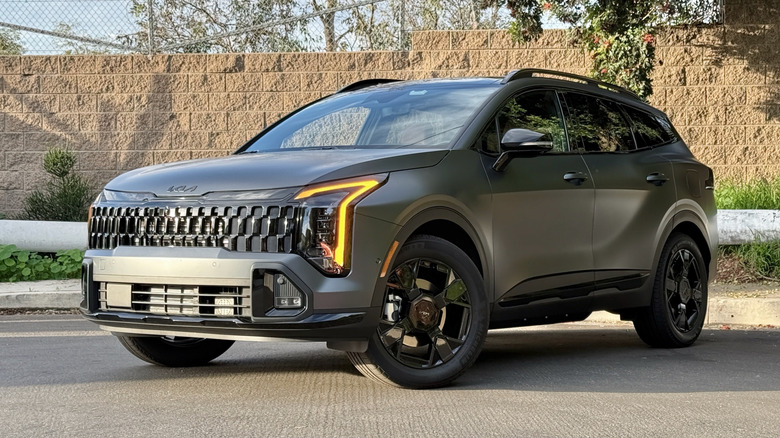
Plug-in hybrids are one of the biggest missed opportunities in the automotive industry over the last few decades. There are a lot of forces at work in the automotive world, dictating which cars get built and which ones don't, but I'm of the opinion that we tried to make the leap from purely gasoline-powered cars to EVs way too quickly.
The transition away from gasoline-powered cars as everyday drivers would've been much easier and met with less resistance if the United States had adopted plug-in hybrids first. With an easier on-ramp, people would've understood just how little daily driving they actually did, and how much could be done without needing a full electric charge every single day.
 Travis Langness/SlashGear
That's where an SUV like the 2026 Kia Sportage PHEV comes in. It's efficient when used as a fill-it-up-and-go sort of vehicle, but it's at the peak of its powers when you plug it in, too. Using a bit of electric range a day, to cover all the basic local travel, is one of the easiest ways to operate a new vehicle. Don't get me wrong, I like fully-electric travel and pure gasoline cars for their own unique reasons, and they both shine brightly in their own ways. Some of my favorite modern vehicles are EVs, and they have their place as practical vehicles, but plug-in hybrids are really the sweet spot when you want a combination of overall efficiency and real-world usability.
It's the best powertrain in the lineup
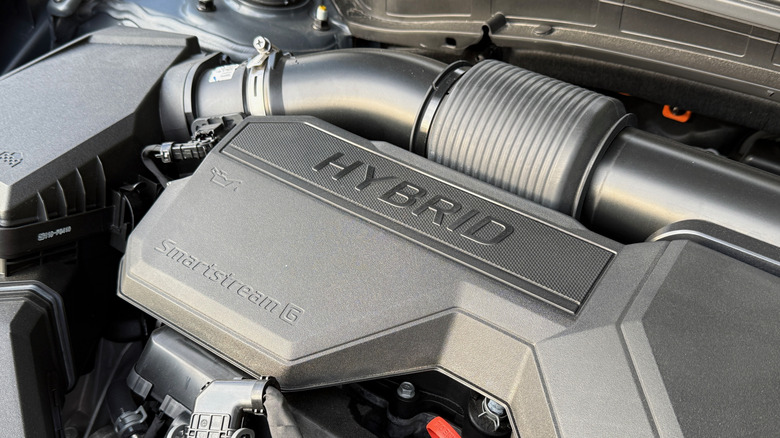
There are three different versions of the Kia Sportage: ICE, HEV, and PHEV. Or, as they're more commonly known: gas, hybrid, and plug-in hybrid. All three take gas, but the only one that accepts a plug as well is the PHEV.
The PHEV is actually the most powerful of the bunch, producing 268 horsepower compared to the hybrid's 232 hp and the gas-only output of just 187 hp. There's a big difference in torque, too: the PHEV puts out 271 lb-ft. That's the same amount as the hybrid, but nearly 100 lb-ft more than the gas-only model, and the difference can be felt pretty quickly when you tip your right foot into the throttle.
 Travis Langness/SlashGear
Like a lot of all-electric vehicles, the PHEV's power helps it get a jump off the line, making it feel even more potent than the 268 hp rating might suggest. And, like most fully-electric vehicles, this makes the Sportage PHEV much more enjoyable to drive in heavy traffic situations and on crowded daily commutes. Passing power and full-throttle acceleration are certainly adequate, with enough motivation to get around slow movers, but where the PHEV's powertrain really shines is in overpopulated spaces. Then there's the admirable fuel economy.
The fuel economy depends on how you drive it
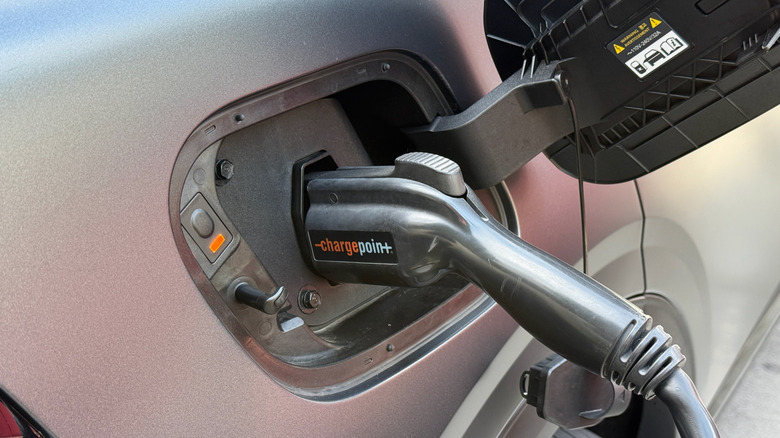
According to the EPA, the Sportage PHEV can go as far as 34 miles on a single charge. After the battery power runs out, the Sportage can return 36 mpg combined — a strong number for a compact SUV. It's not as efficient as the front-wheel drive version of the regular hybrid (that has an EPA estimate of 42 mpg), but the electric range means you could go a pretty significant distance before ever putting gas in the tank. If you have a garage with a Level 2 charger or access to a public charging station, that's the sort of range that can be easily replenished overnight.
Most of my trips are local. I visit friends, go out to restaurants, and go shopping within a small radius of home; few of those activities require more than 30 miles of driving at a time (in Los Angeles, it's even less than that). It's my contention that most Americans drive that sort of daily cycle too (the EPA average for drivers across the U.S. is less than 40 miles per day). That's the reality of life in most big cities anyway – all the stuff you need is pretty close to home – and that's why plug-ins like the Sportage PHEV make so much sense.
On longer trips, the PHEV has impressive overall range too: I was able to do a few hundred miles without needing to top up the gas or the electricity. So, there's nothing stopping you from taking that holiday road trip to visit family, and there's no requirement to stop for electricity along the way.
Charging can take a while, but that's okay
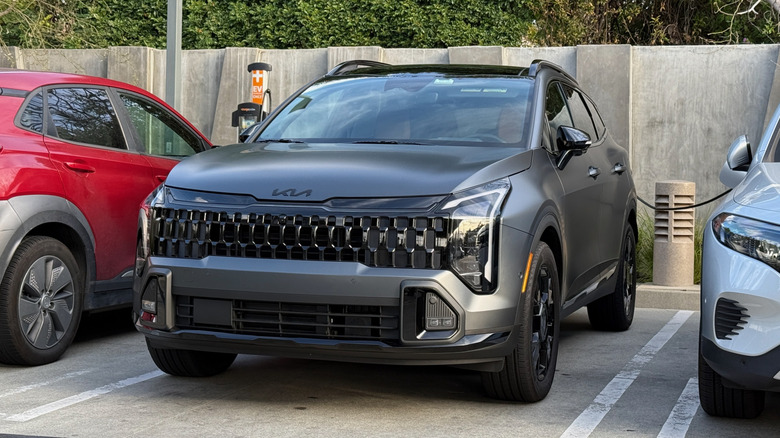
Partially because we want fast-charging solutions for our EVs, it can be a little tough to publicly charge vehicles like the Kia Sportage PHEV these days. The Sportage uses what's called a J1772 connector, which isn't as common as J1772/CCS and NACS connectors at DC fast charging stations. Several automakers have fully made the switch to using NACS across all of their EVs, so lots of the available public charging stations near me only use that sort of plug. And, since I live in Los Angeles, where EVs and plug-in hybrids are a bit more popular, the available J1772 stations in my area are typically in use during high-traffic times.
 Travis Langness/SlashGear
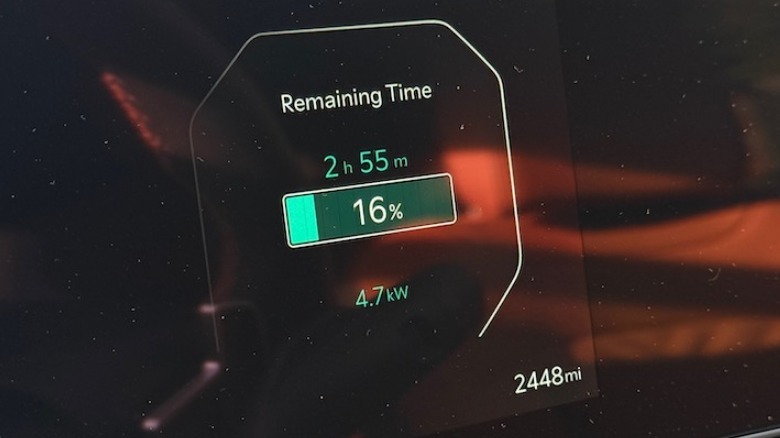
Thankfully, there are NACS adapters available, and regular charging solutions work just fine most of the time. I work from home most days, and I can use a standard outlet to give the Sportage some juice, even if it does take quite a while to top up on a Level 1 (120V) charger. Most homeowners should be able to install Level 2 chargers with relative ease, but even if they can't, leaving the Sportage on a Level 1 charger will get it there in a little over a day. When I was able to find and use public J1772 charging stations, going from zero electric range up to a full 34 miles took less than 3 hours.
Pricing covers a wide spread
From the base non-hybrid, all the way up to the top trim X-Line Prestige model I tested, there's a lot of room between the trims of the Sportage. The base non-hybrid (the LX trim) starts with an MSRP of $28,790 (including $1,495 destination fee), which is pretty affordable in today's market. Moving up to the same trim on the hybrid model is arguably a no-brainer: it starts at $31,985. The difference in fuel economy between those two models will pay for itself in a pretty short amount of time.
The top trim level for the non-hybrid is called the SX-Prestige, and it's considerably more expensive at $39,685. That's still below where the PHEV sets its floor.
 Travis Langness/SlashGear
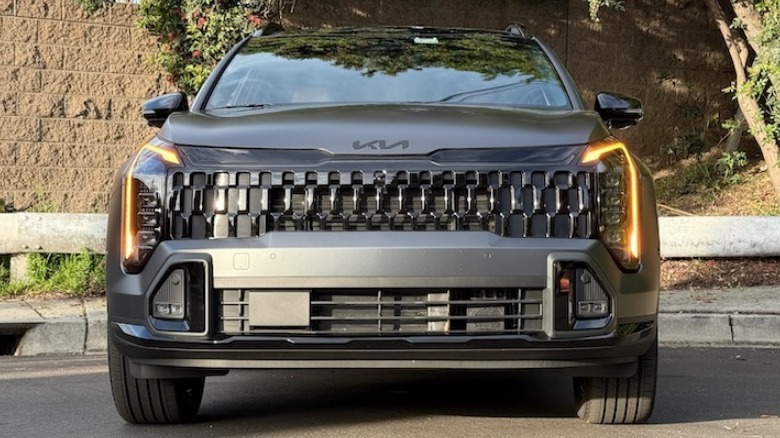
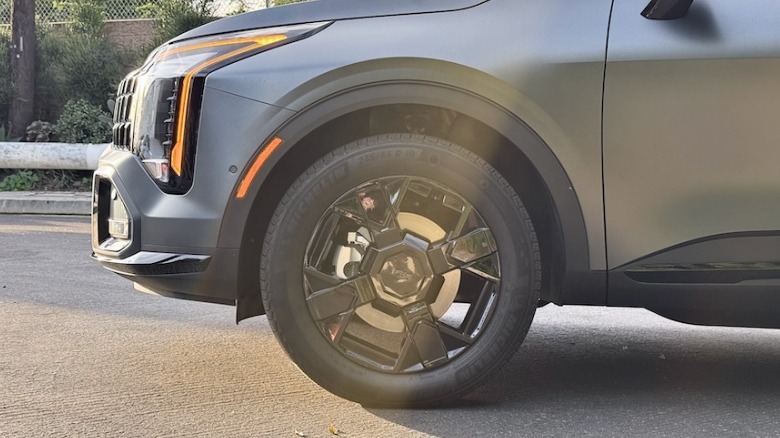
The Sportage PHEV comes in just two trims: X-Line and X-Line Prestige. The X-Line has a starting price of $41,985 (with the ending of the New Clean Vehicle Credit, the Sportage PHEV is not eligible for a federal tax credit for electrified vehicles). The Prestige jumps up to $48,685 , almost $20,000 more than the base non-hybrid model. The PHEV I tested had a few options, too, like the Shadow Matte Gray paint and floor mats, bringing the total up to $49,780. That price makes me think twice about the PHEV, at least in the top trim, so I'd say the sweet spot for the right powertrain is the PHEV X-Line.
You get a lot for your money
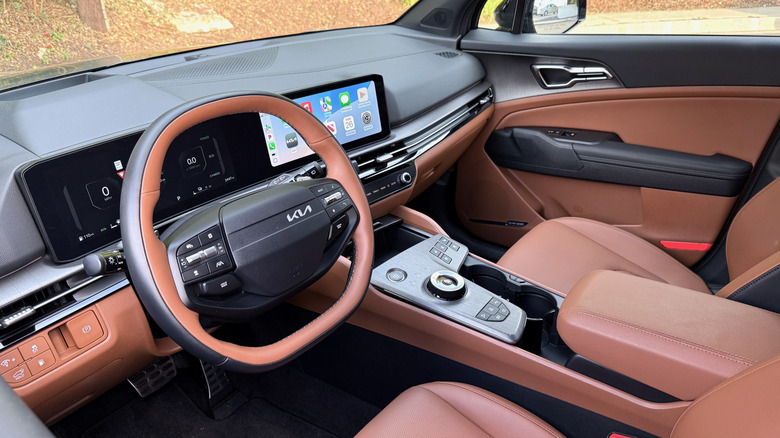
It's pricey, but the Prestige trim comes with plenty of equipment. On the base X-Line PHEV, standard equipment includes heated front seats, dual-zone climate control, a 12.3-inch center touchscreen, wireless Apple CarPlay and Android Auto, and wireless smartphone charging. There's also the list of driver aids, which includes blind-spot monitoring, rear cross-traffic alert, adaptive cruise control, a driver attention warning system, lane-keep assist, and parking sensors.
 Travis Langness/SlashGear
The Prestige adds to those driver aids with a pair of blind-spot cameras that engage when you put on your turn signal, navigation-enhanced adaptive cruise control, forward collision avoidance with pedestrian and cyclist detection, a 360-degree parking camera, and remote parking capabilities that are controlled using the key fob.
Heated and ventilated front seats, heated rear seats, a premium Harmon Kardon stereo, head-up display, a big 12.3-inch curved driver display, a panoramic sunroof, and a heated steering wheel are all part of the package, too. If you're going to spend the big bucks for the Prestige, at least you'll get luxury levels of tech features as part of the deal.
 Travis Langness/SlashGear
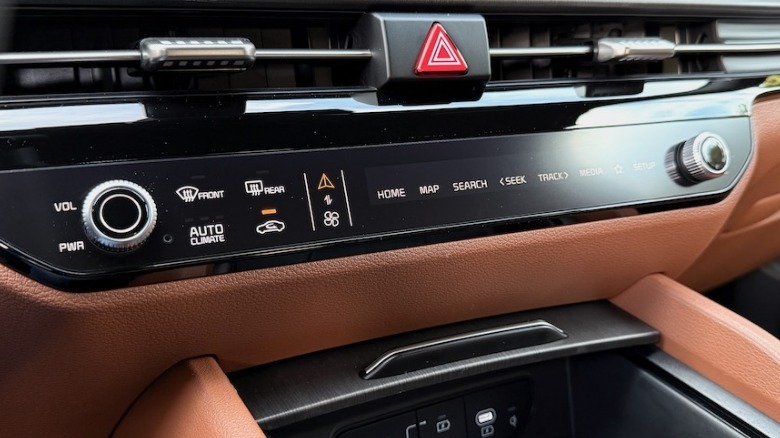
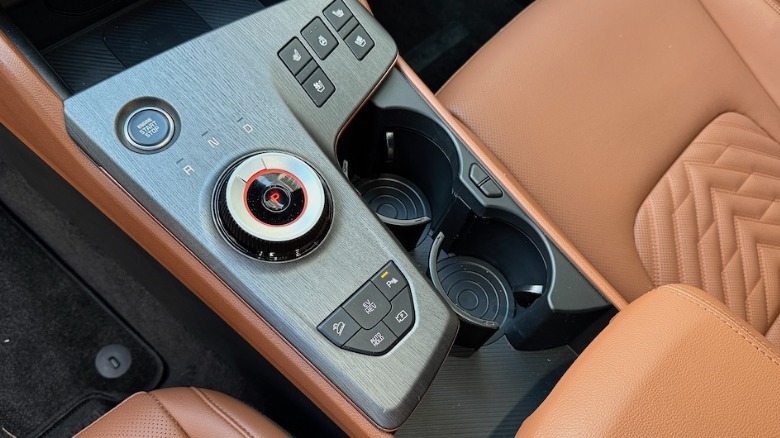
The simplicity of the Sportage's dashboard layout feels pretty upscale too. The buttons and controls are well organized, easy to see with a quick glance, and all the touchscreen controls responded quickly to my inputs. Given free rein over the interior, I'd get rid of the odd, oblong-shaped steering wheel, but I wouldn't change much else.
More than just the electric range
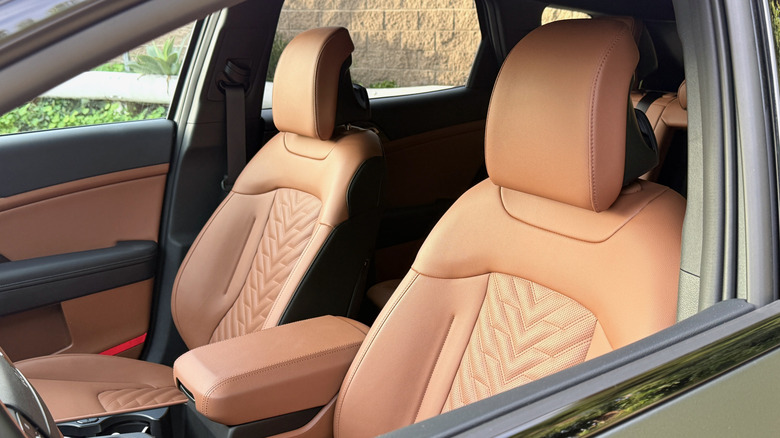
Focusing on the capabilities of the plug-in version of the Sportage is all well and good, but there are a lot of other virtues worth mentioning. For starters, my time with the Sportage was comfortable and quiet. It had a smooth ride over rough roads, and it was an excellent freeway transport, taking me back and forth to some out-of-town events. The driver's seat is supportive and comfortable, with really impressive padding that I'm sure would keep me comfortable over even longer distances than the 100-mile stretches I had to cover during my test.
 Travis Langness/SlashGear
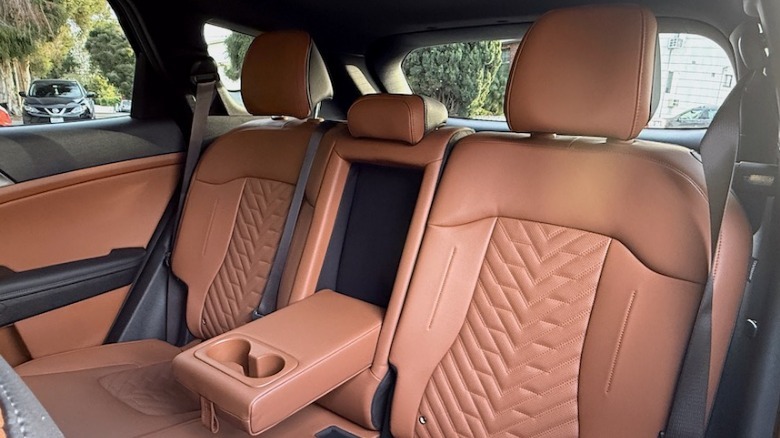
All the cabin materials in the Sportage were top-notch. Having spent some time in a few of the Sportage's luxury cousins lately (think top-end Hyundais and a few Genesis models), a lot of the Sportage's interior felt familiar — which is high praise. The color scheme of terracotta and black felt pretty premium at first glance, and the seats are covered in what seems like the sort of upholstery that will hold up to abuse over time.
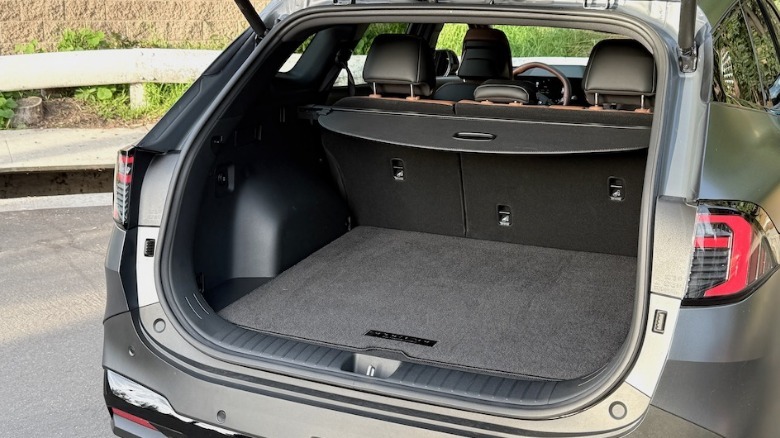
The cabin is well laid out, too. Cupholders, small cubbies, and storage USB ports are just about everywhere. The rear seats have bolsters to help hold passengers in place, and there's lots of cargo space in the rear for luggage.
 Travis Langness/SlashGear
The Sportage has a dual-level cargo floor that can be adapted for different sizes and shapes of luggage, or if you want to keep your groceries from tipping over (that's how I used it). Behind the rear seats, there's 34.5 cubic feet of storage space, and with the rear seats folded flat, that number grows to 65.5 cubic feet.
2026 Kia Sportage PHEV verdict
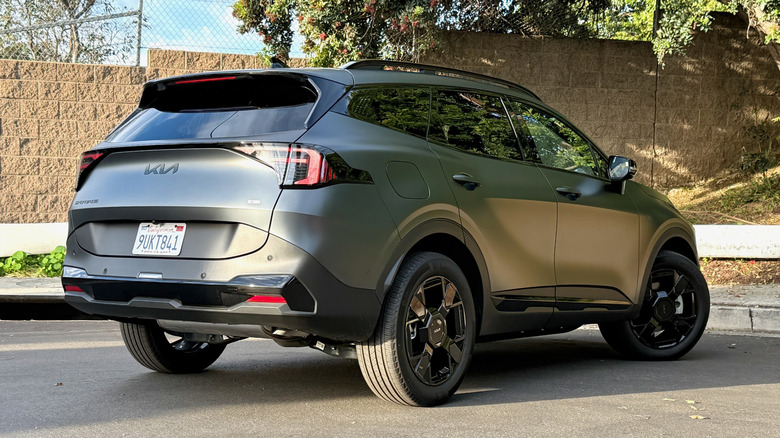
It might not be the right choice for everyone, but I like what the Sportage PHEV offers. It has a full suite of modern tech and features, along with some creature comforts that cross into luxury SUV territory. The cabin is comfortable and quiet, the ride is smooth, and there's plenty of space for all your stuff; that's all the utility bases covered.
The plug-in powertrain is where the Sportage PHEV gets most of its appeal, especially when you consider just how slim the pickings are for plug-in models in general. Most of the available plug-in hybrid SUVs these days are luxury offerings with even more expensive price tags.
As a practical and usable SUV, the Sportage PHEV offers serious competition to class leaders like the Toyota RAV4 and the Honda CR-V. The RAV4 in particular is all-new for 2026 and the plug-in hybrid version of the popular Toyota SUV gets a big boost in range. On some trims, it can go as far as 52 miles on electricity before it switches over to gas power. It's probably the Kia's toughest competition. The CR-V Hybrid isn't available with a plug-in option, but it's still one of the most versatile and appealing options in the class. And, of course, if you really can't be bothered with the plug-in version of the Sportage, the standard hybrid is pretty appealing too.