

4 Of The Worst Places To Store A Ryobi Battery
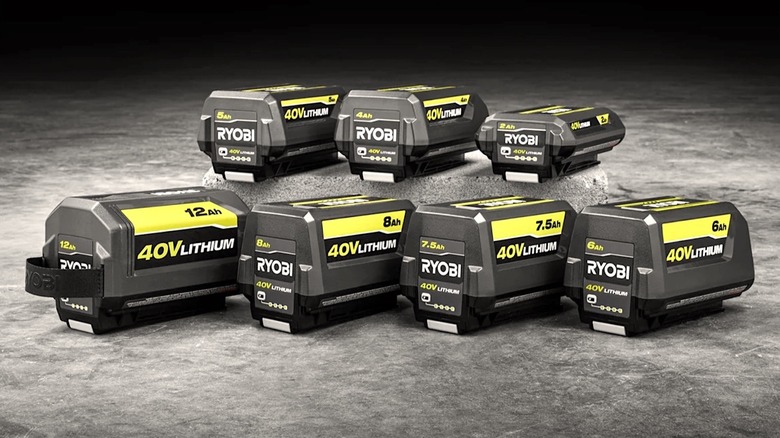
Lithium-ion battery tech has become one of the primary modes of power for tools and yard gear. So much so, that all of the major power tool manufacturers now feature entire lines of devices powered by the rechargeable batteries. Of course, Ryobi does too. Given the brand's popularity in the consumer tool market, we'd wager that many in the DIY sector have more than one lithium-ion powered Ryobi device tucked away in their garage or storage unit.
That means that they likely also have more than one lithium-ion battery primed and at the ready when it's time to get to work. In and of itself, that can be a potentially troubling prospect, because even as widely utilized as lithium-ion batteries have become over the past couple of decades, they've proven a sometimes volatile piece of tech, and have even been known to burst into flames when damaged or subjected to certain conditions.
Given the potential dangers, there are mistakes aplenty owners might make with lithium-ion batteries. To that end, it has become increasingly important that owners of devices which are powered by lithium-ion tech take particular care concerning the how's and where's of storing these power packs between uses. And yes, there are certain places that you should never even consider storing your lithium-ion battery pack. So here's a little primer on where not to keep your Ryobi lithium-ion batteries when they're not in use.
Keep that battery cool

If you know nothing else about lithium-ion battery packs, you should know they are particularly susceptible to damage from extreme temperatures — especially extreme heat. One of the more legit drawbacks of lithium-ion batteries is their propensity for thermal runaway, an internal reaction in which the battery heats up uncontrollably to the point at which it may catch fire, or even explode. Apart from that danger, continued exposure to high temperatures can lead to the sort of internal degradation that cuts short the lifespan of the battery itself, or potentially cause a reduction in performance.
With those facts in mind, you can probably see where we're headed here, which is to deter you from storing your Ryobi lithium-ion batteries in places where they are exposed to extreme heat, or even direct sunlight. That should signal to owners that you should never store a lithium-ion battery in an automobile, because even on a cold day, temps inside a car can be high, and sunlight can always find its way through a window.
Speaking of the sun, you should never leave your Ryobi batteries laying around in the sunlight, even if you're performing other tasks a few feet away. Likewise, you should also avoid storing the batteries inside of a garage or backyard storage unit that does not have any sort of climate control feature. Ditto for basements and attics, which can be sweltering during the summer months.
But don't keep it too cool
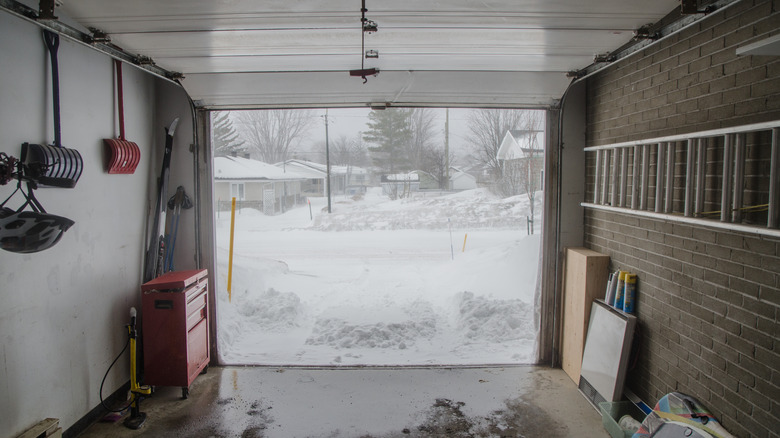
While extreme heat is by most accounts enemy number 1, extreme cold can be every bit as damaging to lithium-ion batteries. This may come as a surprise to those who've heard about a certain little trick involving sub-freezing temperatures that may bring dead lithium-ion batteries back to life. While the trick could temporarily revive a power pack, it may ultimately do more damage than good, as it will also invariably introduce moisture into the internal components. And that will likely ensure the battery will die for good.
Moreover, freezing temperatures can significantly reduce chemical reactions inside of the battery, limiting the action of the internal ions to the point that it will reduce performance and voltage output. So, what exactly does that mean for your storage options? It means that any garages or outdoor storage units without climate control are off-limits. That is especially true for owners who live in areas prone to ice and snow in the winter months, as the combination of cold and wet can prove deadly to exposed Ryobi batteries.
Moreover, you'll also want to ensure you aren't storing the batteries in any basement spaces lacking in either climate control or proper insulation. When it comes to temps, what you're looking for in a safe storage space is a dark space that regularly sits at room temperature.
Damp and wet areas should are another no-no
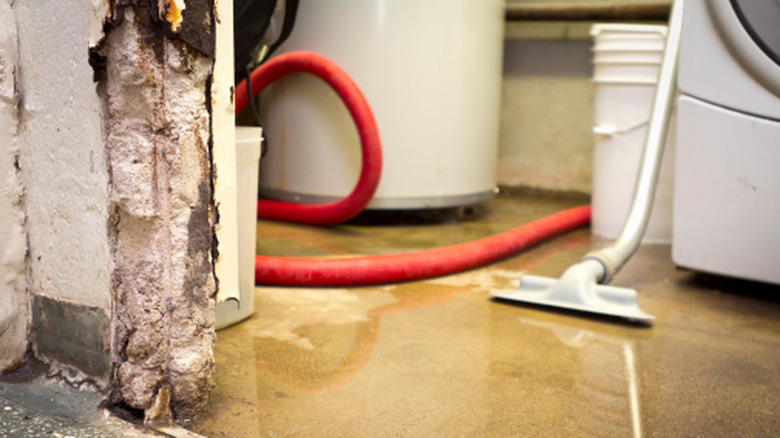
In addition to avoiding storing your lithium-ion batteries in exposed locations where they might be subjected to extreme cold or even snow, you should avoid any locale that regularly endures dampness, and especially those where standing water might come into play. That is, of course, also true of the tools those batteries power.
In the end, you're looking to avoid many of the same issues as with cold, as water and dampness are prime contributors for corrosion. While corrosion can cause damaging rust and malfunctioning in tools, such water damage can be particularly dangerous with lithium-ion batteries, as it can trigger internal chemical reactions that lead directly to thermal runaway and the potential for fire and explosion.
Now, it should be easy enough to avoid such a catastrophe by not just storing your Ryobi lithium-ion batteries in places with high humidity or standing water. That means storage facilities with exposed walls, and any basement spaces with no humidity control features. Ones prone to flooding should also be strictly off limits. Ditto for any location that is regularly subjected to ingress of salt water, which is particularly damaging to lithium-ion batteries due to its elevated electrical conductivity.
Proximity to combustibles should also be accounted for

By now, you've likely concluded that the best option for storing your Ryobi lithium-ion batteries is in a closet somewhere inside of your home, or at least in a well-protected cabinet in your climate-controlled garage. But even in one of those locations, there is another factor that you need to consider: what else you're storing in those spaces. More specifically, you need to know whether or not anything in the vicinity of your battery is flammable.
The reason why should be pretty obvious once you account for the already well-established potential for an incendiary reaction from the battery. Should things go bad and you battery catches fire, you do not want anything near it that might further fan the flames or increase the potential for an explosion.
As for what qualifies, things like paints and paint thinners, and some household cleaners are obvious culprits. If there's any question in your mind, the chemical's flammable potential should be clearly marked somewhere on its label. And if you're still not certain, it is always best to play it safe and store your battery elsewhere. Apart from chemicals, you also want to be certain not to store your lithium-ion battery in locations where cleaning rags and drop cloths are kept, as such items are all but certain to go up in flames should your lithium-ion battery catch fire.