

You May Want To Steer Clear Of These Cars Consumer Reports Says Are Unreliable
Lots of factors can help you whittle down the near-endless options for your budget when buying a car: mileage (if you're buying used), gas mileage, the level of tech on the dashboard, and the level of comfort for you and your passengers, to name a few. While all these determinants go a long way to informing your choice between multiple options, one other should probably have the biggest say in your decision: reliability.
Nobody wants to buy a nice car that requires multiple visits to the mechanic to stay on the road. Sure, maintenance is an important part of owning a car, but you want to be able to drive from point A to point B without wondering what new issues your ride is going to run into. Ideally, if you follow all the right maintenance procedures, you want your car to perform just as reliably five years down the road as the day you drove it off the dealership lot — while spending as minimally as possible on upkeep. To this end, SlashGear has a list of car brands that cost the least to maintain.
Since reliability is front and center of consumer decision-making, Consumer Reports has come up with a list of the 10 least reliable cars in 2026. You'd probably do well to steer clear of these options, and we'll drill down into why with each one.
GMC Acadia
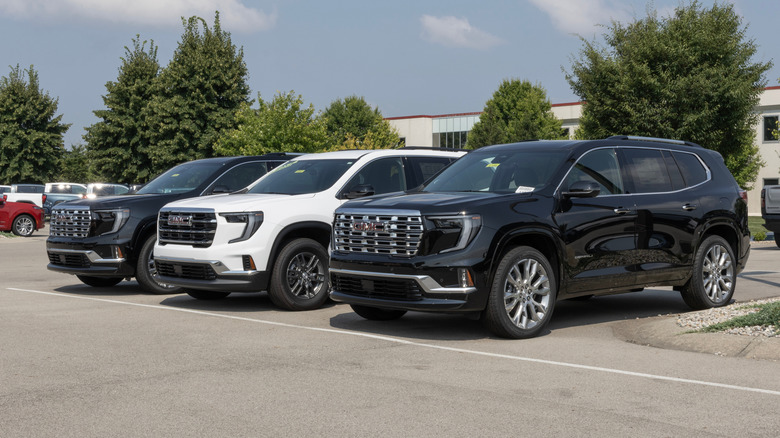
The GMC Acadia's struggles with reliability aren't a new phenomenon; issues have followed the model since it first launched in 2008. We even have a list of Acadia model years you might want to avoid. Its issues aren't exactly run-of-the-mill and easily withstood either. For the 2008 model, transmission problems were the headliner; they gave out randomly. Ideally, you'd expect to get at least 100,000 miles of run from your car before coming across any significant transmission problems. With the 2008 Acadia, however, these issues popped up well before that mark.
The transmission improved for the second generation, but other mechanical problems like water leakages and faulty thermostats reared their heads in the 2013 model. And then the reimagined 2018 model brought back the Acadia's transmission issues. Its timing when shifting could both bump and sag, and throw off drivers' rhythms. With enough time, it could even damage the transmission shifter.
The pains don't seem to have an end in sight either. The 2024 facelift was supposed to bring wholesale upgrades, from a better-powered engine to a comfy interior. That hasn't translated to good performance, unfortunately; build quality is still a question mark, fuel economy is poor for a midsize crossover (20 mpg combined versus a 24-26 range for the best-in-class), and mechanical issues stemming from the engine, radiator, and transmission still pop up, no matter the mileage.
Rivian R1T
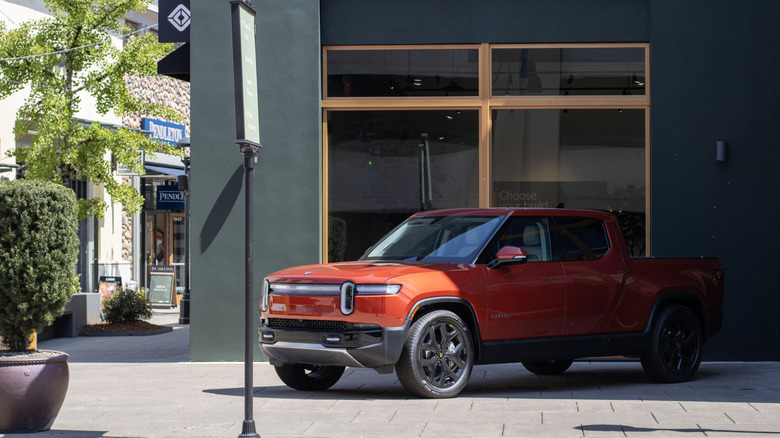
Rivian is one of the leading brands of the EV boom, and its R1T model has the distinction of being the first mass-produced electric truck sold in the United States. However, Rivian is having a tough time converting that hype into real service; in its four years of production, it has already developed an unwanted reputation for being unreliable.
The pilot 2022 model has endured 11 recalls of varying degrees of seriousness. Over 12,000 units were recalled in early 2023 over concerns with the front seat belt system, which could cause the airbag to deploy improperly (or worse, not at all). Seat belts caused hundreds of units to be recalled on three separate occasions as well. These are the last thing a car owner wants to have to worry about, and the incessant nature is off-putting.
There are also issues with the battery, climate system, and other electrical systems to consider. The battery may be rated at 12V and advertised to travel 420 miles on a full charge, but it's prone to failure and falls short of that range considerably (270-300 miles) in real-world testing; some owners report the battery failing multiple times despite high charge levels. Question marks also remain over build quality (lots of misaligned trim pieces and panel gaps that give rise to increased wind noise and rattles) and HVAC systems that can sputter at any time.
Chevrolet Blazer EV
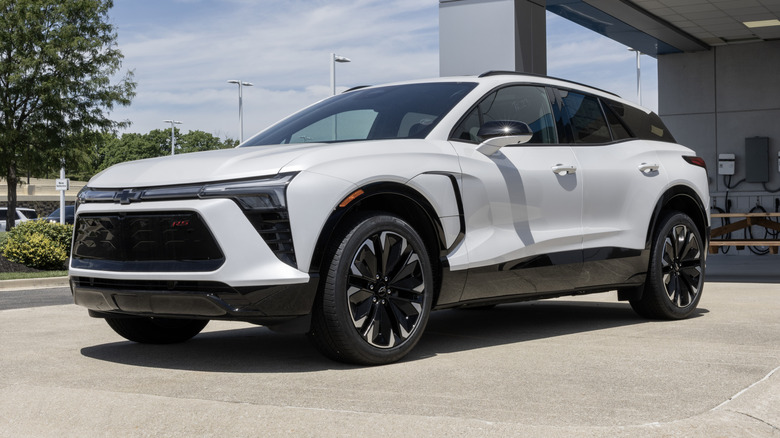
Another electric vehicle on the list is the Chevrolet Blazer, which shouldn't surprise anyone — problems have run amok in the trim since the 2024 model. For the 2024 model, in fact, the issues got so bad that Chevrolet had to issue a temporary stop-sale. According to Edmunds, the company's unit showed up to 23 fault codes upon proper diagnostics after driving it around for less than 2,000 miles during a long term road test.
Things didn't get much better in the 2025 rollout either. Some drivers reported not being able to shift out of park — a complaint that led to over 40,000 Chevrolet Blazer EVs being recalled by General Motors. 2025 models account for about a quarter of that figure, which indicates a problem of recurrence that drivers don't want to have to deal with. Couple that with the Chevy Blazer EV having a tendency to unexpectedly go "turtle mode" on drivers and the HVAC system being iffy at best (owners have reported it not being able to produce heat), and you have a car that fits the bill of unreliability.
There's also the chatter of touchy charging to consider; the Blazer EV can either stop charging altogether or witness a huge drop off in charge rate over time that makes juicing the car a tedious affair. Edmunds also reported a steady deterioration in charging performance of the 2024 Blazer EV, and the issue was severe enough to warrant a trip back to the dealership.
Mazda CX-90 Plug-in Hybrid
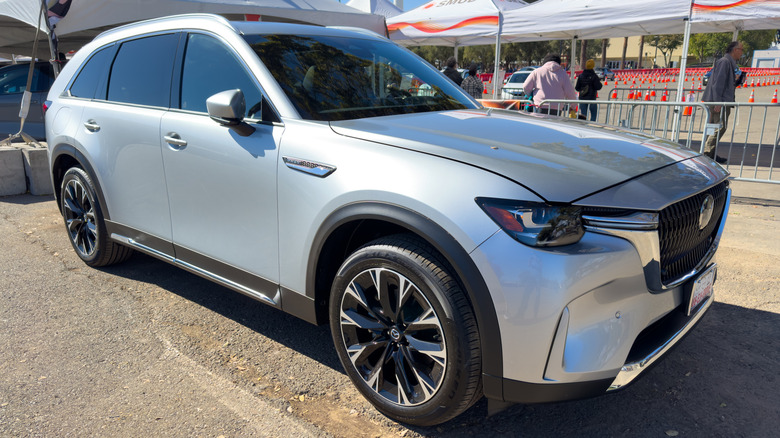
Having a system that depends on harmony between two sources of power without a regular driver feeling a hitch in transmission can be difficult for even the most decorated of automakers, and it's in this area that the hybrid Mazda CX-90 struggles. Its blend of gas and electric is clunky at best — there are noticeable hiccups and jerks in motion, especially at slow speeds or when coming to a full stop. When the CX-90 PHEV runs on gas, the transmission doesn't have too many problems. The electric mode is where the shifting awkwardness starts to rear its head.
MotorTrend reports a "hard and abrupt" shift on occasion in this mode, which is quite unlike regular EVs, but manageable. In terms of fuel efficiency, it falls behind other models in its class — there's no real difference in economy between the PHEV and the regular gas-only CX-90 when running on gas. For other reliability metrics, such as recalls, serious mechanical problems, and the like, the Mazda CX-90 plug-in hybrid has a record that can raise a few eyebrows.
Software issues of all kinds have led to widespread inconveniences; faulty dashboard electronics were serious enough to warrant the recalls of over 100,000 units, nearly 90,000 of which were 2024 and 2025 CX-90s. More serious threats, like a loss of drive power, were also discovered. Transmission smoothness, fuel efficiency, and software are the trio of problem areas for the CX-90 PHEV in an otherwise okay ride.
Genesis GV60
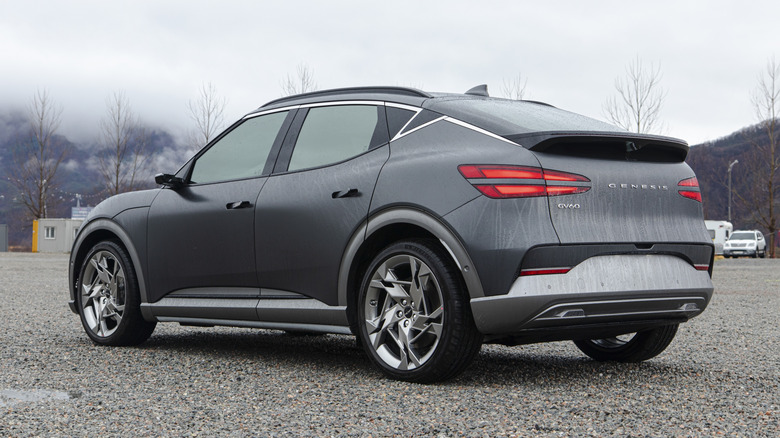
The sister brand of Hyundai and Kia, Genesis came onto the scene in May 2022 with its GV60 EV model. As one would expect coming from a manufacturer of such relative infancy, much like the Rivian R1T, the GV60 has its share of issues that have the potential to irk drivers.
Charging may be the most annoying part of the GV60 experience, especially if you're considering getting the pilot 2022 version. After a relatively low number of miles in the driver's seat, owners reported malfunctions with the integrated charging control unit (ICCU) that affected the recharge process of the 12V battery. Over 1,700 units were recalled to fix the issue by updating the software or replacing the ICCU entirely. However, some recalls either didn't solve the problem at all or ended up manifesting in other areas, like the horn.
Another red flag for drivers is the range — both in terms of raw numbers and its uniformity across different weather conditions. The Genesis GV60 only posts 235 miles in its 2023 model as its estimated range, a figure that pales in comparison to other EVs in its class. This relative brevity is made worse by the variable nature of the statistic. You can get the advertised range out of the battery in an ideal climate, but in colder temperatures (and depending on your speed), the range can dip as low as 160 miles.
Mazda CX-90
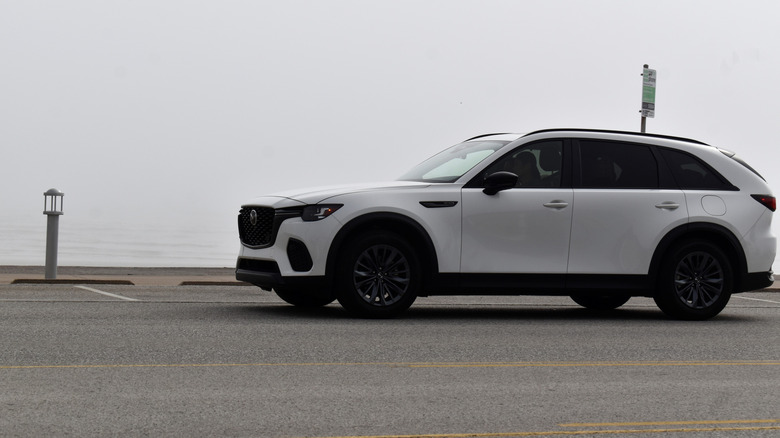
The hybrid version of this model featured earlier in the list, and according to Consumer Reports, the regular, fully gas-powered edition is not exempt from the reliability problems its cousin faces. The reality is somewhat different — chances are, if you can overlook certain annoyances, you wouldn't find the CX-90 unreliable at all.
However, that's not to say that all of the problems the CX-90 faces are trivial. For instance, the National Highway Traffic Safety Administration (NHTSA) recently called for an investigation into a "sticky steering" issue apparently plaguing CX-90 units. 26 such reports were filed with the agency, and to make matters worse, all reports had undergone a previous recall (which had affected north of 40,000 units) to fix the worm gear in the steering system. Failed recalls don't exactly inspire confidence, so there's some credit to Consumer Reports' rating.
Similarly, if you place a lot of emphasis on the infotainment system, you're going to be somewhat disappointed with the CX-90; the connection you'll experience is tenuous at best, and at worst, it doesn't connect at all. Build and ride quality are fine for the most part, but it's been found that the driver's side mirror shakes at high speeds. We'd argue that a lot of these problems certainly cramp the experience of comfort you'd expect, but a fair share of them aren't necessarily reliability issues. Before you make a decision, you should check out our list of 13 things to know about the Mazda CX-90.
Kia EV9
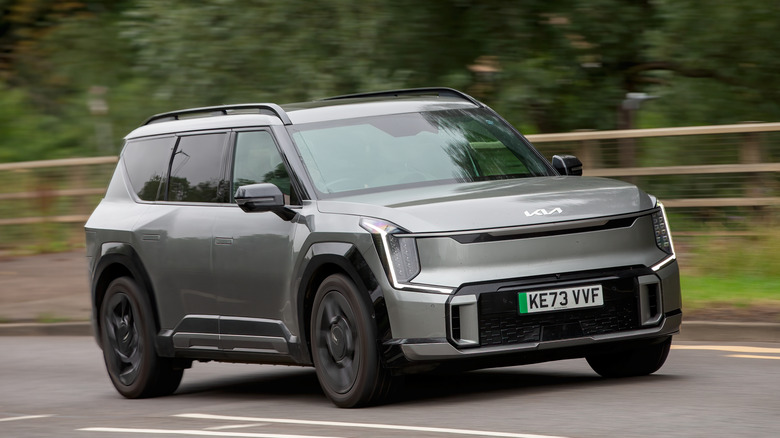
Yet another electric vehicle on the list, the Kia EV9 has some faults that should probably give a prospective buyer cause for concern. Many of the problems stem from software, which wouldn't necessarily be as big a factor with a gas-powered car, but are simply too critical to gloss over here.
On paper, there's loads to write home about with the EV9. There's plenty of cargo space. The 2024 version covers a 280-mile range according to EPA estimates. The build quality somehow reduces the relative incredulity of shelling out around $70,000 on a Kia (if you're acquiring the absolute top of the line). However, under the hood, there's one issue that stands out — the dashboard has had issues with its display. You might be thinking of the infotainment system when we say this, but no, the actual cluster of digital instruments that tell you how fast you're going, initiate your turn signals, and whatnot.
A quick look at MotorTrend and chatter on online forums shows that multiple drivers have run into this problem, and the prospect of being prone to flying blind for even a few minutes is rightfully terrifying. Given that the fix isn't even instantaneous — you'd need to turn your car off and leave it locked for 20 minutes — you'd be justified to be a little hesitant about pulling the trigger on this purchase. Kia did send out a recall to solve the problem, but experiences with Kia dealerships have apparently been less than stellar.
Kia EV6
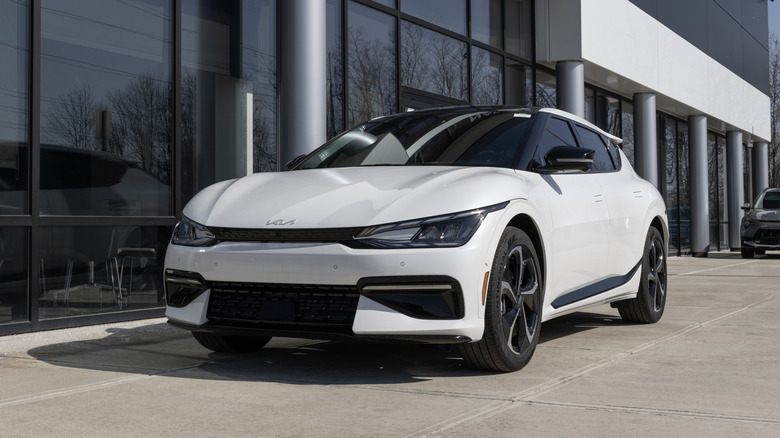
The Kia EV6 is more of a wagon, while the EV9 is a conventional three-row SUV. However, when it comes to software glitches, they might as well be two peas in a pod.
The EV6 manifested a problem with the ICCU, which is something that a lot of EVs struggle with these days. In the EV6's case, the unit is particularly prone to damage, and the problem shows up in two ways. The first is what you'd expect: the 12V battery eventually stops charging, but the second is far more dangerous; the EV6 suddenly loses motive power.
There have been cases of units manufactured between 2022 and 2024 "dying" while actively driving — a phenomenon that can cause traffic pileups, or worse, an accident. These occurrences were grievous enough for the NHTSA to open an investigation into the EV6. Kia recalled over 4,000 units to fix the issue back in 2024, but judging from more recent driver experiences posted on Reddit, it's clear that didn't sort out all the problems. That's quite disappointing, considering SlashGear rated the EV6 quite highly in our 2022 review.
Honda Prologue
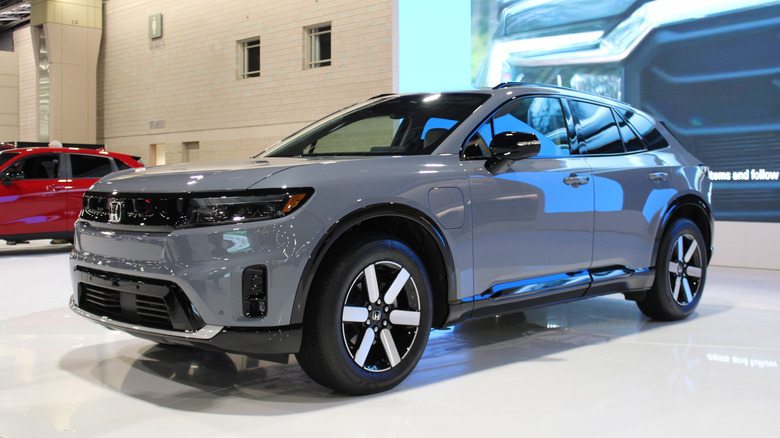
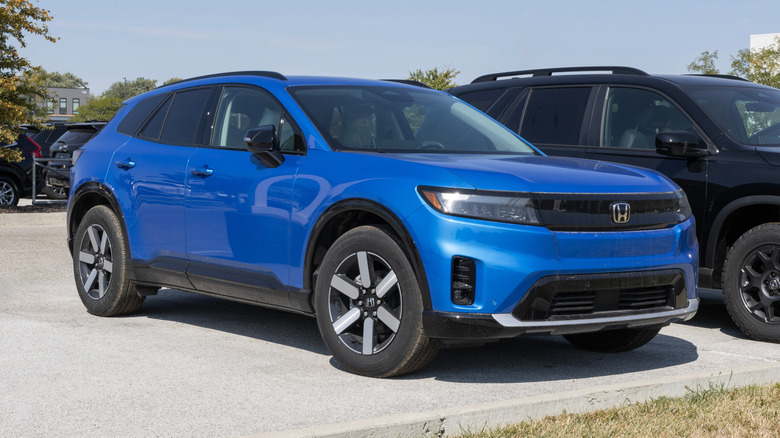
When you shell out around $50,000 on a car, you don't expect to run into incessant problems. That's especially true when you have a car that's essentially the brainchild of two giants in the automotive industry. GM may not have the most pristine reputation in the reliability department, but Honda certainly does. At least, that's what history suggests if you take the Honda Passport as a case study.
Why then is the Prologue so different? A short answer is that the mechanics are, to put it kindly, very flawed. Scheduled charging fails regularly, which can leave you in a tight spot if you've meticulously planned out your routine and timing only to find out your car wasn't charging all along. Secondly, the suspension and handling are both suspect you'll likely hear all sorts of noises when you drive over any bump on the road, and it's not like it makes up for it in the way it rolls around corners.
Couple these experiences with incidents of random braking, especially when your car's in reverse. If you don't switch the assist system to alert-only, chances are you'll encounter the Prologue slamming the brakes when you're backing out of your garage for benign reasons — and there have been some cases of the assist randomly doing so while in normal forward motion too.
Chrysler Pacifica Hybrid
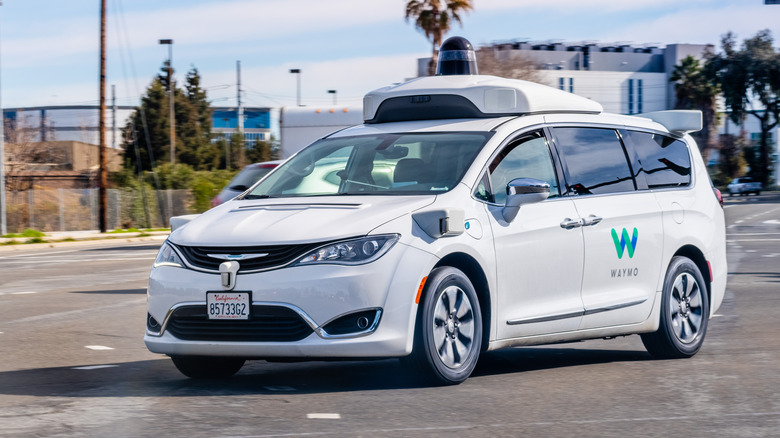
The last entry on Consumer Reports' list is the Chrysler Pacifica Hybrid, and there are quite a few supporting reasons that lend credence to its placement. First things first, no driver wants to deal with the uncertainty that comes with not being able to predict their own engine's next move. You want to drive safely from point A to point B, all things being equal, with no issues. That's not the reality of Pacifica Hybrid owners at all, unfortunately.
If you're considering getting a Pacifica Hybrid manufactured between 2017 and 2023, you might want to think again. In fact, SlashGear has an in-depth analysis of specific model years of the Pacifica Hybrid to avoid. In 2023, Stellantis recalled 76,000 units of the model worldwide over an issue with the transmission wiring connector — an issue that could cause engines to unexpectedly shut down. Stellantis downplayed the frequency, stating that only 0.2% of cars were affected, but lemon law considerations on social media platforms tell a different story. There are multiple reports of Pacifica Hybrids going into limp mode or just completely shutting off and subsequently having to spend weeks out of commission.
Transmission issues and engine stalling aren't the only factors to consider; AC systems have problems maintaining cold temperatures, and there's also a history of battery issues. In fact, Stellantis had to recall over 19,500 units due to an abnormality in the battery cells that could lead to a fire outbreak.