

3 Of The Best Years For A Used Subaru BRZ (And 2 To Avoid)
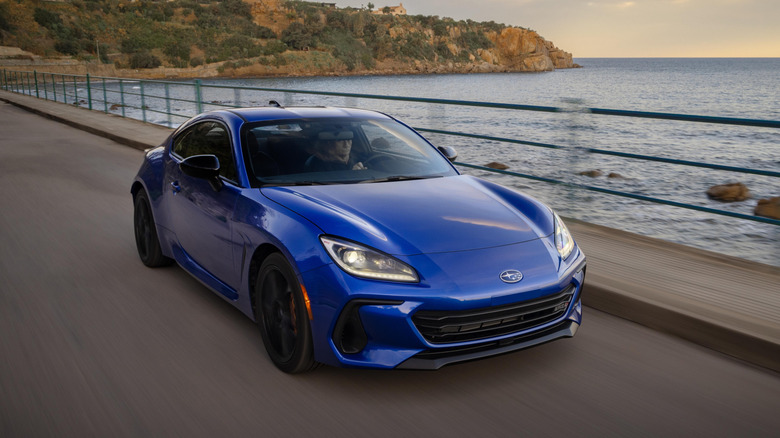
The Subaru BRZ and its sister cars, the Toyota GR86 (previously the GT86) and Scion FR-S, are some of the best budget-conscious enthusiast cars on today's market. The BRZ has been in continuous production since the 2013 model year, offering a diverse array of trims, options, and faces across two generations to make up for it. These are easily-modified, fun little sports cars, perfect for first-time owners and dedicated racers alike. There are even motorsports series dedicated to 86-platform cars. Which raises the question — of all these model years and with all this heritage, which is the best and which is the worst?
We'll take two main factors into account with this ranking: generational and incremental differences. The Subaru BRZ spans two distinct generations, with the second-gen released in 2022. The first-gen, meanwhile, had a mid-cycle refresh in 2017, with a bevy of new features to boot, effectively making it a gen 1.5, of sorts. Each of these distinct eras in the BRZ's history will be considered, with the best model year of each selected based on a diverse array of factors.
Overall, however, these cars are going to offer you a similar experience: a clubman driving feel on a budget. That isn't going to change between model years, really; a 2026 model provides a basic, naturally-aspirated boxer engine mated to a six-speed manual powering the rear wheels, the same as the 2013 model. But there are certain years to pay attention to, for better or worse. From reliability problems to exclusive trims, let's dive in and explore the best and worst years for the Subaru BRZ.
First-gen year to avoid: 2013
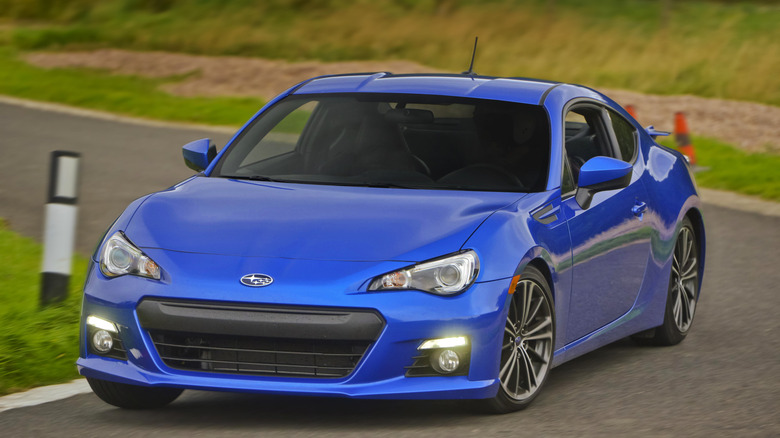
2013 marked the inaugural year of the Subaru BRZ and its sister cars, and like many first times, things didn't exactly go smoothly. It's fairly commonplace for new platforms to have teething issues, ranging from mechanical faults to electrical gremlins. In this case, it unfortunately involved the iconic boxer engine (the "B" in the BRZ name). These boxer engines are defined by the cylinder banks being directly opposite one another — one bank goes straight left, and the other goes right, effectively flattening the engine block. Virtually every new Subaru houses such an engine, and these engines often have their own unique quirks. Sadly, for this first model year, those quirks caused problems for many owners.
In fact, the 2013 BRZ has more recorded issues on the NHTSA database than any other model year, with 63 customer complaints and 2 recalls. One recall is for a valve spring failure that caused the valvetrain to malfunction and compromise the engine. While the first-generation BRZ is lauded for its excitement factor, these cars are likely far more exciting when they're not on the back of a tow truck.
That said, some owners have reported high mileage counts for 2013 BRZs. The problems with reliability often stem from the owners themselves and how the cars were treated; being track-focused, budget-conscious vehicles, the BRZ is frequently abused and driven hard. That said, these cars are still the roughest of any other year because they were brand-new and Subaru needed time to work out the bugs. Faults like the valve issues were indeed addressed, but early examples without any fixes may provide more headaches than fun.
First-gen year to get: 2016
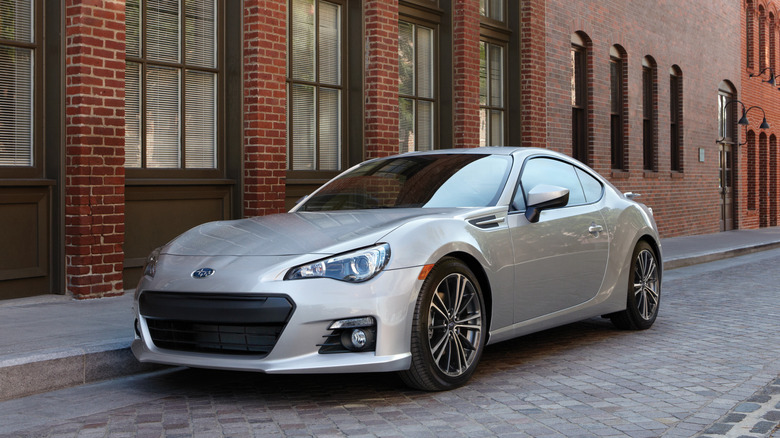
This marked the final full year before the mid-cycle refresh, and likely the best year for a first-gen, though generally any BRZ produced between 2014 and 2016 is going to be alright because Subaru had fixed the early issues by that point. The years 2015 and 2016 in particular marked high points for BRZ reliability, with no substantial mechanical recalls issued. More importantly, there's no more questionable reputation for the valvetrain from here on out, though Subaru boxer engines do have other common problems across the board.
While not every boxer engine is created equal, the first-gen BRZ (apart from the 2013) has a good reputation for reliability, as long as it's not constantly abused. The FA20 housed under the hood is now in its adolescence and is considered a versatile, well-built design after its rocky introduction. The 2016 model year specifically boasts several minor but notable advantages.
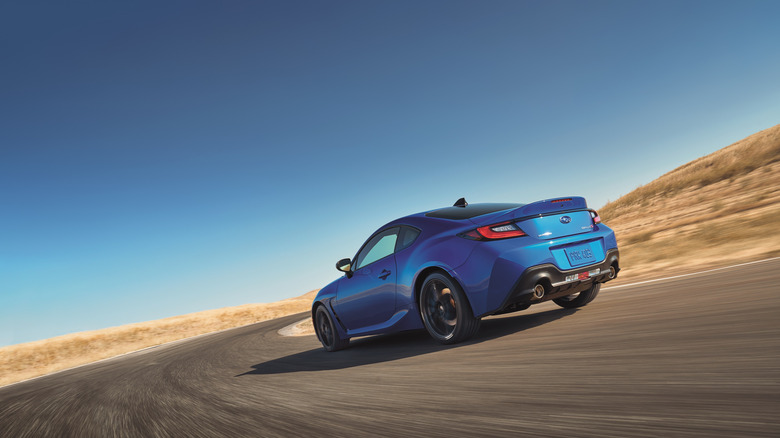
For one, it has a relatively low buy-in value if you're looking for a BRZ, depreciating around $1,000 per year as of 2026, according to Kelley Blue Book. It retains all of the features of previous models but without the reliability concerns, plus adds features like Starlink Multimedia, first available this year. The 2016 model also came in a limited-to-500 Series.Hyperblue variant, which may be the ticket if you're after a rare BRZ. So while none of the first-generation BRZs are particularly bad, the 2016 model offers a few unique creature comforts and exclusive options that elevate it above the others. Couple that with the relatively affordable price, and smart money is on 2016 as the best of the first-gens.
Gen 1.5 year to get: 2020
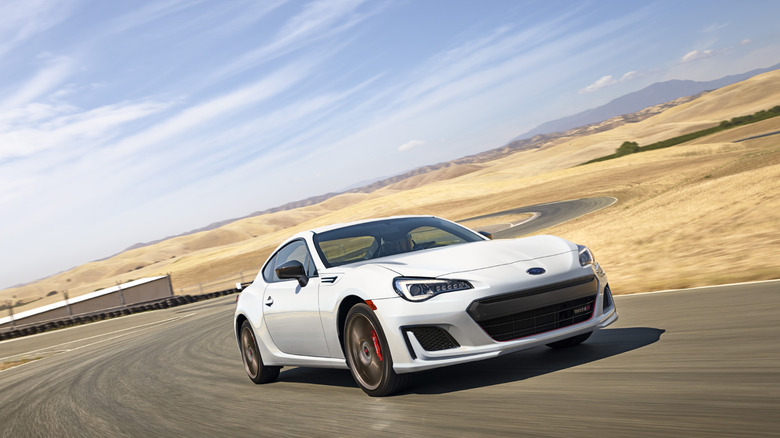
Subaru released a refreshed BRZ for 2017 with quite a few changes. Major mechanical improvements included revised suspension geometry for more planted handling, a closer final drive ratio for improved acceleration, a new "Track" mode for the stability control system, and a power increase to 205 hp (up from 200). The rear subframe also received additional reinforcement. These changes, alongside updates like facelifted cosmetics, bigger wheels, and a refined interior, make a Gen 1.5 car the definitive way to experience an earlier BRZ. By most accounts, they're durable, daily-drivable vehicles for the more practical-minded consumer, just with a sportier feel.
There aren't really any standout problem children among the Gen 1.5 BRZs; they're fairly consistent across the board, with no massive recalls or huge changes over the years. These models are also quite rare, with 2019 and 2020 seeing fewer than 3,000 units sold. Overall, any one of these cars is a solid pick, but the 2020 model year again stands out for its technical and creature comfort updates.
All 2020 models were sold in Limited or tS trims, the latter of which was limited to 300. That means that all 2020 models boast a factory Torsen limited-slip differential, LED headlights, dual-zone climate control, and more. It's the most modern and refined package of the first generation, and its status as the newest also means it's the least likely to have endured many years of hard miles. As far as Gen 1.5 model years go, 2020 is a worthy choice.
Gen 2 year to avoid: 2022
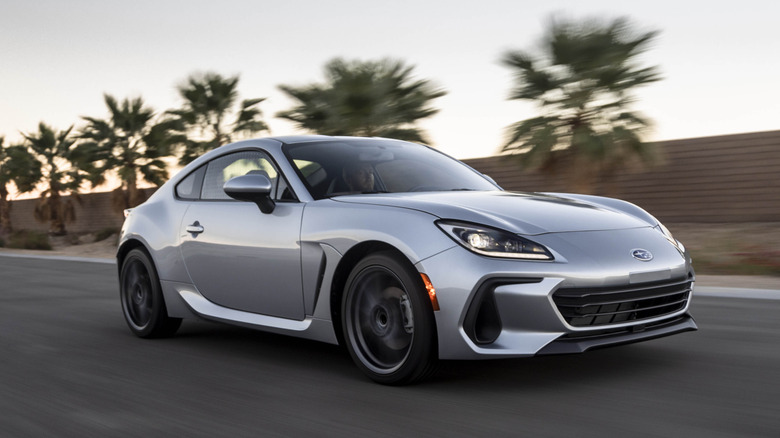
The BRZ's second generation started in 2022 and introduced a number of substantial changes to both the platform and powertrain. The sports car now had a larger 2.4-liter boxer developing 228 hp and a new driver-focused interior that retained most of the improvements and features of previous model years. These include carryover infotainment systems, the same style of limited-slip differential and transmission options, and Subaru's Starlink Multimedia connectivity, amongst others. For all intents and purposes, it was a thoroughly modern and well-equipped vehicle for its sub-$30,000 price bracket, and its modesty worked to its advantage.
However, much like the BRZ's debut year, the first second-gen BRZ is also subject to customer complaints, albeit fewer than before. Nevertheless, several of these issues are quite severe, such as RTV sealant leaking into the oil and clogging the oil pump, leading to oil starvation. One owner was even unfortunate enough to have the issue brick their engine after just 31 miles. Frankly, the potential severity of this issue shouldn't be overlooked, especially when the subsequent model years are still under warranty and are depreciating at similar rates.
The engine issues here mark a low point for the Gen 2 Subaru BRZ, if ever there was one; all subsequent models don't have such noticeable faults. That said, the problem isn't widespread enough to warrant much concern, and the model year is still too new to determine if any long-term issues still lurk beneath the surface.
Gen 2 year to get: 2024
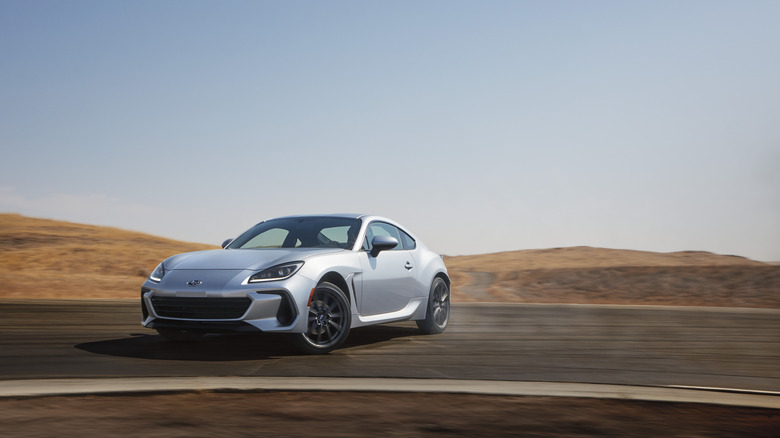
Discussing reliability has to take a back seat for later-model BRZs, as the cars are just too new to make any accurate assessment. The Gen 2s have only been on the road for around four or five years, with many of them still under the three-year factory warranty and five-year powertrain warranty. That said, it's safe to assume that the level of refinement is such that they'll be just as, if not more, reliable than prior years. The sweet spot here, at least in 2026, is the 2024 model year, for a few reasons.
The first reason relates to why we purchase a BRZ in the first place: because it's a budget-conscious sports car. Subaru reintroduced the tS trim level, the culmination of this ideal, in 2024. It's basically a lightly-modded BRZ with a warranty sticker, featuring larger 18-inch wheels, uprated brakes with larger rotors, tuned suspension setup with Hitachi dampers, and exclusive cosmetics like interior upholstery. Value-for-money-wise, this marks the current standard for a good used sports car that isn't a Mazda MX-5 or any of the BRZ alternatives out there.
Apart from this, the 2024 model year also features a few small but noticeable improvements across the lineup, the most substantial of which is the addition of Subaru's EyeSight advanced safety. This includes your usual stuff like adaptive cruise control, pre-collision braking, and lane keep assist, making the 2024 BRZ the most modern vehicle in the lineup in terms of technology. That said, EyeSight does attract its share of critics, so if you don't want to deal with that, go for a 2023 and fit some larger rims and tune the suspension for a similar overall experience without the headache.
Our methodology
To identify the best years for the BRZ, we drew on sources from across the internet, ranging from ownership vlogs and forum posts to professional reviews from trusted outlets. For owner testimonials, we looked at sources like Car Complaints, the NHTSA database, long-term user reviews, and everyday specialist forums to leave no stone unturned.
Many of these focused on the drivability of these vehicles, with "soft statistics" like comfort, practicality, aesthetics, and livability. Our focus emphasized more quantifiable, hard data, like reliability and test scores, comparisons against other subcompacts, and unique features of each model year.
Because these vehicles are still in production and most model years are less than a decade old as of 2026, there simply isn't enough data to make any concrete estimates about the longevity of newer iterations. Thus, we focused on what we can know and the features that separate different model years of an otherwise visually indistinguishable coupe.