

New Yorkers Are Ditching Uber & Lyft For Cheap, Illegal Rideshare Apps
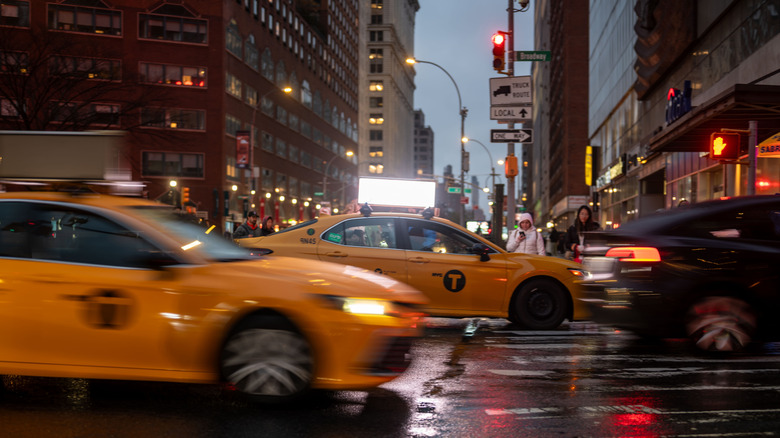
New York City has hosted some of the most popular carpooling and ridesharing formats practically since the rise of the motorcar, with the famous New York Yellow Cab growing to prominence as early as the 1910s. While on the surface it seems to be almost perpetually in gridlock, the public transportation infrastructure of New York is actually one of the most robust in the world. In fact, it has one of the largest and most efficient commuter rail networks, comprehensive bus lines (oh, buses can issue traffic tickets, by the way), and tunnel systems, among many other accolades. And with the turn of the century, there are other players in the game: on-demand ridesharing services like Lyft and Uber.
These companies represent one of the primary means of getting from Point A to B in the capital of the world, offering several benefits (at certain costs) over the traditional Yellow Cab. Features like passenger ratings, differing fees, expanded transaction options, and so on allowed these companies to carve out their own niche. But recent controversies and shifting ideologies have again moved the goalpost to arguably one of the riskier but cheaper worlds of illegal rideshare apps and under-the-table taxis.
There are apps offering a variety of services, some more above-board than others. Companies like Empower are now directly encroaching on both private companies like Lyft and medallion-holding taxicabs, and they do it without requiring drivers to hold a New York-issued Taxi and Limousine Commission (TLC) license. While it sounds like a sound idea in principle, it's actually illegal to accept fares in New York City without such a license, and it comes with certain risks. Let's take a look at what these services are and why they're so controversial.
What are these rideshare apps?

The nuances of ridesharing in NYC are somewhat muddled and complex, so let's keep this simple with this straightforward rule: If you don't have a TLC medallion, you're outside the loop. Various companies fill this niche, ranging from big-name apps to individuals accepting fares from their private cars; obviously, the latter can't really be accurately tracked, so we'll stick with the former. The biggest current name is Empower, which promises to pay its drivers the entire fare; that's a big deal because companies like Lyft take out a commission. In fact, Lyft got into hot water lately over controversy with the split it takes from drivers, which it claims is 70/30 in the driver's favor, a figure that's been disputed to the point of raising class-action lawsuits.
A company like Empower, meanwhile, claims it only charges drivers a monthly subscription, which varies based on the level of services provided. As a consequence, drivers set their own rates, and those rates tend to be lower than comparable examples from Lyft or Uber, along with other benefits like the ability to add favorite drivers. It's still in its startup phase, but the relatively hands-off nature of it raises questions of legality and safety. Plus, drivers aren't subjected to the many rules one must follow to drive for Uber, for instance. That said, the inherent risk factor is the same throughout virtually any such app or other unsanctioned public transportation — liability and accountability.
Why it's illegal and what alternatives are there?
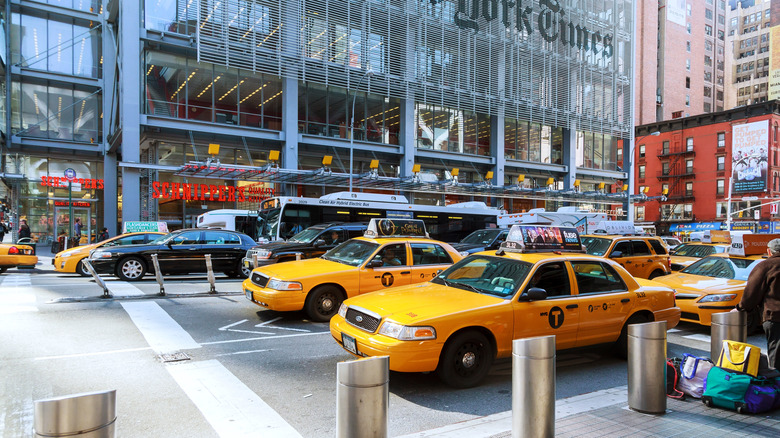
New York taxicabs are carefully regulated, and that extends to both the city's official yellow cabs and the plethora of Uber and Lyft drivers, among others. In fact, the number of legal entities extends well beyond just these main bodies, with more specialized firms including Dial 7, which primarily serves the three main airports of JFK, LaGuardia, and Newark. Other companies, like Uber's partner Curb, require drivers to hold a valid TLC license to operate within the New York metropolitan area. There are a number of hailing apps for yellow cabs as well, such as Arro, further supporting healthy competition in the TLC market.
Outside this market, things get decidedly less regulated, and it's this fundamental difference that lands Empower in hot water with New York City, among other urban areas. The purpose of a TLC license is oversight: drivers with these licenses are beholden to a higher body that carefully regulates factors like vehicle condition and maintenance, driver conduct, passenger safety, areas of operation, and more. All rideshare vehicles, from yellow cabs to private companies, are affiliated with specific dispatchers, meaning there's a legal paper trail if something goes wrong.
In short, these rules are in place to protect the customer as well as the driver. While they do not excuse controversial business practices by some companies, the higher rates afford passengers that extra layer of security, theoretically speaking.