

The US Air Force Just Banned Troops From Using This Popular New Tech

The United States military is among the largest and most technologically sophisticated in the world. Needless to say, it has access to some extraordinary equipment, with the U.S. Air Force operating some of the fastest fighter jets in service today. These are aircraft that most civilians will never ever come close to flying, but by the same token, there is some civilian technology that Air Force personnel are not permitted to use while in uniform.
Smart glasses are becoming increasingly popular, with International Data Corporation noting in July 2025 that the second-generation Meta Ray-Ban glasses captured nearly two-thirds of the market after a successful end to 2024. The broader concept of smart glasses, however, touches on significant fears about privacy and security, meaning that there's a smart reason not to wear models such as Meta's AI glasses. It's also for this reason that the Air Force has prohibited the wearing of such devices. On January 9, 2026, the Secretary of the Air Force Public Affairs issued new guidance targeting "dress and personal appearance." The policy noted that, with regard to traditional eyewear, specific shades of frames and lenses for sunglasses and eyeglasses must be adhered to, while "It is unauthorized to wear mirrored lenses or smart glasses with photo, video or artificial intelligence capabilities while in uniform."
Elsewhere in this memo, the iconic duty-identifier patches were brought back, powerful symbols of pride in a shared role and expertise. This same collective spirit, however, means that any Air Force member could endanger their fellow members through the use of smart glasses, which is why they were banned.
The potential issue with smart glasses for the Air Force
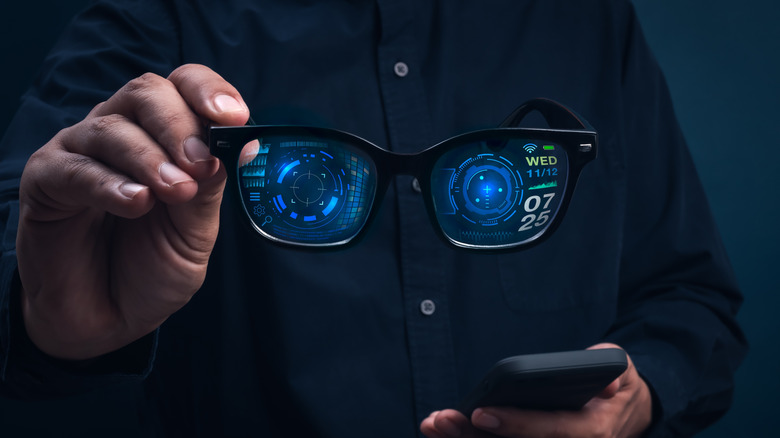
If there's one term that's pivotal to U.S. Air Force operations, it's OPSEC: Operations security. There's a wealth of information, from troop movements to the specs of particular vehicles or weapons, that could be potentially disastrous if it leaked. When smart glasses are in the picture, such a leak could occur accidentally, or even without the responsible parties knowing it happened.
This is the argument put forward by Dana Thayer, the Information Protection Chief of the 104th Fighter Wing, in a statement shared by dvids in response to this prohibition of the devices. Thayer warns that such devices can and will continue to record even when the wearer hasn't specifically set them to do so, which Thayer equates to receiving a plethora of pop-up ads about a specific product that you haven't expressly searched for online but only discussed. Imagine the conversation is about a top-secret new military operation rather than a fast-food craving, and the potential gravity of wearing smart glasses in uniform becomes obvious.
As is the case essentially anywhere AI and similar technologies are in use, there are significant advantages to be gained. Smart glasses may even serve as a viable alternative to computer monitors, for instance, increasing versatility in work environments. It's vital to be aware of the dangers too. The U.S. Army and Navy have not yet instituted such a blanket measure as an outright ban on in-uniform use of smart glasses, but perhaps they will. It's an evolving technology and an evolving situation, and the devices may find a place where their utility can be deployed, even in the most sensitive situations.