

Are Turbo Engines Better Than Naturally Aspirated Ones?
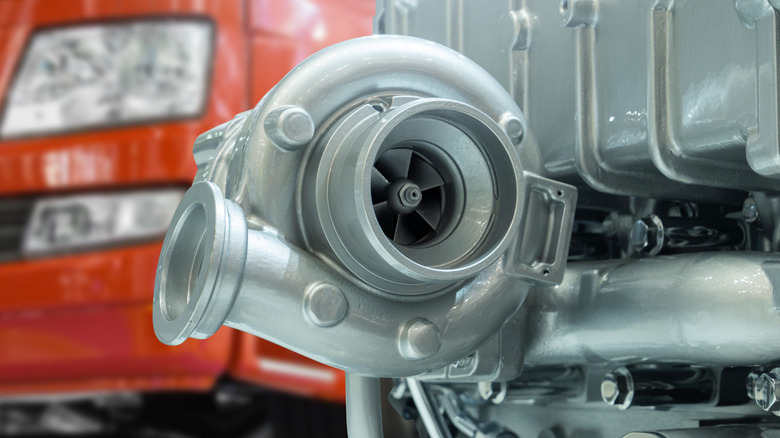
Two of the most common engine configurations you'll find these days are naturally aspirated and turbocharged. In short, a naturally-aspirated engine (also known as an NA engine) breathes atmospheric air through the intake. A turbocharged engine has a turbo that basically acts as an air compressor, forcing more air into the engine than would otherwise be possible. Turbos allow the engine to produce more power for a given displacement — in other words, a 2-liter turbo engine can produce power similar to a 4-liter NA engine, given enough boost.
Each configuration has its advantages and disadvantages, both in terms of the driving experience and mechanical function, and I'll go over each in detail. A naturally aspirated engine will have to be large and heavy to produce the same amount of power as a turbocharged engine, but it'll also be simpler and cheaper. Turbocharged engines, by necessity, have more components (and thus more failure points), but the engines can fit inside smaller bays. So you'll often see such engines tucked inside small sports cars, or cars with more aerodynamically-shaped front ends like high-end economy cars and crossovers. Conversely, cheap cars, trucks, and muscle cars generally stick with naturally aspirated engines.
Which is better, though, turbocharged or NA? Well, as someone who studied cars for the vast majority of her life and worked as a mechanic, I've worked around and have intimate knowledge of both configurations and what they each bring to the table. And for my money, I say turbocharged. Do both have advantages and disadvantages? Yes, and it's not a universal answer for everyone. But objectively, I believe that a turbocharged engine, despite the additional expense and complexity, wins out over NA, and here's why.
Naturally-aspirated: no replacement for displacement
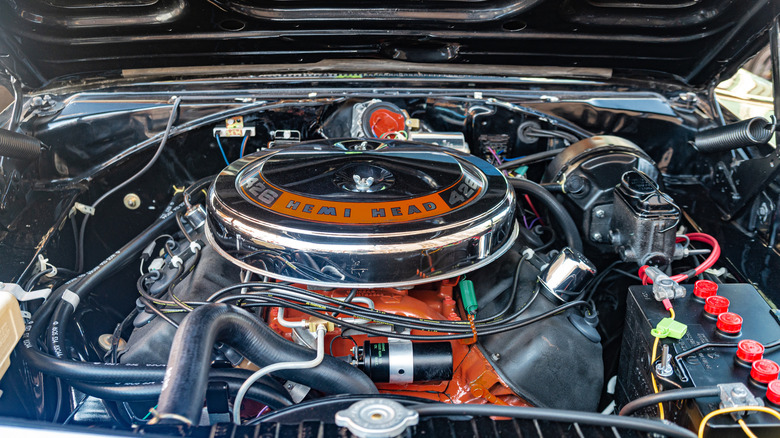
This is the configuration you'll find in most older cars, and it operates on a simple principle. An engine requires three things to produce power: air, fuel, and ignition. The first is what I'll focus on here — how do you get air into the engine? Well, the simplest way is to draw air from outside into the engine directly, through the car's intake, without any external aids like a turbo or supercharger; such an engine is naturally aspirated.
The upsides of this design lie in its simplicity and ease of maintenance. With fewer moving parts (but sometimes more cylinders), a naturally-aspirated engine generally requires cheaper and less intensive maintenance than a turbo engine. That said, many turbocharged engines are actually extremely reliable, so this isn't a definitive advantage. Other advantages include a "purer" sound, since naturally aspirated engines have unobstructed exhausts (turbos mount to the exhaust system). Lastly, NA engines have immediate throttle response, since there are no turbochargers that need to spool up.
For me, while naturally aspirated engines have several advantages, the issue is that they need a lot of displacement to make big power. A Viper's V10, for instance, needs to be over 8 liters, while big-block V8s are frequently over 7 liters. While characterful, having such massive lumps of metal influences a car's handling, and they also absolutely drink fuel. There's also a limit to the amount of power you can get without forced induction or specialized tuning that affects an NA engine's roadworthiness, such as racy camshafts and ultra-high compression. Do I love NA engines? Sure. But I also love not needing to live with cramped engine bays and massive, inefficient engines just to get good power.
Why turbocharged engines are better
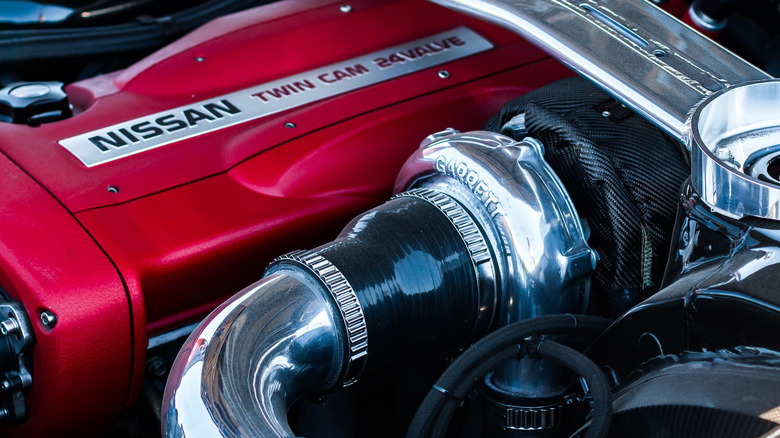
If you want big power, a turbo is likely the way to go. Turbocharging is one of the most effective ways to squeeze higher numbers from a smaller displacement, though older cars require respect to drive correctly, such as the 1974 Porsche 911 Turbo, also known as the Widowmaker. They do have downsides, naturally; the main one being that turbos require specialized care — turbines can spool at 200,000 rpm or more, and the organic shapes are difficult to manufacture. These are complex parts with complex needs. But in my opinion, the benefits far outweigh the deficits, and modern car trends reflect this.
Turbos help manufacturers meet stringent emissions standards by letting them build smaller engines without compromising on power. But modern turbo systems are also great for performance, and it's not uncommon to see twin-turbo LS-platform engines producing north of 1,000 hp. And sure, turbos require premium gas, advanced manufacturing, and disciplined maintenance, but so do high-compression NA engines.
If I had unlimited money, I'd spring for a turbocharged engine every time. They offer better economy, far greater power for the same displacement, and have some unexpected advantages. For instance, the thinner atmospheres of mountainous regions don't affect turbo engines as much because turbos compress air entering an engine. Modern turbochargers with smart boost systems and even electric motors greatly mitigate turbo lag and other idiosyncrasies, too.
Do NA engines suit some drivers more? Sure, myself included; I like their simplicity and character, and they're easier for DIY mechanics like myself to service. But if you put two nearly-identical engines side by side, one turbo and one NA, I will concede that the turbo affords a versatility that no amount of NA tuning can match.