

The Best Used Cars To Buy In February 2026, According To Consumer Reports
The past few years have marked a turning point for the automotive industry as a whole, with new car prices skyrocketing and vehicles growing more technologically advanced and bloated by the year. The days of cheap, basic transportation are waning, with many vehicles being retired for 2026 including the most inexpensive car sold in America, the Nissan Versa. Sedans, coupes, and hatchbacks alike are all seeing the end of the road, yet many remain popular on the blossoming used market. And now, with so many no longer in showrooms, it's likely that used market will only expand and prices continue to climb — but that comes with the benefit of being spoiled for choice.
Whether it's a more specific vehicle type like a smaller budget car or something less technologically-reliant while still feeling modern, the used car lot is often the way to go these days, especially if you're operating on a budget or intend to outright purchase the car. Coupled with staggering depreciation rates for certain vehicle types like luxury cars and EVs, it pretty much seals the deal, no pun intended. Now for the real question, though — which is the best for your specific needs?
In this article, we'll discuss a diverse array of cars based on body types and budgets, taking into account the different needs of various customer bases. All of these vehicles are rated as number one within their respective categories on Consumer Reports, an accredited automotive journal specializing in comprehensive reviews of all sorts of vehicles. Let's jump into it, starting from the least to most expensive and why they excel.
Sedan under $10,000: 2016 Mazda 6
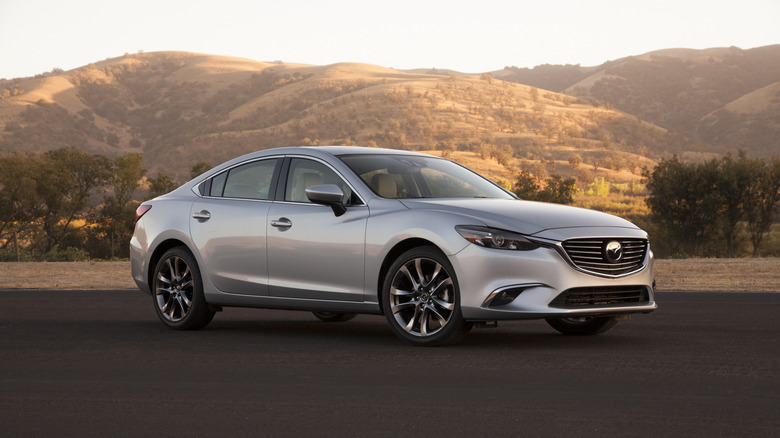
If you're on a tight budget and need wheels immediately, it's tough to beat the 2016 Mazda 6 in terms of sheer value for money. 2016 actually saw a number of customer protections implemented for purchasing used cars, such as a federally-mandated guideline recommending that buyers obtain a car's user history. However, other devices we take for granted today hadn't yet been incorporated — take backup cameras, which didn't become compulsory until 2018. So anything manufactured before this timeframe isn't exactly going to have many modern amenities, but you get what you pay for at this price point.
That said, what you do get is actually remarkably comprehensive. The 2016 Mazda 6 comes with either a 6-speed manual or automatic mated to a 2.5L SKYACTIV inline-four pushing a modest 184 hp, slightly better-equipped than your average economy car (the 2025 Versa, for instance, has 122 hp and a 5-speed). High-end models may also feature factory LED headlights, dual-zone climate control, proximity-sensing cruise control, rearview camera (automatics only), and more. Granted, you won't find any fancy infotainment here, but it's still respectably well-equipped.
Overall, the Mazda 6 is a surprisingly nippy compact car with just enough features, fuel efficiency, and power to get you from Point A to B comfortably. The main downsides here are the vehicle's age, being the oldest car on this list; and the least well-equipped. But it's definitely the best bang for your buck, especially if you find a well-equipped model with features like rear cross-traffic alert and blind spot monitoring — not bad for a sub-$10,000 car.
Hybrid under $20,000: 2021 Toyota Prius
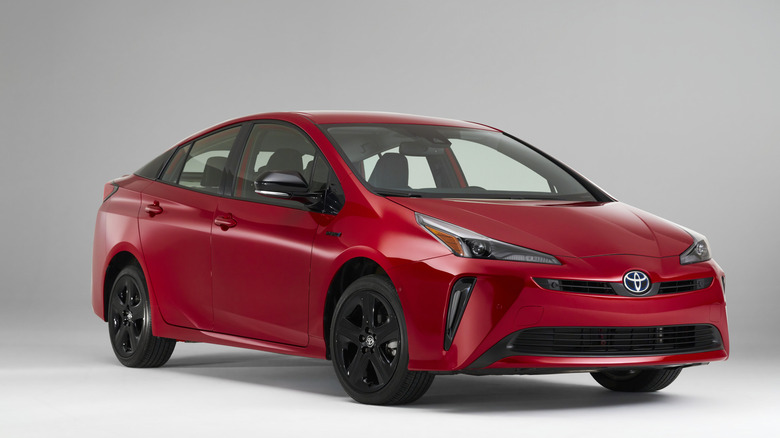
The previous generation of Toyota Prius is unsurprisingly among the list of the best commuter cars of 2025, and for good reason. They're not particularly exciting, they're not fast, and they don't stand out in a crowd, but they will always get you from Point A to B and do it with as few fuel stops as possible. A Prius excels at intercity and intracity transit thanks to its spacious interior (for the front seats, at least), good visibility, and practicality with the hatchback design. Moreover, unlike the far more frugal Mazda 6, the Prius actually has Apple CarPlay and Android Auto as standard in 2021 — the 2023 even has the latest infotainment. But if you want the best value-for-money while retaining those core features, Consumer Reports recommends the 2021.
The 2021 Toyota Prius comes with a surprising amount of extras and standard equipment, plus some optional surprises like electronic all-wheel drive, an 11.6-inch infotainment display, wireless charging, and so on. In addition to the phone connectivity features, it also boasts all the usual stuff one would expect from a car of this vintage, such as Sirius XM satellite radio, 4G Wi-Fi hotspot, and so on. It's not totally modern nor the best equipped, but it's quiet, boasts excellent fuel efficiency to the tune of 48 mpg combined, and provides a fair amount of available safety features that are useful in urban environments like blind-spot assists, rear cross traffic warning, and proximity sensors.
In short, if you're looking for a good, reliable daily commuter, this is probably the car for you. Is it boring? Sure, but that's why exactly why someone might opt for a 2021 Prius.
Sports car under $20,000: 2021 Mazda MX-5
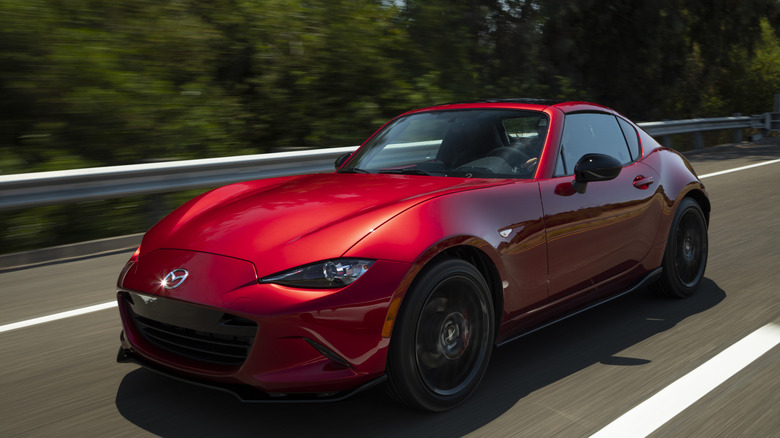
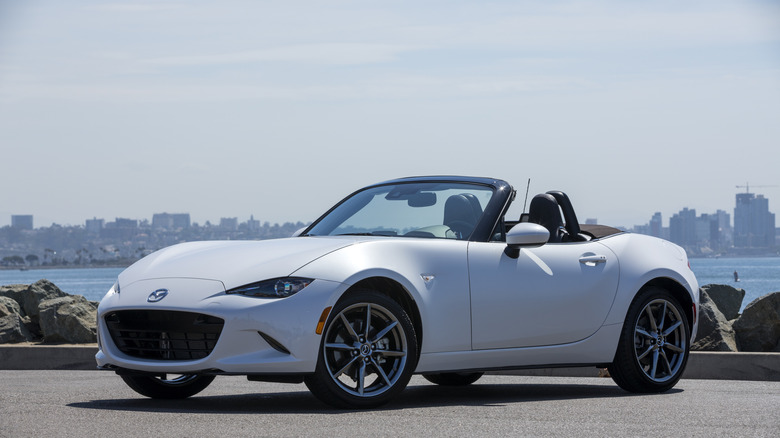
This is what many of us are here for: a small, lightweight sports car with just enough power to be fun without breaking the bank. It's arguably a dying breed these days, with many of the best two-seater sports cars of yesteryear falling by the wayside and in dire need of attention. The MX-5 is not one of those cars, in continuous production since 1989 across four generations, none of which reinvented the wheel. It's a simple formula: take a compact engine on a lightweight platform, partner it with a stick shift and rear wheel drive, and have fun. And, thankfully for the enthusiast community, it remains a relatively affordable formula as well.
The Mazda MX-5 Miata has historically been known as somewhat barebones, and for good reason — its fun factor, in large part, relies on its agility. But more modern examples use clever tuning and lightweight materials to help make up the difference, incorporating not just modern safety features but plenty of creature comforts on top of it. For instance, 2021 introduced wireless Apple CarPlay integration for the infotainment, alongside returning options like a removable hardtop, 17-inch alloy wheels, aerodynamic elements, and more, all without exceeding 2,500 pounds.
You're not exactly spoiled for choice when it comes to budget-conscious sports cars with warranties these days, especially not when you're talking about this price point. The MX-5 might seem like a bit of a "default" option, sure, but it's earned its place as the go-to vehicle of its class, and remains as outstanding at its job as ever.
Luxury SUV under $20,000: 2018 Lexus NX
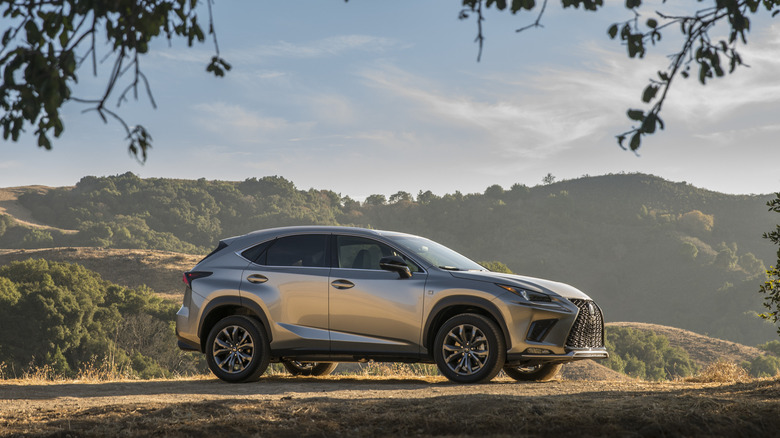
One might think that the term "luxury" comes with certain caveats at this price point — after all, the 2018 Lexus NX's MSRP when new started at over $37,000. Moreover, at first glance, the Lexus NX 300 in particular appears to be just a fancier Toyota RAV4. But the two vehicles, despite sharing a platform, are not the same car, with the Lexus offering a number of exclusive options such as a turbocharged inline four producing 275 hp in modern examples. The older you go, obviously the less modern features you'd expect, and certainly for less than $20,000 you shouldn't expect the world. But that doesn't mean the NX 300 will let you down.
The 2018 model NX, distinguished by being the debut year for the NX 300 (it was previously known as the NX 200t), introduces a bevy of new standard equipment to the luxury crossover. Crucially, this includes the updated Lexus Safety System+ as standard equipment, boasting all sorts of assists like dynamic radar cruise control, various lane assists, automatic high beams, road sign assist, and more. It also updates the multimedia with an optional second-generation remote-touch interface infotainment.
It's not the best equipped by a long shot, nor does it offer the same land yacht experience as the larger SUVs. But for less than $20,000, an NX 300 is Consumer Reports' best pick for the money, and for good reason. It's difficult to go wrong with a RAV4 in the first place — adding some posh extras into the equation without raising the price substantially is rather tempting.
Pickup truck under $25,000: 2020 Honda Ridgeline
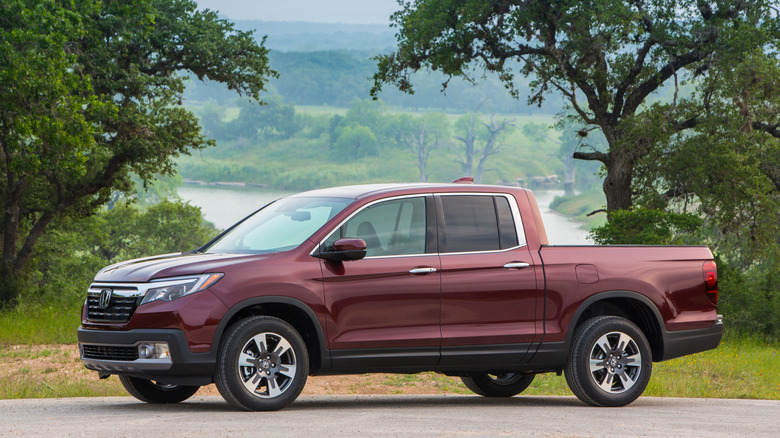
This one might surprise the full-size truck enthusiasts — or it might not, considering how pricey the more popular F-series Fords get with options. The Honda Ridgeline isn't typically involved in conversations concerning pickup trucks, which generally center around the larger variants in the United States, but it remains a perfectly capable and viable utility vehicle regardless. Because these trucks are effectively just midsize SUVs with a pickup bed, they don't behave like trucks in practice, being more akin to large utes.
The Honda Ridgeline is far more comfortable than most other pickups sold stateside, with the handling profile of a large sedan and the general nimbleness to match. Of course, that comes with certain caveats one would expect just by looking at the thing: the Ridgeline, for example, comes with a V6, not a V8. It doesn't have the torque or weight to match full-size trucks for towing or carrying capacity, nor does it have the plethora of bed options afforded by these larger vehicles. However, the Ridgeline excels in other crucial areas: comfort, fuel economy, and standard features that don't break the bank, all important qualities for a work truck one could feasibly be driving commercially for hours.
The 2020 model year in particular offers various incentives, such as a new 9-speed automatic with paddle shifters, integrated Apple CarPlay and Android Auto, all the safety features you'd expect from a mid-budget truck, and a more streamlined trim selection with better defined options. It's certainly not for everybody, but if you're in the market for a pickup truck that's handier and more comfortable than a full-size, Consumer Reports says the smart money's with Honda.