

5 Classic Cars From The '60s That Nobody Talks About Today
Many remember the 1960s only because of the fast muscle cars, but the decade was easily one of the most significant for the automotive world more broadly. It was at this time that we got the Corvette Stingray, Jaguar E-Type, Ford Mustang, and Ferrari 250 GTO, among many other legends. And that's precisely the problem; those cars were so good that today it's impossible for them to not dominate auction headlines and take up all available oxygen in conversations about the '60s auto world.
Those cars' fame is deserved, as they are remarkable machines; but they overshadow other remarkable vehicles that merely lacked the right combination of things like marketing, racing success, or cultural timing. Every case (on this list, that is) has a story just as interesting as its contemporaries.
One car combined European styling with the great hulking V8 of a muscle car. Another was simply too odd to get mainstream acceptance despite being an engineering miracle. Still another was a bold experiment that failed commercially, but succeeded artistically. Tragically, history has largely forgotten these cars, so we're going to give them their due.
Facel Vega HK500
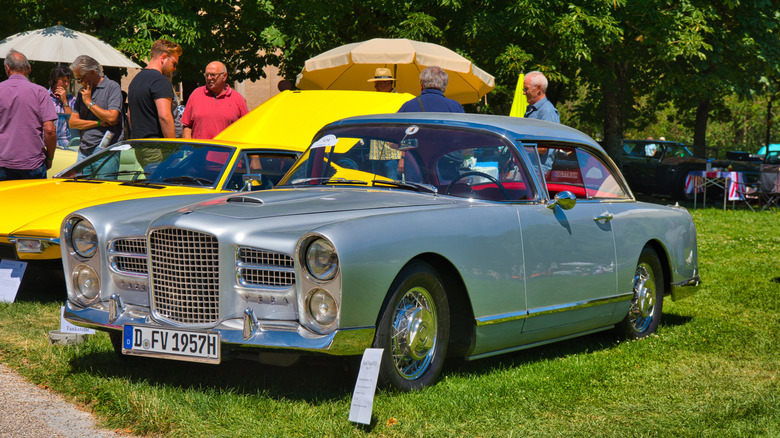
The French are no strangers to big, luxurious, grand touring vehicles, and the Facel Vega HK500 was one of the best ever made. The company was originally just called Facel, and it used to make a model called the Vega, primarily for affluent buyers. However, the Vega became so popular and synonymous with the brand, that the name was changed to Facel-Vega later on. It would have been like Ford renaming itself Ford F-150; a bit of an odd move, but it was the 1960s — a lot of much weirder things were happening.
The company made fewer than 500 HK500 models, and they sold for a whopping $9,795 when new. The engine in this gorgeous car was actually American; having been made for Facel by the Chrysler group. The "typhoon" was a V8 unit that made 350 hp or 385 hp, depending on how it was set up. Models with the three-speed auto gearbox made 350 hp and had a single quad-barrel carb; while the four-speed manual made 385 hp and had dual quad-barrel carburetors, at least that was the claim.
Most sources however, quote that the car offered 360 hp, and 460 lb-ft of torque. A 1960 HK500 failed to sell at an RM Sotheby's auction in Paris in 2023 — one of the most premier automotive auctions in the world — so that should tell you everything about how criminally under-appreciated the HK500 is.
Sunbeam Tiger
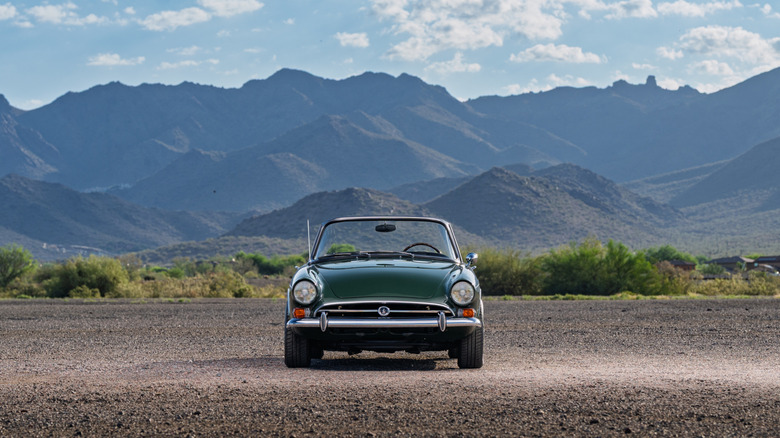
Everything about the Sunbeam Tiger screams 1960s, from the long flowing lines and chromed windscreen border, to the tubular bumper running across the grill opening. The Tiger was essentially just a British-made Sunbeam Alpine ,with a Ford 260 cubic-inch V8 stuffed into it, by Caroll Shelby no less. In terms of engine choices, the ones from the first half of the 1960s had the 260 cubic inch from Ford making 164 hp and 258 lb-ft of torque, while the ones from 1966 had an upgraded 289 cubic incher making 210 hp.
For the people keeping track of the numbers, this means the Mk I Sunbeam Tiger had about 200 pounds more heft than the standard Alpine. However, it also had about double the power, which balanced things out nicely. Further down the line, there was also a Sunbeam Tiger with a Ford big block shoved under the bonnet, though this didn't see mass production.
The Sunbeam Tigers with the 260 had a 0-60 mph time of 8 seconds, while the ones with the bigger 289 fared slightly worse at 8.9 seconds, and cost $3,500 when new — which was actually quite okay for a luxury sports cabriolet of the time. Additionally, one of these ended up selling for the sum of $43,680; which shows that even some of these obscure 1960s classics can have high resale value.
Iso Grifo GL
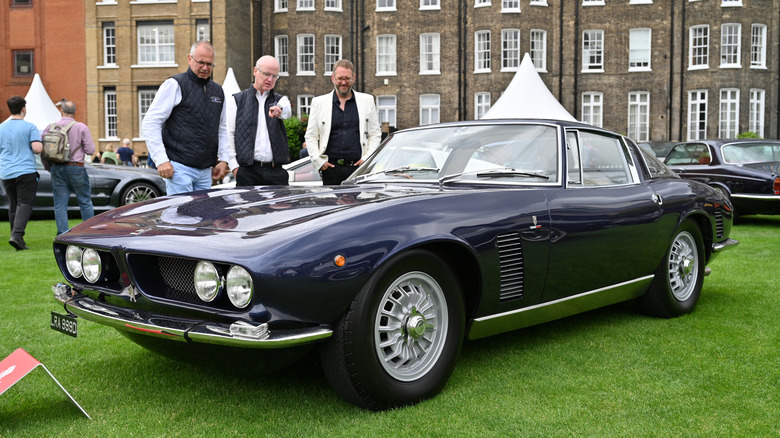
At first glance, the Iso Grifo GL looks like a Ferrari 250 2+2 with the front end of a Dodge something-or-other. In other words, it looks positively brilliant. Its sloping rear end, mega-long bonnet, and set-back driving position represents the epitome of 1960s styling. And that Ferrari-reminiscent design is far from coincidence. The creator of the Iso Grifo GL was actually a former Ferrari employee. The name GL stands for "Gran Lusso," which literally translates to "great luxury" in English.
Iso is better known for its famous Isetta bubble car that people either love or hate. Later, it made another coupe called the Rivolta, followed by the Grifo GL in the years to come after that. When launched, the Grifo GL looked very different from anything Iso had ever attempted, and it was quite eye-catching to say the least.
Power came from a Chevy small-block 327 cubic inch engine (the same one as used in the Rivo that we mentioned), at least at first. In initial models, the 327 made 300 hp, though it was later up-rated to produce a better 340-350 hp down the line. Just a short while after that, the engineers decided to shove in a Chevy 427 cubic inch, which required some modifications to the structure of the car; but these were well worth it, as power output now stood at 435 hp.
Gordon Keeble
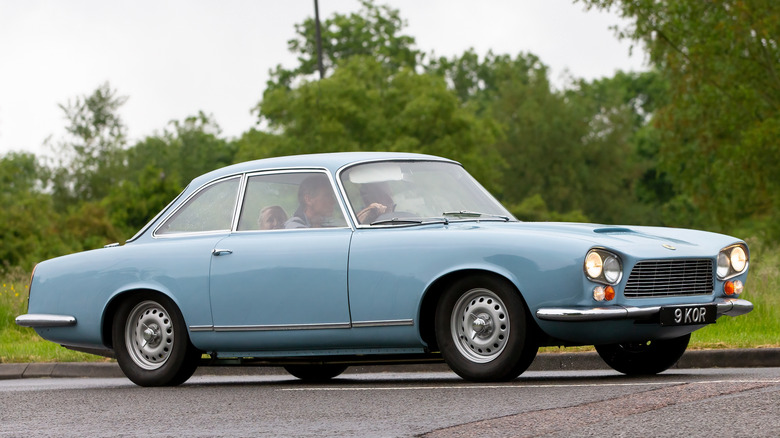
The strange thing about the Gordon Keeble — yeah, that's its actual name — was that there was nothing strange about it. The small two-door car for working families came in an array of colors, and had funky slightly-off-angle headlamps that sat above the indicator lights on the front. The only tell that gave anything of the Keeble's defining feature away was the rather subtle air scoop on the hood of the car. This scoop fed fresh air to a 4.7-liter V8 engine from GM that produced 300 hp along with 360 lb-ft of torque, all of which was available from a respectable 5,000 RPM.
Yes, Italian-styled vehicle using U.S. power for its engine; just like the Iso Grifo GL and the Sunbeam Tiger. The Keeble had an uber-impressive (for the 1960s anyway) standing to 60 mph time of 6 seconds; and ran the quarter mile in 15.3 seconds, at the end of which the speedo would read somewhere near 98 mph. Impressiveness aside, all those numbers have a touch of irony in them, because the badge on the hood of the car was a tortoise; which is not exactly an animal known for its speediness. Perhaps an eagle or condor would have been a better bet, but we highly doubt this trivial detail matters to the owners of the 99 Gordon Keeble units that were made.
Maserati Sebring
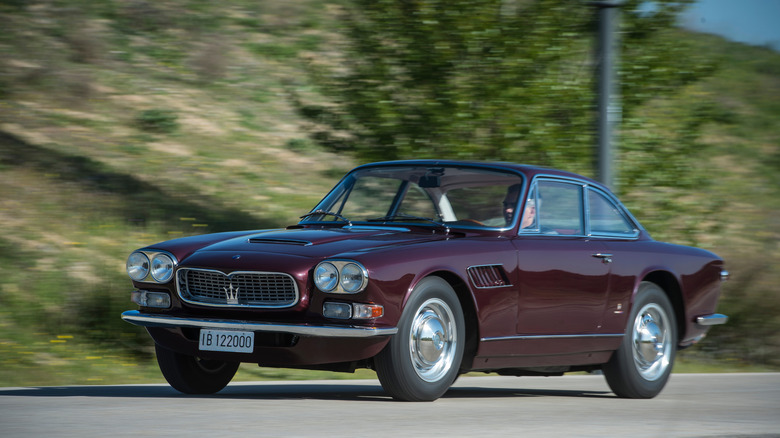
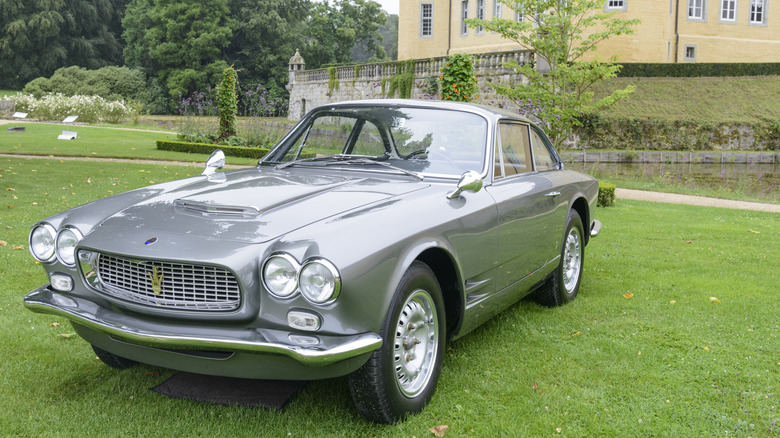
While it may currently be one of the worst-depreciating car brands on the market; Maserati's always known how to make a good looking car. Back in 1962, the company came out with one of its first road cars. The Sebring shares its name with the famous American racetrack down South, and like so many other cars of this decade, it also has a lookalike — though it's tough to say whether it inspired the Lamborghini 400GT or was inspired by it.
The engine in the Maserati Sebring was a 3.5-liter six-banger inline engine that ended up making the impressive sum of 235 hp and 261 lb-ft of torque. Notable features on the initial Mk I (or series one, as they are called) Sebrings were the inclusion of quad-disk brakes and air conditioning. It's also worth noting that these were not the only engines offered on the Sebring, as a mildly higher displacement 3.7-liter was added down the line, with the option of a four-liter option too.
Reaching 60 mph took about 8.5 seconds, and it could run the quarter-mile in a stellar 15.6 seconds. The Sebring name was adopted because a few years prior, a driver for Maserati had won an important race for the brand at that very same track. When they come up for auction (as only a few hundred were ever made), these cars fetch astronomical sums, often in the several-hundred-thousand dollar range.