

5 Classic '80s Sports Cars That Have Stood The Test Of Time
Sports car buyers in the '80s had a wealth of different makes and models to pick from, but four decades later, some remain more appealing than others. On the one hand, the worst '80s cars had safety issues, poor reliability, or were awful to drive. On the other hand, there are some cars that were ultra-desirable among discerning buyers and remain in high demand with collectors today. Arguably, some are even cooler now that collectors have had the time to fully appreciate their legacy.
Inevitably, some of the coolest '80s cars were high-value, limited-run special editions even at their launch. They were only available to buyers who knew exactly what they wanted and had the cash — and sometimes the connections — needed to get them. Although, not every cool '80s classic was out of reach for the average enthusiast. Picking exactly which cars from the era are the most desirable of all is a matter of personal taste, but these are a few of our favorite sports cars from the decade, some of which are temptingly affordable today.
Buick GNX
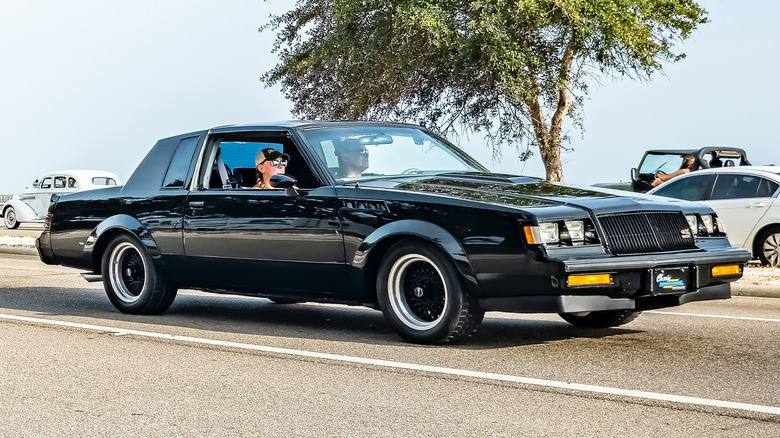
The GNX, or Grand National Xperimental, was thrust back into the mainstream spotlight in 2024 when rapper Kendrick Lamar named his Grammy-winning album after it. However, long before Lamar professed his desire for the car, it was already lusted after by plenty of enthusiasts. Today, examples sell for an average of almost $200,000 at auction. The GNX was created as a final send-off for its platform, and it was always intended to be both very rare and very special.
Originally, a total of 500 examples were planned, with one sent to each of the brand's top-performing dealers across the country. However, when a Buick executive promised a select group of dealers that they'd be sent an additional GNX for their sales performance, the production numbers were boosted to 547. Rather than build the GNX on the production line alongside the GN, Buick handed off conversion duties to performance specialist ASC/McLaren.
Although it had a V6 engine rather than a V8, the GNX could beat virtually all of its V8 competition off the line. In fact, it could even go head-to-head with most European exotics. Demand for the car was extremely high at its launch, and some dealers charged huge markups as a result. Demand remains high today, with a flurry of low-mileage examples recently being snapped up by collectors at auction for as much as a quarter of a million dollars.
Toyota MR2
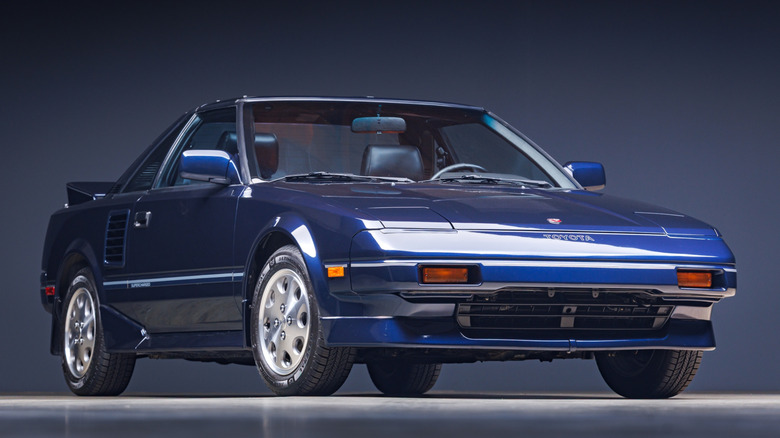
Not every '80s icon was an unaffordable, unattainable special edition. The Toyota MR2 was more affordable than most sports cars of its ilk, yet it retained the same high level of build quality and reliability as the brand's other cars. As a result, it was a car that you could feasibly drive on your daily commute, and yet still put through the wringer on backroads when the weekend rolled around.
The first generation of the MR2 arrived in the middle of the decade, offering a distinctive mid-engine layout and lightweight construction. Its name reflected its intended purpose; the MR2 acronym stands for "Midship Runabout 2-seater." Over its first few years on sale, the MR2 competed against the similarly affordable mid-engined Pontiac Fiero, but when GM retired the car after 1988, the MR2 became unique in its segment.
It's still unique today — there are no cheap mid-engined sports cars currently offered in the U.S. by any manufacturer, which has helped keep used examples of the little Toyota in high demand. However, the MR2 isn't as expensive to buy as some of its '80s contemporaries, with average prices for first-generation examples hovering around $13,000.
Porsche 911
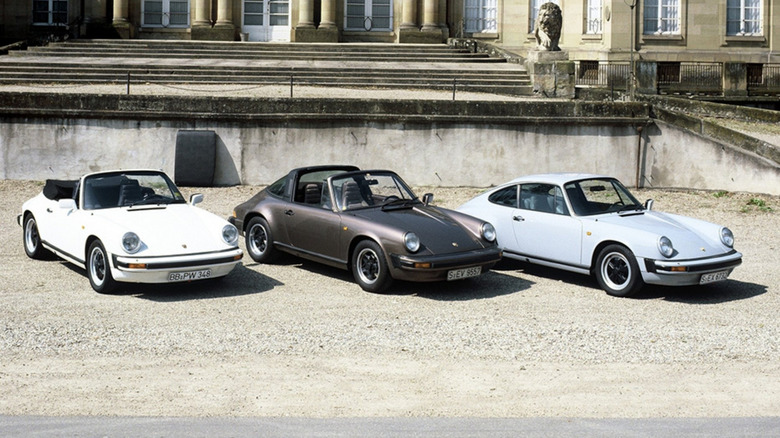
Porsche's G-series 911 debuted in 1974, but it remained in production throughout the entirety of the '80s. Over the course of its lifespan, Porsche continually developed the car, and some of the features and technologies introduced during the '80s would go on to influence later evolutions of the 911. For example, the strong response to the 911 Turbo pushed Porsche to revamp the styling of its lower-spec models to look more muscly with a wider stance. That more aggressive look carried over when the 964 debuted in 1989.
By then, the 911 Cabriolet had been in production for seven years and had proved a very popular part of the brand's lineup. Cabriolet variants of the 911 remain available in the lineup today, more than 40 years later. The '80s also saw entry-level variants of the car gain consistent power increases, and by 1987, the 3.2-liter engine made 217 horsepower. Prices for a G-series 911 can vary considerably based on trim, mileage, and condition, but on average, buyers can expect to pay around $100,000 to own one.
BMW M3 (E30)
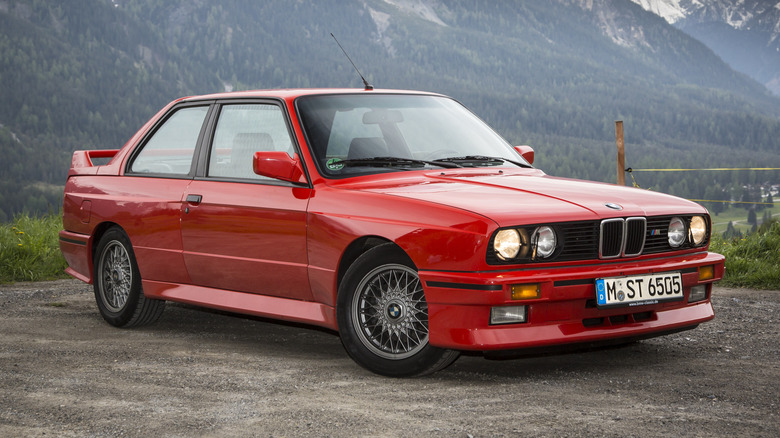
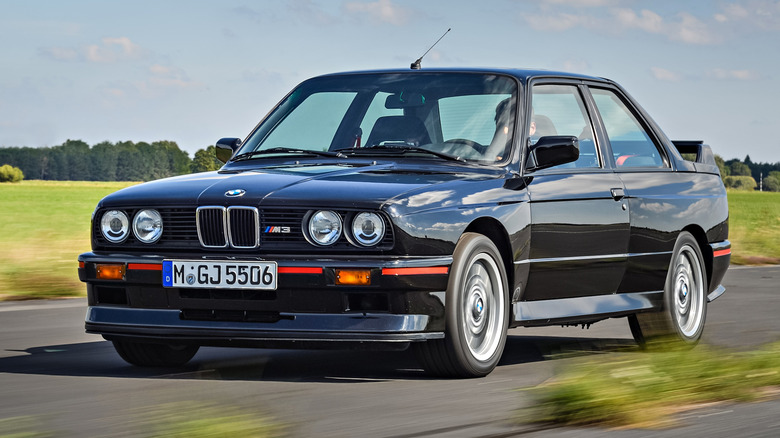
In order to meet homologation rules to go racing, BMW needed to sell at least 5,000 examples of the E30 M3. In the end, it sold over 18,000 examples, including a string of special-edition variants. The car's high-revving four-cylinder engine was a break from BMW's typical six-cylinder designs, but it proved highly successful both on the road and the track. The racing version of the M3 racked up multiple wins in various touring car championships, while enthusiasts were won over by the punchy power delivery of its roadgoing counterpart.
Anyone looking to buy an '80s BMW homologation special today will need deep pockets, because the E30 M3 has become very expensive. Surviving examples sell for an average of roughly $90,000, although the rare Evolution variants can sell for more than four times that amount. As clean, original examples continue to become harder to find, that price is unlikely to drop anytime soon.
Audi Quattro
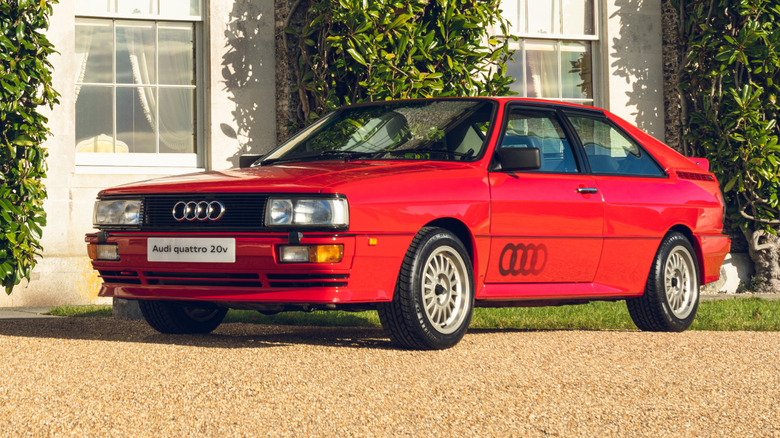
Modern World Rally Championship cars send their power to all four wheels, and that's in no small part thanks to the success of the Audi Quattro. It made its competition debut in 1981, with the FIA having lifted a ban on four-wheel-drive cars just two years earlier. The newly legalized Quattro system soon proved unstoppable on rally stages, and other manufacturers were quick to follow suit and develop their own four-wheel-drive cars. Meanwhile, Audi was busy developing the roadgoing version of its groundbreaking rally car.
The original roadgoing Quattro was launched as a homologation special in only a handful of markets, with U.S. dealers receiving a small batch in 1982, the year after its motorsport launch. Unfortunately, U.S. models weren't as appealing as their Euro-spec counterparts, since in order to meet road regulations, Audi had to reduce the car's power output to 160 horsepower, down from its original 197 horses.
While the Quattro wasn't a huge sales hit in America, it was a pivotal model for Audi in Europe. The brand continued selling the roadgoing Quattro even after pulling out of rallying, and today the Quattro system is an integral part of Audi's appeal. Euro-spec variants are now old enough for Americans to import, and collectors can expect to pay just over $60,000 on average for a base-spec model.