

6 Obscure Florida Traffic Laws Most Drivers Don't Know About
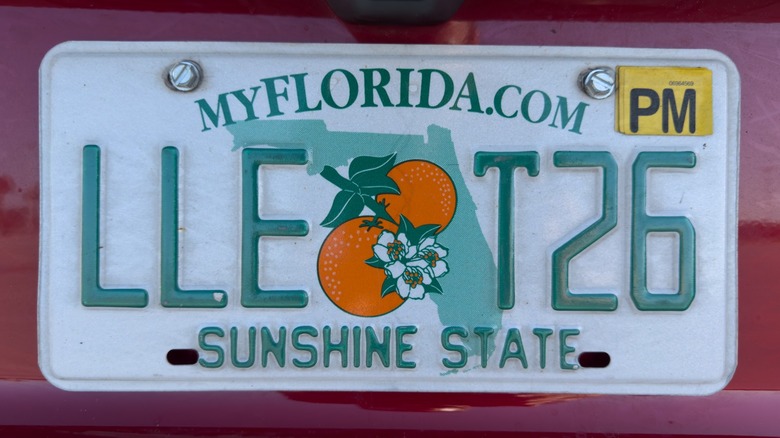
Many U.S. states have some the strangest driving laws you'll ever find, and while Florida may not quite crack the list, that doesn't mean the Sunshine State lacks its own collection of obscure laws that many drivers might not know about. These laws often make common sense, but they're not common knowledge. So, if you want to avoid getting a ticket, it's good to know them.
Of course, we're not talking about common laws concerning driving too slowly, distracted driving, or reckless driving. We're looking at regulations that exist even though most sensible people would think that they won't need a rule for that. We will avoid some common misconceptions and urban legends, like the need to top-up a parking meter if you tie an elephant to it or that you can't drive barefoot. Also note that this list is a mixture of state laws and city ordinances, so some will only apply to specific areas within Florida, rather than the entire state.
You have to hide your junk car

If you live in the Cape Coral, Florida, and plan to buy one of the best classic cars to restore as a beginner, you better have a garage to work on and store your project vehicle. According to the city government website, motor vehicles must be stored inside a fully enclosed structure. It's not enough that you put it under a tent or lay a cover on it — it must be stored indoors. Here's what the law states:
"Inoperable or unregistered motor vehicles, boats, and boat trailers cannot be stored except in a fully enclosed structure. An inoperable vehicle is one that is not equipped with all the parts that are necessary to legally and safely operate on public streets. Also included is any vehicle, registered or unregistered, with one or more flat tires that cannot be driven under its own power."
This kind of makes sense, as the city is probably using this law to avoid it from becoming a wasteland filled with junked and inoperable cars and boats straight out of Hollywood. However, the fact that you need to store it "in a fully enclosed structure" means that you cannot store an inoperable motor vehicle in your backyard, even if it's out of sight of your neighbors.
Drivers must yield to bikes in groups of 10 or fewer

Even though human-powered bicycles are not motor vehicles, Section 316.2065 subsection (1) of the Florida Statutes (2025) say they are still treated like any other vehicle, except for some provisions under the law. That means they need to follow traffic laws as well, like stop lights and stop signs. However, since bicycles are smaller and require much more effort to drive than a car, Florida law gives them special consideration.
Subsection (6)(b) of the same law says that "when stopping at a stop sign, persons riding bicycles in groups, after coming to a full stop and obeying all traffic laws, may proceed through the stop sign in a group of 10 or fewer at a time. Motor vehicle operators must allow one such group to travel through the intersection before moving forward." The law lets up to 10 bikers pass at a time on a stop sign, which should be reasonable enough for both parties. After all, if you encounter a peloton of more than a hundred bikers on the road, you wouldn't want to end up waiting more than 10 minutes just to let them all pass.
Keep off the grass
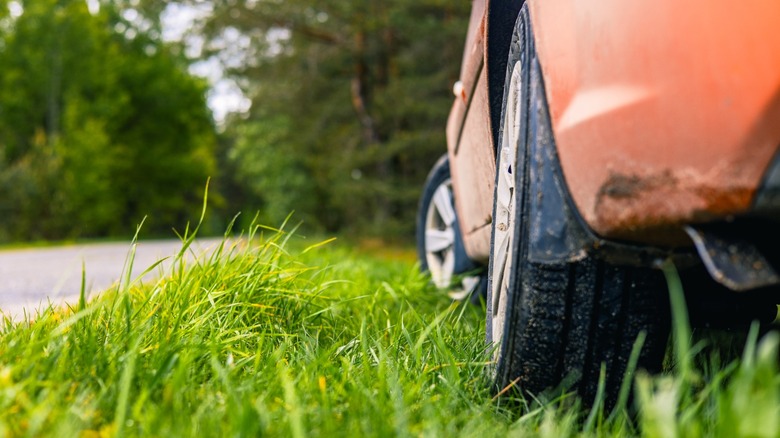
We're used to signs telling pedestrians to keep off the grass, especially at establishments that want to maintain well-manicured turf. The city of Weston, Florida, is officially enforcing the same rule — but this time, for vehicles. Its citizens and visitors cannot park their vehicles on any lawn, especially if they can be spotted from outside of the property.
According to section 72.04(A) of the Weston, Florida, Code of Ordinances, "no vehicles shall be parked on front, side, or rear Lawns when visible from any adjacent or neighboring property." This means that you can only park your vehicles on the street, driveway, or in a garage or parking lot, and that you shouldn't leave it sinking in soil. The law makes no exemptions, which means you will need to park your riding mower or lawn tractor in a designated spot as well, not just on the lawn in the back of your house.
Don't let your pet roam in your car

While many people keep their dogs, cats, and other types of pets at home, some will occasionally bring them along for trips, too. Palm Beach County, Florida, has thought of this, and wants to ensure that they're safely and properly taken care of inside moving vehicles.
According to section 4.24(j) of the Palm Beach County Code, "it shall be unlawful to transport any animal on a public road in any vehicle unless the animal is safely and humanely restrained (at a minimum by a harness with double tethering for dogs) so that the animal is unable to jump or fall out of the vehicle. When animals are transported in a pickup truck with a metal bed, the animals shall be provided protection from the metal bed."
This law primarily protects animals, as jumping or falling out of a moving vehicle could cause them injury or even fatality. It could also cause an accident on the freeway, if an approaching vehicle swerves to avoid them and loses control. Furthermore, an unrestrained pet, no matter how well trained they are, might distract the driver themselves, especially if they are alone with the animal, resulting in a dangerous situation. If you plan to travel with your pet (even if you're outside of Palm Beach), we highly recommend that you pet-proof your car with these Amazon items.
You can't leave your car with the keys in the ignition
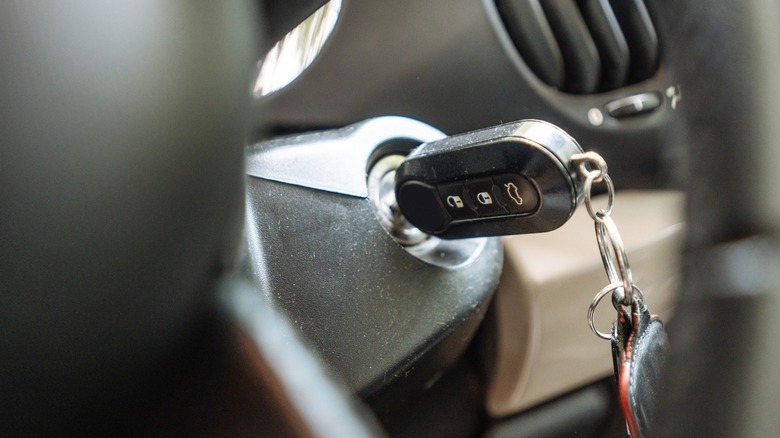
While there is no law against idling your car in Florida, it's illegal to leave a vehicle unattended while its engine is running. Section 316.1975 (1) of the 2025 Florida Statutes say that "a person driving or in charge of any motor vehicle may not permit it to stand unattended without first stopping the engine, locking the ignition, and removing the key."
You're not just disallowed from leaving a car idling by itself, but you must also lock the ignition (meaning you cannot leave it in ACC mode) and remove the key from the ignition switch. Although this is no longer a problem with many modern keyless vehicles, forgetful drivers of older models that still require you to put in the key to start it might get in trouble. Still, the law makes sense — aside from protecting the environment and reducing unnecessary exhaust fumes, it also makes your vehicle less prone to being stolen (unless your drive an older Hyundai or Kia).
No parking on graves
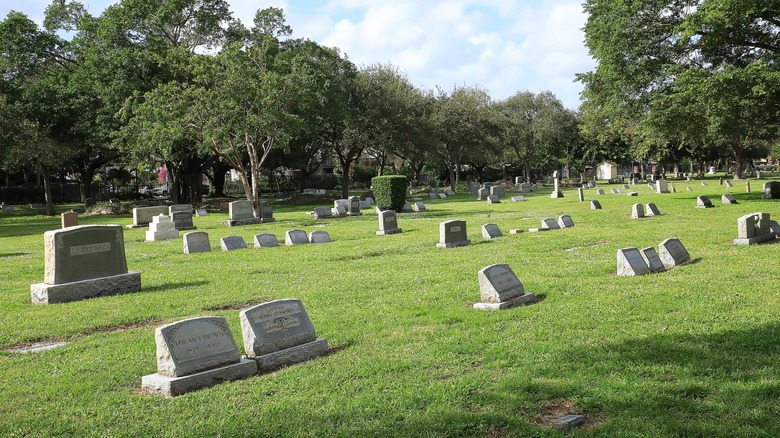
This may sound like common sense, but the city of Lake Mary, Florida, has a specific section in its ordinances about the rule of conduct for drivers when it comes to the Lake Mary Cemetery. According to Section 92.77(D)(4), "no person shall park any vehicle so as to obstruct any cemetery driveway, and no person shall drive or park any vehicle on any burial space."
We don't know why that particular rule had to actually be written down — many people would probably know not to park on a grave. After all, it wouldn't just be a sign of disrespect toward the buried person and their family, but it could also caused damage to the gravestone or grave marker. Furthermore, vehicles are quite heavy, and they might sink into the soil if a driver parks on top of a grave, leading to further damage on cemetery grounds.