

Tesla Owners Claim To Be Burning Through Tires - Here's What Might Be Happening
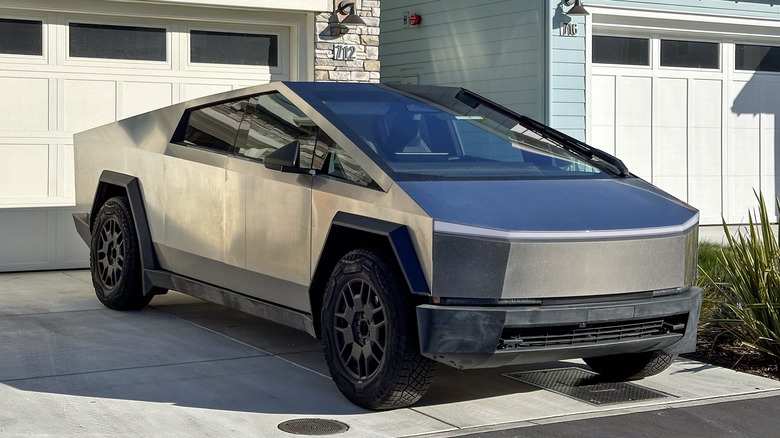
It's not really news that electric vehicles, including Tesla models, are tougher on tires. Tesla even requires approved tires, which are ones that emit less noise and can handle the cars' extra weight. However, Tesla owners have been shocked to find out that even their Tesla-approved tires are not lasting nearly as long as expected.
EVs are heavier than gas cars, and Tesla offerings like the Cybertruck are some of the heaviest. The Cyberbeast is over 6,800 pounds, for example. It's not the heaviest electric truck (that title belongs to the GMC Hummer EV Pickup), but it's definitely on the larger side. It's clearly challenging its approved tires, which are usually the Pirelli Scorpion ATR all-seasons or the Goodyear Wrangler Territory RT all-terrains. One member of the Cybertruck Owners Club reported that his tires barely lasted more than 6,200 miles before his three-month-old Cyberbeast needed a tire change.
It's not just Cybertrucks that are seeing rapid tire wear, though. For example, one Tesla Model 3 owner reported that it only took 10,000 miles and a missed tire rotation to reduce his tires' tread depth to 4/32 inches, despite the tires having a 45,000 to 60,000-mile warranty. Some Model Y owners have it worse, with noticeable wear at 5,000 miles. It's a problem plaguing Tesla owners across the internet, and forums are filled with similar stories about tires wearing faster than expected.
What's causing Tesla tires to wear out so quickly?
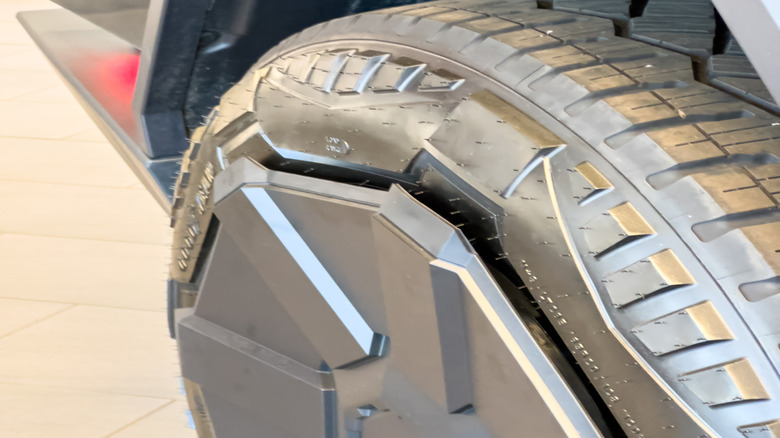
There are a few big reasons why Tesla owners are experiencing tire wear and tear at a rapid pace compared to gas-guzzling counterparts. First is their acceleration. The Cybertruck is one of the quickest trucks in the world, reaching 0-60 miles per hour in 4.1 seconds, while the Cyberbeast hits 60 mph in 2.6 seconds. The Tesla Model Y, a seemingly practical SUV, hits 60 mph in just 4.6 seconds. While impressive, this incredible acceleration applies maximum force to its tires almost instantly, leading to significantly faster tire tread wear. As one Tesla owner said on Reddit: "Instant torque will do that."
Then, consider how Teslas are hitting that kind of acceleration while being heavier than gas cars in the same class. The Tesla Model S is over 4,800 pounds, while the average mid-size sedan weighs just 3,500 pounds. The Cybertruck is even heavier, hitting 60 mph in under 3 seconds while weighing over 6,200 pounds — it's no surprise that owners are failing the penny test much faster than expected.
However, it's not just speedy takeoffs that wear down on Tesla tires. Regenerative braking is another major culprit. While gas cars' braking systems slowly apply friction, regenerative braking utilizes the Tesla models' electric motor to produce kinetic energy, adding wear to the front tires. Uneven wear patterns can also lead to faster tire changes.
How to make Tesla tires last longer
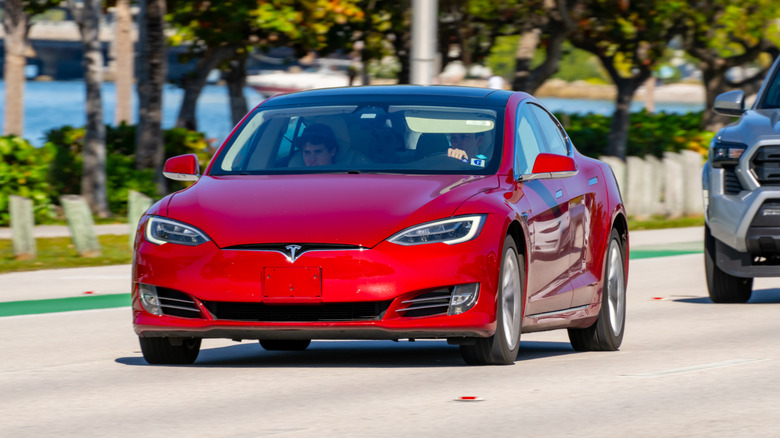
Just because Teslas are heavy and speedy doesn't mean you should have to change your tires every 6,000 miles. You can make your tires last longer by driving smarter — which, yes, unfortunately means slower, yes.
First, avoid hard launches. Gentler starts and stops can protect the tire tread. Chill Mode will reduce your torque and power, which can further help reduce wear and tear. Avoid stop-and-go traffic whenever you can to create a smoother commute. Off-roading the Cybertruck is also not recommended with Tesla-approved tires.
You may also need to baby your tires a bit more than usual. Check your tire pressure often, ensuring it's at the recommended 50 PSI to make sure you're not causing more friction on your tires due to the Tesla's excessive weight. Since braking wears out the front tires, consider more frequent tire rotations to ensure there is even wear on your tires. You may even want to look into an expert to do more alignments, further protecting your tires from uneven and added wear.