

Super Single Tires: What Are The Disadvantages Of Using Them?
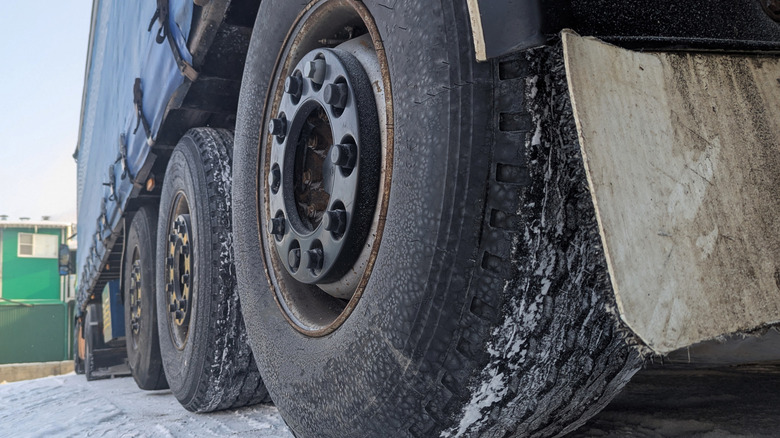
While driving along the interstate, you've probably encountered semis featuring a single large tire on each side of the rear axle. It may look weird at first because most semi-trucks from major brands, like Volvo and Hyundai, have the usual four wheels on the rear axle with two pairs sandwiched together on each side. But there are reasons behind this design. Those wide-base tires, also known as super singles, promise better handling and reduced operating costs, and it should hardly come as a surprise that they're gaining popularity over their dual-tire counterparts.
Most people use these diesel-powered trucks to satisfy all their hauling needs. And if you're in a weight-sensitive niche, say concrete or fuel, because every pound matters, you'll probably want to reduce your truck's empty weight to increase its effective payload capacity. To achieve this, it's wise to switch to super single tires. They'll reduce the weight of a truck by cutting about 400 pounds per axle.
Theoretically, the type and brand of tires you pick for your vehicle can make a big difference in its fuel efficiency. Once you swap out dual tires for super singles, you will definitely save on gas, as they have lower rolling resistance than duals. Besides that, you'll also enjoy improved off-road capability, handling, and, of course, better rig aesthetics. However, while super single tires offer numerous benefits, they do come with some drawbacks, too. Here are the biggest cons you should consider before you consider swapping out your dual tires for super singles.
The drawback of using super single tires
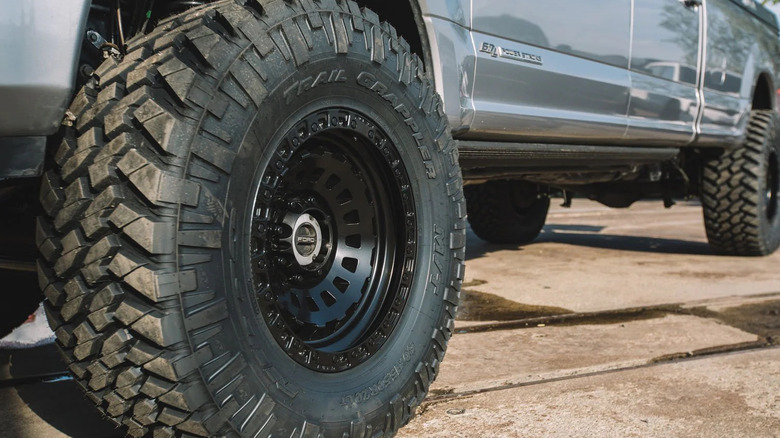
There's no getting around it — tire replacement is one of the most expensive vehicle maintenance services. The average cost of new tires is between $80 and $150 for compact cars and $100 and 150 for SUVs and trucks. When it comes to super singles, however, perhaps their biggest drawback is that they do not come cheap, at least not in comparison to standard dual tires. Each tire costs over $800, and that cost can easily add up when you consider that a standard 5-axle semi-truck needs at least ten tires. In fact, for a heavy-duty truck like the Ram 5500, you can always expect to shell out close to $20,000, inclusive of rims and modifications.
Traction is another concern. Super singles might be the solid choice for off-road applications and highway driving. But when you add wet conditions to the mix, you could be looking at skidding and longer braking distances due to reduced traction. Another drawback of going with super single tires is that, in the event of a blowout, you could be left stranded on the road. More wheels on duals mean that if there is a warning sign of a tire blowout, you can easily limp to a tire center without damaging the rim or fender. Wide-base tires will not offer you this convenience, and, even worse, for small carriers, because not all tire centers carry super singles, the replacement downtime could put a big dent in the profits.