

Honda's 2026 Pilot Elite Reminded Me What This 3-Row SUV Gets So Right
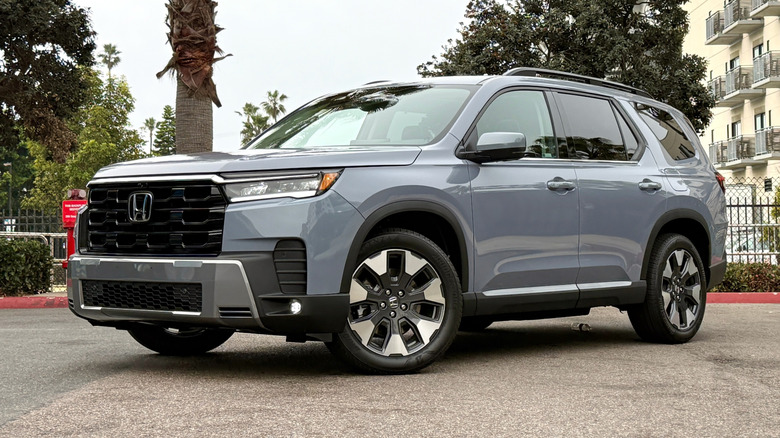
If you're looking to transport your family, but ultra-spacious minivans like the Honda Odyssey just don't match your aesthetic, there's always the big three-row SUV segment. And Honda is just as happy to provide you with family-hauling capabilities in a boxier format via the 2026 Pilot. It doesn't have cool side-to-side sliding seats like the Odyssey, but the Pilot has a lot going for it in terms of features, functionality, and capability.
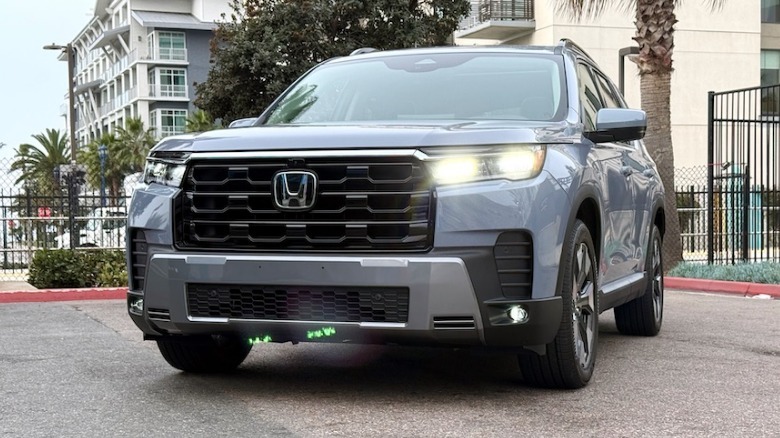
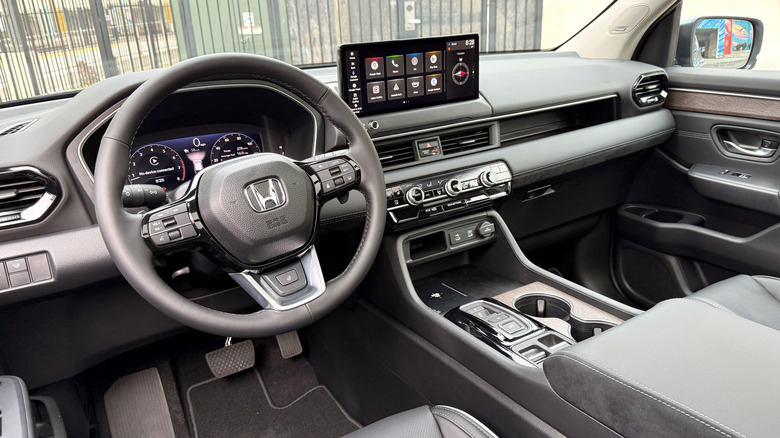
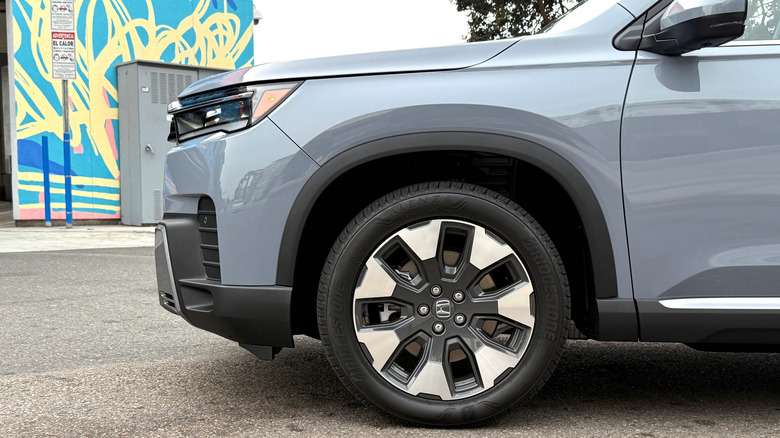
Refreshed for 2026, the Pilot gets new looks, with a big grille and a few new paint colors. Honda has also retuned the electric power steering system to add more steering feel. The list of updated or upgraded tech features is probably the biggest series of changes for the 2026 Pilot, with a new 12.3-inch center touchscreen on all models. The previously-optional 10.2-inch driver display becomes standard on all trims, Google built-in is added for the entire Pilot lineup, and the wireless smartphone connectivity is now standard.
 Travis Langness/SlashGear
To show off all these changes in their three-row family-mobile, Honda paired a drive event of the updated Pilot with the all-new Prelude – a real two-for-one opportunity. I had a packed schedule, so it meant waking up extra-early to get in some miles behind the wheel of the Pilot, but losing a bit of sleep was worth the drive.
Plenty of strength, lots of shifts
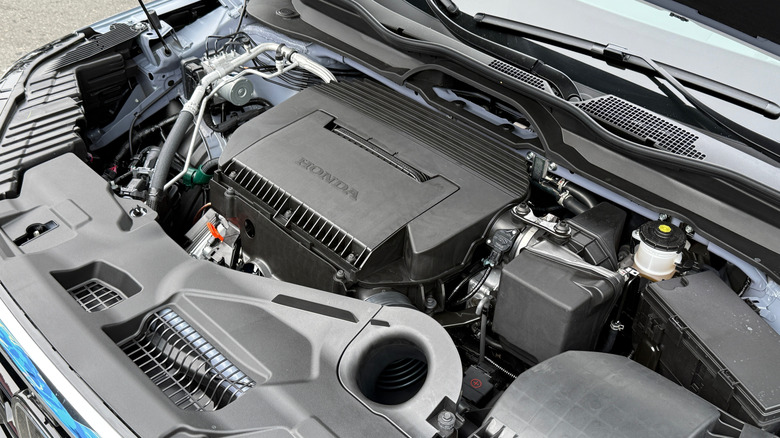
There's a lot of new equipment, and there are fresh-faced looks for the Pilot, but the powertrain carries over from the previous model year. It's a naturally-aspirated 3.5-liter V6 that produces 285 horsepower and 262 lb-ft of torque. The V6 is paired with a 10-speed automatic transmission, and all-wheel drive is standard on most of the upper trims.
The V6 is a strong powertrain and, when you bury the throttle, the Pilot has some pretty impressive acceleration. Merging on the highway or passing the slow-moving early-morning crowd is easy.
The Pilot will give you unstrained climbs up steep hills, and with all-wheel drive, it's capable of towing up to 5,000 pounds – plenty enough for a lightweight car trailer or a small utility trailer. Where the V6 and the 10-speed struggle are at half-throttle. There's a lot of shifting going on, especially at city speeds. If you get moving after a dead stop (like a stop light or sign) and don't go for maximum acceleration, the Pilot will shift up several times before you reach commuter speeds. The shifts aren't jerky or shocking, just a bit too numerous at slow speeds.
It's big, but not cumbersome
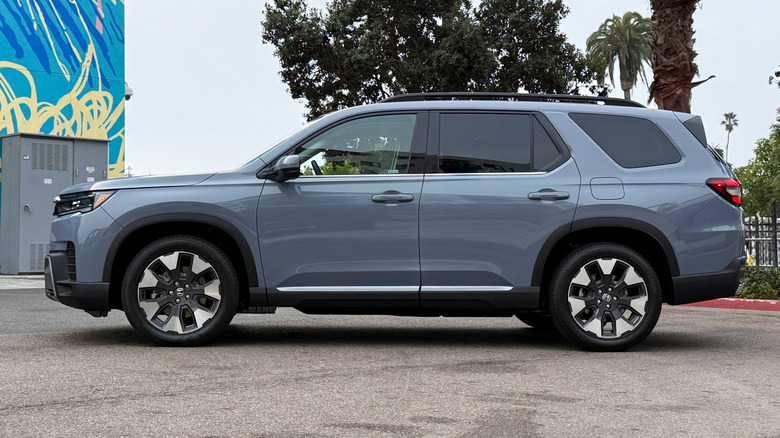
I've driven a few different generations of the Pilot over the years, and almost every time I get behind the wheel, I'm surprised at how well it moves for such a spacious vehicle. Most body-on-frame three-row SUVs are seriously heavy these days, especially models with big V8s and maximum towing capacity. A Chevy Tahoe in some trims is over 5,800 lbs, and the Toyota Sequoia has several trims that are over 6,100 lbs, while even the most well-equipped versions of the Pilot have a curb weight that's well under 4,700 lbs. That's the benefit of being built on a unibody platform.
If you're taking your family on a vacation to your local mountain ski spot or along any kind of winding back road, extra weight is hard to manage. The Pilot doesn't feel that way at all, especially with the latest improvements to steering. I drove it on both winding mountain roads and through built-up city streets, and in neither place did it feel oversized or tough to maneuver. Steering was well weighted on the mountain roads, but light enough in the city for easy parking. If you can spare a bit of legroom and cargo space compared with bigger SUVs like the Tahoe, the Pilot is simply easier to live with.
Comfort for the long haul
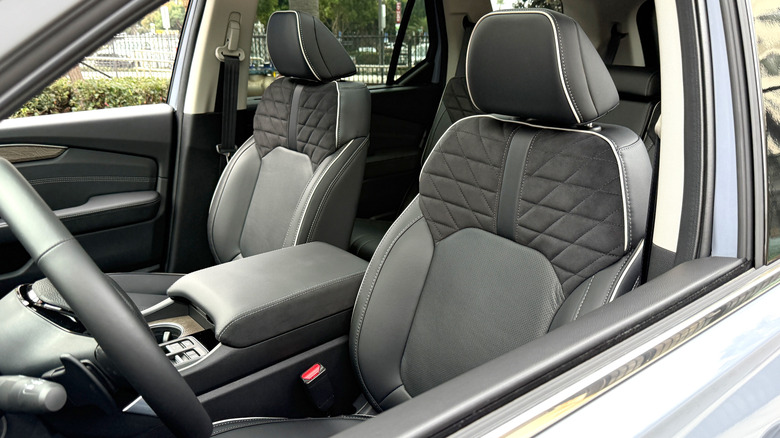
The Pilot's cabin feels pretty isolated from what's going on in the outside world, and that's partially a result of several changes made to quiet down the interior. New door glass, door insulators, and a new hood insulator are all just the beginning for keeping noise out. Honda has added new enclosed fender liners to reduce road noise on Touring and Elite models, and it appears to have worked extremely well. On the highway and on city streets, there was very little road noise inside the Pilot — enough that even a whisper-quiet conversation could be heard.
More than just quiet, though, the cabin is pretty plush. On the Elite trim, the front seats are upholstered with leather and Ultrasuede accents, with a delightful stitching pattern and ultra-comfortable padding. Heated and ventilated front seats come on the top trims, as does a heated steering wheel, and heated second-row seats. Loading into the second and third row seats should be easy for most adults, thanks to wide-opening rear doors and second-row seats that move forward quickly. The middle seat in the second row can also be removed entirely for families that need regular access to the third row, but only a passenger capacity of seven.
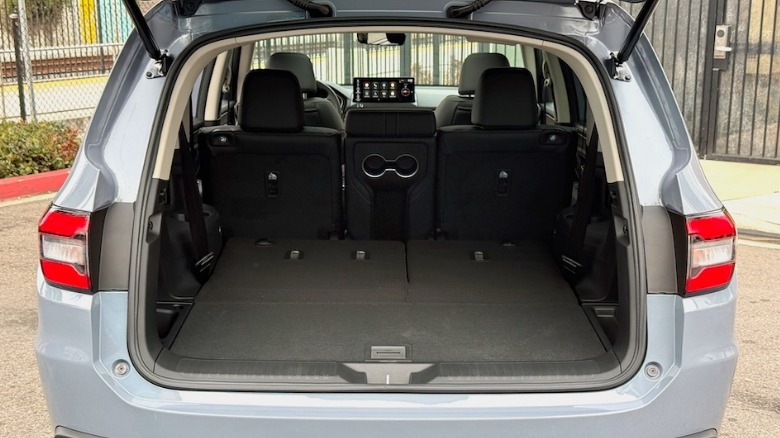 Travis Langness/SlashGear
Cargo space is, as it's always been with the Pilot, pretty expansive. Behind the third row, there's as much as 22.4 cubic feet of storage space. That expands to 60.1 cubic feet with the third row folded, and max cargo space behind the first row of seats is a substantial 112.1 cubic feet.
Updating the touchscreen is a big improvement
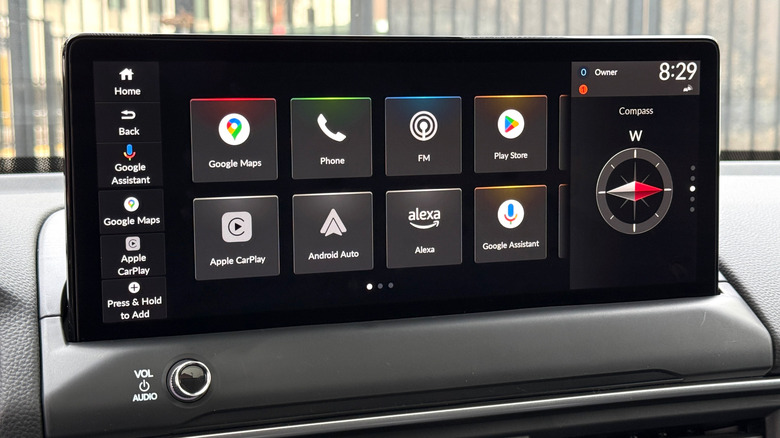
Last year, the Pilot came with a choice between two touchscreens: a 7-inch version on the base trim or a 9-inch touchscreen on all the upper trims. For 2026, a much-larger 12.3-inch screen is standard on every model. It looks good on the dashboard, and in practice, it's a better place to interact with all of Honda's important infotainment commands.
The center touchscreen is high resolution, has logically organized buttons, and it's quick to respond to commands. While I didn't find much use for it in my short test drive of the Pilot, Google built-in is likely a welcome addition for most shoppers too. Some of the physical buttons have been replaced in lieu of widening the screen, but the Honda has retained the volume knob.
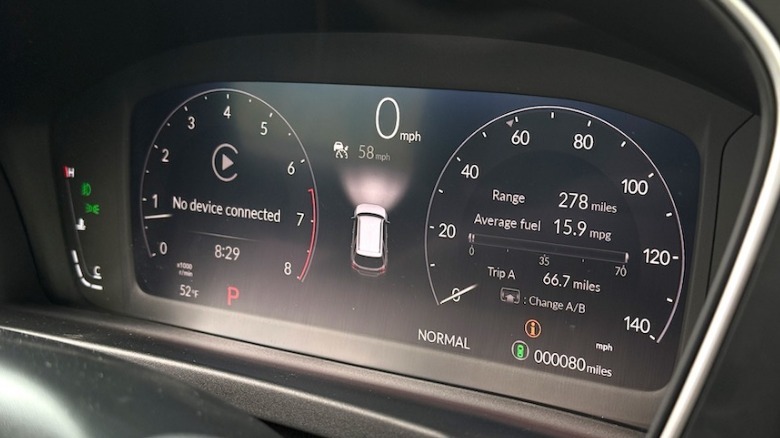 Travis Langness/SlashGear
The 10.2-inch digital driver display isn't new, but it is now standard on all trim levels of the Pilot. It's not quite as high-res as the center screen, but it's still clear and easy to understand with a quick glance. Instead of three different available stereo setups, Honda has simplified this year, with two distinct audio systems. A 9-speaker stereo is standard, but the top trims (including the Elite) get a 12-speaker Bose system. And with my music at maximum volume, the Pilot's top-level stereo was clear and undistorted — the strongest test of an upgraded stereo in my book.
The driver aids could use some work
When using driver aids like the adaptive cruise control (ACC) or lane-keep assist in the Pilot, there was some poor behavior from those systems that deserves a mention. Adaptive cruise control is particularly conservative, keeping a long following distance even on the setting for the shortest gap. Also, if you've got adaptive cruise control engaged and you're following another car at highway speed, the system is slow to respond to increases in speed.
During my test of the Pilot, I set the adaptive cruise control's speed to 70 mph on the highway. More than once, I came up on cars going slower. And, more than once, those cars changed lanes or moved out of my way. The Pilot took several seconds to respond to the new gap in front, leaving lots of time for other cars to squeeze into it. If you live in a city where traffic is heavy and drivers are aggressive, you'll probably end up taking over for yourself rather than relying on the ACC.
Lane keep assist was less frustrating, but still a bit quirky. Over several miles of Southern California freeways, it often favored the right side of any lane it was in. If I attempted to correct the steering and center the Pilot in its lane, the lane-keep assist system would seemingly sense that I was drifting out of my lane and attempt to pull me back towards the right side.
Small shifts in pricing
Naturally, with all these changes to the Pilot's looks and standard tech, there are going to be some price changes too. But aside from the increase in price on the base Sport trim, inflation across the rest of the lineup isn't very large.
The Sport trim in its basic two-wheel drive setup has a starting price of $43,690 (including $1,495 destination fee). That's a $2,040 increase from the previous model year, but it encompasses the bigger touchscreen, the now-standard 10.2-inch driver display, the now-standard 9-speaker stereo, and a quieter cabin — a combination that's worth the price.
Mid-range models like the rugged TrailSport see a more modest price increase, with 2026 models coming in at $51,890, and adding second-row heated seats as a part of their $1,040 increase. At the top of the range, with trims like the Elite and the Black Edition, the price is certainly higher, but not much higher than the previous model year. The 2026 Pilot Elite has an MSRP of $54,990, which is only $460 more than the 2025 model.
2026 Honda Pilot verdict
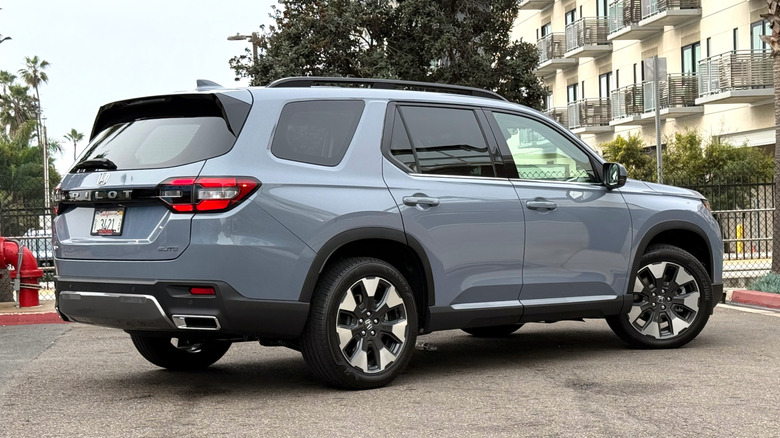
The 2026 Honda Pilot is more appealing than ever. Changes to steering and noise insulation have made it the most refined version of itself, and the top trim levels like the Touring and Elite come packed with all sorts of modern features. An increase in standard equipment means an increase in the price, but it's still a reasonably-affordable SUV for the segment. New tech and upgraded standard equipment help raise the tide for all versions of the Pilot.
There are some downsides, though, most notably the middling fuel economy from the V6. On most models, including the Elite trim that I drove, the EPA estimates that the Pilot will return 21 mpg combined (19 city/25 highway). If there were some sort of hybrid model available, or even an optional turbocharged four-cylinder to choose from, that would make the Pilot much more competitive. The Toyota Grand Highlander is a strong choice for fuel economy, with a hybrid fuel economy estimated as high as 36 mpg combined. For competitive refinement and interior space, there's also the premium Kia Telluride to consider.