

I Imported My Dream JDM Car, Here's Everything I Wish Someone Told Me About The Process
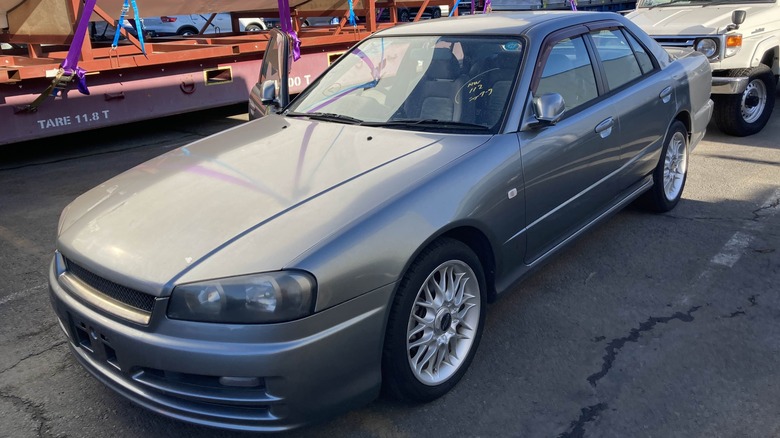
I grew up in the 1990s, during the heyday of Japanese imports. We were spoiled for choice in this era, whether we're talking classic 1990s JDM legends such as the Toyota Supra, Mazda RX-7, and Nissan Silvia or underrated gems like the Nissan Cedric, Subaru Legacy, and Mitsubishi Legnum. One of the most famous of these vehicles was the iconic Nissan Skyline R34, a car never sold in North America, but nevertheless permanently enshrined in American automotive culture.
Long story short, I grew up wanting one of these cars since I first set eyes on them in racing video games and later movies like "2 Fast 2 Furious," and promised myself that I would purchase one when I had the means. That dream finally came true on November 2, 2025, but realizing that dream involved a lot more work (and headaches) than I expected, with a myriad of paperwork, anxiety, and a lack of resources available to show me the way — apart from 8-plus-year-old Reddit posts. As a woman who likes to keep things simple, I want to change that, so I will provide a detailed synopsis of what I struggled with so that you don't have to deal with the stress when you import your dream JDM car.
There are several pitfalls common to any used car, especially one that's 25-plus years old like my Skyline, but there are also import-specific idiosyncrasies and confusing documents. You'll get a ton of paperwork and not know what anything means, how to submit it all, and so on. I'll go through everything that stumped me, step by step, to hopefully make your process as painless as possible.
Finding the car
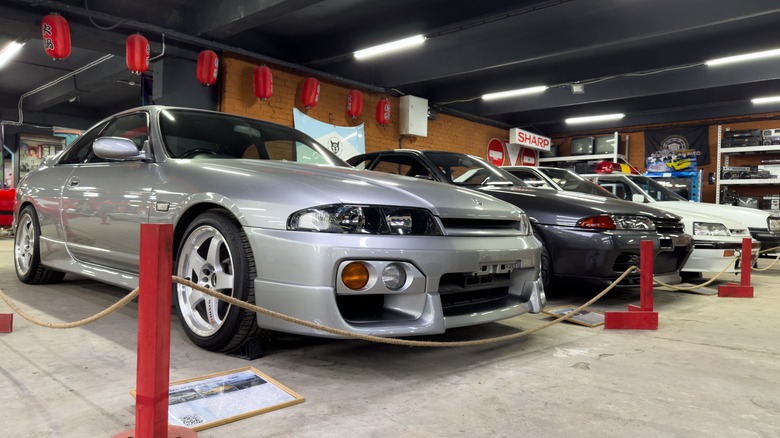
This is simultaneously the second most fun and arguably the most complicated step. Every car, from humble kei trucks to top-tier JDM legends, has its own individual quirks. My Skyline (and all generations of Skyline GT-Rs, for that matter) uses an RB engine, a straight-six "interference" engine. What that means, for the driver, is that a skip in the timing belt due to poor maintenance will cause the pistons to hit the valves, converting your internal combustion engine into an external combustion engine. My engine's timing cover has a sticker stating when the next timing belt change is due.
Every car has its own traits you need to be aware of. If it's not something you're equipped to handle, you'll have to factor in that labor to the final cost. Moreover, other cost overheads can sneak up on you, especially with perishable or rubberized parts. If you're importing into the U.S., your car legally must be over 25 years old. That means you'll have to replace things like fuel lines, bushings, brake lines, any rusted (or rust-prone) parts, and so on. This is part of daily driving any classic car.
My advice here is to do your research. I didn't know what the service interval for an RB25's timing belt was until I was shopping (it's 100,000 kilometers, by the way). If you're buying an old car, know it will have typical old car problems, and you may want to avoid driving it daily, especially if the engine was never produced stateside or is hard to find parts for. Otherwise, get used to waiting for parts to be delivered from Japan at a premium.
Purchasing your car

So you've found your dream car; now comes the time to actually purchase it. How do you do that? There are a few methods. The first involves getting a broker to purchase the car at an auction, if that's where your car is. You set a maximum price, and they buy it on your behalf. I went with a specialized exporter that works directly with numerous dealerships, basically a massive one-stop shop for Japanese classifieds. You can either get a loan or pay for the car outright, but you likely won't get any financing options unless you're purchasing from a stateside-based import dealer, so prepare accordingly. Lastly, plan for the car's price times two to account for future steps and mechanical issues.
Bear in mind that, if you purchase the car in Japan, the car will (obviously) still be in Japan, meaning you won't be able to check the car unless you physically go there. Not every dealer will inspect its cars, either, so you'll have to do a lot of homework beforehand, relying on photos, videos, and testimonials to decide if the car is good or not. Otherwise, you could hire an inspection service to look over the car for you. If the car is at an auction, it will receive a grade from 1 to 5 and F to A, signifying the condition; here's a site that helped me decode this.
Japanese auction grades are typically quite thorough, but they're all in Japanese, so be sure to get a translation or brush up on your Japanese. Aside from that, if you're not 100% sure, always either physically inspect the car or hire a service to inspect it for you to avoid purchasing a lemon.
Getting it shipped

This is genuinely the most crucial and trickiest step. Timing is essential here: you will want to contact an export broker and explain the situation before anything happens. Export brokers are companies that specialize in bringing goods and merchandise to the United States. Many, like the one I used, operate nationally, while others service specific states. Several ports accept these cars, and the one I used was the Port of Newark in New Jersey. You inform the dealer which port you chose at checkout, send them the cash, and then they will send you various documents in the mail.
The most crucial document here is called the Bill of Lading (or B/L); this will be your major focus (though you will likely receive other documents, like the vehicle's export certificate and its translation, inspection documents, and so on). The bill of lading details what is being shipped, where it's shipped from, and where it's going. You must submit this form to file what's known as an Import Security Filing (ISF, also known as a 10+2 Form), which informs U.S. Customs about the cargo. This must be filed no less than 24 hours before the cargo vessel's departure.
I overnight mailed all the documents to my export broker's office, and they filled out all the paperwork for me. However, specialized websites exist that allow you to file the 10+2 yourself. Whatever route you take, you want to be underway essentially the same day you get the bill of lading or face substantial fees that can amount to over $5,000. I didn't know this and almost missed the deadline, so be on the ball to avoid getting hit with this fee.
Receiving the car
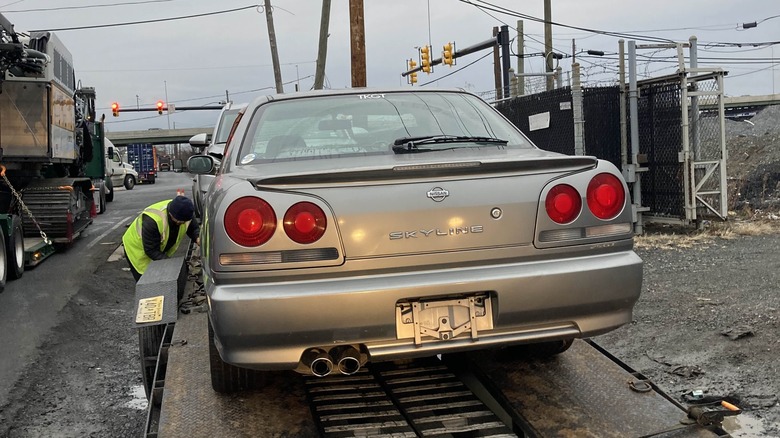
My export broker fee was only a few hundred dollars, so I submitted all my paperwork there without any hassle. I would rather pay $300 to do it right than $5,000 to do it wrong, but you can also do all of this yourself if you're confident. This includes submitting documents to the EPA (specifically forms 3520-01 and DOT form HS-7), your chosen port, and so on. This should get your car to the dock. Once it's there, you can go to the dock and receive the car. You'll need to bring your bill of lading to the office and show it to the port officials, who will then direct you to the correct vehicle. Match the chassis number if you need to, and sign the car out.
The last steps in this process are all on you; the dealer, export broker, and port are all finished with their work. Now all that's left is to bring the car home, which requires you to either get temporary plates if your state allows them — New Jersey does not, except if you're a dealer — or get it shipped. You will either have to trailer it or get a trucking service to pick it up. In the latter case, you'll have to coordinate with the shipping company, but make sure to let them know what time the port closes. Newark's closed at 4 p.m., and the shipping company I chose almost arrived at 5 p.m., which would've been a boatload (pun intended) of fines. After that, simply ship the car home and enjoy looking at your brand-new driveway decoration while waiting for the registration process to complete, which is the final step in this long odyssey.
Registering your car
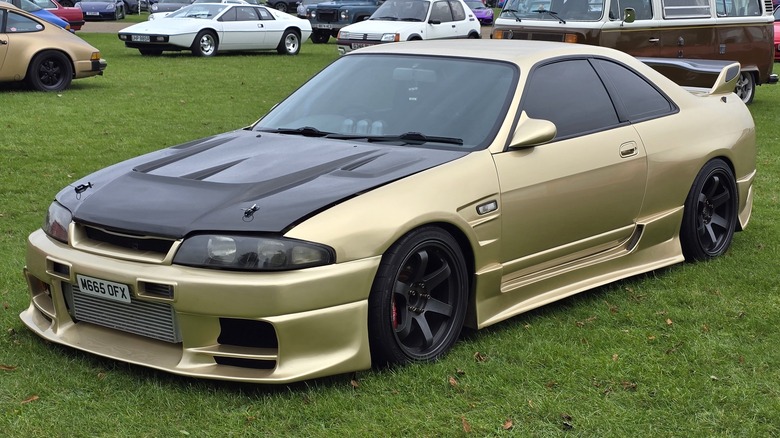
The hard part is over, but there's one hurdle to go. For this, you need to take all of the documents you have up to this point, along with an application for a foreign title, and mail them to your state capital's DMV. I had to mail my documents to Trenton. New Jersey also has certain caveats, so be sure to read the fine print. In my home state, for instance, I am taxed 6.625% of the vehicle's sale price, plus the DMV fees. I must also photograph the car's information plate, containing information like the chassis number and model designation, generally located on the firewall.
Fill out the application and send it away, then wait approximately two months; I waited 10 weeks. Once you get the title in the mail, you can register it like any other car at the local DMV. After that, you'll sort out insurance, and you're done. In total, expect to actually be able to drive your car about six months after you hand over the money.
My state also requires inspection for all vehicles made in 1996 and newer (including cars you can now import for the first time in 2026). If that's the case, you'll likely need to call your state's Department of Environmental Protection and a specialty inspection center and explain the situation; it's a long and involved process that I'm still going through at the time of writing. However, if you have an older vehicle, you can skip this step.
And that's all there is to it. It's a rather opaque process, but in practice, it all boils down to some phone calls, knowing which documents go where, and not losing track of anything.