

Are EGO Power Tools With Carbon Fiber Worth Buying? Here's What Experts Say
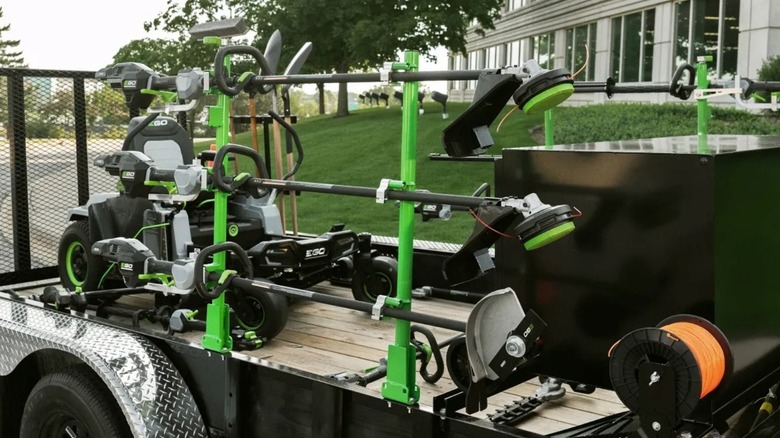
In general, Ego Power's products are considered high-quality power tools for homeowners. The lineup includes, among other things, string trimmers, edgers, hedge trimmers, and pole saws. Those tools feature 56V battery power, are available as complete kits or tool-only versions, and often offer a choice of shafts made from aluminum or carbon fiber. While 2025 saw a number of new Ego tools to consider for use around your home, tools with carbon fiber shafts have been around for a few years.
Any changes to the tried-and-true construction used in outdoor power tools are often met with skepticism and demand premium prices. Today, there isn't much difference in price between Ego tools with aluminum shafts and those featuring carbon fiber construction. For example, Lowe's lists the carbon fiber shaft Ego Power+ Powerload 16-inch string trimmer for $199.00, although it's sometimes on sale for $179.99. Compared to the Ego Powerload 15-inch string trimmer, priced at $179.00, there isn't much difference.
Still, we have to wonder if the advantages and disadvantages of carbon fiber construction make it worth buying Ego tools that use it. In a review of Ego's carbon fiber-shafted edger, ProTool Reviews says the "carbon fiber construction has several benefits, including a lighter weight, more vibration absorption, and high durability. Ego's lifetime warranty on its carbon fiber shafts should alleviate any concerns consumers may have about the newer technology.
Is carbon fiber better than other materials for power tool components?
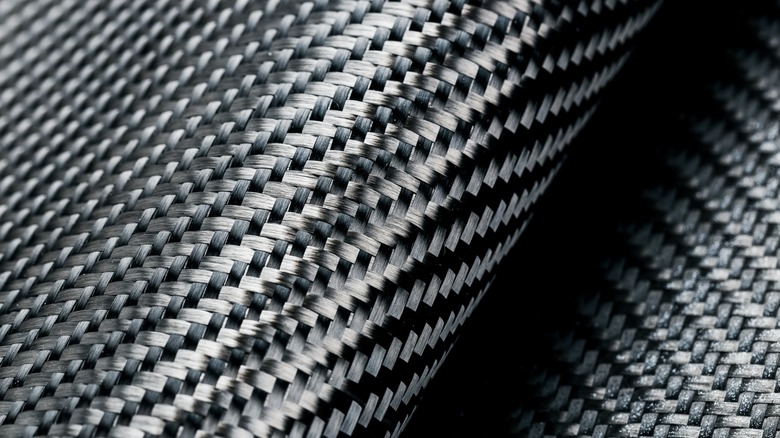
The best way to explain carbon fiber is that, like fiberglass, it's a composite material made from strands of material encased in resin. However, while fiberglass uses strands of glass, carbon fiber features strands of carbon atoms. While carbon fiber and fiberglass are stronger than steel, carbon fiber is lighter and stronger than fiberglass. The downside is that it's more expensive.
Carbon fiber's complex manufacturing process and high cost of the raw materials used to make it contribute to its expense. Like other advanced processes and technologies, as carbon fiber use becomes more popular, its cost declines, making it more appealing for use in power tool production.
While carbon fiber is generally recognized as stronger than steel, it doesn't withstand impacts and flexing as well as some materials. Advanced construction techniques can add impact-resistant layers to the carbon fiber composite material to make it more resistant to damage while maintaining its strength and weight advantages.
Which Ego power tools feature carbon fiber components?
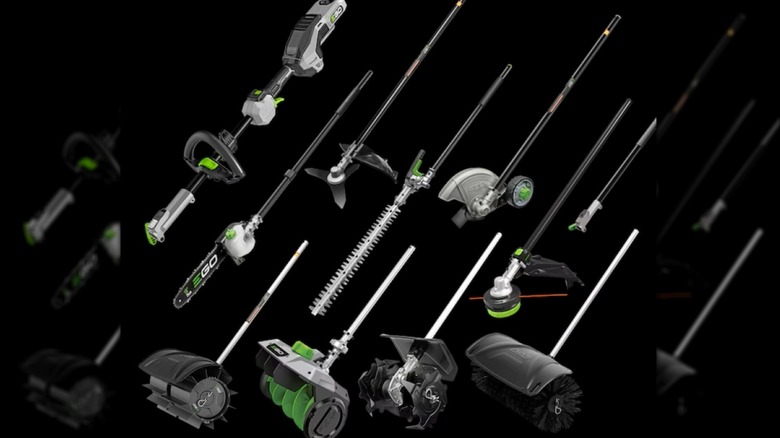
While there are other things to consider before buying Ego tools, whether they are made of carbon fiber might be important to some consumers. Perusing Ego's 2026 product catalogue reveals a variety of power tools featuring carbon fiber components.
Most Ego power tools featuring telescopic shafts are carbon fiber. Ego tools such as pole saws, string trimmers, edgers, hedge trimmers, and multi-tool systems are some examples. Ego also uses carbon fiber for the shaft of its ProX Multi-Tool powerhead.
The Ego Power+ Carbon Fiber Multi-Head System combo costs $1,245.00 at Lowe's. It includes the Ego Multi-Head 56V Power Head, a 5.0 amp-hour battery, and a 320-watt battery charger. In addition, the combo comes with carbon fiber attachments, including a 17-inch string trimmer, a 20-inch hedge trimmer, a 10-inch pole saw, an 8-inch edger, and a 12-inch brush cutter.
Carbon fiber Ego tools are generally highly-rated by Lowe's customers. The highest-rated versions are the Multi-Head System Carbon Fiber Brush Cutter and the Commercial Carbon Fiber Short Pole 21-inch Hedge Trimmer, both with a 4.8-star rating. At the other end of the ratings scale is the Commercial Carbon Fiber 8-in Lawn Edger with a 4.4-star rating.
Methodology

To determine whether Ego power tools with carbon fiber components were worth buying, we needed to know how much more they cost than versions without carbon fiber, what advantages they offered over standard versions, and how people using them perceived them.
To accomplish this, we consulted several expert sources for information on the tools and materials, such as ProTool Reviews and Spartec Composites. We also combed through specifications and product information provided by Ego. Finally, we considered product reviews from consumers.