

Future Android Update Could Make Your Notifications More Private Than Ever
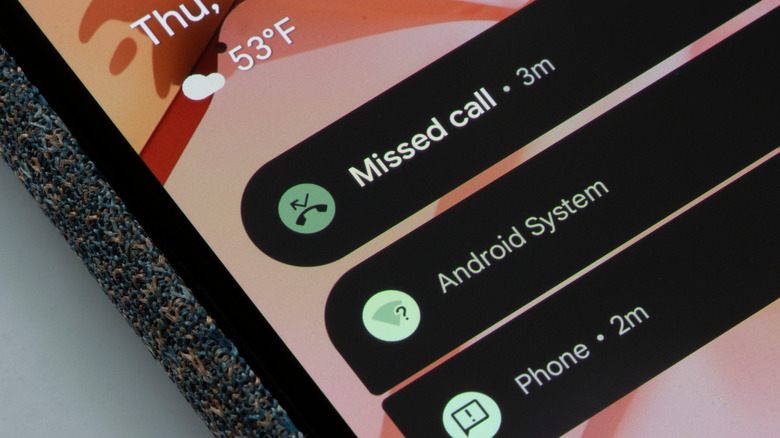
The next major version of Android could include a feature that gives users much more granular control of app notification privacy. First spotted in an early developer build of Android 17 by Android Authority, the upcoming App Lock feature will allow users to make app notifications more private by limiting the content shown. If this feature is carried through to the official Android 17 build rolled out globally, it would add yet another way for users to approach per-app privacy and security on their own terms, adding to the many ways users can customize Android to their liking.
Security and privacy are among the largest concerns for mature operating systems, so it's no wonder that Google has continued to focus development in that direction. For the past several major Android releases, some of the most significant upgrades have been security and privacy-related, both under the hood and user-facing. With thieves, hackers, and even governments increasingly eager to acquire user data, operating system vendors from Google to Apple and Microsoft must constantly add to their systems' security portfolios. If implemented, here's how App Lock will make notifications more private in Android 17.
Android App Lock may allow users to set private notifications
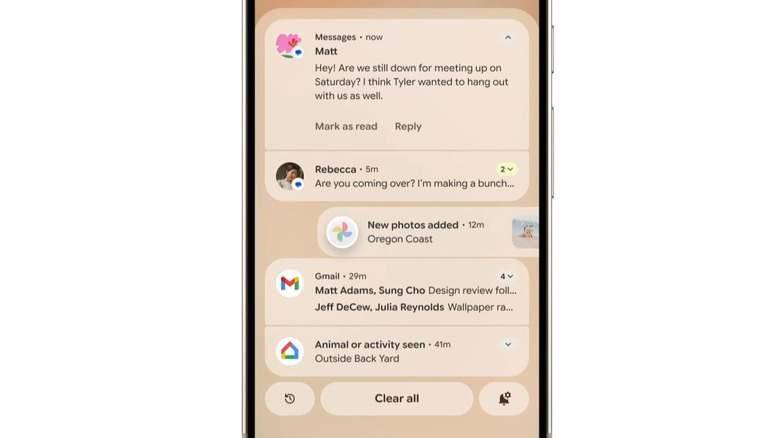
Android Authority found code in the January developer build of Android Canary 2601 that hints at a new App Lock feature that may ship with Android 17. The code appears to indicate that apps locked with the feature will still show notifications, but will hide the content of those notifications to preserve privacy.
It's expected that the App Lock feature will allow users to hide individual apps behind a password, PIN, or biometric lock. However, users may still wish to receive notifications from locked apps, so it looks like Google is toying with allowing users to strip those notifications of any sensitive information. So, instead of displaying the text of a message or other alert, the notification would simply read, "New message," or "New notification." Presumably, users who do not want to receive notifications from locked apps will still be able to disable them entirely, as is currently possible for almost all Android apps.
App Lock will make its way to Google Pixel devices, assuming Google ships the feature with Android 17. However, it's not clear whether the feature will make it to handsets from other brands. Some Android manufacturers, such as OnePlus, already have features with nearly identical functionality, but could migrate to Google's implementation to reduce development time. On the other hand, Samsung has its own security infrastructure and may stick with it. For example, though the company chose to ditch its Samsung DeX desktop environment in favor of Google's desktop mode for Android 16, it did not implement Google's Private Space feature. Instead, it retained its longstanding and proprietary Secure Folder functionality.
App Lock will differ from Private Space and similar privacy features
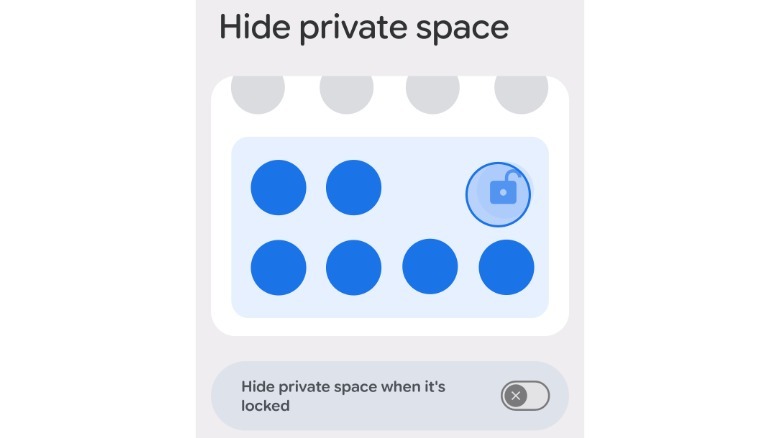
Users familiar with the ins and outs of Android may wonder how App Lock and its privacy-conscious notification settings would differ from existing Android features. After all, users can already stop certain apps from showing the full contents of their notifications on the lock screen. Moreover, the Private Space feature added in Android 15 allows users to lock apps into a secure area within the system and protect that area with a password or biometrics.
However, App Lock will work while the phone is unlocked, whereas current stable releases of stock Android only offer notification privacy on the lock screen. As for the lock itself, the current Private Space (or Secure Folder on Samsung Galaxy devices) requires apps to be moved to a locked-down area of the operating system. The security layer is applied to the Private Space itself, sandboxing apps within it. App Lock will allow users to lock individual apps without placing them into the Private Space.
Android currently requires developers to implement their own app locks. For instance, WhatsApp, Signal, and other encrypted messaging apps offer a built-in lock that, when enabled, requires the user to enter a password or scan a fingerprint before they can use the app. The upcoming App Lock feature would remove the burden from developers to create a custom lock, while also enabling protection for any app installed on a device. We should get more updates on this feature as Google continues to roll out early builds of Android 17.