

3 Ways You Can Extend Your Car Battery's Lifespan
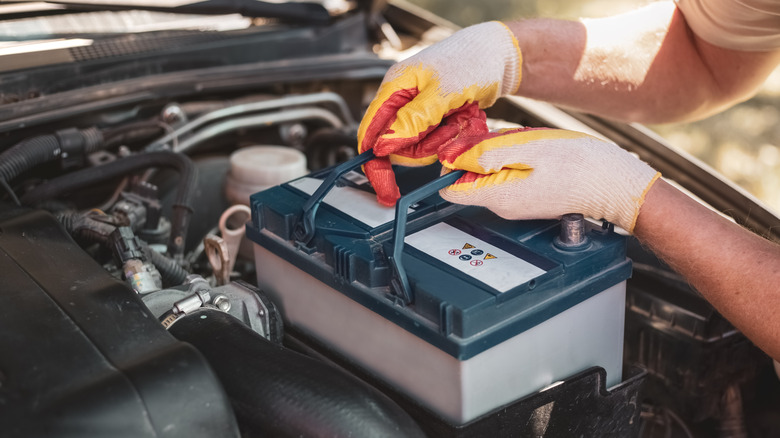
We may receive a commission on purchases made from links.
A car battery is an often-overlooked part of the engine bay, but arguably one of the most important. In fact, it's so crucial that many complaints about cars not starting are often traced back to faulty or dead batteries. Not to mention, if you have a flat battery, you definitely won't be able to access the dashboard control, infotainment systems, headlights, and other electrical components.
Like everything else under your hood, your car battery will eventually fail, often with little or no fanfare, leaving you stranded. You can reasonably expect your car battery to last three-to-five years, but that's not always guaranteed. Bad driving habits, small mistakes like leaving electronics on after shutting off the engine, and the weather outside can all shorten the lifespan of your batteries.
Your car's battery is one of the maintenance items you should never cheap out on, and you'll want to do everything possible to make sure it sticks around for a long time. From packing your car in the shade to smart driving habits, some simple things can make a huge difference in how long your car's battery lasts and how well it performs.
Turn off the headlights when your car is not running

Generally, your car's battery isn't designed to power the headlights when the engine is running (that's the alternator's job). But if the engine is off, the battery will act as a temporary power source for a short period. This means that if you leave the headlights on overnight while the engine is off, you could wake up to a dead battery. Headlights, especially traditional halogen bulbs, are one of the most power-hungry components of your car; they can draw between 55 watts for high beams.
Of course, a single deep discharge will not totally destroy your car's battery. But if you repeatedly leave your lights on, those repeated deep discharge cycles will drastically shorten your battery's lifespan. When you notice the telltale signs of a flat or dead 12-volt car battery, instead of replacing it, you may be able to recondition or recharge it using a multi-level 12V battery charger, but car batteries can only withstand a limited number of charges and discharge cycles before they die completely.
To maximize your car's battery life, it's wise to avoid using your lights when the engine is not running. Instead of relying on traditional halogen bulbs, you can always upgrade to LED headlights. While they're expensive, they're brighter, will last much longer, and even better, they'll draw less power than their counterparts. This means that they'll put less strain on your car's battery, increasing its lifespan.
Don't store your vehicle for a long time without driving it occasionally
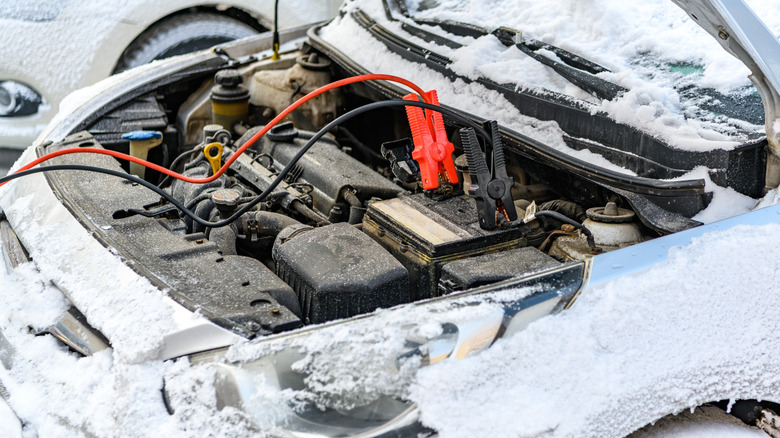
Even though you're a daily driver, there are certain situations that will force you to put your vehicle in storage for weeks or months. Maybe you're going on a long vacation, or you want to protect your seasonal ride from the harsh winter months. But regardless of your reasoning, it's worth noting that storing your car for a long time brings a set of challenges, and one of the most common is complete battery drainage.
All batteries (whether lithium-ion or lead-acid batteries) are designed to lose charge when not in use. This means that if you pack your car for weeks without a lot of driving, your battery's charge will gradually decrease due to natural self-discharge. Even worse, when temperatures dip below freezing, your battery may struggle to hold a charge and even start your engine — after all, cold weather can drastically reduce your battery's capacity by as much as 40%.
For these reasons, if you're storing your car for an extended period, experts always recommend that you run and drive your car for 30 minutes every week at a minimum. You can even take it for a spin to allow the alternator to recharge the battery naturally. If you're not in a place where you can take your car for a weekly drive, you'll want to disconnect the battery completely. However, keep in mind that doing so might reset your electronic systems, resulting in the loss of clock settings and radio presets.
Keep up with battery maintenance
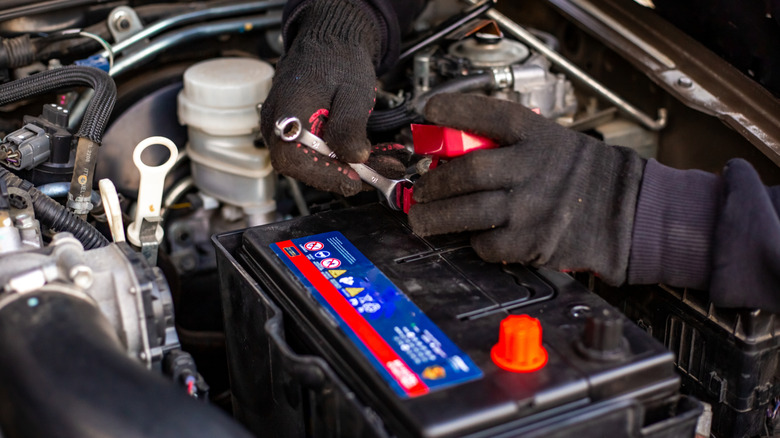
When it comes to engine care, oil changes and spark plug replacements often get all the attention, but you should check the car battery, too. As with other engine components, your car's battery also needs proper maintenance. Luckily, car battery maintenance is a relatively simple auto DIY task that even beginners can handle, requiring only a few tools that you probably have in your garage.
If you notice any crusty or salty buildup around the clamps or terminals, be sure to clean them with a wire brush and spray-on battery terminal cleaner like CRC Battery Cleaner. Household products, like a mixture of baking soda and water, will work in a pinch. You want to clean that buildup because it will slowly eat away at the metal terminals, reducing their ability to conduct current.
Inspecting your battery's charge frequently is helpful as well. Ideally, you should test your car battery every six months with a digital multimeter to avoid risking a no-start situation. While at it, if a battery warning light pops up on the dashboard or your car shows signs you need to replace the battery, it's best that you contact a pro. They'll conduct a diagnostic test to pinpoint the main culprit, and if your battery has several bad cells, they'll recondition it, thus prolonging its life.