

Every Harley-Davidson Motorcycle Announced For 2026, And What They Cost
Harley-Davidson has been building motorcycles since 1903, and much has changed over the years. From a single-cylinder thumper built in a Milwaukee backyard to the sophisticated and beautiful cruising machines of today, Harley's story continues into 2026 with enhancements to its latest models.
The latest and greatest from the bar and shield brings innovations, more power, high-tech gadgets and gizmos, and some familiar models that aim to make your time on the road fun, safe, and satisfying.
We've run down the latest crop cultivated by the engineers in Milwaukee, sorted by price. Some of Harley's models haven't changed much from last year, while others offer new and interesting features. Note that each price is the starting price for its model. It won't take long to increase that number with options such as upgraded paint and other goodies, and if you hope to get into one of Harley's high-performance Custom Vehicle Operations (CVO) or Liberty Edition lines, those premiums rise precipitously.
Sportster $9,999 to $15,999
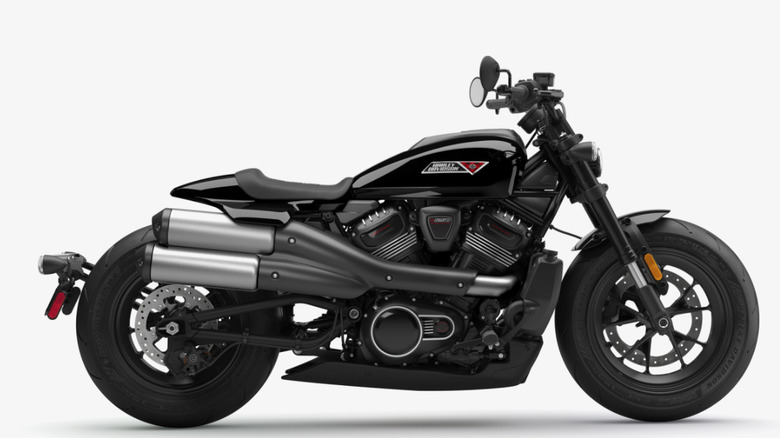
Harley-Davidson debuted the Sportster in 1957 to hang with overseas competition from Britain and Japan. While the Sportster long ago fell by the wayside in performance terms, the nameplate has remained beloved. So much so that the Sportster is Harley's longest continuously produced model. That's not about to change for 2026, with multiple variants of the Sportster hitting showroom floors. It comes in three flavors: Sportster S, Nightster, and Nightster Special.
The Nightster serves as Harley's entry-level bike. With an MSRP of $9,999, it eschews flashy chrome for muted matte and uses the 975T Revolution Max engine to make 91 horsepower and 72 lb-ft of torque. For $12,499, prospective buyers can upgrade to the Nightster Special. The primary differences are in comfort and aesthetics, with the Special bringing a TFT display, cruise control, Bluetooth, and an additional paint option to the party.
The Sportster S remains the king of the Sport family castle. While the Nightster retains vintage design cues, the Sportster S squares off the lines, presenting more like the Batcycle than the Sportster of yesteryear. It also includes a significant power jump, employing a Revolution Max 1250T to the tune of 121 horsepower and 93 lb-ft of torque. It's up to the buyer whether that's worth the base asking price of $15,999.
Street Bob – $14,999
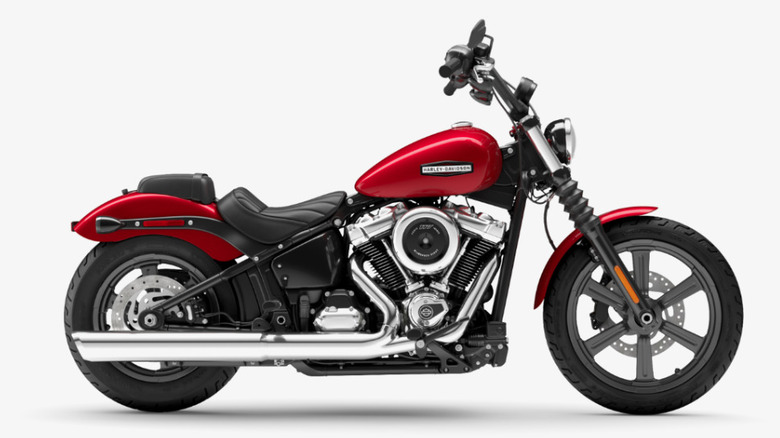
If a full-sized hog is on the menu, Harley fans will have to step up to the Cruiser family, where we find the Street Bob. It's everything riders need, and not much else. As a manufacturer known for bells and whistles, Harley-Davidson's Street Bob may be somewhat Spartan compared with the baggers at higher price points. But its Spartan attitude contributes to us naming it one of the toughest-looking Harley-Davidson motorcycles out there.
For 2026, the Street Bob makes 98 horsepower and 120 lb-ft of torque via Harley's 117 cubic inch Milwaukee Eight Classic engine. It weighs 646 pounds and has an accessible saddle height of just 25.8 inches, meaning riders of most heights should be comfortable swinging a leg over. The 4-inch gauge cluster is decidedly minimalist, featuring an analog speedometer and a small LCD screen. Riders can select between Road, Rain, and Sport ride modes via a hand control.
The Street Bob is a wallet-friendly (relatively — it's Harley, after all) way to get into Harley's big-displacement bikes. It's also one of the best ways to step up from the Sportster for those who don't like the aesthetic direction the Sport family has taken in recent years. You can ride the Street Bob for a starting MSRP of $14,999.
Low Rider (S and ST) $19,999 to $23,999
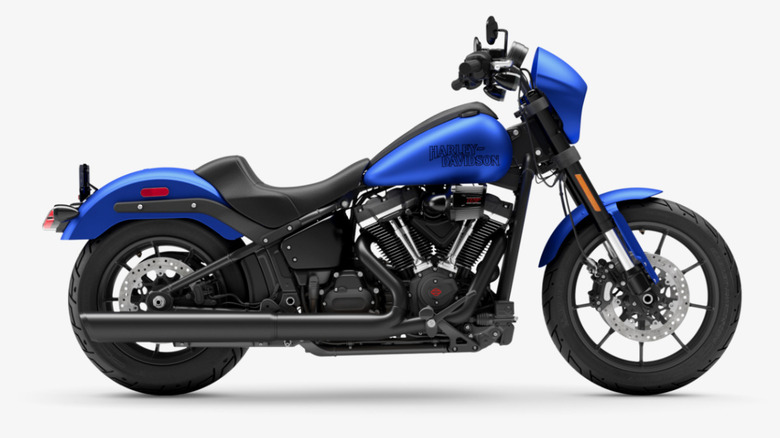
Next up is the Low Rider. With a lineage dating back to 1977, the Low Rider came about when custom builders began mixing and matching Sportster forks with Big Twin frames. Harley got on board with the idea and built the Low Rider from the ground up.
The 2026 iteration of the Low Rider name brings us two models: the S and ST. Both are performance-oriented, powered by the 114-horsepower, 128-lb-ft Milwaukee Eight 117 High Output engine. Harley engineers then double down with a performance-tuned two-in-one exhaust and Heavy Breather intake. It has a 27-inch saddle height and some safety and comfort features, including a USB-C port, anti-lock brakes, and cruise control, at a base price of $19,999.
For $23,999, the ST model kicks it up a notch. The T stands for touring, and for the extra cost, buyers get a lightweight, frame-mounted FXRT fairing designed for aerodynamics. It also adds Harley's Drag-Torque Slip Control System to the software suite and 2 cubic feet of luggage room in a pair of hard saddlebags for weekenders and grocery-getting. Ordering a brand-new ST also gives customers access to four paint schemes not available in the S model.
Heritage Classic $19,999
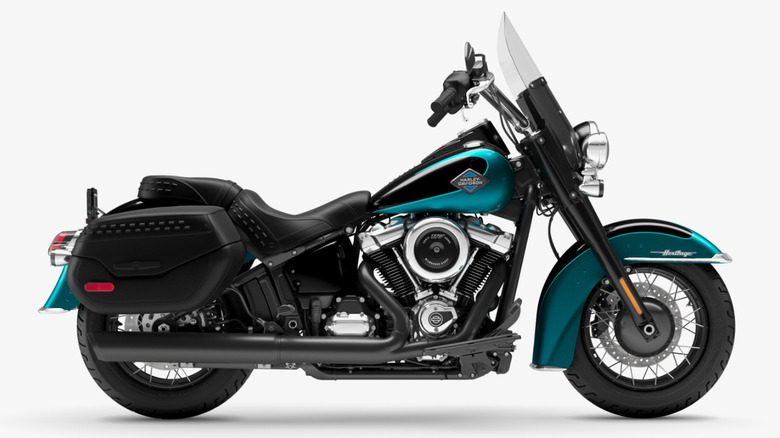
If the Harley-Davidson brand is about anything, it's heritage. Sometimes maligned for clinging to out-of-date styles and tech, Harley unabashedly doubles down with classic lines in the 2026 Heritage Classic — though the tech is anything but antiquated.
The Heritage nameplate first appeared in 1987, while Harley-Davidson attempted to rebuild its reputation after the disastrous AMF era. Equipped with the then-new Evolution engine combined with a design that would look at home in earlier decades, it was a mold of the old and the new. Fast forward a few decades, and the 2026 Heritage Classic is on the same mission.
Equipped with Milwaukee Eight 117 with a relatively sedate 98 horsepower, the aim of the Heritage Classic isn't to tear up the drag strip, though with 120 lb-ft of torque, it's hardly a slouch. The 26.3-inch seat height, comfortable passenger seat, and included lockable bags balance the practical needs of a long commute with the ability to cover miles on a weekend trip.
Pan America $19,999
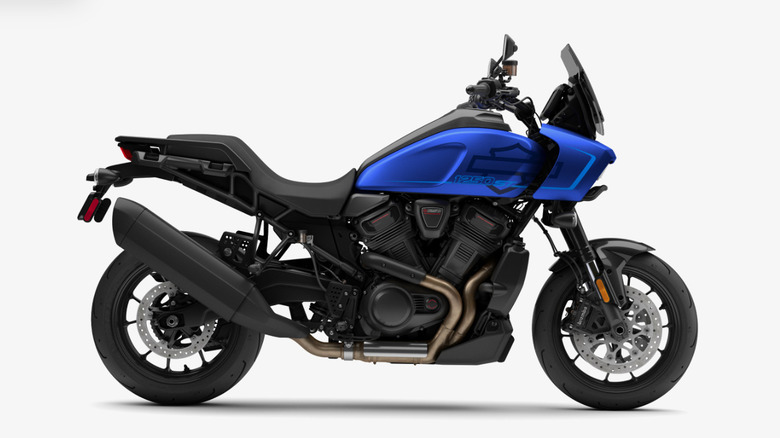
The Pan America is the biggest step Harley has taken outside its typical cruiser offerings since the Sportster arrived to tangle with British and Japanese performance bikes in the late 1950s. The Pan America takes Harley where it has seldom gone before. Introduced in 2021, the Pan America dove into the adventure-touring motorcycling market with gusto. A clean-sheet Revolution Max 1250 engine, sophisticated electronic suspension that garnered 6.9 inches of ground clearance, and an off-road option among its five riding modes made the Pan America a fresh foray into a new market for Harley.
A half-decade later, we're happy to report that the Pan America is thriving. Available in Special (S) and ST trim, both of which start at $19,999, the Pan America packs a walloping 150 horsepower and 94 lb-ft of torque. Once upon a time, those numbers were reserved for elite superbikes, but Harley coaxes them out of a 60-degree, 1,241 cc V-Twin, though it should be noted that it tips the scales at 546 pounds — well out of superbike range.
Nods to its off-the-beaten-path mission include a 6.8-inch TFT screen, hands-free Bluetooth mode, and a slew of traction control and rider-safety accoutrements, including ABS, torque and cornering control, and lift mitigation. Optional adaptive ride height lowers the bike's high-slung profile at speed, accommodating shorter riders who may be uncomfortable with the 31.1-inch saddle height. The Special trim is for riders who intend to go off-road, while the ST edition is geared toward eating up highway miles.
Fat Boy $22,599
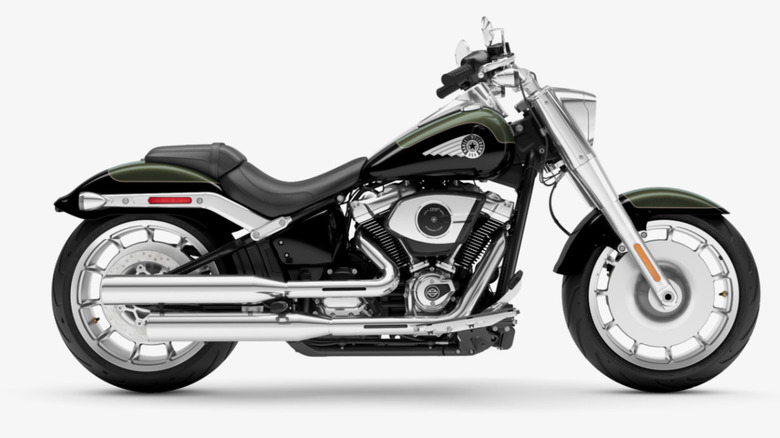
Harley-Davidson's famous Fat Boy debuted in 1990 to instant acclaim and has maintained a passionate fanbase moving into 2026. It might be because it was designed by Willie G. Davidson himself, who obsessively tested the motorcycle for two years before giving it the green light. Whatever the reason, it's been a mainstay of Harley's Softail line ever since.
The Fat Boy exemplifies Harley's street attitude, with thick tubular framing and wide tires that give it its name. For 2026, it features a 103-horsepower Milwaukee Eight 117 Custom V-Twin that delivers 126 lb-ft of torque. Safety enhancements include the usual ABS, traction control, cornering, and torque-control systems, plus new ride modes and full LED lighting for 2026.
The Fat Boy is no race bike, nor is it a cross-country tourer. It's a laid-back cruiser that oozes attitude and brings gravitas to your local watering hole's parking lot. It doesn't come with baggage. It's for you and whoever you like to take along with you on those moonlit rides around town.
Breakout $22,999
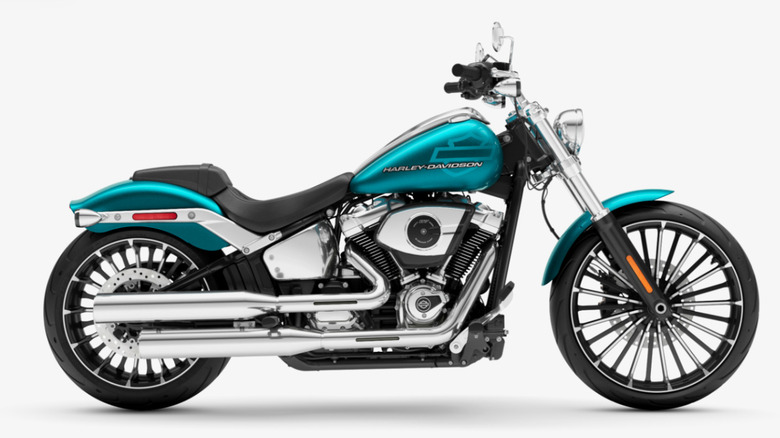
One of the newer additions to Harley's stable, the muscular Breakout hit the street in 2012 with a mandate to tell import cruisers who rules American highways. It reigned for eight years before leaving the American market in 2020, only to return with a fresh outlook in 2023.
For 2026, the Breakout returns with the 103-horsepower Milwaukee Eight 117 Custom V-Twin, delivering 126 lb-ft of torque. With a 34-degree front fork rake, bobtail fender, and fat rear tire, it's the closest you can get to a modern factory chopper from the company that made choppers a thing. Front 300 mm discs bring the Breakout, which weighs 681 pounds, to a stop.
The Breakout isn't a cruiser or a tourer. It is best described as a muscle bike in the same vein as the Yamaha V-Max or Triumph Rocket 3, or Harley's own discontinued V-Rod. Aggressive, powerful, and stripped-back in all the right ways, the Breakout may be inspired by the olden days, but modernity is present in Harley's rider-safety and handling system.
Street Glide $24,999
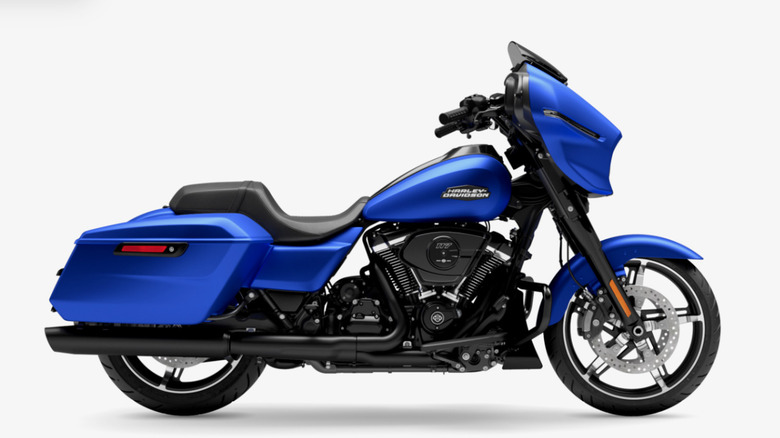
The Street Glide is where Harley's lineup enters what it's known for best — touring. Not the full-dress bagger that the Road Glide is, the Street Glide is equally adept at around-town riding and commutes while offering riders the option for longer hauls.
With 105 horsepower and 130 lb-ft of torque from the Milwaukee Eight 117, it is a middle-ground bike on Harley's cruising to touring spectrum. Its 26.4-inch saddle height and 811-pound weight make it accessible to riders who don't want to (or can't) carry extra weight. The Street Glide includes Harley's usual collection of traction, cornering, and torque control software along with multiple ride modes.
The Street Glide comes with Harley's Skyline operating system, which riders access via a large 12.3-inch full-color TFT screen. They can even sync the cycle to their smartphone via Bluetooth to play music through a pair of 5.25-inch speakers. Other touring-oriented features include Harley's handsome handlebar-mounted Batwing fairing with incorporated LED lighting and 2.42 cubic feet of storage space in the hard, lockable saddlebags.
Road Glide $27,999
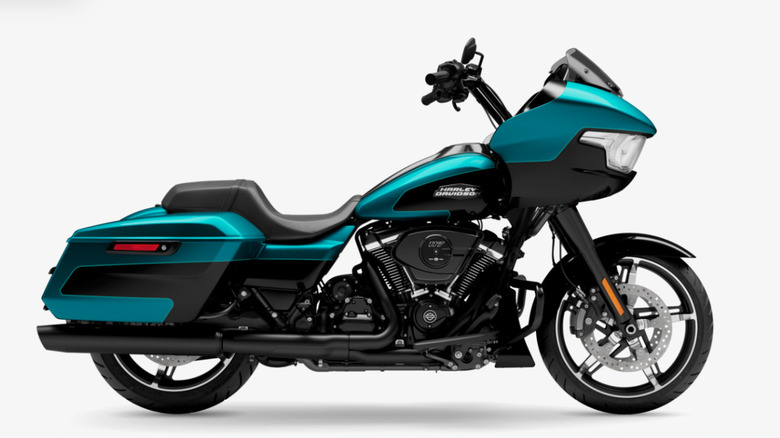
Harley's ultimate bagger, the Road Glide, has been a top-tier touring motorcycle since 1995. Originally introduced with an air-cooled 1,337 cc 45-degree V-Twin making 65 horsepower, today it is a whole different animal.
The 2026 Road Glide starts with the 105-horsepower, 130 lb-ft Milwaukee Eight 117 engine that moves its 838 pounds. Around that engine, engineers have built a premium tourer featuring the Harley Skyline OS operating system and the same 12.3-inch full-color TFT screen and 5.25-inch speakers as the Street Glide. New for '26 is a redesigned Sharknose fairing with a brilliant LED lighting display. The Road Glide also gets vehicle hold control (VHC) as one of its control systems, which keeps the bike in place by keeping the brakes locked when waiting on inclines without the rider needing to apply them.
Unlike the Batwing fairing, which sits on the handlebars, the Sharknose fairing on the Road Glide is mounted directly to the bike's frame, providing superior stability and reduced vibration while redirecting wind at highway speeds and making the handlebars feel lighter than with a bar-mounted setup. The Road Glide is designed to make multi-day road trips and long-haul riding as comfortable and thrilling as possible. While it's still a choice for town cruising, potential buyers would do well to save the extra money on a different model if that's their main riding style.