

Five Outdated Driving Habits It's Time To Let Go Of
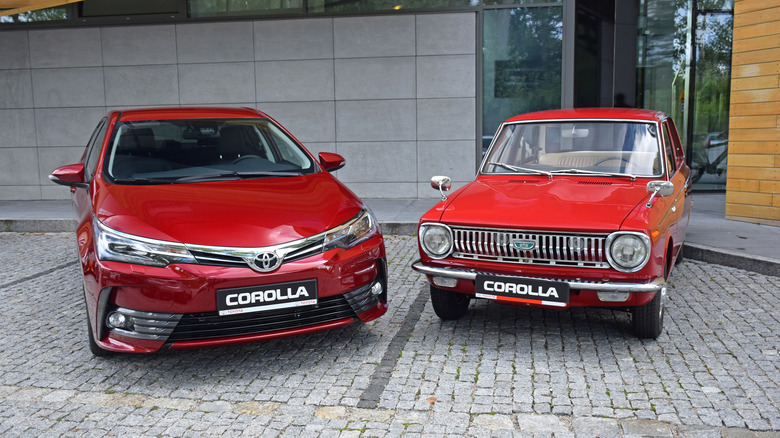
Cars these days do far more thinking for us than they used to. With electrified powertrains, sophisticated transmissions, AI driver assistance, ever-growing levels of sensors, and automation, the cars we once drove are now becoming relics of a different, more mechanical era. Additionally, generations are changing. Younger drivers are more likely to use newer technology, which, in certain instances, can eliminate many of the habits that older drivers held onto for decades on end.
Poor driving habits are common factors contributing to your car not reaching 100,000 miles. So, from a contemporary perspective, although some are believed to still be beneficial to both cars and drivers, that's not always the case. Many can actually do more harm than good. As the saying goes, "old habits die hard," and plenty of drivers still cling to them, even though modern driving often makes them completely obsolete. Here are five outdated driving habits it's time to let go of.
Shifting an automatic into neutral at red lights
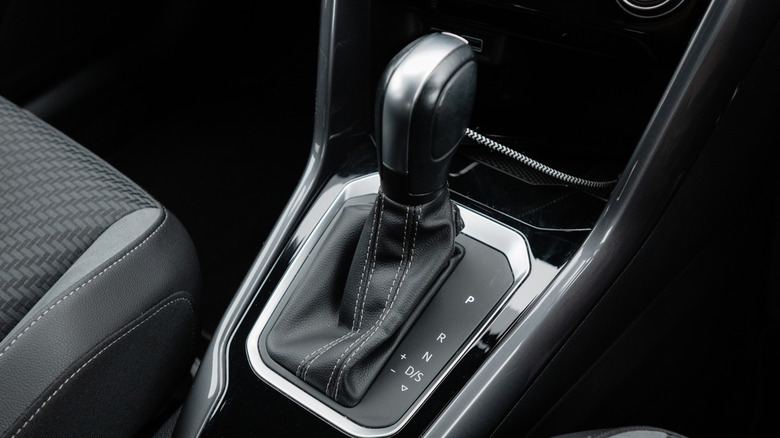
The question of whether you should shift to neutral at red lights is a product of drivers wanting to protect the automatic transmission from wear and tear and to reduce fuel consumption. For older cars with torque converter automatics that were prone to slipping, shifting to neutral while stopped could sometimes lower fuel efficiency. However, for most state-of-the-art automatic transmissions, this is no longer the case. Constantly shifting into neutral can make your vehicle roll if you don't engage the brakes, and it can also wear the transmission out.
Keeping a modern vehicle in gear does not strain the transmission because it maintains proper pressure and lubrication. For longer stops, if you want to relax your right foot, shift into Park. The only time when shifting to neutral actually makes sense is when you get your car towed, through a car wash, or in an emergency situation. For a manual vehicle, it's a somewhat different story, meaning that keeping the clutch pedal pressed in can cause unnecessary strain on the clutch plates, and thus, placing a manual in neutral is advisable.
Holding your phone up to talk
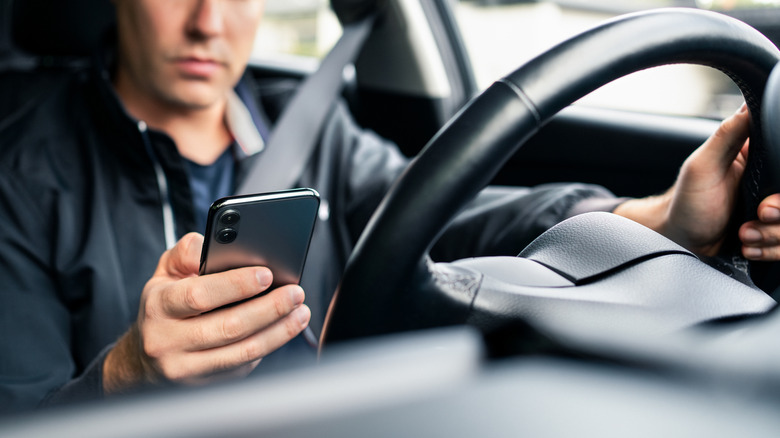
According to the National Conference of State Legislatures, 31 U.S. states prohibit drivers from using cell phones while driving. In some states, such as Florida or Texas, holding (not using) a phone while driving is not prohibited, at least for adult drivers, while in others, it can be a lot more serious. For example, don't get caught holding your phone while driving in California — doing so can result in fines. Regardless of the state you drive in, holding a phone up to talk while driving has become both outdated and completely redundant.
Almost all modern-day cars have hands-free capabilities, meaning that you can talk on the phone without holding it. Even if your car does not have a dedicated hands-free system, you can always put your phone on speaker and place it on a dedicated phone mount. It should be enough to talk without needing to physically hold the phone in your hands, while also being safer because both of your hands are on the wheel. Regardless of what specific state laws dictate, there is little need to physically hold a phone while driving.
Using high-beam flash to warn other drivers

If you've ever wondered what it means if another driver flashes their headlights at you, you have probably been a bit confused — potentially even believing they are angry, or that something is wrong with the car. The reality is that flashing high beams can mean many things, but most often, it means the driver is warning you about something. It can be about a speed trap around the corner, a police checkpoint, an animal on the road, or an accident. However, the problem with this habit is that modern-day cars have extremely bright headlights.
Given how most people tend to use headlights to flash and warn, it's usually done when the car is coming towards you, and the flash is often when they are close in front of you. With LED and laser headlights, it can seem like the sun is burning through your retinas. Plus, Google Maps, Waze, and many other driving apps can do most of those functions for you. Although flashing your headlights is legal in many U.S. states, it can cause eye discomfort, and there are many alternatives to communicate hazards in a safer manner.
Ten minute car warmups

Older cars use carburetors, and many of our parents used to let cars sit idling for a bit before driving them. This is because carbureted engines need a richer fuel-air mixture when cold. Therefore, when it's freezing and the car hasn't been driven for a bit, warming the car up was common practice. This would also allow the engine to come to temperature and let the oil circulate through the engine. For modern cars, particularly fuel-injected engines, this is mostly redundant thanks to synthetic oils and how they manage temperature.
Regarding not warming up a modern engine, J.D. Power explains, "this wouldn't cause any damage to your car if you were to drive it from the get-go." Besides letting the car sit, modern cars will come to temperature more quickly while driving. Idling does little else besides wasting fuel, increasing emissions, and wearing out other components of the car. Although the practice of ten-minute warmups used to be a method for safeguarding the engine, for newer cars, it's actually become the opposite — a common mistake that can ruin an engine.
Not using cruise control
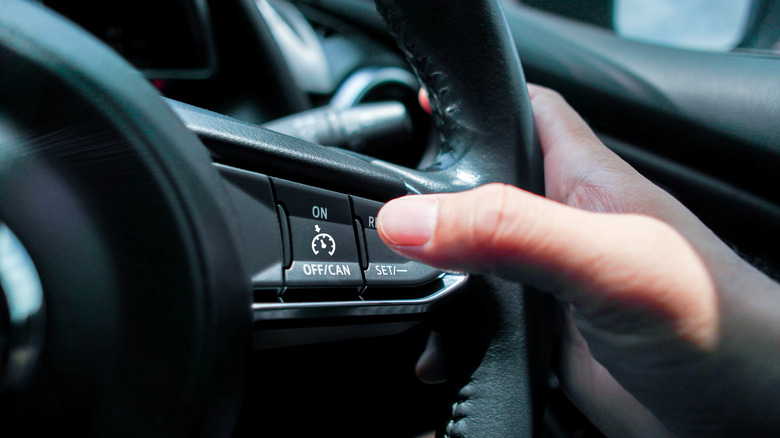
Cruise control has been around for decades, and throughout its development and earlier iterations, it sometimes wasn't as useful as it is today. For some drivers, using cruise control still feels unnatural and computerized, and some people prefer resting their feet on the accelerator pedal even for hours on end. However, modern-day cruise control systems are different. Using them allows you to both focus on your driving environment without thinking about the gas pedal, all while helping you relax your right foot on a long journey.
If used wisely, cruise control can also improve your MPG. Adaptive cruise control (ACC) also reduces mind fatigue while on the highway because you don't have to micro-manage speed and car distance at all times. According to a study published in Transportation Research Part F: Traffic Psychology and Behaviour, using ACC can (to a degree) reduce driver workload and help maintain better focus on the road. As such, more of your brainpower is available to monitor your surroundings and make sure you, your car, and everyone else are safe.