

5 Of The Most Reliable Engines Ever Put In An SUV
SUVs come in a variety of forms, with broader definitions of the SUV segment encompassing everything from a small Subaru Crosstrek to a massive Chevrolet Suburban. But no matter the type or size of the vehicle you are looking at, most SUV buyers are, at a minimum, looking for a reasonable amount of interior space, some extra ground clearance, and a taller profile than you get with your typical sedan. Beyond that, it's wide open.
But whether it's a rugged, old-school 4x4 or a modern crossover, buyers generally love SUVs for their Swiss army knife-like versatility. So ideally, having a reliable engine should be a big part of that usefulness. Like the cars and pickup trucks they typically share platforms with, SUVs can be hit or miss when it comes to engine reliability, and it's no coincidence that some of the most popular SUV models from the last 40+ years are known for having extremely reliable engines.
While there are dozens of SUVs we could spotlight for having great reliability, we've rounded up five of the most reliable engines ever put in an SUV. From V8s to V6s to four-cylinders, it's a diverse mix of engines that have powered everything from a heavy-duty 3/4-ton monster SUV to an inexpensive, fuel-efficient Honda crossover.
Toyota 4Runner 3.4 V6
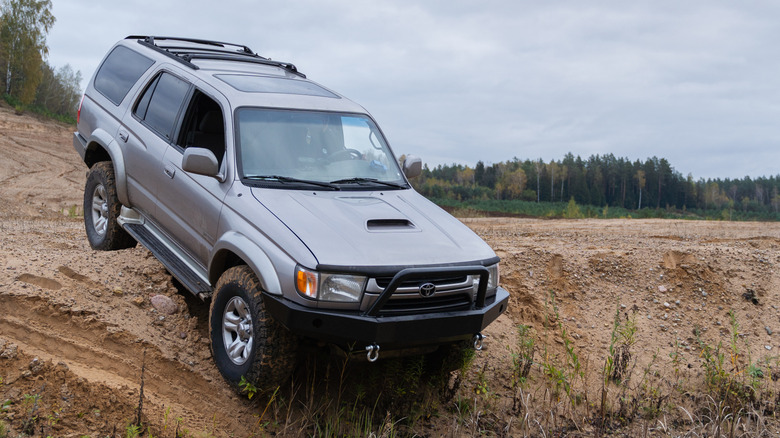
If you were simply putting together a ranking of the most reliable SUVs in general, the Toyota 4Runner would be easily deserving of a spot near the top of the list. A reputation for simple mechanics and excellent reliability is a massive part of the 4Runner's popularity, and with several generations to pick from and multiple engine options among them, it's hard to pick one single standout 4Runner engine.
Yet, according to owners, there's one especially great Toyota 4Runner engine in the family: the 3.4-liter 5Z-FE V6 that was offered in the third-generation 4Runner between 1996 and 2002. With less than 200 horsepower, a third-gen 4Runner isn't going to win many drag races, but what the 5Z-FE lacks in performance, it more than makes up for with longevity.
Not only have 5Z-FEs been known to commonly go beyond 300,000 miles, but when it does come time to work on the engines, the simple, naturally aspirated V6 is also easy to service and easy to source parts for. Available not just in the 4Runner but in the Tacoma pickup as well, the legendary reliability of this V6 is a big part of the reason why Toyota trucks and SUVs from the late '90s and early 2000s are so beloved today.
Ford Excursion 7.3 PowerStroke
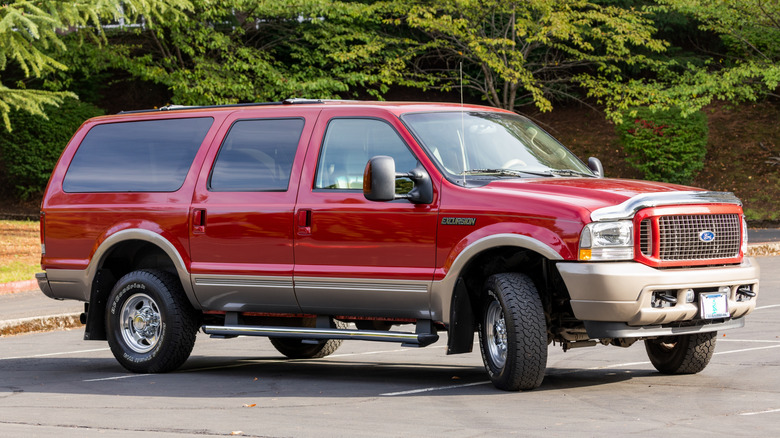
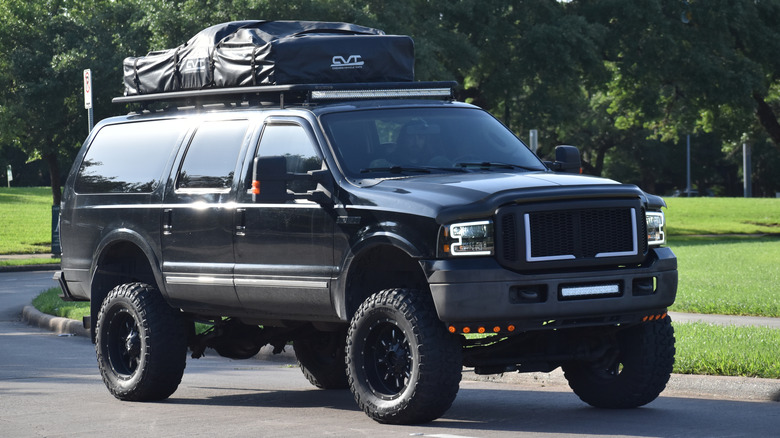
The Ford Excursion was not on the market for a long time, but thanks to its massive size and unapologetic attitude, it's nevertheless become one of the most iconic American SUVs of the late '90s and early 2000s. Though Ford discontinued the Excursion in 2005, the SUV has since become a cult favorite, and it's not too hard to see why. For starters, there's the simple fact that it's unique. The Excursion is based on a 3/4-ton platform, which is pretty rare for SUVs, and sets it apart from Ford's more common SUVs like the F-150-based Expedition.
And since it's based on the underpinnings of the F-250 Super Duty pickup, that means the Excursion could be had with Ford's powerful 7.3-liter Power Stroke diesel engine. Powered by what's considered to be one of the most reliable diesel engines ever built, a 7.3-equipped Excursion is essentially a diesel F-250 with a spacious, enclosed cabin instead of a truck bed.
You could get an Excursion with other engines, including a gasoline V10, but the 7.3 Powerstroke models are by far the most valuable and sought-after today. Perhaps the best indicator of the Power Stroke Excursion's popularity is the fact that even though Ford itself hasn't made the Excursion for over 20 years, third-party builders have stepped in to build modern F-250-based Excursions of their own.
Honda CR-V K-Series
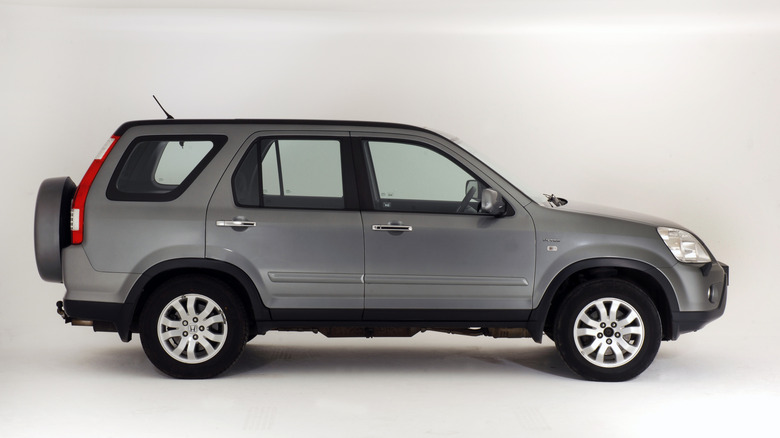
The K-Series four-cylinder engine isn't just one of Honda's great achievements; the K motors are considered one of the most reliable engines ever made. Enthusiasts might associate the K-Series with screaming Civic and Integra Type Rs; but in reality, the vast majority of K-Series engines were put to work doing far more mundane tasks under the hoods of mainstream models like the Honda CR-V.
In the American market, the CR-V came standard with variants of the 2.4-liter K-Series engine for quite a long period. The K24 engine debuted in the 2002 CR-V and stuck around for multiple generations, getting updates along the way. After 2020, the naturally aspirated four-cylinder engine was dropped in favor of turbocharged and hybrid powertrains. Even though the versions of the K24 used in the CR-V weren't the high-performance ones from other Honda models, they still helped to give these little crossovers the kind of refined, sporty personality that even Honda's more mainstream engines were long known for.
Better yet, the K24 engine is quite commonly known to go well over 200,00 miles with basic maintenance. Ultimately, the fact that the K-Series could be simultaneously beloved by racers and enthusiasts while also reliably putting in yeoman's work in the CR-V is a big testament to Honda's broader engine-building excellence.
Jeep Cherokee 4.0 I6
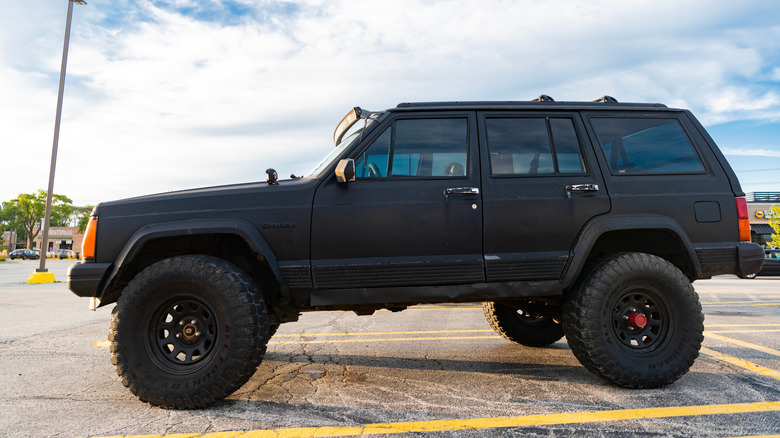
The Jeep 4.0-liter inline-six is a lot more than just a reliable SUV motor; it's known as one of America's all-time greats when it comes to reliability. An old-school, American Motors design that first debuted in the mid-1980s, the 4.0 could also be found in the Jeep Wrangler, but the engine is best known for its use in the original Jeep Cherokee. The XJ Cherokee, as it's known, is considered one of the most influential vehicles of the 20th century, helping to popularize the idea of the modern 'SUV' as you know it.
The stout 4.0 engine played a massive role in the XJ's popularity when it was new, and enthusiasts still love the engine today. With no overhead cams or turbochargers, the 4.0 was never considered a high-tech motor, but with the high-output versions making 190 horsepower and over 200 pound-feet of torque, its performance was always strong. And even better, the 4.0's reliability is considered legendary, with one Cherokee owner reportedly getting 500,000 miles out of his engine.
The 4.0 was, in fact, such a strong performer that Jeep also used it in the larger Grand Cherokee (which has gone on to become an SUV icon of its own) from 1993 all the way until the early 2000s. With lots of displacement and simple tech, the Jeep 4.0 is basically the polar opposite of the complex, small-displacement turbocharged engines that are so prevalent today.
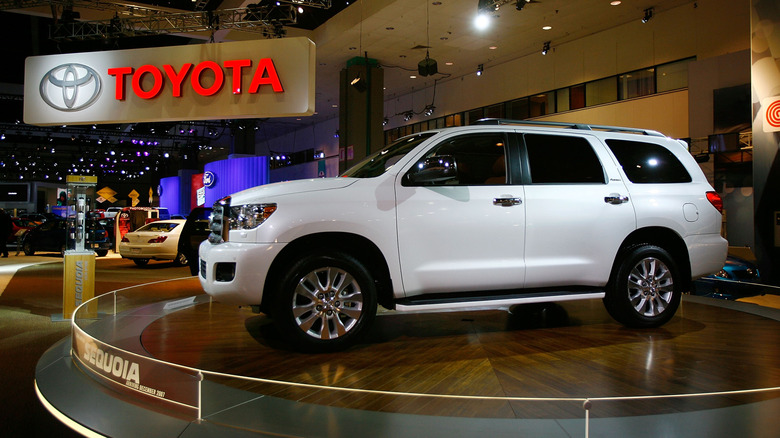
Toyota Sequoia 5.7 V8
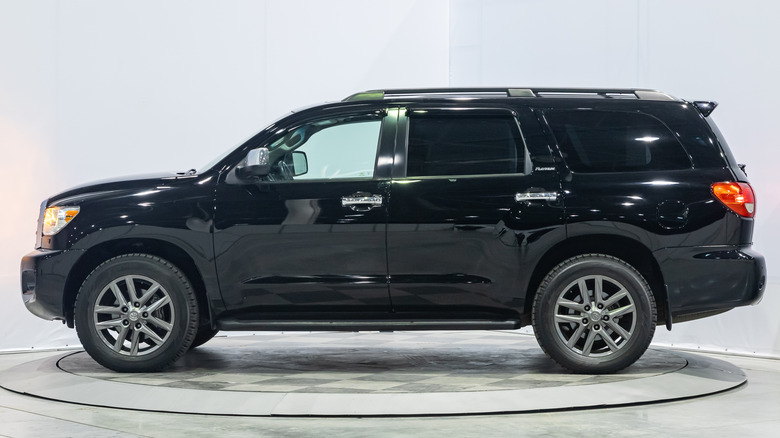
The 3UR-FE 5.7-liter V8 engine is well deserving of a spot among Toyota's great powerplants. Along with being considered one of the most reliable pickup truck engines out there, at 381 horsepower and 401 pound-feet of torque, it's also one of the most powerful engines Toyota has ever built. All the good stuff that's said about the 3UR-FE in the Tundra pickup can also be applied to its use in the Tundra's SUV counterpart, the Toyota Sequoia.
The 5.7-liter i-Force V8 debuted in the second-generation Sequoia for the 2007 model year and was carried on all the way until the 2022 model year with no major changes. In this case, that lack of change is actually a good thing, because the Sequoia regularly got top honors in reliability ratings, including a very high likelihood of lasting over 250,000 miles.
After more than 15 years, Toyota finally gave the Sequoia a full redesign in 2023, ditching the old V8 for a new twin-turbocharged V6 engine. But given the fairly widespread issues with this new engine in the Tundra and other models, it's not surprising that potential Sequoia buyers might want to seek comfort with the proven reliability of the previous generation's simpler, naturally aspirated V8.
Methodology
When putting this list together, we considered rankings and reputations of both the engines on their own, as well as the specific SUV models they were offered in. We referenced professional reviews and historical retrospectives, reliability surveys, independent owner reports, and wider mechanical insight about likely engine longevity and ease of maintenance. In addition to SUVs, all of these engines were used in other vehicles, including pickup trucks and passenger cars, where they've also earned strong reputations for reliability.