

5 Smartphones More Powerful Than The iPhone
We may receive a commission on purchases made from links.
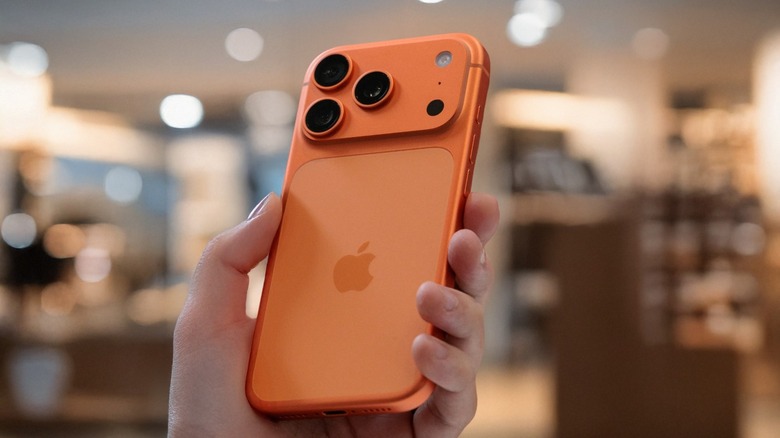
Every year, Apple launches a slightly more improved model of its best-selling product — the iPhone — and each year, it's an easy recommendation to anyone looking for a reliable smartphone with great cameras and a smooth software experience. Additionally, iPhones have also always boasted industry-leading specifications, making them some of the most powerful phones you can buy.
Take the newest iPhone 17 series, for instance. The top-of-the-line iPhone 17 Pro Max that we reviewed comes with Apple's in-house A19 Pro chip, which features a 6-core CPU and GPU, and a 16-core Neural Engine for handling on-device AI tasks. You also get hardware-accelerated ray tracing, which is how the iPhone has been able to handle console-quality AAA titles like "Resident Evil 7" and "Death Stranding" for a few years now.
Raw horsepower like this means that the iPhone can perform any task you throw at it with relative ease, but it also ensures that the device stays functional for much longer. That said, not everyone is accustomed to using iOS, and given that the operating system's reputation has fallen considerably with a few of the most recent updates, now could be the best time to switch to Android. It also helps that there are several smartphones released every year that are more powerful than the iPhone. Based on reviews by experts in the industry, we have compiled a list of five such devices. You can find out more about our methodology at the end of this read.
Samsung Galaxy S25 Ultra
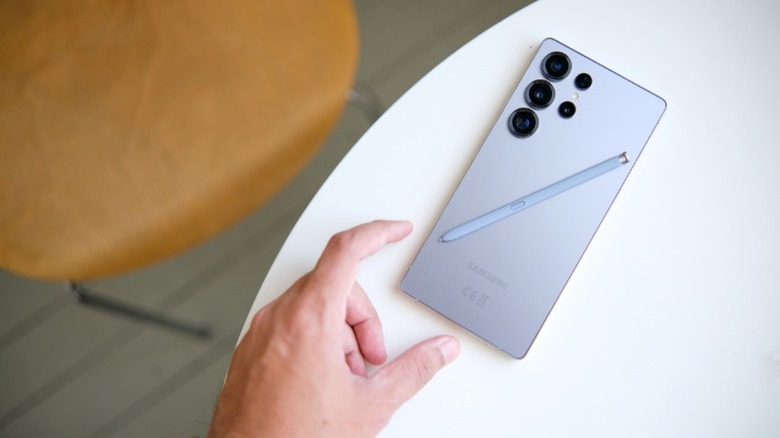
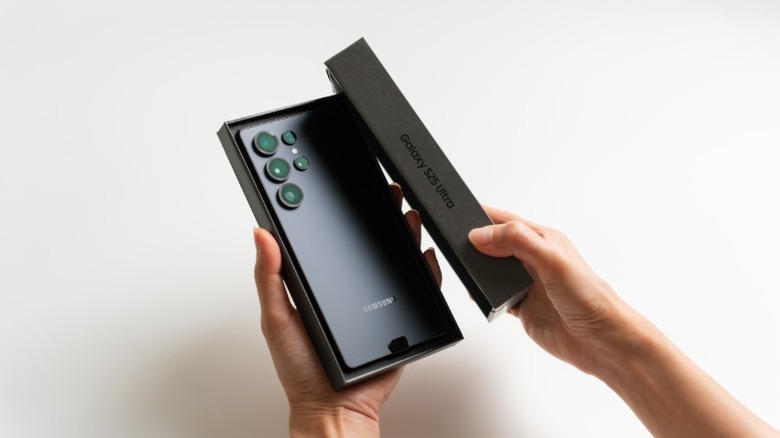
Samsung's Galaxy S series of phones has always given tough competition to the iPhone — so much so that many people consider it to be its default alternative on the Android side. Samsung streamlined its phone lineup quite a bit in recent years by merging the Note and S Ultra products. Now, if you're looking for the most powerful Samsung phone, you'll be redirected to the Galaxy S25 Ultra, which was released at a starting price of $1,299.
The smartphone maintains many of its predecessor's characteristics, including its recognizable design, camera setup, and gorgeous display. The device is powered by the Snapdragon 8 Elite SoC and is backed by up to 16GB of RAM. Due to the different release cycles, the iPhone, at the end of each year, tends to one-up that year's Galaxy S Ultra device — which is why the S25 Ultra is rocking a chipset that's one generation older than the competition.
However, the device is no slouch when it comes to performance. In our review of the Galaxy S25 Ultra, we mentioned how the phone absolutely glides through not just daily use, but also graphics-intensive titles like "Genshin Impact." Really, if you're eyeing a Samsung Galaxy S25 Ultra, you'll be doing it for the rest of the things it also does right. This includes class-leading cameras, solid battery life, one of the best displays on any smartphone, and a surprisingly clean software experience with One UI 8.
OnePlus 15
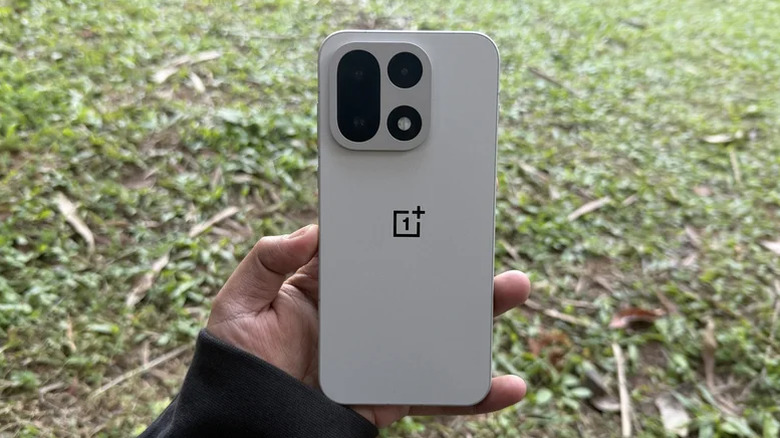
Flagship performance at affordable price points — this has always been OnePlus' mantra. The company is now a decade old, and it looks like OnePlus is staying true to its philosophy. The latest OnePlus 15 packs in some of the best internals available and is specifically marketed as a powerhouse of a phone. It's powered by the new Snapdragon 8 Elite Gen 5 chip and comes with up to 16GB of RAM and 1TB of UFS 4.1 storage.
This year, it appears that the company is targeting gamers. At $899, the OnePlus 15 sports a 6.78-inch LTPO AMOLED display that refreshes at a whopping 165Hz in compatible games. In competitive titles like "Call of Duty: Mobile," this definitely gives you an edge. That's not all — in our review of the OnePlus 15, we noticed how it intelligently manages performance and thermals. Though it delivered a lower performance peak in our benchmark test, the vapor chamber cooling system helped the device stay cooler even under sustained load.
Addressing thermal throttling is crucial, since even the most powerful chipsets tend to start dropping frames in demanding games after a few minutes, which totally ruins the gameplay experience. OnePlus has also figured out the software game better than most brands. OxygenOS 16 brings a load of new features and is as snappy as ever. Though the device lags behind the competition in certain aspects like camera performance, it is undoubtedly one of the most powerful phones you can buy.
RedMagic 11 Pro
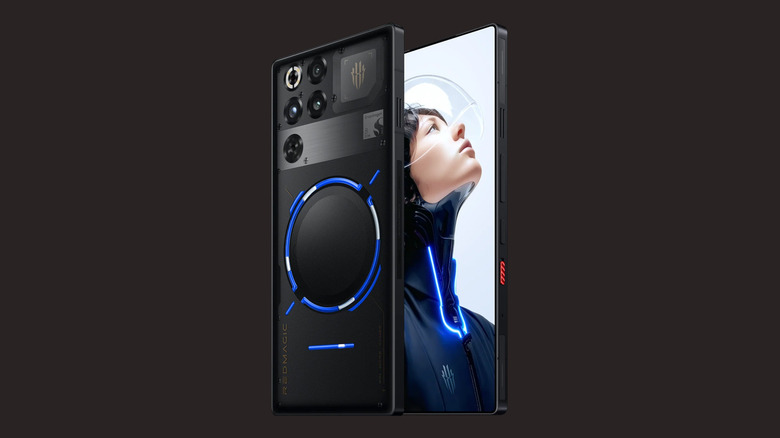
Premium smartphones like the Galaxy S25 Ultra and Pixel 10 Pro have powerful internals, but they also have to strike a good balance in other aspects to make sure they appeal to a wider audience. Gaming phones, on the other hand, can go all in on performance without worrying as much about having to nail the right design aesthetic or packing in the best cameras. The RedMagic 11 Pro is the newest in the gaming phone space, and absolutely doesn't shy away from displaying its specialization in an admittedly less elegant chassis.
That, however, is masked by the fact that the phone utilizes liquid cooling to keep temperatures in check. It's powered by the latest Snapdragon 8 Elite Gen 5 SoC and can be decked out with up to 24GB of RAM — that's more memory than the base model MacBook Air ships with. The phone features a 6.85-inch AMOLED display that refreshes at 144Hz, which should provide for a noticeably smoother gameplay experience in titles that support higher frame rates.
TechRadar gave the RedMagic 11 Pro a solid 5/5 in the performance category, claiming the phone outperformed the iPhone 17 Pro in multi-core benchmarks. That said, the rest of the phone is so-so. It sports an average set of cameras but suffers from a clumsy software experience that's even messier due to all the bloatware it ships with. It starts at $699 — but remains one of the most powerful phones you can buy at any budget.
Oppo Find X9 Pro
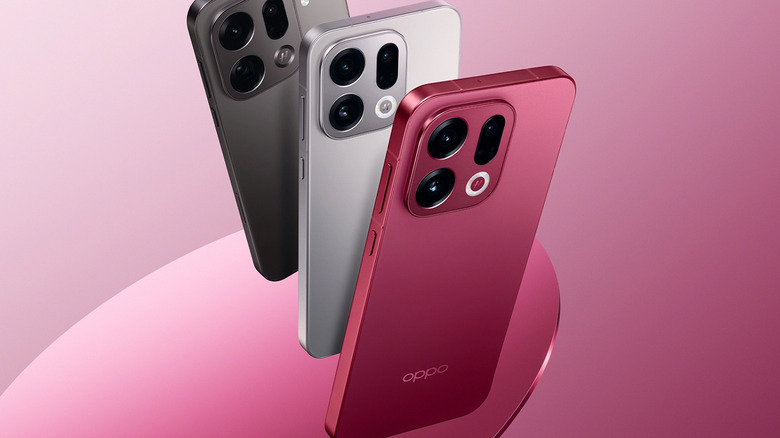
Oppo has been building a reputation as a premium brand lately, with its latest releases rivaling the likes of the iPhone and Galaxy S Ultra devices. The Oppo Find X9 Pro is the newest flagship from the company and bears a resemblance to the OnePlus 15 — which makes sense given that Oppo and OnePlus are sister brands. Under the hood, the Find X9 Pro utilizes a MediaTek Dimensity 9500, which is an octa-core chipset, much like the competing Snapdragon 8 Elite Gen 5.
The phone comes in various tiers, with the highest-end variant offering 1TB of UFS 4.1 storage and up to 16GB of RAM. The Oppo Find X9 Pro runs atop ColorOS 16, which offers a very similar suite of features and visual experience as OxygenOS 16. Besides solid performance, the phone offers a humongous 7,500mAh battery. Even if you manage to kill it in under a day, its 80W fast charging comes in clutch.
CNET called the Oppo Find X9 Pro one of the best Android phones it has tested in 2025 — which is quite the praise considering the sheer number of phones that see the light of day each year. On AnTuTu's Android benchmark list, the Oppo Find X9 Pro is ranked sixth, being slightly outperformed by phones using Snapdragon's 8 Elite Gen 5 SoC. It sports a triple-camera setup, which delivers great results in all scenarios. Unfortunately, the phone isn't available through official retailers in the United States.
OnePlus 15R
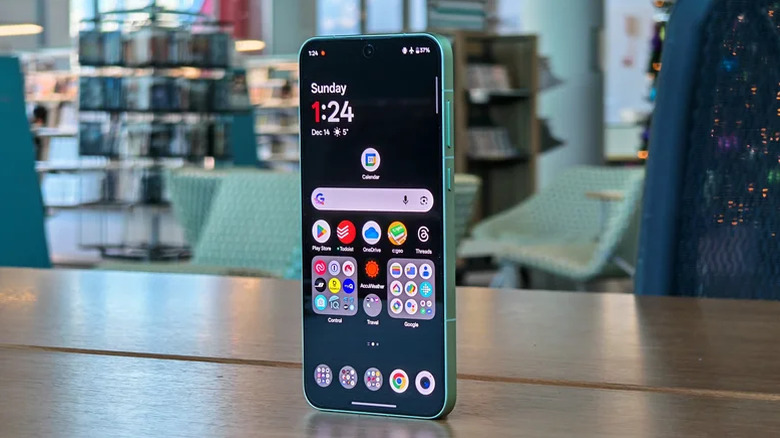
So far, the list has made mention of Android phones featuring the highest tiers of SoCs from Snapdragon and MediaTek. These give tough competition to Apple's A19 Pro, but do come at higher price points. If you're fine with dipping half a class below, the recently launched OnePlus 15R offers great value and performance with its Snapdragon 8 Gen 5 chip. At this level, it offers equal or better raw performance compared to the non-Pro iPhone 17 and even older-generation iPhone Pro models.
For $700, the OnePlus 15R packs in a lot of goodies. For starters, you get a 6.83-inch AMOLED display with a 165Hz refresh rate, similar to that of its elder sibling. It's available in two storage capacities, both featuring 12GB of RAM. It's powered by an impressive 7,400mAh battery that can be topped up quickly via the supplied 80W charger. Performance and battery life were both aspects we were thoroughly pleased with during our time reviewing the OnePlus 15R.
According to Nano Review, though the Snapdragon 8 Gen 5 lags behind the Apple A19 chip in single-core Geekbench tests, it pulls ahead when it comes to multi-core performance. Gaming on a screen with high refresh rate support is truly life-changing, and while the base model iPhone 17 now finally ships with 120Hz ProMotion, the 165Hz panel on the OnePlus 15R is a step up in perceivable performance. Outside of raw horsepower, the 15R is a well-rounded phone in other areas as well.
How we selected phones for this list
When it comes to benchmark tests like AnTuTu, it's not advisable to compare results across different platforms like iOS and Android. This is due to differences in architecture and the APIs used for GPU testing. This is why we haven't based our picks strictly on their benchmark scores. For example, the AnTuTu score for the iPhone 17 Pro is around 2.4m, while that of the RedMagic 11 Pro is over 4m — despite the latter not being twice as good in real-world performance.
Phones with the Snapdragon 8 Elite Gen 5 and MediaTek Dimensity 9500 chips trade blows with the current-generation iPhone 17 Pro, and offer better performance when compared to older models. Even the slightly binned-down Snapdragon 8 Gen 5 found in the OnePlus 15R, or the previous year's Snapdragon 8 Elite in the Galaxy S25 Ultra, are more than capable of running the latest games at high frame rates.
Furthermore, raw performance is not the only metric that matters. A combination of heat management and software tuning can have a significant impact. This is why we've evaluated the phones on this list by measuring how stable they are in other aspects as well. For this, we referred to some of our own in-house reviews, in addition to testing carried out by reputable publications like CNET and TechRadar.