

5 Realities Of Oil Rig Jobs No One Talks About
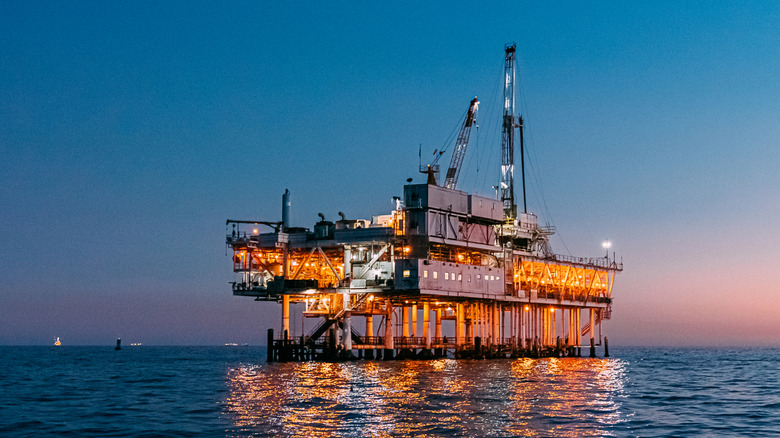
Oil rigs, particularly the offshore type, are one of the most fascinating parts of the global energy industry. How do they work? How big can they get? Do they float on water? It's not surprising that people are intrigued by them. And what's equally intriguing – and potentially very lucrative is the idea of a career working on these rigs. The pay for this kind of work is widely known to be very good, and there's certainly a sense of adventure that comes with working (and living) on an offshore oil rig – or at least the idea of it.
But there's always a catch, as they say. There's a reason that the pay is good, and depending on your personality, that sense of adventure could quickly become a state of misery. There are a lot of realities that come with the decision to work on an offshore rig, with some of them being more obvious than others. A lot of these can also apply more broadly to working in the oil industry in general, but everything is amplified when working offshore. With that in mind, here are five realities of offshore oil rig life that potential workers will want to consider.
Lack of privacy and personal space

If you are considering a career working on an offshore rig, you probably already have a sense of the demanding schedule that comes with the job. Though exact schedules will vary, you can generally expect to spend around two or three weeks on the rig, followed by two weeks ashore. That means, of course, that when you're on the rig, your work literally becomes your life. And that means living with your coworkers.
Depending on the size, there could be as many as 200 workers on board an offshore rig at any given time, and even when you aren't working a shift, you are going to be eating, sleeping, and spending your free time in close proximity to others. It's one thing to have problems with people at work and then going home, it's another to have to eat or sleep in the same room as them for a couple of weeks straight. For example, one oil worker on Reddit reported having to share a single restroom with six other people.
Then again, being "stuck" with other workers for days on end doesn't have to be a negative, and a lot of rig workers actually view the camaraderie and teamwork as a benefit of the job. But if you are the kind of person who doesn't always enjoy being around other people and highly values having their own personal space, the human factors of working on a rig could end up being a dealbreaker.
Sketchy internet and communication
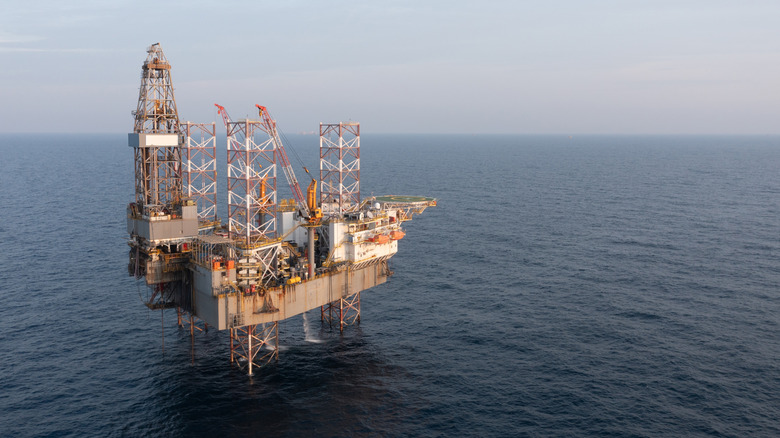
One of the great things about the evolution of modern internet and communications technology is that you can usually travel around the world while remaining in close connection with what's important to you. It could be talking to friends and family, using social media, or streaming your favorite show or following your favorite sports team. Unfortunately for workers, many offshore oil rigs are not blessed with the same kind of high-speed internet technology that we are used to on land. In fact, some rig workers have compared the experience of using the internet offshore to that of trying to go online in the 1990s.
Physical isolation is already one of the biggest drawbacks of a career working on an oil rig, and without modern internet technology that we take for granted at home, that sense of isolation can expand into the digital world as well. Then again, there are plenty of people who feel that it's a good thing to disconnect from an overly online lifestyle. And when combined with the demanding physical work on an oil rig, the combination can actually be very rewarding. Like a lot of the factors that come with this career choice, it will all depend on your personality.
Health risks big and small
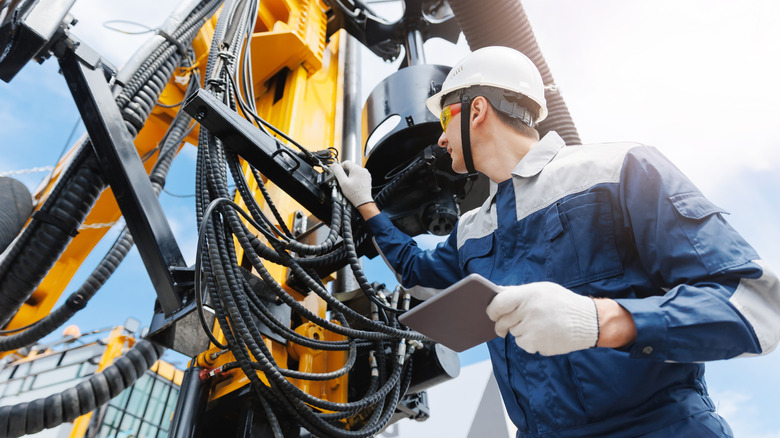
With their ability to drill thousands of feet below the surface of the ocean, the modern offshore oil rig is a masterpiece of engineering. But with that capability comes a lot of risk for workers. Working in the oil industry overall is widely known to be one of the more dangerous professions out there. And working offshore adds new elements of risk to that. On a rig, you get all of the inherent danger and accident risks that come with the oil industry, compounded by the added factor of being at sea. Among others, there's the risk of cold weather, rough seas and the nightmare scenario of falling overboard. And you'll probably want to look elsewhere for a career if you are prone to getting seasick.
Though the rigs will typically have trained medical staff on hand for accidents, if you do need to see serious medical attention for something, be it an accident or another issue that comes up, you can't just hop in a car (or ambulance) and be at a hospital in a few minutes. Ultimately, though, it might not even be an accident that poses the high health risk, but more the long-term exposure to the various harmful chemicals, muds and fluids that are part of oil drilling.
Strict and constant safety rules

The inherent danger that comes with offshore oil rigs can be felt in other ways, too, namely in the heavy emphasis on safety at all times while onboard. It's not that there's anything unusual about following strict safety protocols in a dangerous line of work – that's common across many different industries. Drilling companies obviously want to protect their workers, the environment, and of course, the massively expensive rigs themselves. The issue is more for the everyday workers' lives, where the lines between working and nonworking hours can blur.
Just because you aren't working a shift doesn't mean there aren't important rules and procedures to follow. One rig worker on Reddit reports that certain offshore rigs have emergency drills that would happen while sleeping, requiring everyone to get into full PPE and wait outside for 30 minutes while the fire team completes training. All of these safety rules, protocols, and drills are a necessary and crucial part of keeping accidents to a minimum, but that doesn't mean that they cannot become tiresome. Especially when they extend beyond your actual working shifts, the ever-present focus on safety rules can end up being another one of those factors that reinforce the feeling of never truly being at home or off the clock.
The loss of routine
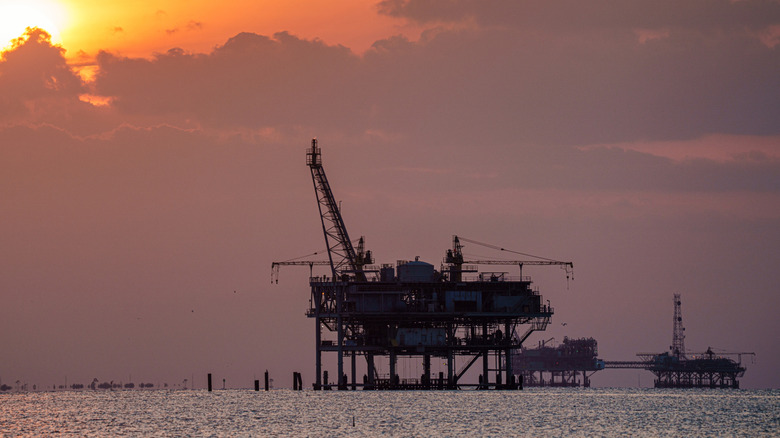
The unusual work schedules, the travel, the elements, the isolation from family, friends, and the world at large. These are some of the biggest and most well-known drawbacks that come with a career on an offshore rig. And all of that ties into a broader loss of routine that comes for people working in the industry. It's not so much the actual hours worked as it is the lack of a normal schedule and distance that can wear people down.
For younger, single people, this kind of career adventure might not be a big deal. But if you have a marriage or family, this lack of a grounded routine can be a major problem. It's not surprising, then, that some rig workers seem to recommend offshore work as a well-paying gig you can do for a while to build out a stable foundation, rather than something you'd want to do for your entire working life.
For some people, having a stable routine is much more important than for others. And with all the routine changes that come with working on an offshore rig, things will be heavily dependent on your own personality and life situation. With offshore oil rigs continuing to be a constant and vital part of the energy industry around the world, lucrative career opportunities remain there for those willing to accept the lifestyle changes that come with it.