

4 Japanese Car Brands Likely To Reach 250,000 Miles (According To iSeeCars)
Depending on our individual needs and requirements, we all single out different features, gadgets, and traits when looking to buy a new car. If you've got a big family and live in a colder state, then cargo space, passenger occupancy, and features like heated seats and a heated steering wheel will probably take priority. However, if you live alone and love carving up the canyon roads each weekend, then a slick two-seater with nimble handling and a powerful engine will probably be more suitable.
Regardless of whether it's a Miata or Suburban that we are after though, one trait we'd all love to ensure when picking up a new car is reliability and durability. Sadly, it's not always guaranteed. Some cars are notoriously unreliable and might struggle to even crack the 100,000-mile barrier, which is pretty disappointing — especially when you consider the average price of a new car has now crept north of $50,000.
Thankfully, though, we can turn to data from iSeeCars to give ourselves a better chance of buying a car that can go the distance. The outlet checked out data on 174 million cars to figure out which brands were most likely to produce cars that can surpass 250,000 miles (excluding heavy-duty models). Overwhelmingly, the top performers were Japanese automakers, which is why we've decided to shine a spotlight on the very best Japanese brands in terms of durability. Interestingly, the top four from the iSeeCars study were all Japanese, and these four were the only brands (out of 32) that cracked 250,000 miles. Without further ado, here are your top performers.
Toyota
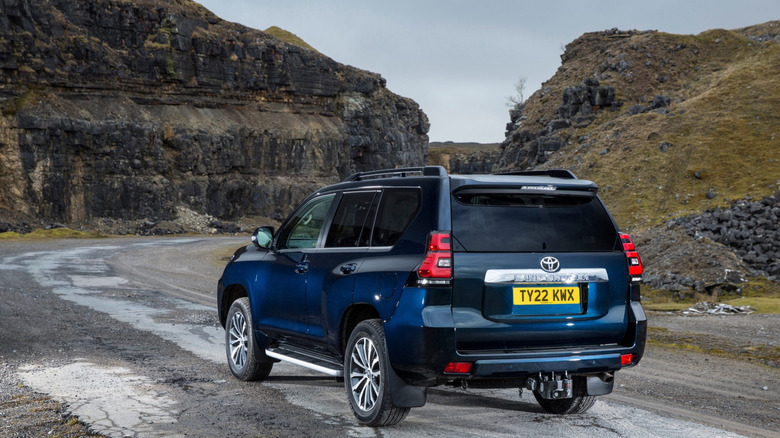
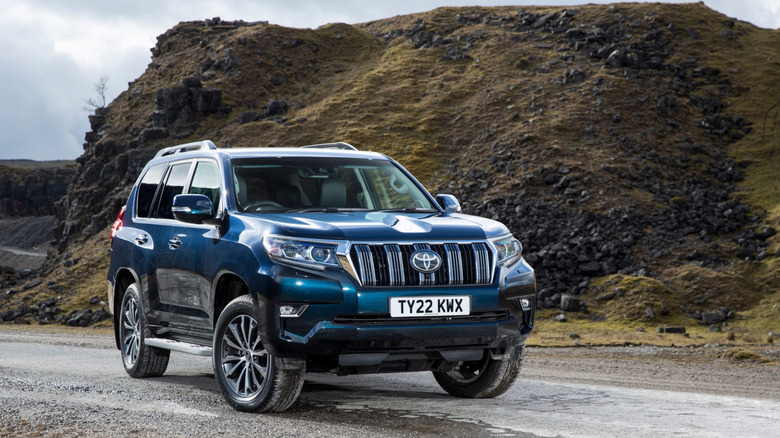
If you're even remotely interested in cars, which you probably are if you're here, then it will probably come as no surprise that iSeeCars pegs Toyota as — not only the number one Japanese brand — but the overall most likely automaker to produce cars that have a chance of motoring past the 250,000-mile barrier. The brand has a reputation for reliability, and it hasn't come out of nowhere. Perhaps the best example of Toyota's mind-blowing durability is Vic Sheppard's million-mile Tundra. Or, to be more accurate: Tundras, as Vic has taken two of Toyota's full-size pickups past the elusive million-mile mark.
We had a look last year at how easy it is to crack the half-million mile threshold with a Toyota, and we concluded that, so long as you keep up with maintenance and don't drive like American rally driver Ken Block everywhere, a good number of Toyota models should be able to manage the task. So, it certainly doesn't shock us to see iSeeCars putting the brand in first place. In terms of the stats, iSeeCars provides Toyota cars with a 17.8% chance of reaching 250,000 miles. At that percentage, Toyota cars had a 3.7 times higher chance of cracking the quarter-million-mile mark than the industry average.
Lexus
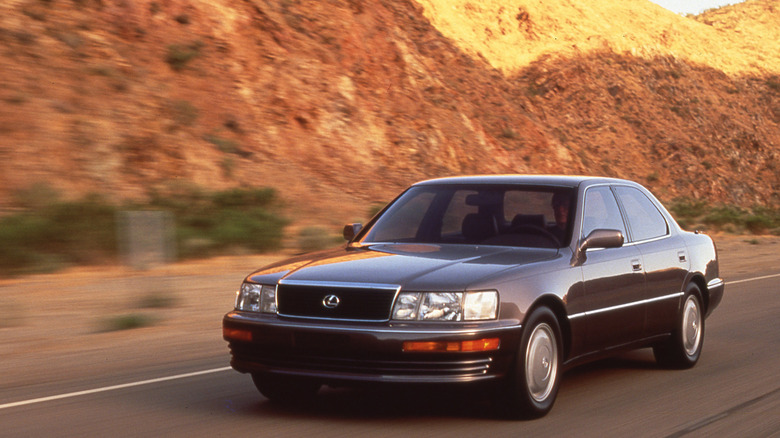
Apologies if you were after some eye-opening revelations from this piece, but second place is just as predictable as first, with Lexus scooping up the award. For those not in the know, Lexus is Toyota's luxury arm, and the brands share powertrains, transmissions, and no doubt engineering practices. iSeeCars singles out Lexus as the most durable luxury brand, too, with the brand outscoring big American names like Cadillac, Tesla, and Lincoln.
Much as we saw with Vic Sheppard's Tundra duo, there are notable examples of Lexus models cracking mileage barriers, with perhaps the most famous being Matt Farah's Lexus LS 400. The 400 was the first generation of the legendary LS luxury sedan, arriving at the tail end of the 1980s as a tempting alternative to the German stalwarts of the industry, namely the Mercedes-Benz S-Class, and BMW 7 Series.
Matt Farah picked up his $1,200 '91 LS 400 for just $1,200, and although it looked a little battle-worn (Wouldn't you after 897,000 miles?), its 1UZ engine had never even been opened up. While Matt's LS is a great example of what a Lexus can achieve, it is an anomaly. Still, the data provided by iSeeCars at least back up the fact that Lexus cars are a solid bet for those looking to achieve 250,000 miles. According to the report, Lexus cars have a 12.8% chance of reaching the mentioned mileage, which is exactly four times higher than the average luxury car.
Honda
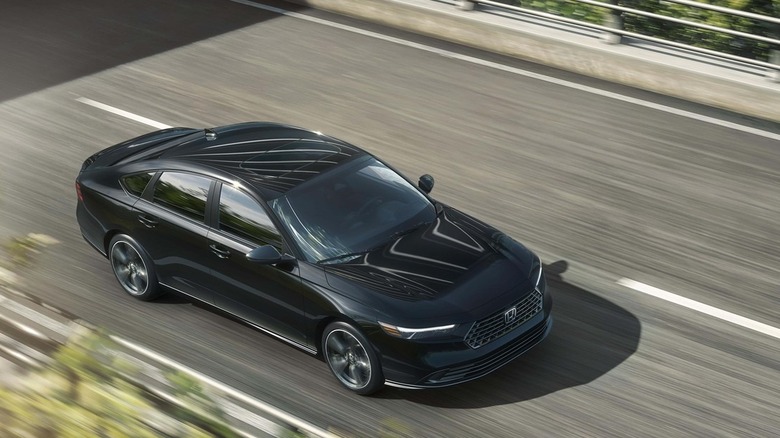
Coming up next is Honda, with iSeeCars ranking the brand third overall. According to the outlet, the Japanese automaker has a 10.8% chance of being able to hit 250,000 miles. At 10.8%, you're 2.3 times more likely to hit a quarter-million miles with a Honda than you are with a brand that sits right around the industry average, which is 4.8%.
Not all Honda models are built equal, though, so for your best chance of covering huge mileage without too many hiccups, you'll be wanting to pick one of the most reliable Hondas ever built. Among them are models like the evergreen CR-V, of which there are multiple generations, so you can spend as little or as much as you like. Other options include the Fit, Accord, and Odyssey, although for the more performance-focused driver, it's worth knowing that the sporty S2000 is a proven entity, too.
Honda was one of the first Japanese automakers to establish itself in the U.S. when imports began to soar in popularity and by continuing to produce high-quality, reliable, and durable models at affordable price points, the brand has managed to build a reputation within the states. Interestingly, the Accord was also the first-ever Japanese car to be assembled in the U.S., proving how well Honda has catered to American audiences with solid and dependable options for the masses.
Acura
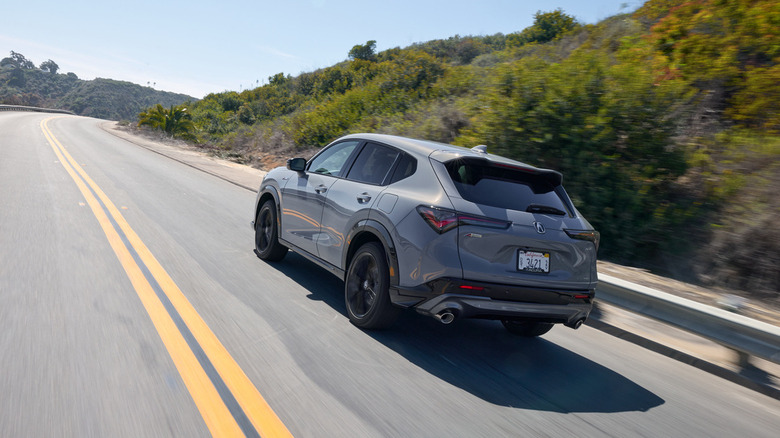
Much in the same way that Lexus is the swanky version of Toyota, Acura is the posher Honda, so it makes sense that we see the brand following closely behind in terms of durability. If you are wondering why the luxurious arms of both these brands rank lower than the mainstream brands, it's likely because luxury cars are more complex, with additional features and functions. That's all well and good, but as cars get older and hit high mileages, these once desirable amenities and extras can result in higher running and repair costs. As a result, the cars tend to reach a point where fixing them becomes uneconomical, whereas the cheaper and simpler versions might continue motoring on for a little while longer.
Regardless, iSeeCars scored it fourth overall and second overall in terms of luxury brands. Acure has a 7.2% chance of meeting 250,000 miles on the odometer, which is 1.5 times better than the industry average. There are a good number of hugely reliable Acura models to choose from, with particular highlights being the NSX supercar, the MDX Hybrid SUV, and the more compact ILX sedan. Not only do they all promise to deliver in terms of durability, but they will also provide plenty of creature comforts. Typically, Acura models come well-equipped as standard, with great sound systems, comfortable leather-trimmed seats, and smart exterior finishings, like chrome details and large alloy wheels.