

5 Of The Worst-Looking Cars From The 1980s We Wouldn't Be Caught Driving Today
Every decade has its list of cars that we wouldn't be caught driving today. Even so, the 1980s were a strange decade, and some of the cars that were produced were pretty awful-looking. While the styling of some of these vehicles wasn't necessarily that bad, the terrible ownership experiences that followed your purchase certainly were. We're looking at you, Yugo. So let's take a nightmarish walk down the 1980s Memory Lane Hall of Shame and find the specific cars that fit our profile — the worse the better.
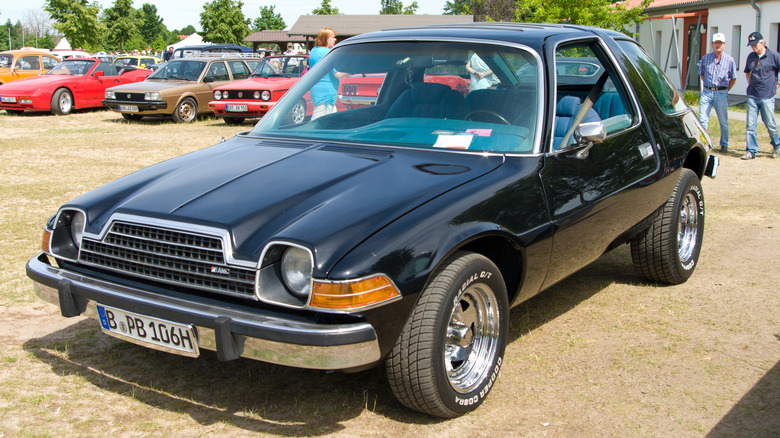
We're starting with the rather bizarre-looking 1980 AMC Pacer, also known as "the fishbowl," produced from 1975 through 1980. AMC called the Pacer a "wide small car." In the words of Motor Trend, "The Pacer's huge glass area was designed to give drivers better visibility, but instead it made them feel like a goldfish being boiled in its own bowl."
The Pacer was originally designed to be propelled by a rotary engine that never came to pass, thanks to both fuel economy and emissions issues. So AMC had to shoehorn its trusty inline-six engine under the hood, with a V8 coming later. Sales started out decent for the first two years, but began to falter just as a wagon was added to the lineup. From a high of 117,244 Pacers made in 1976, somewhere around 2,000 or so of the final year's 1980 models were produced. The market no longer had any interest in the AMC Pacer. Party on, Wayne and Garth.
1980 MGB
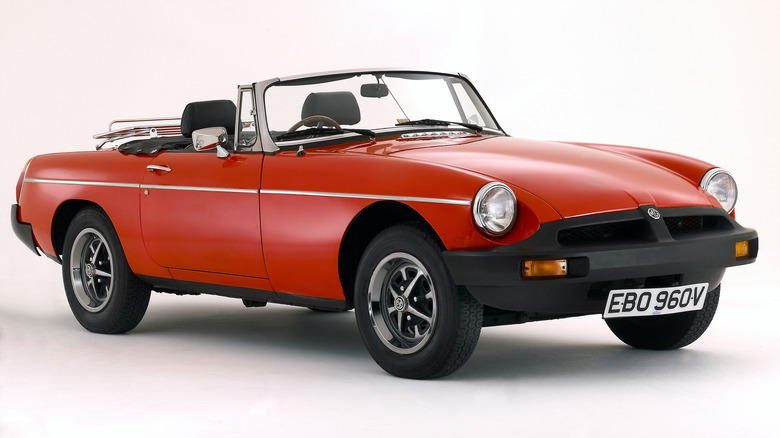
The 1980 MGB represented the final model year for the once quintessential British sports car. From production of the first MGB in 1962 until the early 1974 models, MGBs had graceful chrome bumpers, supplemented by small rubber tips since 1970. But in September 1974, thanks to new 5 mph bumper rules taking effect in the U.S. market at that time, the MGB was hit with an ugly stick, and black rubber bumpers were grafted onto its previously graceful body. Thus was created the monstrosity that you see above, which came to our shores. Contemporary critics concurred. The rubber-bumper MGB was sold here until the sports car was discontinued in the U.S. in 1980, with bumper-car values continuing to lag behind their chrome-bumpered siblings.
The problems went beyond the bumpers themselves. Ride height was increased to meet bumper height requirements, leading to poor handling and big gaps around the wheels. Removal of the front sway bar in 1975 and 1976 for cost-cutting reasons made the handling even worse. Emissions controls took their toll, with the fitting of a catalytic converter and moving from dual carbs to a single one in 1975. The MGB was essentially obsolete, but because the tooling was paid for and it continued to sell, British Leyland kept the lines going. A comparison test done by Car and Driver in 1980 confirmed the MGB's shortcomings, commenting that it, "...acted like a septuagenarian running a decathlon. It hopped like a buckboard over bumps, and in corners it leaned over on its door handles..."
1980 Lincoln Versailles
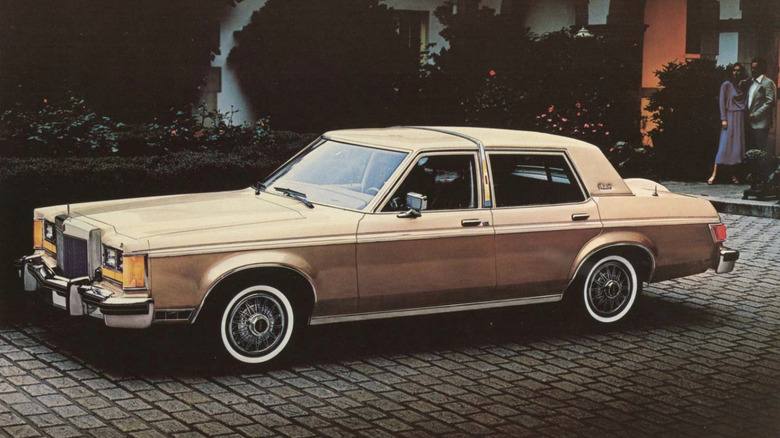
The 1980 Lincoln Versailles, confirmed as one of the worst-looking cars ever, was Ford's attempt to compete with the success of Cadillac's bustle-back Seville in the compact luxury car arena. Where the Cadillac Seville had received all-new sheet metal to form its unique body style, Ford went the cheap route with its upscaling of its Ford Granada.
The hood and nose were new pieces, along with the trunk lid and its tacked-on 'spare tire' element. But the Versailles' side view was identical to the Granada's, its wheelbase was the same, and so were the engine and transmission choices. In spite of this, Lincoln priced the Versailles at the top of its range, making it the most expensive Lincoln available. The Versailles was introduced in 1977 at a price of $11,500 and ended production in 1980. This meant that it cost almost four times more than the Granada it was cloned from.
The Lincoln Versailles did offer some content at no additional charge. It provided leather seats, air conditioning, automatic temperature control, and the first-ever hand-buffed clearcoat finish on an American car. Even so, sales of the Lincoln Versailles never met either Ford's projections or the numbers being put up by the Cadillac Seville. Starting at 15,434 in partial-year 1977, sales dropped to 8,931 in 1978, recovered to more than 21,000 in 1979 when the car was restyled, then plummeted to 4,784 in 1980, its last year on the market. The Versailles' four-year sales total was approximately equal to one year of Seville production. It was a failure.
1982-84 Dodge Rampage
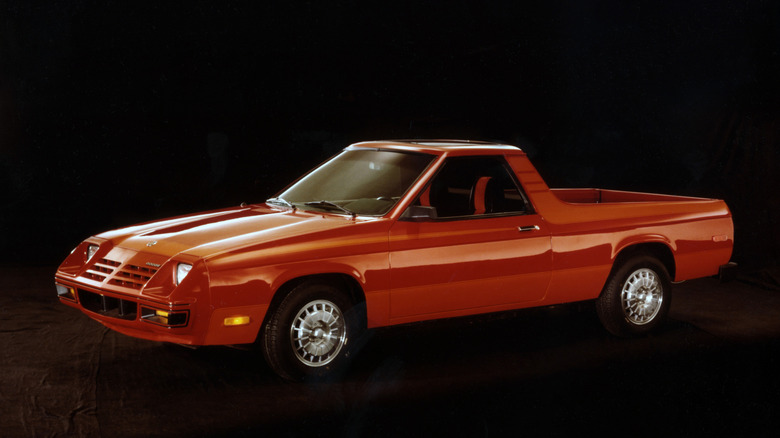
The Dodge Rampage, along with its 1983-only platform mate, the Plymouth Scamp, were two variants built on the bones of the venerable Dodge Omni. They featured styling that Motor Trend called both "homely" and "dopey." This ungainly vehicle was created in the image of previous car-based pickups like the 1957 Ford Ranchero and the 1959 Chevrolet El Camino. It debuted for the 1982 model year and was discontinued after the 1984 model year, marking a brief three years on the scene. In the words of Motor Trend, the Rampage was "Completely lovable and utterly detestable at the same time..."
The Dodge Rampage was produced at Chrysler's Belvidere, Illinois, Assembly Plant. It used the front-end nosecone and sheet metal from the unibody Omni 024 Sport Coupe, combined with a purpose-built pickup cab and bed that were suspended by leaf springs in the rear. Its original four-cylinder engine produced 84 horsepower, later increased to 96 horsepower. Transmission options consisted of a four-speed manual, a five-speed manual, or a three-speed automatic. With a 104.2-inch wheelbase and 183.8-inch overall length, the Rampage could haul up to 1,145 pounds, making it a legit half-ton pickup.
The Dodge Rampage was not exactly a huge sales success, with a total of 37,401 sold during its three years on the market. Sales were highest during the Rampage's initial year of 1982, when 17,636 were shifted. Not even a 1984 facelift, using the front end of a Dodge Charger, could save the Rampage from its ultimate fate.
1982-88 Ford EXP
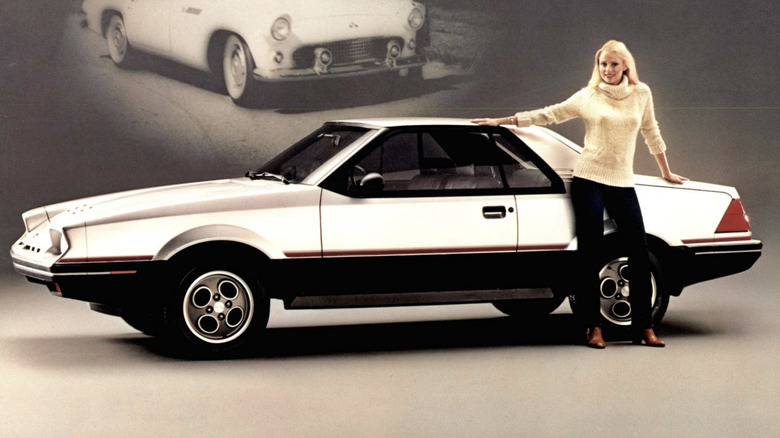
The Ford EXP, which some consider Ford's hidden gem, was actually the first two-seater Ford production car since the original Thunderbird of the 1950s. Based on Ford's Escort hatchback and called "Ford's Ugly Little Sin" by TheTruthAboutCars.com, the EXP, with its odd-looking schnoz, was designed to appeal to entry-level shoppers looking for what Ford called "flair" in a personal luxury coupe. Even though it had independent suspension and a manual transmission option, this was no performance car. With a curb weight 200 pounds higher than the Escort and the same 70-horsepower engine, performance was not a part of the package, even after some gearing and slight power upgrades. Sales were much less than Ford expected, and were even worse for the EXP's platform-mate, the Mercury LN7, which did not live beyond the 1983 model year.
For the 1984 model year, Ford made a serious performance variant, the EXP Turbo. With the benefit of eight pounds of fuel-injected boost, power went up to 120 horsepower, with a 0-60 mph time of 9.2 seconds. Koni shocks and Michelin TRX tires completed the package. The EXP lineup continued on through 1985, at which point the car was supposed to end production for good.
But EXP production line workers had a different idea, grafting the nose of the just-restyled Escort onto the EXP's body. Ford's president liked what he saw and approved the production of the renamed Escort EXP, which continued in the Ford lineup until the end of the 1988 model year. And then it was over.