

California Demands Tesla Stop Calling Its Cars 'Self-Driving'
There are autonomous features that drivers are comfortable with, such as the speed-maintaining cruise control that can make longer drives a little less daunting, and those that they just aren't. Just as some continue to resist the draw of electric cars, the paradigm shift to self-driving cars is another change too far for many. There are six distinct levels of autonomous vehicle, with the sixth and final level indicating that the car can effectively do absolutely everything itself. Vehicle manufacturers around the world are experimenting with progress up that ladder, but, unsurprisingly, there's a zeal for progress tempered by a reluctance to go too far too soon. Should such technology reach commercial availability too soon and tragic accidents begin to occur, the repercussions for the manufacturers would be catastrophic. However, Elon Musk has never been a CEO afraid to push forward, and this has perhaps put Tesla in something of an unfortunate position.
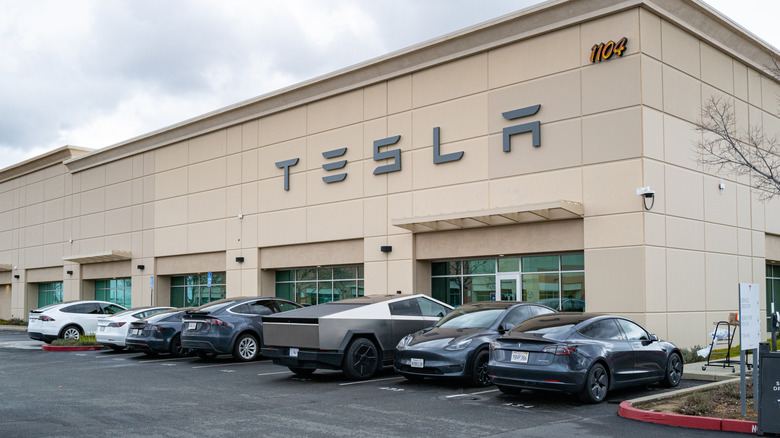
In December 2025, the California DMV declared that certain messaging in documentation from Tesla production was at odds with what those vehicles were actually capable of doing. In May 2021, according to a DMV press release, Tesla began claiming that some of its cars had "Full Self-Driving Capability" and "Autopilot" functionality. This could imply that the vehicles have no need for a driver in the front seat, which is not the case with any commercially available Tesla model at the time of writing. As such, California has insisted on a change to this messaging, lest Tesla lose the right to sell in the state that buys the most EVs in the country.
The question of levels of automation
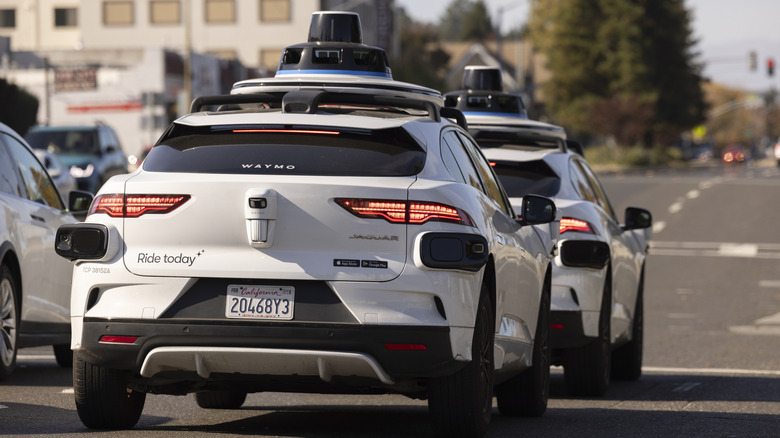
A vehicle truly capable of full self-driving would be Level 5 on the automated driving scale. It could simply follow any route and navigate them just like a human. There isn't currently a vehicle that is capable of this, but it would be easy to mistake some of the driverless taxis rolling out around the world for this. However, there's a difference: they are simply following a limited number of predefined, safe routes. Self-driving cars, advanced as the technology is becoming, aren't quite there yet.
In January 2021, an X post from Waymo defined the parameters for the Waymo Driver, with some crucial insight about the difference between Level 4 and Level 5 autonomy. The Waymo's Level 4 autonomy, the company explains, "mean[s] no human driver is needed in our defined operational conditions. Fully autonomous driving technology, in places we've carefully mapped." You probably noticed the very specific language chosen, with "defined operational conditions" and "carefully mapped," and that's the difference between Level 4 and 5, really. Only the final level represents truly free autonomy in driving, and that's why the technology has to be slowly rolled out to specific areas. Waymo, for instance, is currently operating in five U.S. cities (Atlanta, Austin, Phoenix, and California's Los Angeles and San Francisco Bay area), providing an interactive map displaying where it's rolling out next. This is why the distinction is important, because Waymo has prepared driving environments in each area where the service is available to ensure safety. This level of autonomy, while undoubtedly revolutionary, has limitations in terms of the areas where it can operate. Tesla wasn't initially nearly as careful with its wording, and that's where the concern stems from.
Full Self Driving versus Full Self Driving (Supervised)
Lots of drivers love the accessibility and convenience of assist features. They do not have full autonomy, though, as in a conventional vehicle, there must be a driver alert and able to take manual control whenever necessary. Elsewhere in its messaging, Tesla addresses this directly. Detailing its Full Self Driving (Supervised) functionality, the brand states, "When enabled, your vehicle will drive you almost anywhere with your active supervision, requiring minimal intervention," adding, "When engaged and under your active supervision, your likelihood of being in a collision goes down." Again, a sophisticated feature to enhance the driving experience, but not an alternative that can entirely replace a driver. Tesla also notes that some countries don't allow the use of the feature without a driver's hands on the wheel.
The key to California's ruling was that these limitations weren't sufficiently clear to potential consumers and may constitute a false advertisement. Elaine Borseth of the Electric Vehicle Association explained to CBS 8 San Diego that "they just need to be very clear with people so that people aren't misled." The ultimate result of the lawsuit was that Tesla adopted the term "(Supervised)" into its branding. The news release states that the DMV reached the same conclusion as the administrative law judge, but the penalty is more lenient. Instead of a 30-day ban from both manufacturing and selling cars in California, Tesla will be given "60 days to take action regarding its use of the term 'autopilot'." If Tesla fails to address the issue after 60 days, it will be subject to the 30-day suspension of its dealer license."