

Acura's Original NSX Was My Dream Car. Was Finally Driving It A Letdown?
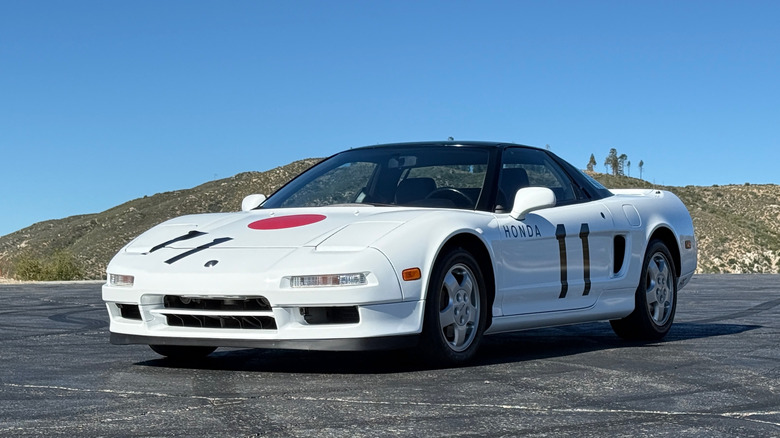
The engineers at Honda started dreaming up the first NSX the same year I was born. On their list of requirements for the would-be supercar was that it could outperform existing exotics, but it wasn't strictly about speed. They set their sights on creating a car that could run with the best from Porsche, Ferrari, and Lamborghini, but that was also usable from a daily driving perspective.
While I was learning to color inside the lines at pre-school, Ayrton Senna was complaining about the fragility of the mid-engine creation during its development stages (an issue the engineers would later address). At that point, it was called the New Sportscar eXperimental. And, by the time I was getting a grasp on complete sentences and basic mathematics in the second grade, the NSX was ready for the buying public.
 Travis Langness/SlashGear
My tendency to be easily distracted and regularly take up new hobbies (and the fact that I wouldn't get a driver's license for another 9 years) didn't stop me from idolizing the NSX as I grew up. The two-seater supercar from Japan was a god amongst mere mortals, displayed on the cover of magazines, dominating every comparison test it entered, and acting as a main character in video games I spent hours playing. For decades I've heard stories of just how good the original NSX was, but I never had the chance to drive it. I had significant time behind the wheel of the modern hybrid NSX, but never the original. That all changed recently, when the folks at the American Honda Collection Hall in Los Angeles were kind enough to lend me a 1991 Acura NSX for a day.
A day with an icon
The rules were pretty strict. Unlike the Honda S2000 I was able to test a few weeks back, the NSX wasn't the sort of car Honda would let me keep overnight. Honestly, I understand their protective nature: it only has about 65,000 miles on the odometer and I wouldn't want anything to happen to it either. Plus, I'd probably stay up all night worrying about it if it were parked in my garage. Not having to sleep next to it in a tent was a relief.
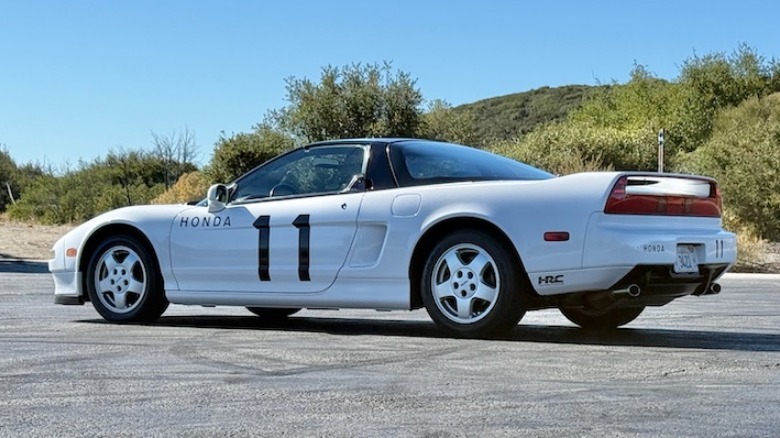
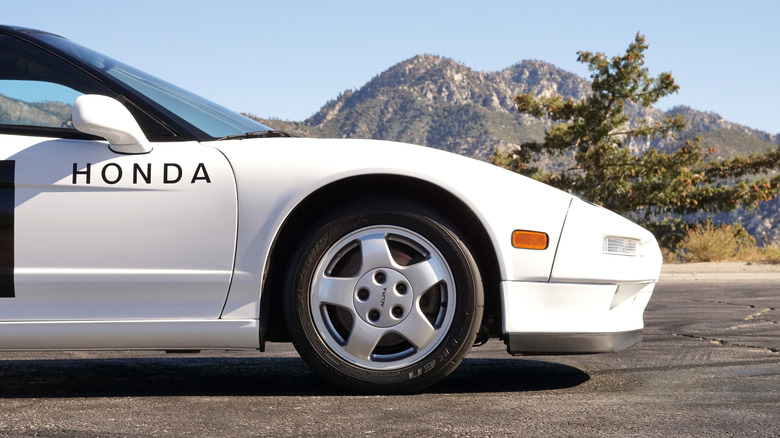
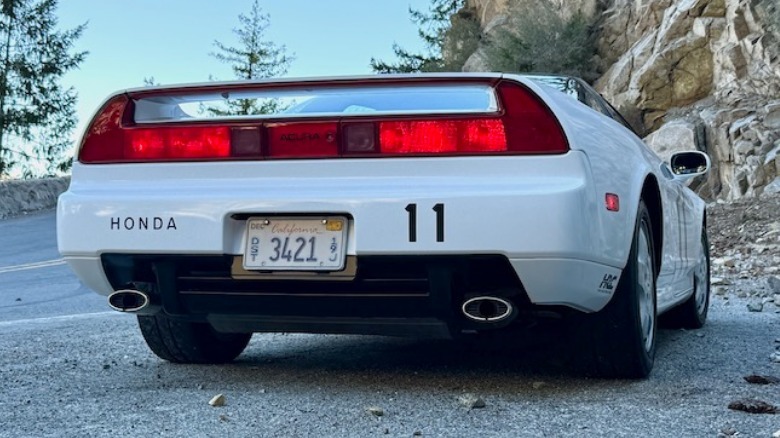
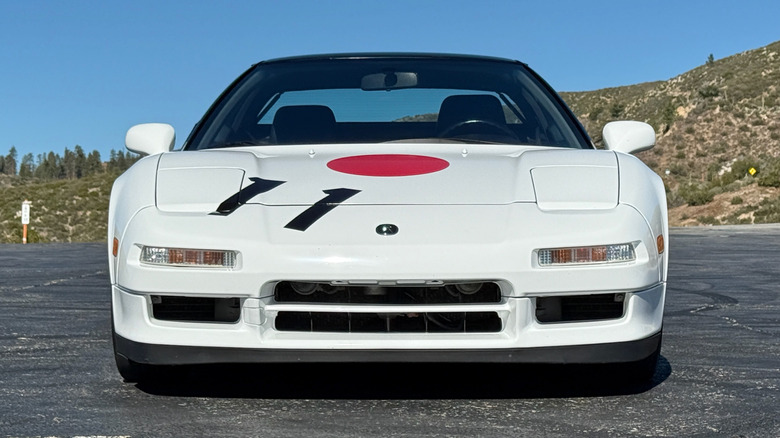
So, Honda brought me the NSX, complete with a celebratory wrap, designed as a tribune to the RA272 race car that brought home Honda's first F1 win in 1965. They pulled it out of a covered trailer early in the morning, then gave me less than 12 hours to put it through its paces. What I did with it during that time was up to me.
 Travis Langness/SlashGear
My plan was simple: Take it to the mountains, where I test every car, and give it the same thorough examination. I would drive over 100 miles on some of the best roads in town. My route to the mountains goes through the dense freeways of downtown Los Angeles, along wide-open stretches of rural roads, and dashing from corner to corner via tight chicanes. It would give me a chance to feel like I was living with the NSX, but as a special Sunday-driven kind of car. I wasn't going to baby the car, nor was I going to drive it on glass-smooth roads.
Power isn't as impressive as it once was
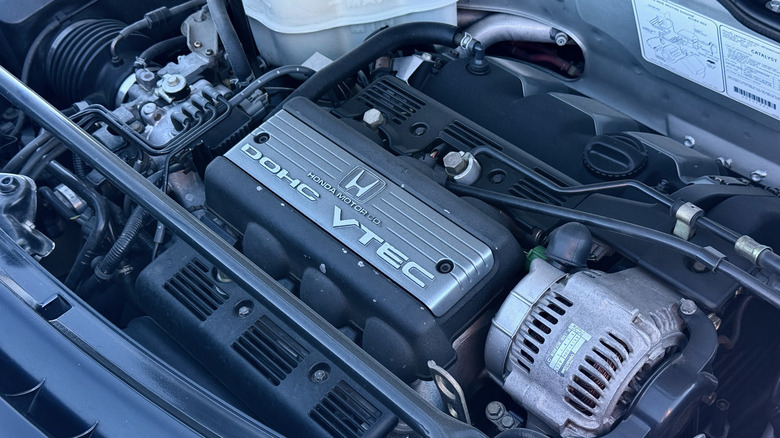
Once I had the keys in hand, I started the NSX and headed straight for the highway. Merging was easy, but not dramatic. Power for the first-generation NSX comes from a DOHC 3.0-liter V6 that produces 270 horsepower and 210 lb-ft of torque. Most run-of-the-mill midsize sedans make similar power these days, and performance sedans like Honda's flagship Civic Type R leap-frog the NSX with over 300 hp. Thankfully, the NSX is light. Its curb weight is just a hair under 3,100 pounds with the five-speed manual transmission (an automatic would add about 70 pounds). Acura's estimates from 1990 had the NSX sprinting from zero to 60 mph in six seconds: a respectable time, but not fast enough to win too many drag races in 2025.
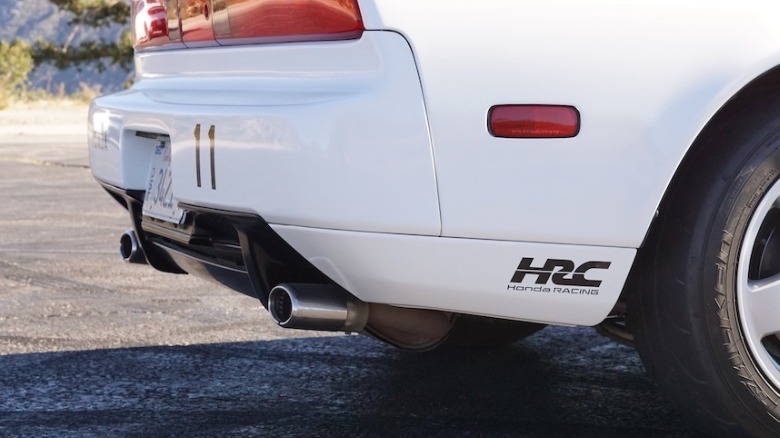
The shift knob felt adequately sized in my right hand, and sliding it into gear required very little effort. It wasn't quite as tactile as some of the best options on the market today, but the NSX's shifter felt like it was placed extremely well in relation to the driver's seating position. Before I even made it to the mountains, I had the sense that the NSX wasn't going to provide a strictly raw experience. It wasn't about big sounds or vibrations. Instead, it was refined and purified. The exhaust note was calm, barely noticeable under light throttle pressure, and it didn't drone on at highway pace. Even in its aged state, the museum piece I drove felt extremely well put together and composed.
Much more than just the power
Its power rating might be mediocre by modern standards, but the way the NSX deploys that power is a much larger part of what makes it special. Once I cleared the morning traffic in Los Angeles and made it to the bending mountain roads, I could experience the real magic. On the climb to its 8,000 rpm redline and its 8,300 rpm fuel cutoff, the NSX had a linear and predictable increase in speed. At around 5,500 rpm you can hear VTEC kick in over your shoulder, changing the pitch and tone of the engine, vastly increasing satisfaction.
 Travis Langness/SlashGear
Like many other high-revving Honda engines, the NSX's six-cylinder feels like it desires revs. It lives its best life at the top of the range, singing high-rpm songs and telling tales of quick-shifting acceleration runs. It wants you to go fast, and it wants you to do so by using every available inch of the rpm range. Brush the brakes and the NSX heeds your warnings with urgency. Even when I was giving the two-seat Acura a bit of extra throttle, heading deeper and deeper into corners before applying the brakes, the pedal was responsive, and quick to translate my inputs into braking action. It's an encouraging bit of interaction that made me want to drive faster and faster as my day with the NSX went on.
Handling and comfort are still world class
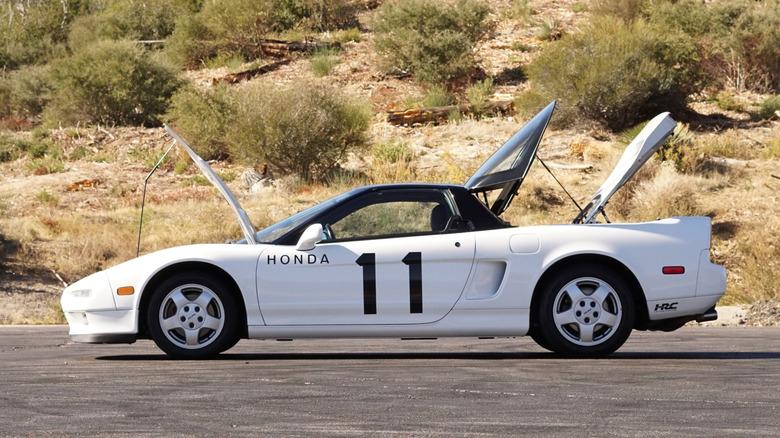
The NSX doesn't boast 50/50 weight distribution. The mid-engine layout here means 58 percent of the weight sits on the rear wheels and 42 percent is weighing on the front. Still, the NSX felt extremely balanced through corners. Not once did I feel the rear tires slip or slide, even with a bit of extra throttle input on corner exit. The low overall weight helps here too, helping the NSX resist strong g-forces in high-speed corners. In other words, it never felt like it was being pulled out of line by the g-forces of its own weight.
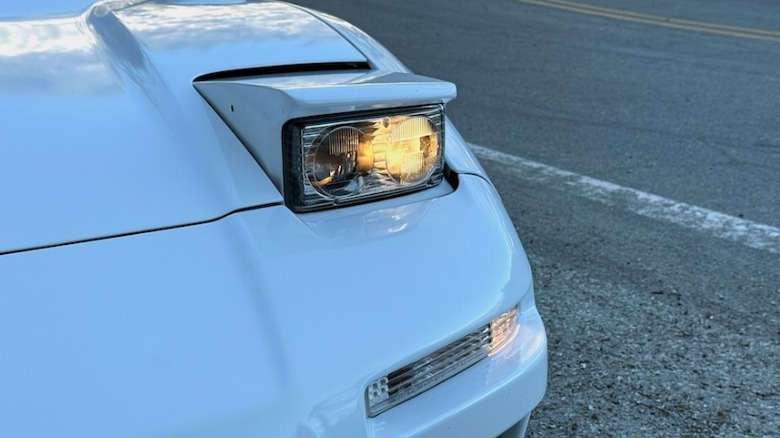
Built well before the days of adaptive air suspension and computer-controlled dampers, the NSX has a relatively simple suspension setup by modern standards. Independent double wishbones with coil springs in both the front and the rear, with an 18.3 mm front sway bar and a 17.5mm rear sway bar, all keep the NSX planted and comfortable.
 Travis Langness/SlashGear
The suspension, while firm, wasn't stiff or abusive. Over the aggressive bumps and ruts of Los Angeles freeways, the ride was still comfortable and forgiving, making the case for prospective NSX owners to leave their suspension stock. Really, the most aggressive bit of equipment on the NSX was its manual steering system. Early manual-transmission versions of the NSX had a simple variable ration rack-and-pinion setup, which is pretty heavy at slow speeds, but it lightens up nicely once things get going. It also provided maximum engagement and feedback when you're directing the NSX around corners at speed. I could always sense where the front wheels were, what sort of grip I had, and how much more I could demand of the car.
A spacious and jet-inspired interior
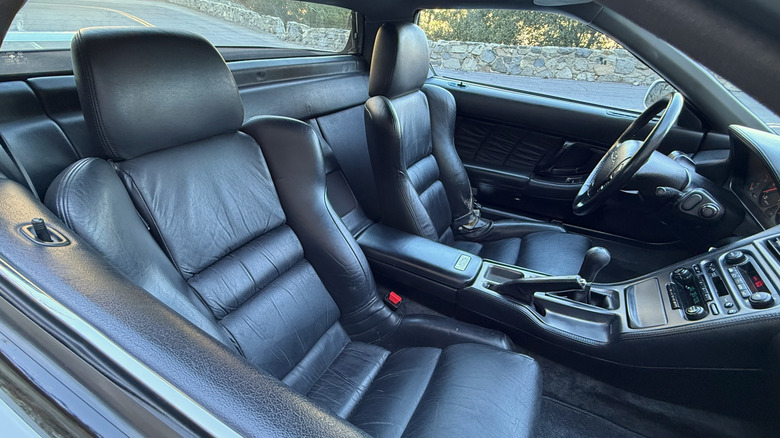
For a two-seater, the NSX's interior felt pretty large. I know more than one NSX owner who is over 6 feet tall and comfortable inside their car. And for me, at 5-foot-9, there were zero space issues. Sure, like you would in all cars from the '90s and 2000s, you'll feel a bit closer to your passenger in the NSX with its narrow center console, but that's all part of the charm. And that small cabin means that the air-conditioning doesn't have to do much work to cool everything down in a hurry on a warm day.
 Travis Langness/SlashGear
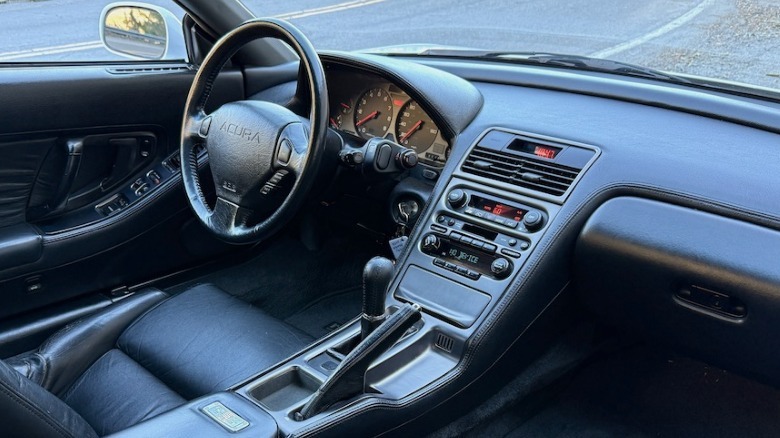
What's more, the NSX's interior could teach classes on outward visibility. The dashboard on its own is a lesson in how to organize controls so that they're within reach but out of sight when you're focused on the road ahead. The large windows and windshield paired with the thin A-pillars mean you can see just about every aspect of the road. At speed, the interior melts away and you can focus on the task at hand: driving. When it launched, Acura claimed that the NSX's interior was influenced by the cockpit of an F16 fighter jet, meant as a functional piece of architecture that the pilot could use without distraction, no matter the speed. And after my time behind the wheel, despite having spent zero time inside an F16, it's a claim I don't doubt.
Even after all these years, it still looks good
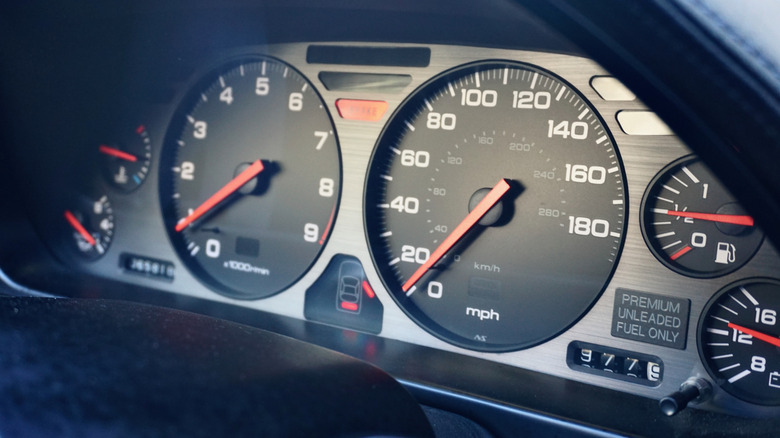
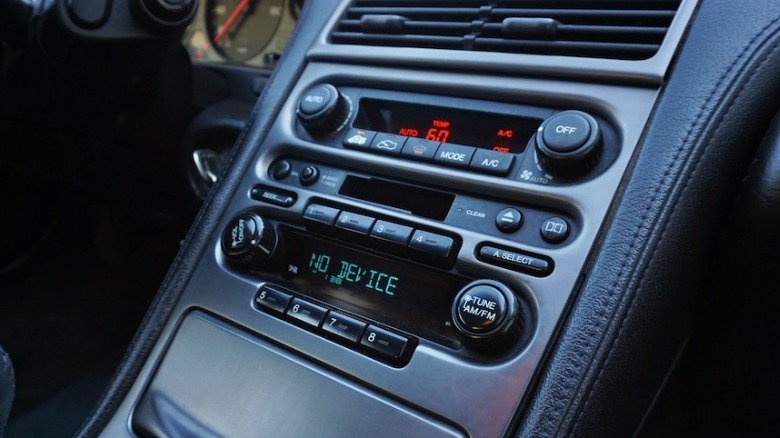
During my first break from driving, I took a bit of time to soak in more of the NSX's details. I've seen plenty of these cars at shows over the years, but I've never really examined the interior. On the model I tested, the interior had a pretty monochromatic vibe. Basically everything from the carpet and the seats, to the dashboard and the stitching, was either black or gray. But the interior didn't feel boring or toned down. The white numbers and the orange gauge needles spice up the gauge cluster and make every important number immediately visible at a moment's glance.
 Travis Langness/SlashGear
The seats in Honda's museum model were a bit torn and worn, but no worse than I'd expect from a 35-year-old car, and they were still supportive and comfortable. If I won the lottery and purchased an NSX like this time capsule, I wouldn't go searching for aftermarket replacements. Instead, I'd have the stock seats reupholstered in the same high-quality leather that would likely last another few decades before it needed to be redone again. The climate control knobs, steering wheel buttons, and audio controls all felt easily accessible, but nothing distracted from experience at hand. This particular NSX had been retrofitted with some sort of Bluetooth audio accessory, but I didn't bother with music other than the naturally-aspirated VTEC soundtrack.
1991 Acura NSX verdict
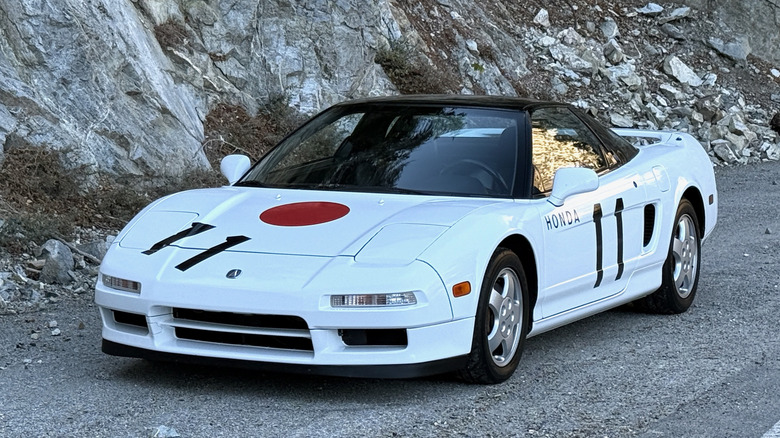
After admiring the NSX, sharing the details with some friends in the mountains, and taking a few dozen photos, I sadly admitted to myself that it was time to head home. I ruminated a bit, and committed the sights and sounds of the NSX to memory: driving this car was not an experience I wanted to forget. Heading back home along the same curving roads, bumpy highways, and boring city streets, I came to the simple conclusion that the NSX had lived up to all my childhood expectations. More than just a poster car coming to life, though, this particular car felt attainable and special all at the same time.
The original NSX was priced at around $60,000, and that translates to about $150,000 in 2025 dollars, but you can get a first-gen NSX for much less than that today. In the last few months, several early models have sold on auction sites for somewhere between $60,000 and $70,000. That's not much more than the average hot-hatch costs new these days, and I'd have a hard time finding something new that cost the same and felt anywhere near as special.
In both looks and philosophy, the NSX is timeless. Everywhere I went, people stopped and asked me about it. They wanted to admire it, take their own pictures, and tell me their NSX stories. It still turns heads more than 30 years after its inception and it drives in a way that few other cars can. The NSX and I may have similar origin dates, but it has aged much better than I have, and I assume it will continue to do so for many decades to come.