

This State Wants Drivers To Start Paying By The Mile As EV Popularity Climbs
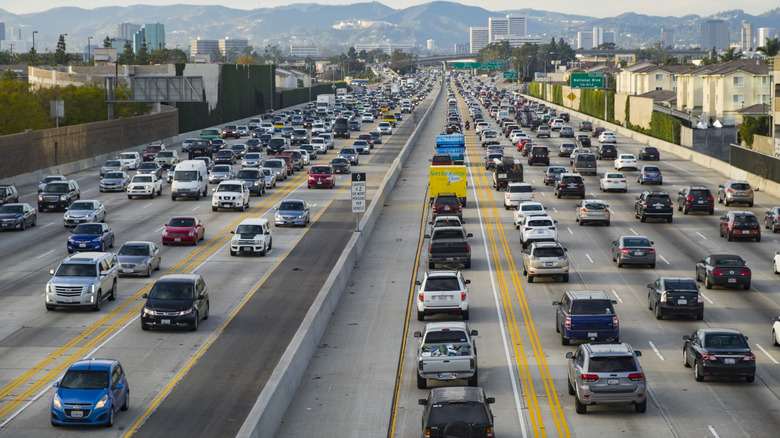
Between corporate regulations tightening on automakers year after year and gas prices climbing for consumers, more people are looking to alternative fuels than ever before. These include EVs, hybrids, PHEVs, and even hydrogen-powered cars like the Toyota Mirai, all adding up to good news for penny-pinchers at the gas pump, or so one would anticipate. Enter the state of California, with a radical new concept that aims to level the efficiency playing field by taxing drivers per mile rather than per gallon of fuel bought.
This policy, officially known as the road charge, is designed as a road tax to help fund continuous road maintenance and development by supplementing or perhaps even replacing gasoline taxes in California. The Golden State already features the highest tax in the continental United States, raising gas prices all the way to an average of $4.375 as of December 2025, which the state pumps back into its road infrastructure. On average, a Californian pays roughly $300 a year in gasoline taxes, coupled with some counties issuing separate sales taxes for similar purposes. However, with the rise of hybrids and EVs, less and less drivers are paying that much per year, and the transportation budget is taking a hit as a result.
In other words, this proposal — and it is still a proposal, no official date has been set for any hard implementation — directly targets these consumers by making it so that every car, from the most inefficient junker to the top of the line EVs, must pay their way by the distance they travel, not how much fuel they consume. Let's dive in and explore the particulars of this hypothetical policy and who would be affected for better or worse.
What the road charge entails
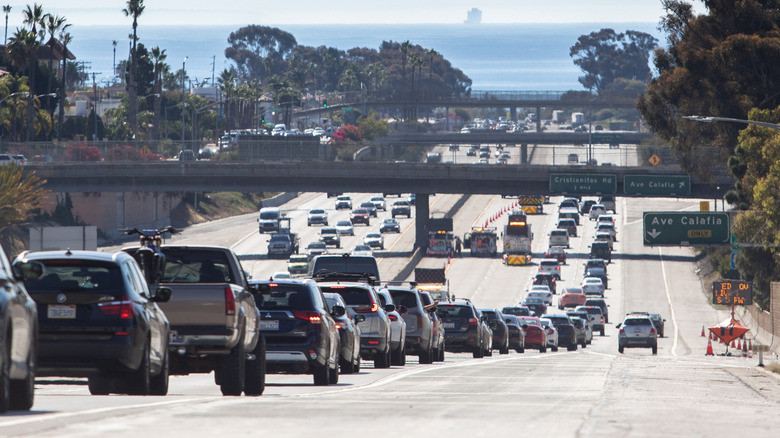
California has the highest gas prices in the Continental U.S. for a reason — several, actually. It's mostly due to taxes and regulations governing aspects such as carbon consumption, road infrastructure, getting the fuel into California in the first place, and so on. Basically it's all down to logistics, which is why, despite its excellent car culture, it's also one of the worst places to live if you're on a tight budget for gas. In the new road charge initiative, first proposed back in 2014, all that money would instead be funneled into a continuous road tax, even and fair for everyone regardless of a vehicle's actual efficiency.
The stresses placed on roadways naturally increase with the amount of PSI of downward pressure a car exerts on it; that's just basic physics. The heavier the car (and skinnier its tires), the harder on road surfaces it is. EVs are often already heavier than their gas-powered equivalents, and efficiency-minded tires are often thinner for less rolling resistance, meaning these cars are more likely to deteriorate roads faster. This translates into higher taxes at the gas pump, which means more EVs purchased to circumvent the higher taxes, and so on and so forth.
Therefore, the road charge's true purpose lies in restoring the delicate balance between these two extremes by giving everyone — EV owners included — an equal weight tax for maintaining the transportation budget. All this comes in tandem with a much larger national initiative that has already passed, called the Bipartisan Infrastructure Bill of 2021, introducing its own changes in American roadways including safety, emergency relief, and crucial maintenance.
How would it affect gas prices?
Obviously the two most directly affected demographics would be those with grossly inefficient or extremely efficient vehicles. The further away you are from the middle of the bell curve, the more noticeable the price change will be at the end of the year. However, people in the middle aren't likely to see much change at all, at least according to the state of California. Of course, this all depends upon how much the proposed fees would actually be, but one bonus is that it isn't liable to go up just because more people are buying fuel-efficient vehicles, like the current tax does.
There are a few takeaways we can surmise here from the information we currently have. For one, this directly benefits consumers with poor fuel efficiency. Whether it be drivers who spend large amounts of time idling their cars, people with large trucks and SUVs, or people with classic cars — this bill is likely to make daily driving with a classic car in California far less expensive, especially if you own a thirsty V8. Second, if you own an EV, expect to get a price hike when you submit your taxes, especially if you have a long commute. And third, while the price may seemingly drop sharply at the gas pump, it'd likely be the same yearly price for the average commuter, although that price hypothetically shouldn't fluctuate nearly as much as it does now.